REVIEW · KATHMANDU
Kathmandu: Local Women-Led Nepali Cooking & Momo Class
Book on GetYourGuide →Operated by Relax Getaways Pvt. Ltd · Bookable on GetYourGuide
Momo lessons start with market smells. In Kathmandu’s Thamel, you shop for spices and vegetables, then cook iconic dishes like momo and dal bhat with English-speaking instructors.
I like that it is truly hands-on—you shape dumplings and build dishes from scratch, not just watch from the sidelines. I also like the menu flexibility, with vegetarian and meat options and room to add extras like chatamari, sweets, and snacks.
One heads-up: the kitchen setup includes stairs, so it can be awkward if you struggle with steps or have limited mobility.
In This Review
- Key highlights you’ll care about
- Why This Kathmandu Cooking Class Feels Practical (Not Just Food Filler)
- Thamel Market Run: Buying Ingredients You’ll Actually Use
- How the Class Flows in the Kitchen (From Dough to Dinner Plate)
- What you’ll make (core dishes plus choices)
- Momo From Scratch: Dough, Fillings, and That Dipping Sauce Moment
- Quick expectation reality check
- Dal Bhat and a Nepal-Style Lunch or Dinner Spread
- Masala Tea, Bara, Yomari, and the Sweet Finish
- Dessert and special treats you might encounter
- Price and Time: Why This Is Such a Standout Value
- Where You’ll Meet and Practical Logistics in Thamel
- What to bring
- Who Should Book This Momo-and-Dal Class
- Should You Book This Kathmandu Cooking Class?
- FAQ
- What dishes does this class focus on?
- How long is the cooking class?
- Is there a market visit?
- Can I choose vegetarian or meat options?
- What language are the instructors?
- Is pickup available from my hotel in Kathmandu?
- FAQ (optional add-on)
- Is a recipe book included?
- What should I bring?
Key highlights you’ll care about
- Market shopping that directly feeds your meal so you learn what to buy, not just what to cook
- Small groups that keep the work moving and your questions welcome
- Momo and dal bhat as the core with extra Nepali dishes you can choose
- Named instructors like Nish (often Nishma in bookings) and chefs including Bikram/Vikram guiding step-by-step
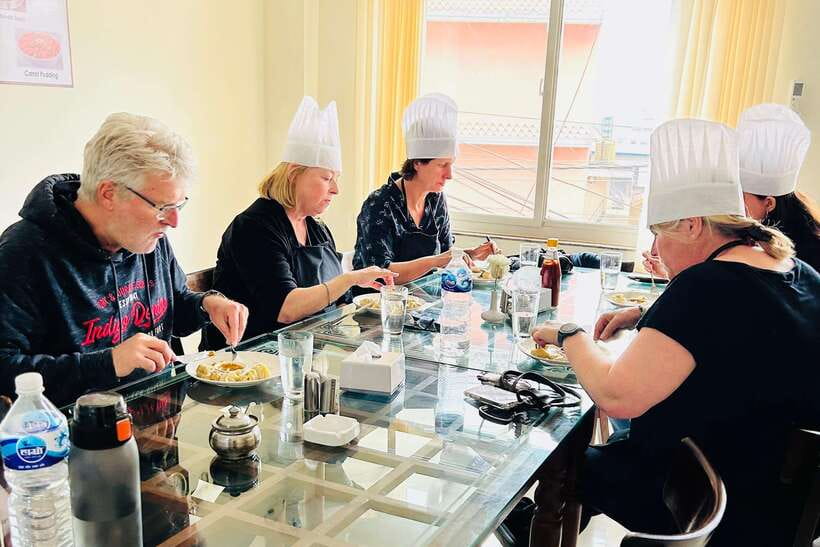
- You eat a lot: fresh dumplings, a full lunch or dinner style spread, plus masala tea
- Very strong value at $4 when you compare the time, instruction, and ingredients
Why This Kathmandu Cooking Class Feels Practical (Not Just Food Filler)
If you want Kathmandu food without the usual tourist version, this class is a good bet. You start in the market, then move into a real kitchen and learn how the flavors get built. The class focuses on the Nepali comfort zone—especially momo and dal bhat—so you leave with recipes you can actually repeat at home.
The teaching style is a big part of why it works. In many groups, instructors like Nish (and chefs including Bikram or Vikram) slow things down when needed, explain what matters in each step, and keep the group engaged. I also like that you can tailor the menu toward vegetarian or meat choices, which makes the experience feel personal instead of templated.
The main trade-off is physical. The kitchen area can involve steps, and some guests mention steep hills on the way in. If you know stairs are a problem for you, plan around it early.
You can also read our reviews of more cooking classes in Kathmandu
Thamel Market Run: Buying Ingredients You’ll Actually Use
The lesson begins with a market or shop visit where you help source the key ingredients. This part matters because Nepali cooking is built on small flavor decisions: the right spices, the right vegetables, and the right cut or type of ingredient for the dish you picked.
You’ll typically browse for items that match your planned meal. If you’re making meat momo, you’re buying ingredients for that filling. If you’re staying vegetarian, you’ll focus on vegetables and seasonings that work the same way in Nepali kitchens. Either way, the chef or instructor guides you on what matters and what to skip.
One practical advantage: the market time turns into lesson time. Instead of only learning techniques in the kitchen, you learn what good raw ingredients look like and how Nepali cooks think about balance—spice, salt, sour, and aromatics.
How the Class Flows in the Kitchen (From Dough to Dinner Plate)
Most sessions run around 3 hours total, including the market stop, cooking, and tasting. You’re asked to arrive about 15 minutes early so the group can get going without rushing.
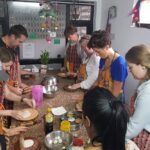
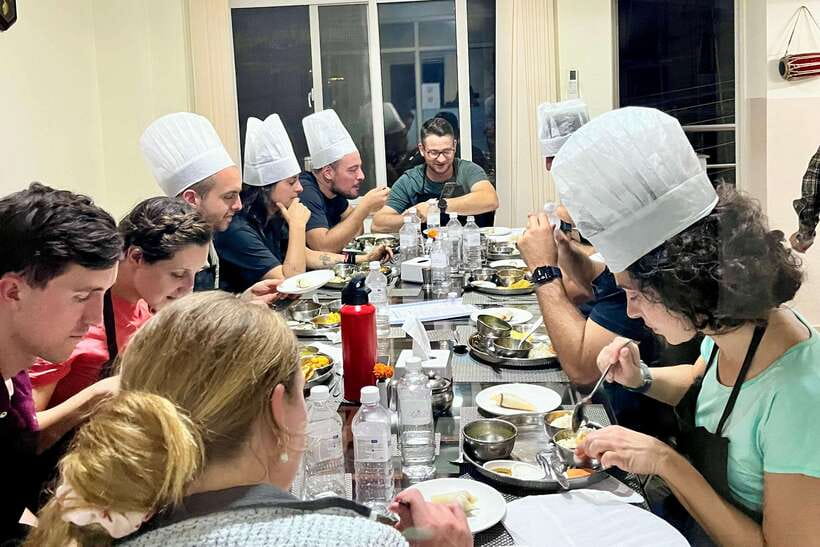
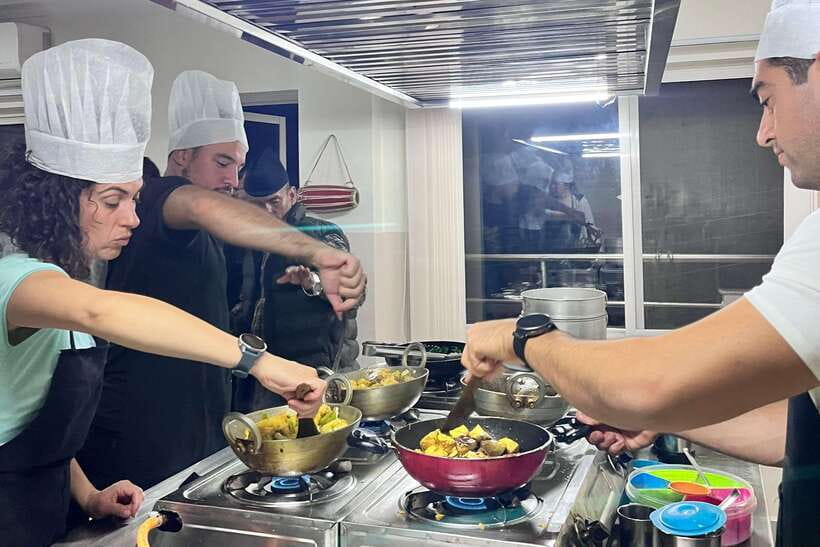
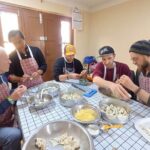
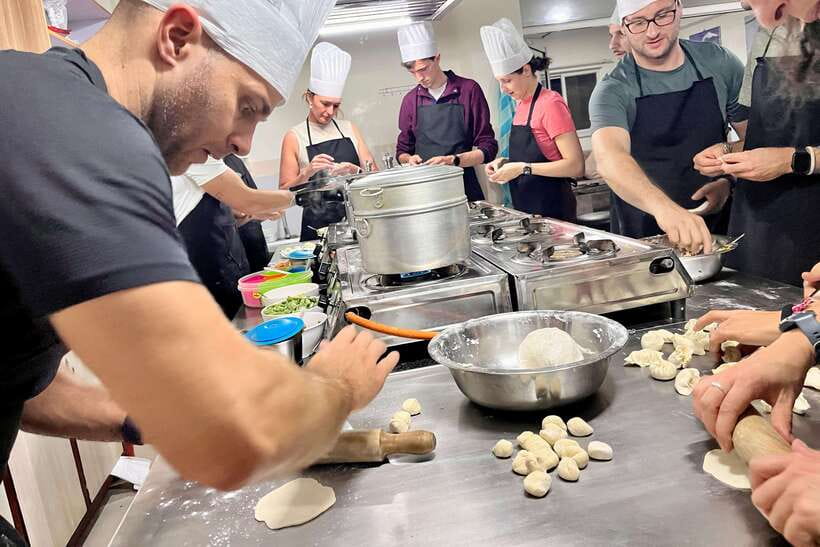
Once you’re in, you’re not stuck doing one tiny task. The format is more like a rotation of real jobs: prepping, mixing, shaping, and cooking, with instructions at each stage. Aprons and cooking gear are provided, and the kitchen runs with a small group feel, not a “line of tourists” vibe.
The class is conducted in English, and you can ask questions as you cook. People repeatedly highlight how clearly steps are explained and how patient the instructors are, including Nish (Nishma) leading the session in many groups and chefs like Bikram/Vikram supporting the food work.
What you’ll make (core dishes plus choices)
The class menu focus is typically momo and dal bhat, with an option to add other Nepali dishes. Common picks include:
- Momo with chicken or vegetarian fillings
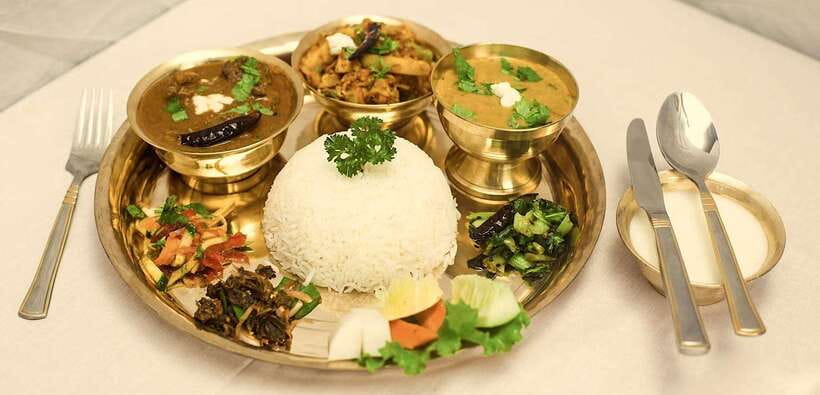
- Dal bhat (rice + lentil curry set)
- Chicken curry with roti
- Snacks and breads like bara (deep-fried lentil patties)
- Flatbread like chatamari, often called the Nepali pizza
- Noodle soup like thukpa
- Spicy marinated dishes like mushroom choila
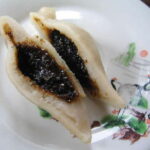
- Sweets like yomari (sweet dumpling with jaggery and sesame) and carrot pudding
Not every option appears in every class, but the structure is designed so you can usually choose what you want to learn more deeply.
Momo From Scratch: Dough, Fillings, and That Dipping Sauce Moment
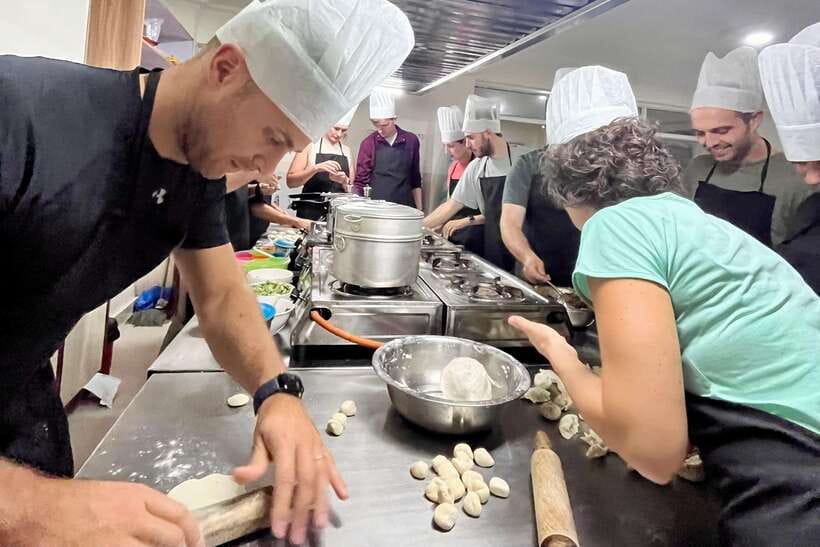
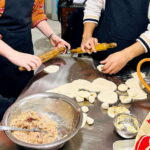
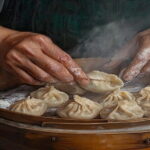
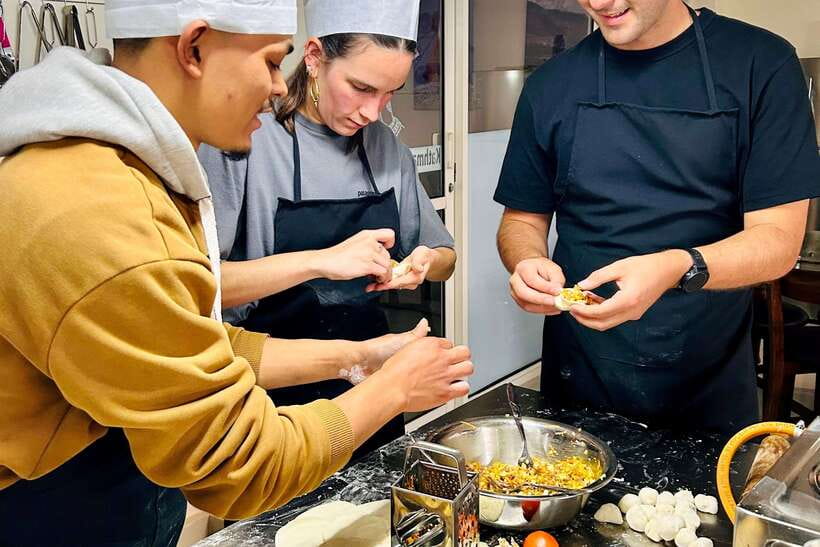
If momo is the reason you booked, you picked the right class. The hands-on work shows up fast: you make the filling (veg or chicken), prepare the dough, and then shape the dumplings. Many participants specifically mention doing both a veg and a chicken filling in the same session and learning the dough process and the dipping sauce.
That detail matters. A lot of cooking classes stop at assembling. This one tries to teach the logic behind the texture—what you’re aiming for and how to adjust as you go. That’s why people often leave feeling confident they can repeat momo at home.
In terms of pacing, the instructors work to make sure you don’t feel rushed. Several groups mention the teacher’s patience and step-by-step explanation. The class also works well even if you are shy or less confident speaking, because you still get hands-on practice and clear guidance.
You can also read our reviews of more tours and experiences in Kathmandu
Quick expectation reality check
You will likely eat a lot of momo by the end. One person notes they couldn’t finish their share and got food to take away, which tells you portion sizes tend to be generous.
Dal Bhat and a Nepal-Style Lunch or Dinner Spread
Dal bhat is the backbone of Nepali everyday eating, and the class treats it like more than a side dish. You learn how the components come together as a set—rice plus lentil curry—and you’ll cook it alongside the momo.
What I like about this combo is that it teaches a “system.” Momo gives you the dumpling technique and dipping sauce thinking. Dal bhat teaches the comfort flavors: lentils, spices, and the way Nepali meals are built around a hearty main plus rice.
Depending on your selected menu, you might also add dishes that broaden the flavor map. For example:
- Chicken curry with roti for spice depth and the bread pairing
- Chatamari for a different texture challenge (flatbread topping rather than dumplings)
- Thukpa if you want a noodle soup comfort break
- Bara for crisp outside, tender inside fried lentil patties
- Choila if you want smoky-spicy marinade vibes
The menu choice is a smart feature for value: $4 is low enough that you want variety and relevance, and you’re set up to choose dishes you actually care about.
Masala Tea, Bara, Yomari, and the Sweet Finish
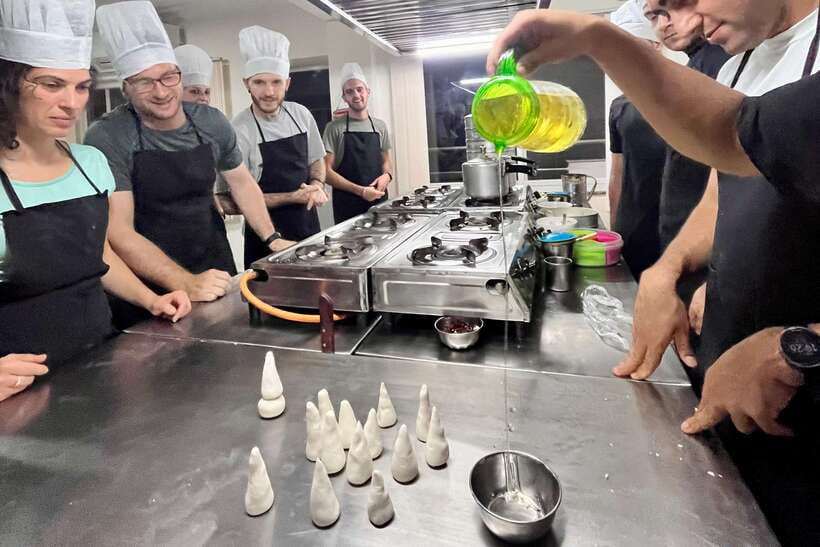
Food classes can feel like a bunch of small bites. This one tends to function more like a real meal. You don’t just sample; you taste what you cook and often eat a full lunch or dinner style spread.
You’ll get Nepali masala tea during the lesson. It’s the kind of drink that resets your palate and makes the spice load easier to enjoy. People also mention extra hospitality details in some groups, like bottle water and chai on arrival, and small additional local bites during the session.
Dessert and special treats you might encounter
If your menu includes sweets, you may get to make or taste:
- Yomari, a sweet dumpling filled with jaggery and sesame
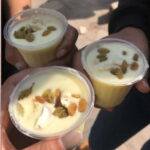
- Carrot pudding, a Nepali-style dessert option
Even if dessert isn’t your top priority, the sweet element is part of why Nepali meals feel complete. It’s not an afterthought; it’s scheduled.
Price and Time: Why This Is Such a Standout Value
At $4 per person, this is hard to beat—especially when you factor in what’s included. You’re not just paying for a recipe. You’re paying for:
- a market/shop tour to source ingredients
- step-by-step coaching from English-speaking instructors
- hands-on cooking time with equipment provided
- a tasting session of what you make
- masala tea during the lesson
- optional hotel pickup and drop-off within Kathmandu (depending on the option you book)
Some classes with similar length charge several times more, and many of them don’t include the ingredient shopping. Here, the market visit ties the whole thing together: you learn the what and the why, then you practice the how.
Time-wise, you’re looking at about 2 to 4 hours, with many sessions running around 3 hours. That’s a comfortable chunk for a day in Kathmandu—long enough to actually cook, short enough to keep your afternoon or evening free.
Where You’ll Meet and Practical Logistics in Thamel
Most people link this activity to Thamel. Some guests note it’s within walking distance from hotels in that area. Still, don’t treat it like a level sidewalk situation.
A few practical notes from the experience:
- The location can involve stairs, which one guest specifically flagged.
- One person mentioned a steep hill to climb based on directions from mapping apps.
- If you want an easier route, aim to follow the meetup guidance you receive and plan extra time.
What to bring
Bring a camera and wear comfortable clothing for cooking. Aprons and equipment are handled for you, so you don’t need a special outfit—just something you can move in and wash off if a little food splashes happen (it’s a kitchen).
Who Should Book This Momo-and-Dal Class
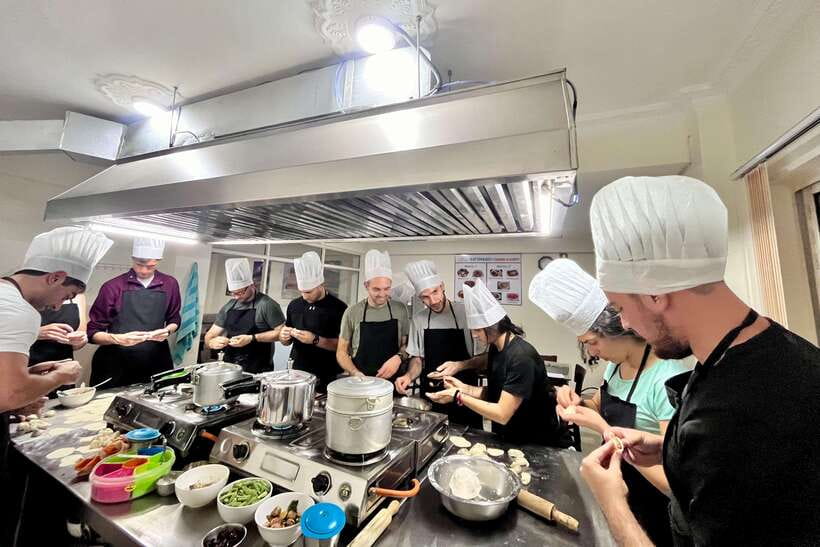
I’d book this if you want a Kathmandu activity that’s equal parts food and learning. It works especially well if:
- you’re a beginner but curious and want clear instructions
- you like hands-on cooking rather than sitting through a demonstration
- you want vegetarian or meat options
- you enjoy small group settings where you can actually talk and work
It also suits solo travelers who want friendly conversation. One participant mentioned being a bit shy with English but still having a great time, which suggests the class stays supportive even if your speaking confidence is still warming up.
If you have mobility needs related to stairs, you’ll want to think hard before booking. The experience is also noted as not suitable for wheelchair users and visually impaired people, so consider that a hard constraint.
Should You Book This Kathmandu Cooking Class?
If you’re choosing between “see Nepal” and “learn Nepal by cooking,” this one leans hard toward the second option. With a market stop, hands-on momo, and a meal you eat at the end, you get more than a one-off snack lesson. At $4, it’s also one of the rare deals where you feel like you’re paying for instruction plus food plus time, not just a meal.
Book it if you:
- want to leave Kathmandu with techniques you can repeat
- care about momo and dal bhat (and maybe one extra dish)
- enjoy learning from instructors like Nish and chefs like Bikram/Vikram in a small group
Skip it if:
- stairs are a dealbreaker for you
- you want a mostly passive cultural activity rather than real cooking work
FAQ
What dishes does this class focus on?
The class centers on momo and dal bhat, with options to choose additional Nepali dishes. Common choices include chicken or vegetarian momo, chicken curry with roti, chatamari, bara, thukpa, choila, and sweets like yomari and carrot pudding.
How long is the cooking class?
The experience is listed as 2 to 4 hours, and it typically runs around 3 hours total, including the market visit, cooking, and meal tasting.
Is there a market visit?
Yes. A market/shop tour is included so you can buy key ingredients for the class.
Can I choose vegetarian or meat options?
You can choose between vegetarian and meat options. If you have dietary restrictions, you should let the provider know in advance.
What language are the instructors?
The instructor is English.
Is pickup available from my hotel in Kathmandu?
Pickup is optional. If you select it, pickup and drop-off can be arranged from within Kathmandu, and you provide your hotel details when booking.
FAQ (optional add-on)
Is a recipe book included?
A recipe book is available as a PDF you can request after the class via WhatsApp. Physical books can be purchased for an additional cost.
What should I bring?
Bring a camera, and wear comfortable clothing for cooking (aprons and equipment are provided).