REVIEW · KATHMANDU
Private Day Tour in Kathmandu Valley Rim with Bhaktapur Sightseeing
Book on Viator →Operated by Himalayan Planet Adventures · Bookable on Viator
Four temples, one calm day.
This private 7–8 hour route around the Kathmandu Valley rim is interesting because it mixes UNESCO Bhaktapur with the hilltop calm of Changu Narayan, then steps you off the main tourist path into Panauti. I like that it is door-to-door from your place, not a long meet-up scramble. The other big win is the private guide, who can explain the temples in plain language while you walk instead of leaving you to guess.
One consideration: entry fees are not included (plan roughly $20 per person), and food and drinks aren’t included either. Also, pickup is only inside the Ring Road area (including Bouddha), so if you’re staying well outside that zone, you’ll want to confirm your hotel fits the pickup area.
In This Review
- Key things that make this tour worth your time
- Kathmandu Valley Rim, minus the crowd rush
- Price and value: what $110 really buys you
- Changu Narayan Temple: old roots, hilltop calm
- Bhaktapur Durbar Square: the day’s main walk-around
- Taumadhi Square, Pottery Square, and the street-level rhythm
- Nyatapola: a pagoda you can’t miss
- 55 Window Palace: stop for details, not just distance
- Dattatreya Temple and square: more spiritual texture
- Sanga’s Kailashnath Mahadev statue: huge scale, short attention span
- Panauti Museum and Indreshwar Mahadev: the quiet break that sticks
- Panauti Museum: a small time investment with big payoff
- Indreshwar Mahadev Temple: the main attraction in Panauti
- Your private guide: what makes the explanations actually useful
- What to expect from the day’s timing and pacing
- Tips that help you enjoy every stop
- Should you book this Kathmandu Valley rim tour?
- FAQ
- How long is the Kathmandu Valley rim day tour?
- What is included in the $110 per person price?
- Are entry tickets included?
- Do you offer pickup from my hotel?
- Where does the tour go and what is the main highlight in Panauti?
- What should I wear for the tour?
Key things that make this tour worth your time
- UNESCO Bhaktapur with a guide-led pace instead of a rushed self-walk
- Changu Narayan Temple: the oldest Hindu temple in the Kathmandu Valley area, set on a hill
- Panauti without the Kathmandu crowd pressure—a slower town stop with real religious life
- A private day that avoids logistics stress with round-trip hotel pickup and drop-off
- Short but meaningful temple-and-statue stops that add variety without turning into a marathon
Kathmandu Valley Rim, minus the crowd rush
If Kathmandu already feels like traffic, noise, and crowds, this is a smart way to get a break without leaving the region. The concept is simple: you start with major heritage sites, then shift toward quieter, less central neighborhoods and towns. You’ll still see the famous names, but the rhythm feels more human because you’re not moving with a big bus schedule.
I also like that it’s structured as a full day, not a quick “hit and run.” Most of the stops are timed well for a private group, so you get enough minutes to look closely at carvings and architecture, then ask questions before you’re whisked off to the next photo spot.
And yes, it helps that you’re not constantly figuring out transport. The tour includes private vehicle transport and pickup/drop-off inside the Ring Road area (including Bouddha), so you spend your energy on the sights, not on planning how to get from A to B.
You can also read our reviews of more private tours in Kathmandu
Price and value: what $110 really buys you
At $110 per person, you’re paying mostly for three things: private vehicle transport, a professional guide, and door-to-door transfers. That matters because Kathmandu Valley heritage sites are spread out, and the time lost to public transport or haggling for rides can eat up a whole morning.
What’s not included is important:
- Entry fees (listed as about $20 per person)
- Food and drinks
So in real terms, you’re looking at the $110 plus some extra for tickets and your own lunch/snacks. If you’re comparing options, don’t just compare the base price—compare what you get for that price: a guide who can explain what you’re seeing, and transport that keeps the day flowing.
There’s also mention of group discounts. If you’re a family, a couple of friends, or traveling with another small group, ask what discount applies. The pricing can often feel more attractive when you split the fixed costs of a private vehicle.
Changu Narayan Temple: old roots, hilltop calm
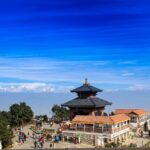
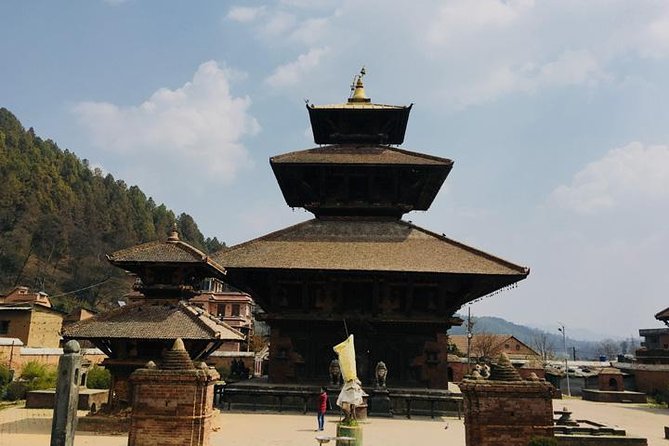
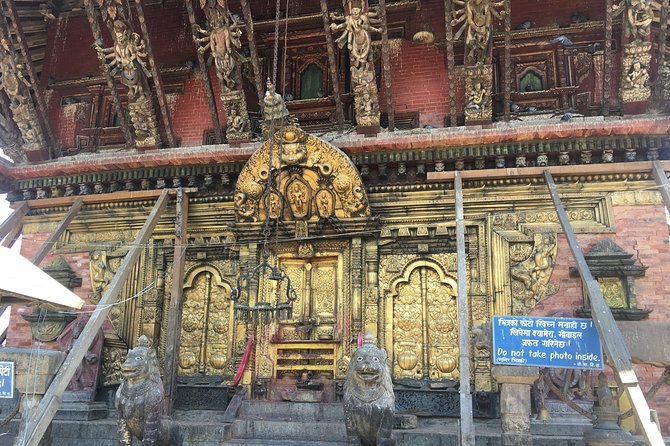
The day starts at Changu Narayan Temple, a UNESCO-listed site perched on a hilltop. This stop is short and focused—about 30 minutes—with an admission ticket not included. Even in a brief visit, the hilltop setting helps. You get a sense of why religious sites were placed where they could feel separate from daily bustle.
What I find useful here is that the guide can connect the temple to the larger Kathmandu Valley story. The tour framing highlights Changu Narayan as the oldest Hindu temple in the Kathmandu Valley. When your guide puts that into context, you tend to look beyond the architecture and notice details like symbolism, devotional layout, and how the site fits into the wider religious landscape of the valley.
Practical tip: plan for a little walking and looking around at temple sites. This is a guided cultural stop, not a drive-by. Wear smart casual clothes, and comfortable shoes help, especially if the ground is uneven.
Bhaktapur Durbar Square: the day’s main walk-around
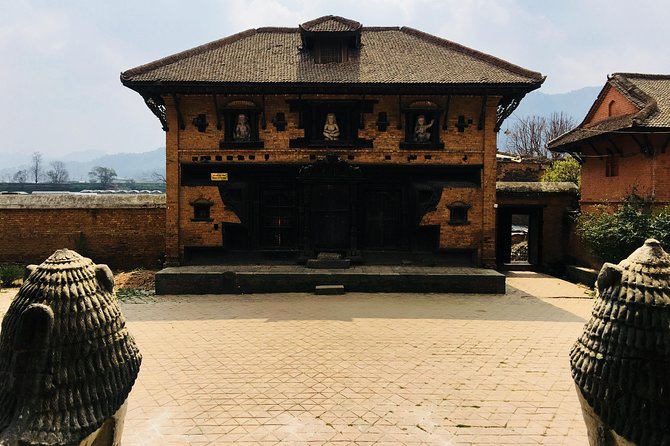
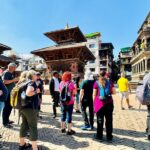
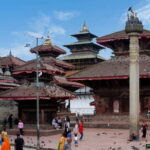
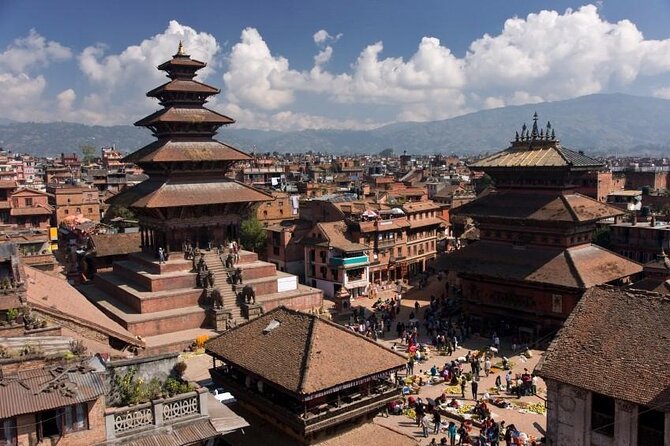
Bhaktapur Durbar Square is where the tour turns from “interesting” to “wow, I get it now.” This is described as the best-preserved of the Kathmandu Valley’s three royal cities and a UNESCO World Heritage Site. Your guided time here is about 1 hour, and then you keep seeing more parts of Bhaktapur with short stops afterward.
This is one of those places where a guide changes everything. Instead of you standing in front of carved wooden struts and pagoda roofs wondering what you’re looking at, you get explanations for the religious and cultural meaning behind the design. That makes the photos better, but it also makes your memory stick.
Taumadhi Square, Pottery Square, and the street-level rhythm
Right next to the main Durbar Square, you’ll pass through Taumadhi Square (about 10 minutes). It’s a brick-paved plaza with everyday life layered over heritage structures. Nearby is Pottery Square, again with a short guided visit (about 10 minutes). The point of these quick stops is to help you understand Bhaktapur not just as monuments, but as a craft and community space where traditional skills have long been practiced.

Nyatapola: a pagoda you can’t miss
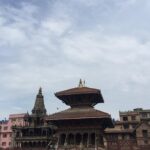
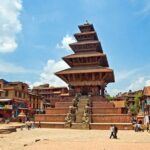
Nyatapola Temple is one of the iconic landmarks in Bhaktapur. You get about 10 minutes here, plus another brief segment focused on the Nyatapola area inside the Durbar Square. The tour description emphasizes the classic five-story pagoda look—tall, dramatic, and designed to hold attention.
Even if you’ve seen lots of temples elsewhere in Nepal, this is worth the stop because it’s a key visual reference point in Bhaktapur. When your guide explains the temple area layout and how the courtyards relate to surrounding Newari houses, the architecture makes more sense than a flat photo ever would.
55 Window Palace: stop for details, not just distance
The 55 Window Palace is given about 10 minutes. The name alone grabs you, but the better use of time is for close observation—how the facade reads, how the windows and structure fit the larger square. With a guide, you’ll usually pick up the idea of how Newari craftsmanship expressed status and artistry through building design.
Dattatreya Temple and square: more spiritual texture
Then you’ll move to Dattatreya Square and the Dattatreya Temple segment (about 15 minutes). This part is framed as the historic heart of Bhaktapur, with a three-story pagoda temple. If Bhaktapur Durbar Square feels like a giant open-air museum, this stop adds something more devotional and human, because temples are still places where people have relationships with faith.
Sanga’s Kailashnath Mahadev statue: huge scale, short attention span
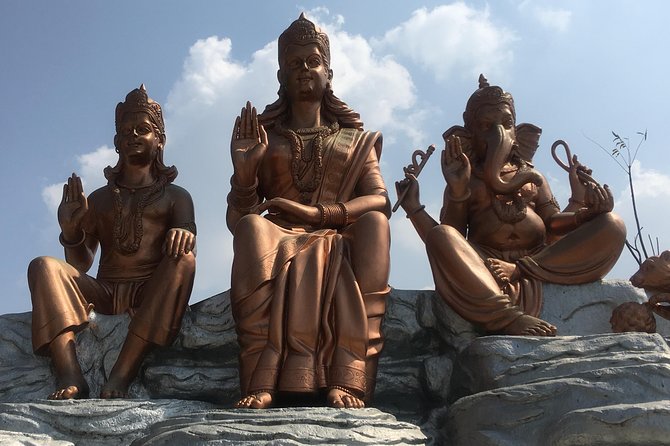
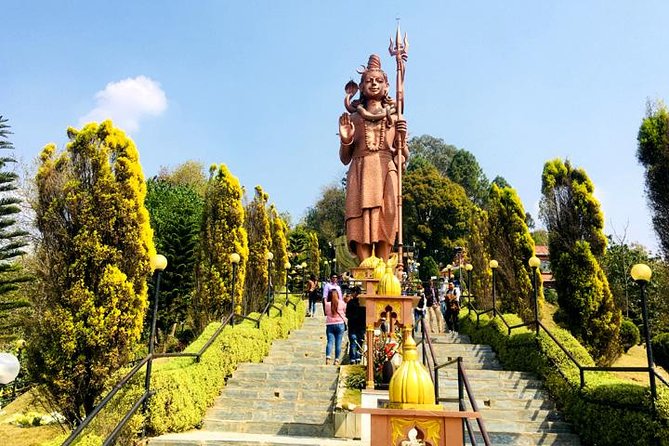
After Bhaktapur, the route goes to the Kailashnath Mahadev Statue in Sanga. It’s a big one—about 144 feet (44 meters)—and the tour description calls it one of the world’s tallest statues of Lord Shiva. Your guided visit is quick (about 5 minutes), and then there’s another segment that includes a longer look at the statue and surrounding garden (about 30 minutes), with admission ticket noted as not included.
This is a good example of why a private day tour works: you get variety. You go from crowded-looking heritage squares (even if this route tries to avoid them) to a large open-feeling statue garden where you can step back and take in scale.
A practical note: because the statue segment includes both a brief stop and a longer garden time, you’ll want to keep your energy for standing and walking around outdoors.
Panauti Museum and Indreshwar Mahadev: the quiet break that sticks
Then you shift to Panauti, described as a pretty, less-visited town beyond the Kathmandu Valley. The stops here give the day a different texture from Bhaktapur’s dense royal core.
Panauti Museum: a small time investment with big payoff
You’ll visit the Panauti Museum for about 15 minutes, with admission ticket not included. The idea is to give you background on Panauti’s culture through a focused museum visit rather than only seeing buildings from the outside. If you like context, this short stop helps you “read” the town as more than a scenic pause.
Indreshwar Mahadev Temple: the main attraction in Panauti
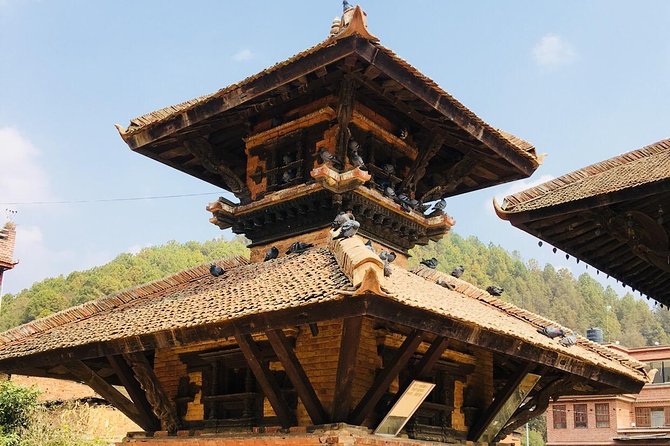
The biggest Panauti stop is Indreshwar Mahadev Temple, with about 1 hour for the guided visit. This temple is described as one of the oldest and most significant pagoda temples in Nepal. You’ll likely notice the architectural style immediately, but again, the best part is what your guide can explain: why it matters, how it fits into the valley’s religious life, and what to look for as you walk through the area.
For me, this last temple stop is where the day feels complete. Bhaktapur is about heritage architecture. Changu Narayan gives you old foundations. Indreshwar gives you living tradition—at a slower pace, in a place that doesn’t feel like a checklist.
Your private guide: what makes the explanations actually useful
This kind of tour lives or dies by the guide. The experience description promises personalized insights, and the tour’s general feedback highlights guides like Pankaj and Rabina as friendly, informative, and genuinely responsive to questions.
Here’s the practical effect for you: temple architecture can look similar across South Asia unless someone helps you interpret it. When a guide explains Hindu religion and culture in clear terms while you’re standing right there, you can connect motifs, temple layout, and the reason certain buildings are revered. You also don’t have to hold your questions until you get back to your hotel.
I also like that the pacing is described as well-managed and that communications feel smooth and effortless. On a private day, that kind of confidence matters because you’re trusting the guide and driver to keep timing reasonable across multiple stops.
What to expect from the day’s timing and pacing
The total time is listed as approximately 7 to 8 hours. That’s a full day, but not a punishing one if you dress for comfort and treat it like a guided walk-through rather than a “grab every photo from every angle” challenge.
Most stops are short:
- About 5–30 minutes at statue and hilltop temple areas
- About 10–15 minutes in Bhaktapur’s key squares and temples
- About 1 hour at Bhaktapur Durbar Square
- About 1 hour at Indreshwar Mahadev Temple in Panauti
This structure helps you avoid the classic problem of heritage tours: the feeling that you’ve only seen half of what’s in front of you. Short segments keep you moving, but the longer temple visits (Durbar Square and Indreshwar Mahadev) give you time to slow down.
Tips that help you enjoy every stop
- Wear smart casual clothes, as requested, and bring comfortable shoes. Temples are for walking and looking.
- Plan for extra costs: entry fees are not included (around $20 per person), and food and drinks are not included.
- If you want more from the day, come with questions. A big part of the value is learning how the sites connect to Hindu belief and culture.
- If you’re sensitive to long sit/stand times, pace yourself during outdoor segments like the statue and garden areas.
Should you book this Kathmandu Valley rim tour?
I think this is a strong choice if you want a guided day that mixes major UNESCO heritage with less-frequented town atmosphere, without turning into a logistics headache. The door-to-door pickup within the Ring Road area is a real convenience, and the private guide format is what turns temples from “pretty buildings” into “I understand what I’m seeing.”
It’s less ideal if you’re hoping for a low-cost day where everything is included, because entry tickets and meals are on you. It may also be a mismatch if your hotel is outside the pickup zone, since the included pickup is limited to the Ring Road area (including Bouddha).
If you’re the type who likes culture with context, not just snapshots, book it and use the guide like your on-the-spot explanation machine.
FAQ
How long is the Kathmandu Valley rim day tour?
It’s approximately 7 to 8 hours.
What is included in the $110 per person price?
Hotel pickup and drop-off (inside Ring road including Bouddha part), private vehicle transport, and a professional tour guide.
Are entry tickets included?
No. Entry fees are not included (listed as approximately USD 20 per person).
Do you offer pickup from my hotel?
Yes, pickup and drop-off are included inside the Ring Road area, including Bouddha.
Where does the tour go and what is the main highlight in Panauti?
You’ll visit Changu Narayan Temple, multiple stops in Bhaktapur including Bhaktapur Durbar Square and Nyatapola, then go to Panauti for the Panauti Museum and the main stop at Indreshwar Mahadev Temple.
What should I wear for the tour?
The dress code is smart casual.