REVIEW · KATHMANDU
Private Kathmandu Sightseeing Tour | UNESCO World Heritage sites
Book on Viator →Operated by Breakfree Adventures Pvt. Ltd. · Bookable on Viator
Kathmandu can feel like a fun maze, but this tour gives it a route. You’ll hop between major UNESCO sites that mix Hindu temples, Buddhist stupas, and royal squares, with a guide to translate the meaning behind the stone.
I really like the hotel pickup and air-conditioned private vehicle. It saves time and energy, especially when Kathmandu traffic turns your afternoon into a slow-moving puzzle. I also like that the tour leans on an English-speaking guide who explains what you’re seeing before you wander, including the rituals and day-to-day religion you’ll notice at places like Pashupatinath and Boudhanath.
One consideration: entry fees and temple-access rules aren’t included, and for some Hindu inner premises there are limits on who can enter. Plan on extra cash at the gates and be ready to admire certain areas from the outer viewpoints if you don’t meet the temple entry criteria.
In This Review
- Key highlights you’ll feel on the day
- A private day that actually works in Kathmandu traffic
- Your UNESCO route: how the stops fit together
- Swayambhunath Monkey Temple: views and temple energy, fast
- Boudhanath Stupa: slow down and let it explain itself
- Pashupatinath Temple: where rules matter and context makes it respectful
- Patan Durbar Square: stone craftsmanship and a calmer pace
- Patan Museum and Sundari Chowk: a quick hit that clarifies a lot
- Changu Narayan: a focused UNESCO stop that rewards patience
- Bhaktapur Durbar Square: where you can finally breathe
- Kathmandu Durbar Square: closing the loop on old power centers
- Lunch and pacing: how not to lose the day
- Price and value: what the $17 covers (and what it doesn’t)
- Who this tour suits best
- Should you book this UNESCO Kathmandu tour?
- FAQ
- How long is the Kathmandu sightseeing tour?
- What UNESCO sites are included?
- Is hotel pickup and drop-off included?
- Are monument entry fees included?
- What is included in the tour price besides transportation?
- Are meals included?
- Can I enter the inner premises of Hindu temples?
- Is there free cancellation?
Key highlights you’ll feel on the day
- Hotel pickup and drop-off reduces the biggest Kathmandu headache: finding the right place at the right time
- 2, 4, or 7 UNESCO options let you match your stamina and schedule
- Hindu and Buddhist sites in one loop so the city’s spiritual logic clicks faster
- Flexible pacing with time to see and then wander instead of sprinting temple to temple
- A private vehicle through Kathmandu traffic so you’re not stuck waiting on shared tours
- Clear guidance on what you can enter and where to stand at major temples
A private day that actually works in Kathmandu traffic
If you’re doing Kathmandu for the first time, your biggest enemy isn’t distance. It’s the mental load of figuring out transport, meeting points, and which streets connect to which courtyard. This tour fixes that with door-to-door hotel pickup and drop-off in Kathmandu city centers and a private air-conditioned car.
The other smart part is how the day is structured. You’re not just shown pretty buildings. A good guide frames each stop so you understand why it matters to locals, not just what it looks like in photos. In the best cases, guides such as Dipesh, Bidhya, Shankar, Mukesh, Razz, or Prasant are described as warm, communicative, and willing to adjust the pace to what your group wants to absorb.
The day can run anywhere from 4 to 10 hours, depending on which UNESCO option you choose. That range matters. A shorter option can feel more focused. A longer option can feel like a full valley circuit that’s exhausting in the best way.
You can also read our reviews of more private tours in Kathmandu
Your UNESCO route: how the stops fit together
This is a UNESCO-focused day, but it’s also a story about Kathmandu Valley: sacred sites, old city power centers, and the way different faiths share the same streets.
The itinerary you’ll follow depends on whether you select 2, 4, or 7 UNESCO World Heritage Sites, but the commonly included anchor stops are:
- Swayambhunath (Monkey Temple)
- Boudhanath Stupa
- Pashupatinath Temple
- Patan Durbar Square and Patan Museum
- Changu Narayan Temple
- Bhaktapur Durbar Square
- Kathmandu Durbar Square
There are also practical “support” moments on the route, like brief city gates and the Thamel area, plus driving time through the valley (which you can’t fully escape, but you can experience with less hassle when you’re in a private car).
Swayambhunath Monkey Temple: views and temple energy, fast
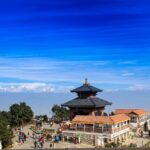
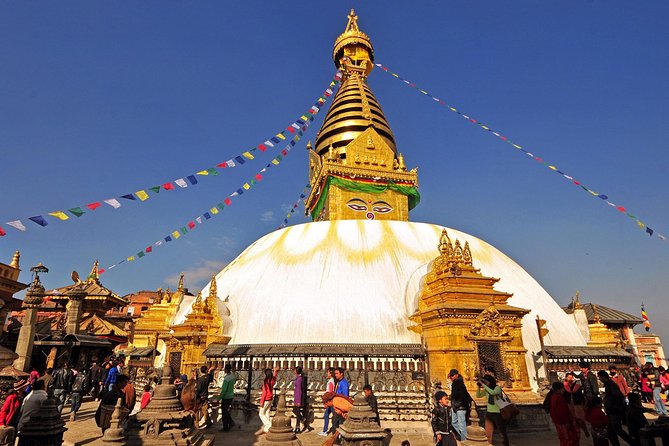
Swayambhunath is the kind of place that makes you grin before you even reach the entrance. It’s famous for monkeys, for its stupa complex, and for the way it sits above Kathmandu like a watchful eye.
On this tour, you get about 30 minutes at the Monkey Temple stop (with admission fees not included). That short window is the biggest trade-off of starting here: it’s enough to orient yourself and see the main spiritual focus, but it won’t feel like a slow, no-rush stroll.
What you’ll want to do in that time:
- Walk with purpose toward the main stupa area so you don’t burn minutes wandering.
- Take a moment for the city views, because that context helps everything else later.
- Watch how people behave around the stupa. Even if you don’t know the rituals, the rhythm gives you clues about local faith.
Practical note: if you’re sensitive to crowds or have trouble with steps, tell your guide early. Several guide styles on this route emphasize staying at a steady pace and keeping you comfortable.
Boudhanath Stupa: slow down and let it explain itself
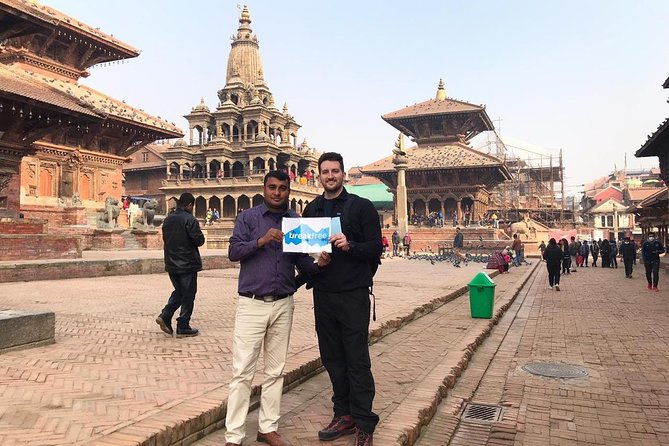
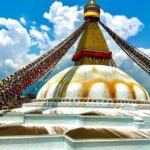
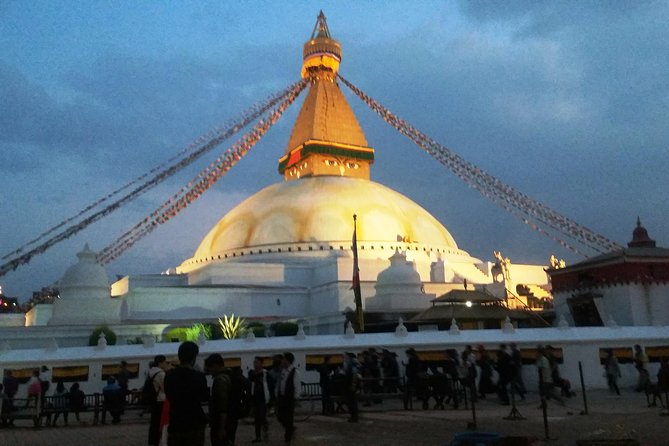
Boudhanath Stupa is one of the best places in Kathmandu to understand Buddhist practice in real time. The scale is striking, and the atmosphere is different from Hindu temple complexes. It’s more about repetition and devotion: people circling, pausing, and praying.
You’ll typically have around 1 hour here, and the entrance fee is not included. An hour is a good balance. Long enough to circle a bit and notice prayer patterns, but short enough that you don’t feel trapped when the day moves on.
Here’s what I think you’ll enjoy most:
- The way the stupa dominates the space, so you stop thinking in streets and start thinking in a sacred center.
- Your guide’s explanations of how belief is practiced, not just what the site is called.
- The contrast with later stops at Hindu temples, where access rules and ritual behavior can be different.
Pashupatinath Temple: where rules matter and context makes it respectful
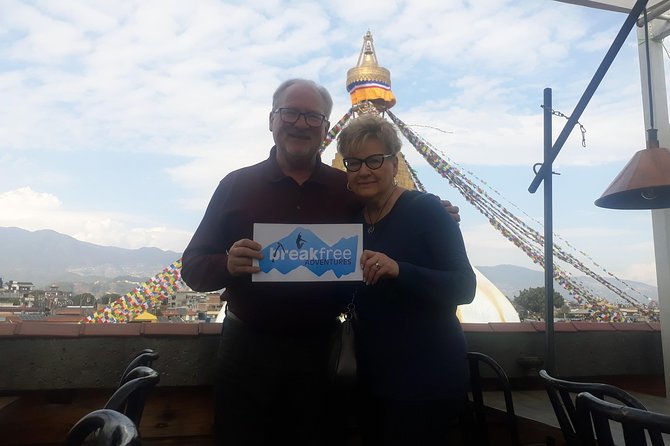
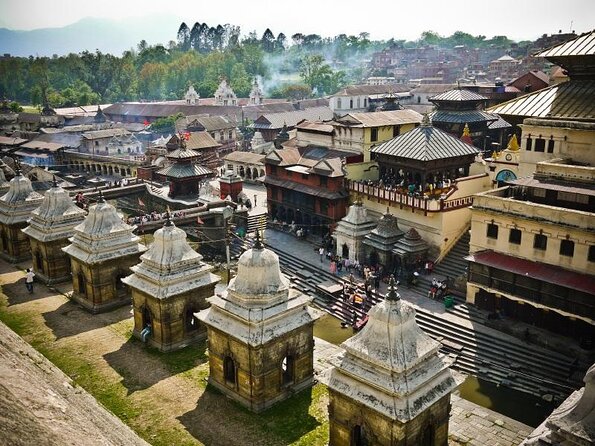
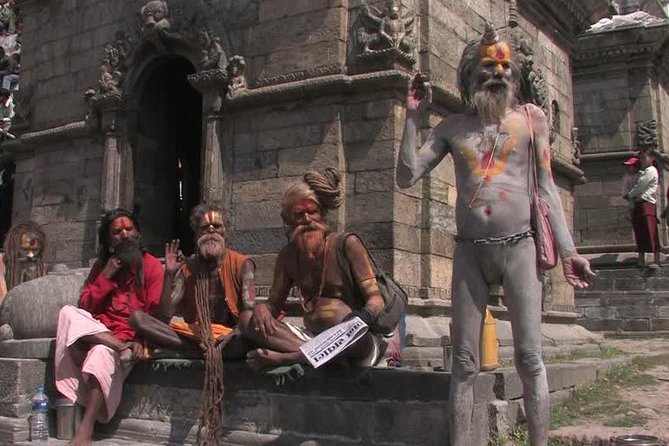
Pashupatinath is one of Nepal’s most important Hindu temple sites. It’s also the stop where “how you visit” matters as much as “what you visit.”
You’ll spend about 1 hour at Pashupatinath, and the tour data even lists it twice. The practical point for you is simple: this is a major spiritual place with active religious life, and you’ll want to be attentive and respectful.
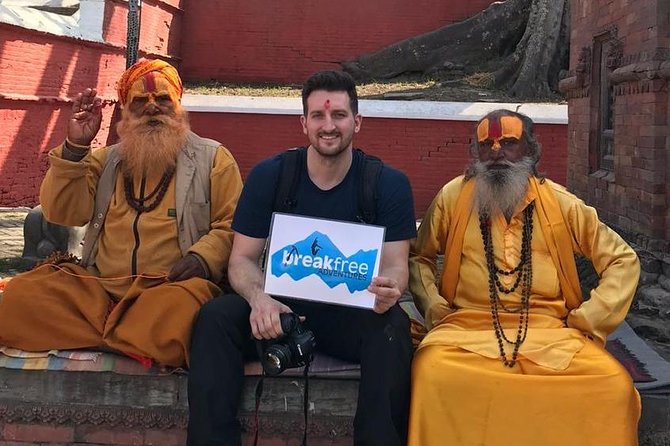
Big consideration: only Nepali and Indian nationals of the Hindu faith are permitted to enter the inner premises of Hindu temples during the tour. If you’re visiting from elsewhere or you aren’t Hindu, you should plan on observing from the permitted areas. Your guide can help you understand where you’re allowed to stand and what you’re seeing.
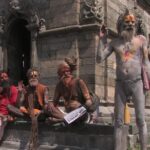
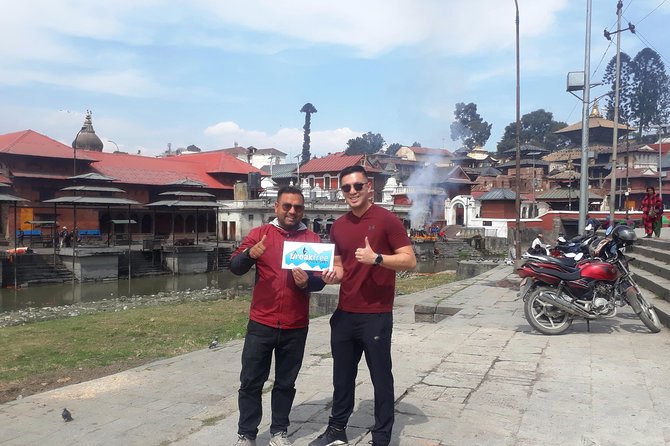
Also, Pashupatinath is associated with Hindu cremation rites on the riverfront. You might catch a ceremony if timing lines up. If that happens, your guide can help you watch respectfully and understand the meaning of what’s going on, rather than just looking at it like a spectacle.
This stop is where a strong guide earns their fee. The better ones give you the why behind what you’re witnessing, so you leave feeling informed instead of just overwhelmed.
You can also read our reviews of more historical tours in Kathmandu


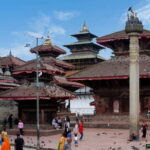
Patan Durbar Square: stone craftsmanship and a calmer pace
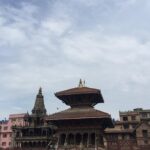
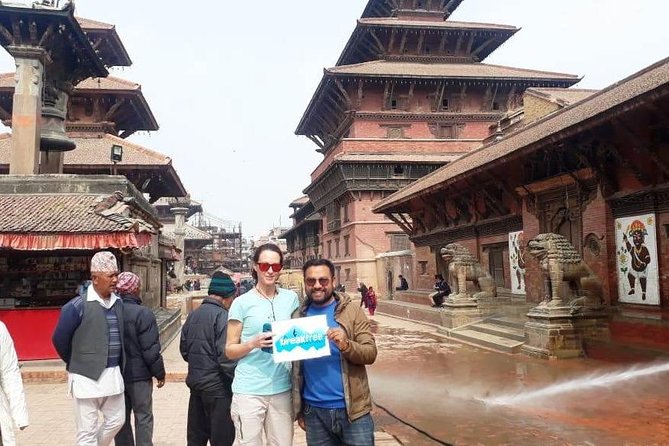
Patan (Lalitpur) feels like Kathmandu’s sibling with a different personality. The city’s historic core is full of carved stone details, courtyard textures, and the kind of architecture that makes you want to look up.
You’ll get about 1 hour at Patan Durbar Square, with admission not included. In this time, you’re not just collecting sights. You’re connecting the dots between old royal power centers and how religion played out in civic space.
One reason this stop works well on a private tour: you can pause where your group is actually interested. If your eyes want carvings, you can take a little extra time. If your legs need a break, your guide can regroup the group and keep moving.
Patan Museum and Sundari Chowk: a quick hit that clarifies a lot
After the square, you’ll likely step into Patan Museum for about 30 minutes. The museum is described as being made up of old palaces, courtyards, and temples, including Sundari Chowk.
This is one of those add-ons that makes your outdoor walking feel less random. If you’re the type who likes to know what you’re looking at, the museum stop helps. It gives you names, context, and the sense that the architecture and artifacts aren’t just decorations.
The downside is time. Thirty minutes is short, so you’ll want to pick what you want most: sculptures, everyday history, or how the site relates back to the square you just visited. Your guide can help you choose if you ask.
Changu Narayan: a focused UNESCO stop that rewards patience
Changu Narayan Temple is included as another UNESCO highlight, typically with about 30 minutes on the schedule (admission not included). This is one of those places where the value is in details—design, craftsmanship, and the feel of a temple that has been cared for across generations.
Since the time is limited, don’t try to do everything. Instead, aim for:
- One or two slower walks where you actually look at carvings.
- A quick moment to absorb the temple layout and setting.
- A photo or two, then move so you don’t lose your mental clarity.
If you like sites that feel more intimate and less like a loud city performance, Changu Narayan is a nice change of pace.
Bhaktapur Durbar Square: where you can finally breathe
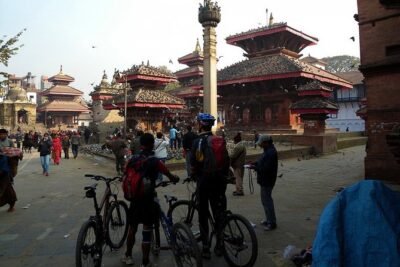
Bhaktapur is often where people realize the valley isn’t just a set of landmarks. It’s a lived-in old city. Bhaktapur Durbar Square is included for about 2 hours, which is generous compared to many other stops.
Two hours matters. It lets you shift from seeing to understanding. You can step aside, linger near important facades, and walk at a slower speed without feeling guilty about the schedule.
This is also a good place to notice how old squares still function as social space. Even if you can’t fully explain every detail, your senses get the message: this isn’t just a museum city. It’s still an active urban culture.
Kathmandu Durbar Square: closing the loop on old power centers
Finally, you’ll reach Kathmandu Durbar Square for about 30 minutes (admission not included). Compared to Bhaktapur, the time here is shorter. That’s not automatically bad; it just means you should treat this as a capstone stop rather than a deep dive.
Your goal in the last thirty minutes should be clarity:
- Look for the main historic focus so you know what you’re standing in front of.
- Use your guide’s last explanations to connect the dots from earlier sites.
- Save energy for the drive back, since the day’s momentum can hit you once you’re done.
If you’ve had a long day, this is the moment to take a breath and accept that you’ll be learning in layers, not all at once.
Lunch and pacing: how not to lose the day
You’ll be able to take a lunch break during the tour, and the guide can recommend places. That’s useful because Kathmandu restaurant choices can be confusing if you don’t know the neighborhoods.
Pacing is a big deal here. Many people book this tour to get a first big overview without feeling rushed. A recurring theme from guide styles described on this route is balance: guided walking plus time to look on your own.
Here’s how to keep it working for you:
- Tell your guide your priorities early: photos, rituals, architecture, or just learning the basics fast.
- If you want extra time in one place, ask before you lose momentum. The guide can usually adjust within reason.
- Keep your expectations realistic. With 4-site and 7-site options, there can be a lot of driving time, and that’s part of seeing multiple UNESCO areas in a single day.
Price and value: what the $17 covers (and what it doesn’t)
The listed price is $17.00 per person and includes:
- Hotel pickup and drop-off
- Professional English-speaking tour guide
- Private transportation with air-conditioned vehicle
- All taxes
So what you’re paying for is not just tickets. You’re paying for logistics solved: car, guide, and the ability to switch sites without doing navigation work yourself.
What’s not included is monument entry fees, which depend on the number of UNESCO sites:
- NPR 1400 for 2 UNESCO sites
- NPR 2600 for 4 UNESCO sites
- For 7 sites, it’s listed as NPR 6000 in one place, and NPR 5800 in another. Confirm what your final voucher shows so there’s no surprise.
If you’re comparing value, this is how I’d think about it:
- If you’d otherwise hire a taxi + pay for entry tickets + try to coordinate a guide on the fly, the base tour price can look like a bargain.
- If you’re traveling as a very price-sensitive group and only want one or two sites, the separate entry fees can make a smaller option feel smarter.
Also keep in mind: entrance fees are payable in Nepali rupees, and SAARC nationalities get lower fees.
Who this tour suits best
This is the right fit if:
- You want an orientation day in Kathmandu Valley without map stress.
- You’re short on time but still want major UNESCO landmarks across the Hindu-Buddhist mix.
- You want a guide who explains rituals, meaning, and local culture so the sites connect in your mind.
It might be less ideal if:
- You want a super slow, fully self-guided day with zero structure.
- You’re expecting long museum-style stays everywhere.
- You’re counting on entering the inner premises of Hindu temples without restrictions. Based on the rules provided, access depends on nationality and faith.
Should you book this UNESCO Kathmandu tour?
Book it if you want a smart first-day plan: hotel pickup, English guidance, and a route that hits the big UNESCO names without you juggling logistics. I especially like it for first-timers because the day is paced to help the city click—Swayambhunath to Boudhanath to Pashupatinath, then out to Patan and the historic squares.
Skip it (or choose a shorter UNESCO option) if you hate driving time or you know you’ll want deep, long stays at just one site. And if temple entry access is important to you, read the rule on Hindu inner premises carefully before you set expectations.
If you do book, do one simple thing: tell your guide what you want most—rituals, architecture, photos, or quiet time. On this route, that kind of direction is what turns a checklist day into a memorable Kathmandu day.
FAQ
How long is the Kathmandu sightseeing tour?
The tour runs from about 4 to 10 hours, depending on whether you select 2, 4, or 7 UNESCO sites.
What UNESCO sites are included?
The route includes Swayambhunath (Monkey Temple), Boudhanath Stupa, Pashupatinath Temple, Patan Durbar Square, Patan Museum, Changu Narayan Temple, Bhaktapur Durbar Square, and Kathmandu Durbar Square. Which ones you visit depends on the selected 2/4/7 UNESCO option.
Is hotel pickup and drop-off included?
Yes. Hotel pickup and drop-off are included by a private vehicle for hotels in Kathmandu city centers. Pickup/drop-off outside those areas may cost extra.
Are monument entry fees included?
No. Monument entry fees are not included. The fees are listed as NPR 1400 for 2 UNESCO sites, NPR 2600 for 4 UNESCO sites, and for the 7-site option it is listed as NPR 6000 (and also NPR 5800 in another section of the provided details).
What is included in the tour price besides transportation?
The price includes a professional English speaking tour guide, private air-conditioned transportation, hotel transfers, and all taxes.
Are meals included?
No. Meals and drinks are not included, but you can take a lunch break during the tour and ask your guide for restaurant recommendations.
Can I enter the inner premises of Hindu temples?
Inner premises access is limited to Nepali and Indian nationals of the Hindu faith during the tour. Others may be limited to permitted viewpoints.
Is there free cancellation?
Yes, you can cancel for a full refund up to 24 hours before the experience start time.