REVIEW · KATHMANDU
Pokhara: 5-Day Annapurna Base Camp (ABC) Trek
Book on GetYourGuide →Operated by MTA Trekking Pvt. Ltd. · Bookable on GetYourGuide
Most people chase Annapurna for the photo. You’ll remember the climb.
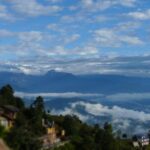
This 5-day Annapurna Base Camp (ABC) trek starts in lakeside Pokhara and builds day by day toward 4,130 meters—with a real mix of rice terraces, forest trails, and mountain villages. You’ll also pass through Jhinu for natural hot springs and (on the way up) make a detour to Machhapuchhre Base Camp for Fishtail Peak views.
I love that the trip is structured but not rushed: you hike about 4 to 6 hours on most days, then you sleep in tea houses with meals handled. I also like the people-focus—Gurung village life shows up along the way, and your English guide helps you understand what you’re seeing instead of just walking through it.
The main consideration is altitude. ABC is high, and while severe altitude sickness is said to be rare, you still need to respect the climb and take it slow if you feel off. (Also, leeches can be a factor on lower trails, especially in monsoon months.)
In This Review
- Key moments worth planning around
- Pokhara to Lower Sinuwa: the trek’s first wow factor (and the jeep ride)
- Deurali at 3,200m: where good pacing becomes the whole game
- Annapurna Base Camp via Machhapuchhre Base Camp: the big finale you remember
- Base Camp to Bamboo: you hit the altitude high, then deal with gravity
- Bamboo to Pokhara via Jhinu: hot springs as the victory lap
- Tea house stays and meals: what included comfort looks like
- Guides and permits: the quiet strengths that protect your time
- Fitness and altitude: what you should realistically check before you go
- Weather and leeches: plan smart for June through August
- Price and value: what $136 really gets you, and what to budget
- Who this ABC trek is best for
- Should you book this Pokhara to ABC trek?
- FAQ
- How long is the Annapurna Base Camp trek from Pokhara?
- How high do you go?
- What kind of accommodation is included?
- Are meals included?
- What permits are included?
- How do you get from Pokhara to the trailhead and back?
- Do I need a guide?
- Is luggage stored for me in Pokhara?
- What should I bring for the trek?
- What’s not included in the price?
Key moments worth planning around
- Jhinu hot springs at the start and end: a simple way to recover your legs after hiking days.
- Deurali at 3,200m: a good checkpoint day where “pace” matters more than speed.
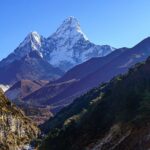
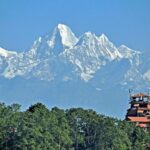
- Machhapuchhre Base Camp detour: Fishtail Peak views without needing a huge extra time commitment.
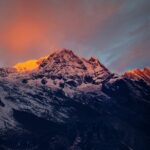
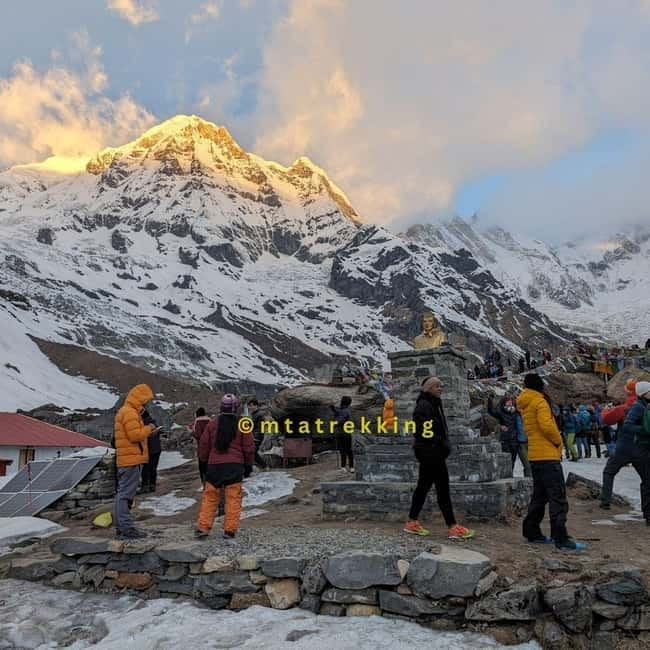
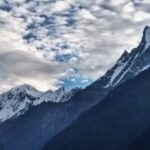
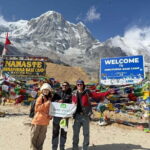
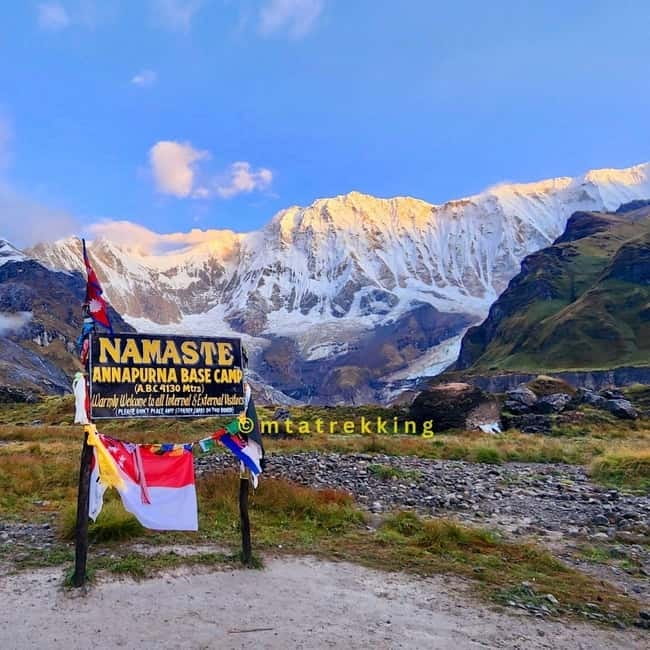
- Annapurna Base Camp at 4,130m: the payoff sits right in front of the Annapurna massif, with sunrise as a standout memory.
- Descent to Bamboo after Base Camp: the day that can feel harder than the numbers suggest.
- Guide-led adjustments: past departures have included guides who actively help prevent overexertion while keeping things informative.
Pokhara to Lower Sinuwa: the trek’s first wow factor (and the jeep ride)
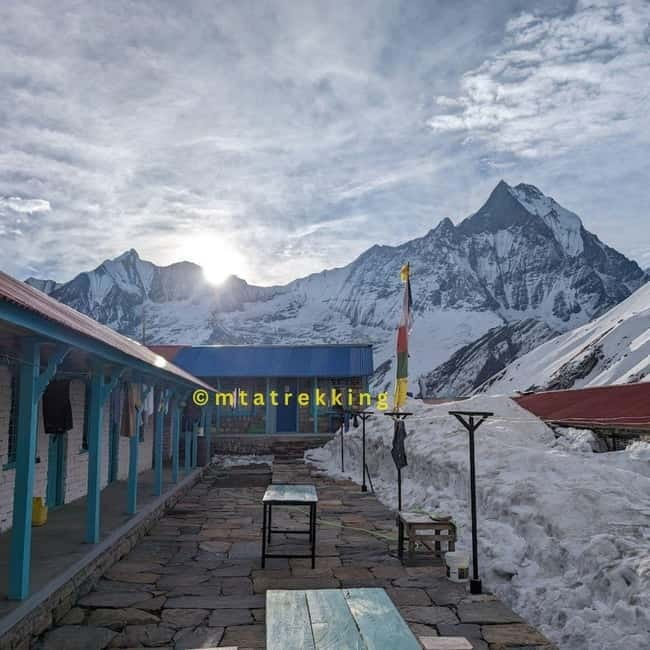
You start in lakeside Pokhara, then you’ll transfer by jeep/SUV for about 3 hours to the trekking start area (Pokhara to Siwai, the last road). From there, the hiking begins with an easy-ish ramp up—about 5 hours to Lower Sinuwa at 2,300 meters.
What makes this first day feel good is the rhythm: movement plus quick rewards. You pass through Jhinu, a village known for its natural hot springs, so you get that “we’re in Nepal mountain country now” feeling early. Even if you don’t soak on Day 1, the village is a strong mental marker: the trek isn’t only about altitude. It’s also about how people live around these trails.
The Lower Sinuwa area works well as your first night because it’s high enough to start acclimating, but not so high that you’re immediately fighting your breath. You’re still learning the basics: how your legs feel after a sustained hike, and what pace keeps you steady.
You can also read our reviews of more hiking tours in Kathmandu
Deurali at 3,200m: where good pacing becomes the whole game
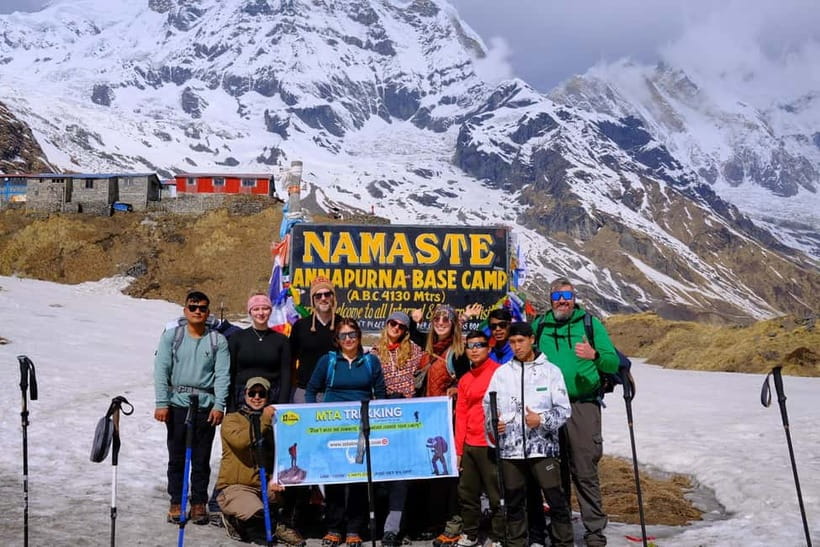
Day 2 runs roughly 6 hours as you climb toward Deurali (3,200 meters). This is the day where the trek stops feeling like a walk in the woods and starts feeling like a real mountain climb.
Why this matters: ABC success isn’t about pushing hard. It’s about staying smooth. Deurali is a helpful “in-between” stop because you’re high enough to feel the thin air, but still close enough to make adjustments. If you’re someone who goes out fast and pays for it later, Day 2 is where you’ll learn to slow down.
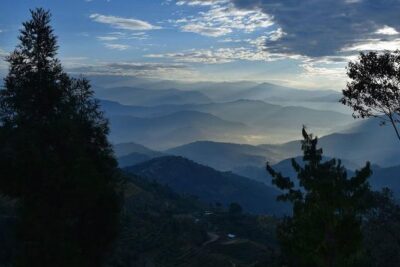
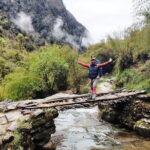
You’ll also see the “Nepal mix” show up across the climb—paths that shift from terraced fields to denser forest areas as altitude changes. That variety is practical too. When trails look different, you naturally vary your effort and posture, which can make the day less punishing.
Annapurna Base Camp via Machhapuchhre Base Camp: the big finale you remember
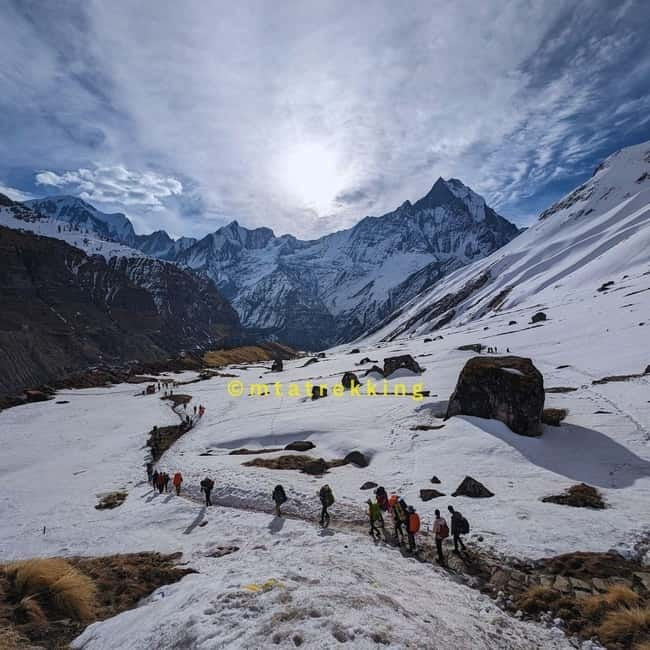
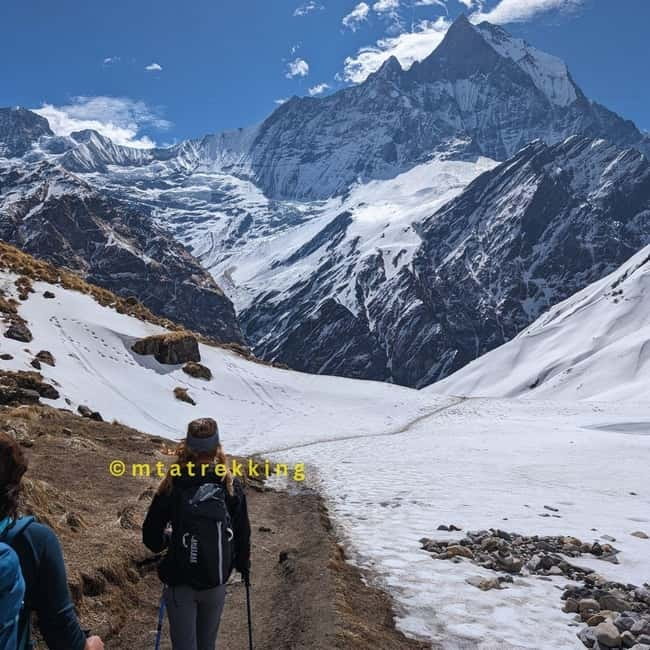
On Day 3, the time on paper looks manageable—around 4 hours—but the goal is massive: reach Annapurna Base Camp at 4,130 meters. The trek is the point, yet the detour is a major bonus: you go via Machhapuchhre Base Camp for views of the iconic Fishtail Peak.
Here’s what you should expect: the closer you get to Base Camp, the more the view becomes the work. You’ll spend time looking up at the peaks and scanning the massif while your body stays busy with every step. When you finally arrive, it feels like the whole Annapurna region is surrounding you rather than just being “in the distance.”
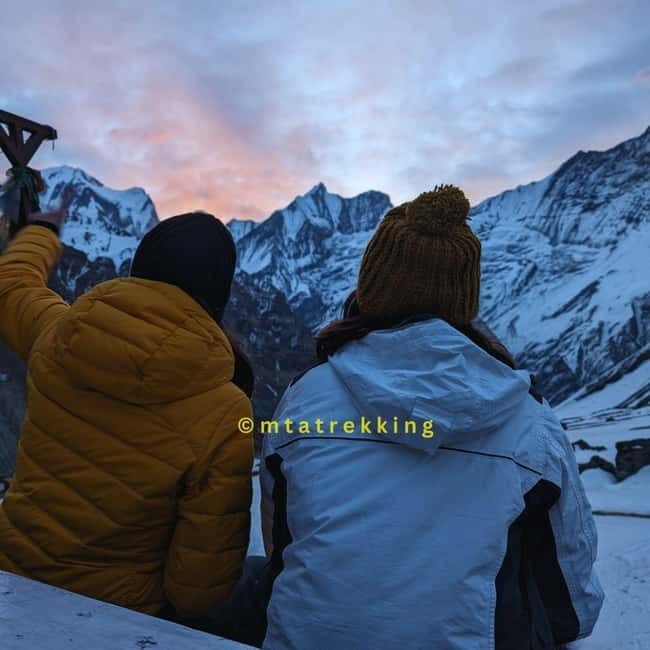
One of the most praised moments from past trips is sunrise at Base Camp, described as an unforgettable experience in front of the south face of Annapurna. Even if sunrise isn’t your thing, treat Base Camp as a place to slow down. Hang out long enough to catch different light on the peaks, not just a quick group photo and done.
Base Camp to Bamboo: you hit the altitude high, then deal with gravity
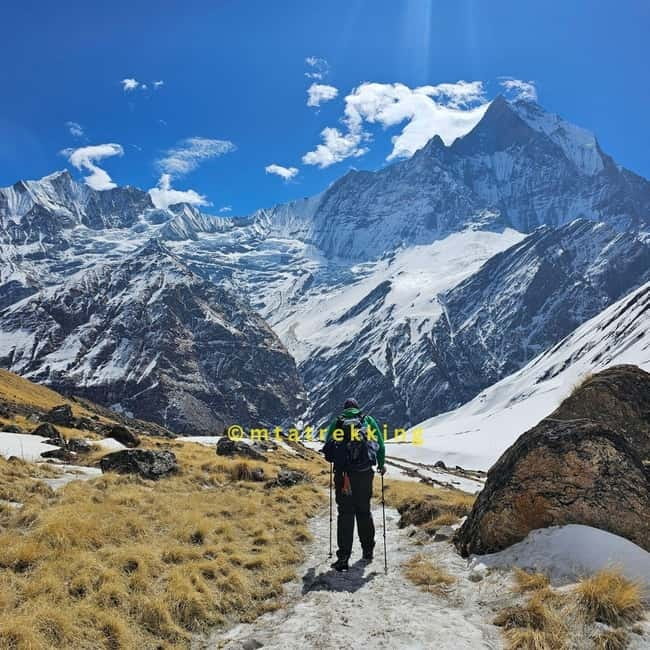
Day 4 starts with exploring ABC from the inside of the action—photo stops, viewpoints, and that “yes, I’m really here” feeling. Then you shift gears and descend to Bamboo (2,400 meters).
The big trick with this day is psychology. Descents can feel easier because your elevation drops. But the legs still take a beating: more strain on knees and thighs, more careful foot placement on uneven ground, and often a longer day than you expect. If you’ve ever finished a hike and thought, my arms feel fine but my body hates me anyway—that’s this day.
The descent matters for one reason: it helps you recover physically after being at the highest point. Bamboo is lower, so your body gets a bit of breathing room before the final day. And emotionally, it’s a good transition. After Day 3’s peak moment, Day 4 gives you a controlled “we’re coming back down” arc.
Bamboo to Pokhara via Jhinu: hot springs as the victory lap
Day 5 is the return—about 6 hours of trekking back toward Jhinu Danda and then an optional hot-spring unwind. The idea is simple: you’ve climbed for days; now you let the mountain send you back with a recovery tool that doesn’t require a pharmacy or a massage therapist.
After Jhinu, you’ll drive about 3 hours back to lakeside Pokhara, which is the best kind of ending: warm food, a shower you don’t have to earn with hiking, and a view of the lake where your eyes can rest.
If you choose to soak, keep expectations realistic. This is natural hot spring water—not a spa pool with perfect temperature control. Still, it’s one of those “why isn’t every trek like this” details that makes the end feel earned instead of abrupt.
You can also read our reviews of more tours and experiences in Kathmandu
Tea house stays and meals: what included comfort looks like
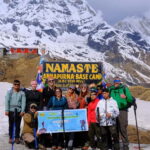
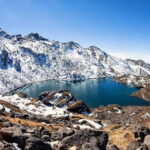
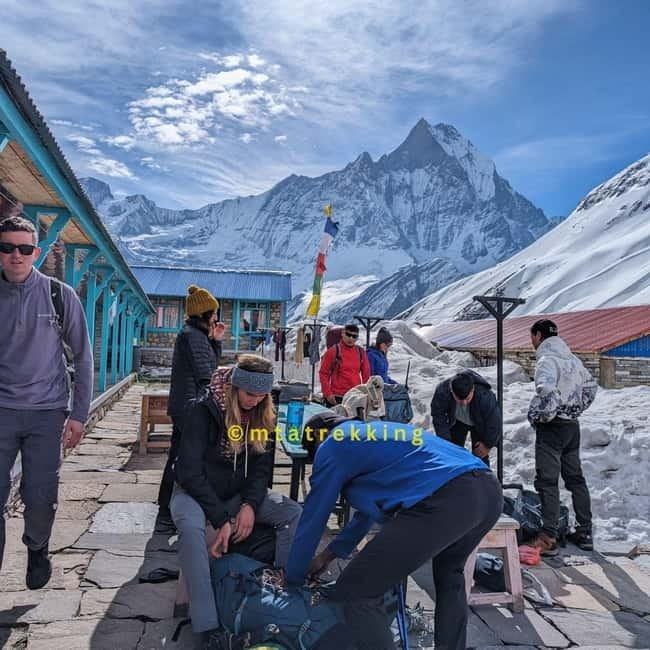
This trek includes tea house accommodation and meals (with a note that you should choose the Full Board option if meals are included in your package). In practice, that usually means you’ll have a predictable rhythm: eat, walk, settle in, repeat.
Why I think this is good value: you’re not spending energy deciding where to eat or trying to track cash at every stop. It also keeps the pace steadier, since your guide can align breaks with meal timing.
What’s not included is also worth noticing. Personal expenses like Wi-Fi, drinks, mineral water, hot showers, and laundry on the mountains are listed as not included. If you want a shower at higher elevations, budget for it. If you rely on bottled water, plan that cost too. This isn’t about being cheap—it’s about not getting surprised.
Guides and permits: the quiet strengths that protect your time
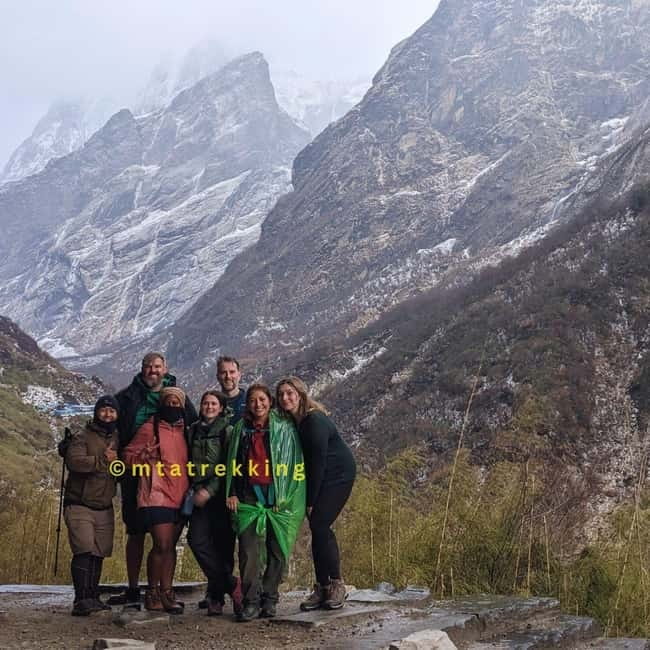
You’ll hike with a professional trekking guide registered with the government, and the tour is led in English. The guide’s role isn’t only “point at mountains.” In past departures, guides such as Santosh, Prabit, and Ramit were praised for being kind, friendly, and informative about both the mountains and local culture.
That matters because ABC isn’t a generic walking route. It’s a place where conditions can change and where your body can react differently than expected. One review highlighted that the guide helped make adjustments so a participant didn’t overexert themselves—exactly the kind of coaching you want on a 4,130m finish line.
Permits are also included: Annapurna Conservation Area (ACAP) plus the listed government permits, TIMS, and taxes. That saves you from the hassle of sorting paperwork mid-trip. It also helps you stay focused on the trail instead of admin.
And one more practical touch: there’s a luggage storage facility on Pokhara during the trek. If you pack smart for trekking, you can leave extra weight behind and travel lighter in your daypack.
Fitness and altitude: what you should realistically check before you go
This trek reaches 4,130 meters, and altitude sickness is called a possibility (rarely, according to the provided info). The best move is to treat altitude as a training element, not a challenge problem you solve with stubbornness.
I recommend you do a simple honesty check:
- Can you comfortably walk 4–6 hours on uneven ground?
- Can you handle a slow pace without feeling frustrated?
- Do you know how you respond to thinner air (even a long flight sometimes tells you something)?
Also, this route isn’t suitable for everyone. It lists restrictions including pregnant women, people with mobility impairments, wheelchair users, visually impaired people, anyone with altitude sickness, and people over 70 years.
If any of those categories apply, don’t force it. Mountain safety is not a negotiation.
Weather and leeches: plan smart for June through August
The provided guidance calls out monsoon season (June–August) as having erratic weather with heavy rainfall. If you’re hiking then, be ready for soaked trails and a slower pace than you’d expect in dry months. Your guide’s advice becomes more important in rain because visibility and footing change fast.
Leeches are also mentioned as a nuisance, especially during monsoon months on lower trails. The practical fixes are clear:
- wear long pants
- tuck pants into gaiters
- use insect repellent
This is one of those cases where “I’ll be fine” usually costs you discomfort, not just annoyance. If you’re sensitive, take the preventive steps seriously.
Price and value: what $136 really gets you, and what to budget
The price listed is $136 per person for a 5-day trek. For that, you get a lot of the expensive hassle covered: tea house lodging, meals (depending on the package/full board selection), hotel pickup and drop-off from lakeside Pokhara or the airport, private transport from Pokhara to the last road and back, and key permits (ACAP, TIMS, taxes).
You’re also paying for risk-management basics that matter on a trek: a government-registered guide and a first aid kit.
What you should budget beyond that:
- Porter service costs $20 per day (listed separately). If you want to travel with less weight, ask about porter add-on.
- Rescue and insurance are not included. Plan your own insurance because mountain treks can turn complicated.
- On-mountain extras: hot shower, Wi-Fi, drinks, mineral water, and laundry.
If you’re comparing value, don’t just compare the trekking days. Compare how much is handled for you—transport timing, permits, lodging structure, and guide support. That’s where the $136 tends to feel justified, especially for first-time trekkers.
Who this ABC trek is best for
This is a good match if you want:
- a shorter, focused ABC experience (4 nights / 5 days)
- a route with villages and culture alongside mountain views
- a guide that’s there to explain the mountains and life around the trail
- an itinerary that includes recovery moments like Jhinu hot springs
It’s not a great fit if you need accessibility accommodations, if you’re managing altitude issues, or if you’re seeking a low-effort walk. Even with tea houses and a guided pace, ABC is still a real mountain trek.
Should you book this Pokhara to ABC trek?
If you’re an active traveler who can handle steep days and you want the payoff of Annapurna Base Camp at 4,130m, I’d say this is worth serious consideration. The combination of hot-spring recovery, a Machhapuchhre detour, and strong guide support (including examples of guides like Santosh, Prabit, and Ramit being helpful and watchful) makes it feel well-run rather than chaotic.
Book it if you’re ready to go slowly, dress for rain and leeches if you’re trekking in monsoon months, and keep an eye on how your body feels as altitude climbs.
Skip it or look for a safer alternative if altitude is a known issue for you, or if any of the listed unsuitability categories apply.
FAQ
How long is the Annapurna Base Camp trek from Pokhara?
The trek is 4 nights and 5 days, starting in Pokhara and ending back in Pokhara.
How high do you go?
You reach Annapurna Base Camp at 4,130 meters (13,550 feet).
What kind of accommodation is included?
The tour includes tea house accommodation during the trek (including stops like Bamboo Lodge).
Are meals included?
Yes. Meals are included, and the information specifically says to choose the Full Board option if you want the meals included.
What permits are included?
The package includes the Annapurna Conservation Area (ACAP) permit, plus government permits, TIMS, and taxes.
How do you get from Pokhara to the trailhead and back?
You get hotel pickup and drop-off in lakeside Pokhara (and from the airport), plus private transport from Pokhara to Siwai (last road) and back. Jeep/SUV ride time is listed as about 3 hours each way.
Do I need a guide?
Yes. You’ll have a professional trekking guide (government registered), and the tour is described as having an English live tour guide.
Is luggage stored for me in Pokhara?
Yes. There is a luggage storage facility in Pokhara during the trekking days.
What should I bring for the trek?
Bring comfortable shoes, change of clothes, and comfortable clothes, plus cash and your passport or ID card (copy accepted).
What’s not included in the price?
Not included: hot showers, Wi-Fi, drinks, mineral water, and water laundry on the mountains; porter service ($20 per day); and rescue and insurance.