REVIEW · KATHMANDU
1 Night 2 Days Chitwan Jungle Safari Tour from Kathmandu
Book on Viator →Operated by Couch Adventure Nepal (CAN) · Bookable on Viator
Two days, one big jungle quest. This Chitwan National Park trip is a fast look at Nepal’s Terai ecosystem—famous for one-horn rhino and (in theory) tigers—plus a cultural evening with the Tharu community. It’s based at the foot of the Himalayas, so the setting feels like a different world from Kathmandu.
I love the morning jeep safari format and the Tharu village + stick dance evening, because you get wildlife time and culture time without dragging it into a 5-day plan. The main thing to consider is logistics: this is built around early departures and a fixed schedule, so if the bus runs late, the afternoon activities can get tight or vanish.
In This Review
- Key things that make this tour worth your attention
- Chitwan in 48 hours: the value of a short, structured escape
- Price and inclusions: what your $155 covers (and what it doesn’t)
- Day 1 from Kathmandu: the early start, then Tharu culture by sunset
- Tharu village visit and elephant stable time
- Sunset view point and Tharu stick dance
- Day 2 jeep safari morning: wildlife time, then breakfast and the return
- Wildlife reality check: rhinos, tigers, and what you can actually influence
- Resort breaks and food: where the day feels human (not rushed)
- Timing matters: the tight connection risk on a 1-night plan
- Who this tour suits best (and who should skip it)
- Should you book this Kathmandu–Chitwan 1-night safari?
- FAQ
- What time is pickup in Kathmandu?
- How long is the Chitwan jungle safari tour?
- What wildlife activity is included?
- Are meals included in the price?
- Do you visit the Tharu village and see a stick dance?
- Is transportation included between Kathmandu and Chitwan?
- How big is the group?
- Do you get a mobile ticket?
- What is the cancellation policy for a full refund?
Key things that make this tour worth your attention
- Chitwan National Park’s Terai setting: subtropical lowlands at the Himalayan foot, and a UNESCO World Heritage site since 1984
- Jeep safari included: built around a morning wildlife drive
- Tharu village experience: plus elephant stable time and a sunset view point with Tharu stick dance
- Food is handled: dinner, lunch, and breakfast are included
- Small group cap (max 20): more room for questions and pacing
- Tiger sightings depend on timing: if tiger is your #1 goal, you’ll want to ask the operator about when your safari slot is scheduled
Chitwan in 48 hours: the value of a short, structured escape
This is the kind of trip that works when you want a real ecosystem break but you still have Kathmandu on your calendar. You travel by tourist bus from Kathmandu to Chitwan and back, then you’re based at a resort for the safari portion. The total duration is listed as about 2 days, with an early start on day 1.
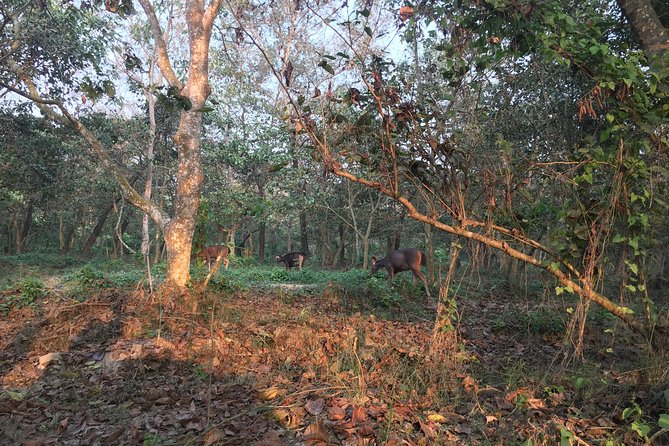
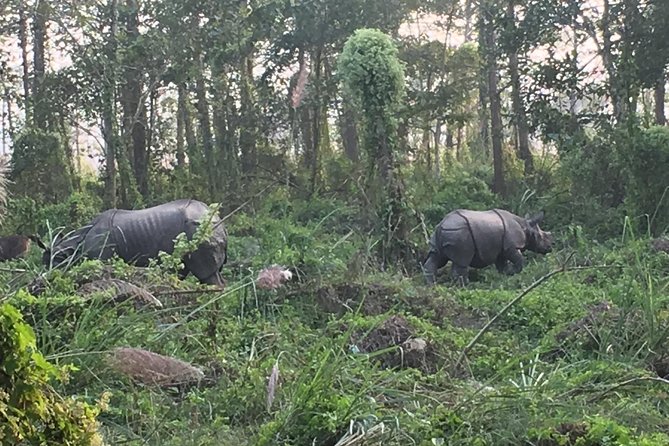
Chitwan itself is the headline. It’s famous for one-horn rhinos and Royal Bengal tigers, and it’s one of the last surviving examples of the Terai natural ecosystem. That matters because it’s not just about one animal checklist. You’re in an environment where grasslands, forest edges, and river-adjacent wildlife patterns all play together.
Is it a “best odds” plan for tigers? Possibly not, because the included wildlife activity is a morning jeep safari. But it can still be a strong choice if you’re realistic and you enjoy seeing what’s out there—rhinos, elephants, deer, and other wildlife—while also getting culture and relaxation time.
You can also read our reviews of more evening experiences in Kathmandu


Price and inclusions: what your $155 covers (and what it doesn’t)
At $155 per person, you’re paying for a bundle: transport, safari, and most of the on-the-ground logistics. The tour includes hotel shuttle service, Kathmandu–Chitwan–Kathmandu bus transfer, a jeep safari, and multiple meals (dinner, lunch, breakfast).
You also get cultural stops without extra planning: Tharu village, elephant stable, and a sunset view point with Tharu stick dance. Admission tickets are listed as free in the itinerary for the included stops, which helps keep your day-to-day costs predictable.
What’s not included is simple: personal expenses. So bring spending money for things like snacks outside the included meals, drinks, and any souvenirs. Also, since you’re traveling early and spending a full day in transit on day 1, I’d budget for comfort purchases if you’re the type who needs a decent bottle of water and a few wipes to stay sane.
Group size is capped at up to 20 travelers. That’s important because smaller groups usually mean the schedule feels less like cattle transport and more like guided pacing—especially during the cultural stops and the transition to the safari.
Day 1 from Kathmandu: the early start, then Tharu culture by sunset
Your day starts at 6:30 am. Pickup is from your hotel, then you transfer to the bus station and head toward Chitwan. This early timing is not just a random hour—it’s what gives you daylight for the day’s sightseeing and helps protect your safari plan the next morning.
Once you arrive in Chitwan, you’re transferred to the resort. You’ll refresh, then the day flows into lunch followed by cultural and animal-related stops. The order is designed to keep you fed and settled before the evening activities, which is a relief on a travel-heavy day.
Tharu village visit and elephant stable time
The cultural portion is a key reason to choose this specific itinerary. You’re not just driving to the park and hoping for the best. You get a Tharu village visit, plus time at an elephant stable. That combination gives you two different angles: community life and the human side of living near wildlife management.
What you’ll likely enjoy most here is the rhythm. Village visits tend to feel calmer than park time, so you get a chance to ask questions and see daily-life details rather than only scanning for animals from a moving vehicle.
Sunset view point and Tharu stick dance
The evening highlight is the sunset view point with a Tharu stick dance performance. Even if you’re not the biggest dance person, it’s a good way to end the day because it’s tied to the landscape’s light—warm colors, relaxed pacing, and a clear cultural moment to remember.
One practical note: in this style of tour, the afternoon isn’t meant to be free-roaming time. You’ll want to go with the flow and keep your phone charged for photos, since this is when the light tends to look best.
You can also read our reviews of more tours and experiences in Kathmandu

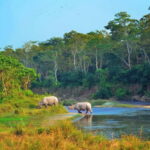
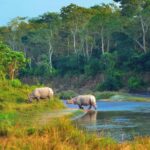

Day 2 jeep safari morning: wildlife time, then breakfast and the return
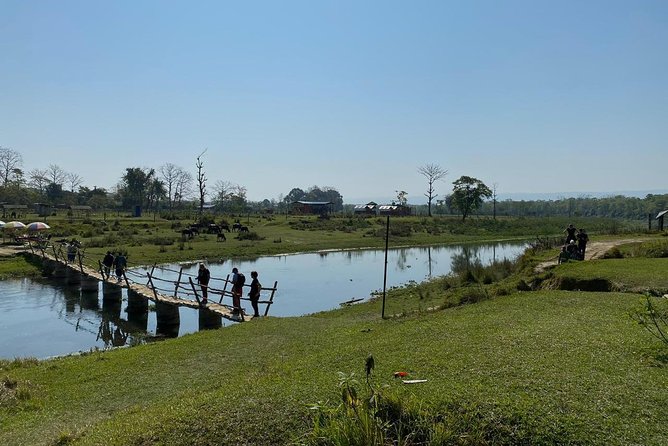
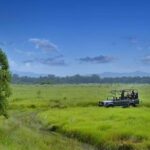
Day 2 starts with the main wildlife activity: a jeep safari in the morning. Jeep safaris are a classic Chitwan choice because they let you cover ground and reposition as sightings change. Your best strategy is to keep expectations flexible. You’re in a real habitat, not a zoo schedule.
After the safari, you’ll have breakfast, then you’ll transfer back to the bus station and ride to Kathmandu. The plan lists the return as about 5 hours of bus time, and the tour ends back in Kathmandu.
This is a “do it and move on” format. If you’re the type who loves long, slow days, you might find it fast. But if you want a clean two-day arc—safari, culture, meals handled, transport handled—this pacing is the point.
Wildlife reality check: rhinos, tigers, and what you can actually influence
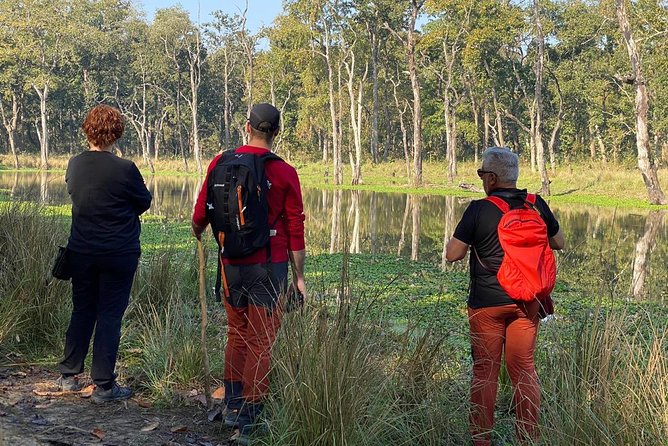
Chitwan is known for one-horn rhino and Royal Bengal tiger, but wildlife sightings are never guaranteed. What you can influence is your attitude and how you plan your expectations around time of day.
This itinerary puts the included jeep safari in the morning. That can be great for active wildlife movement and for cooler riding conditions. Still, if tiger is your top priority, you should ask the operator ahead of time whether your safari timing can be adjusted. People associated with this tour have suggested that timing matters for tiger-focused expectations, so don’t be shy about asking.
If you do see wildlife beyond the headline animals—deer, elephants, and rhino—try not to treat it like a checklist. Seeing a variety of species is often the real win in a short trip. The morning safari is your main chance, so give it your full attention: sit where you have the best view, keep noise low, and don’t spend the whole ride staring at your screen.
Also, remember why Chitwan is special: it’s a UNESCO World Heritage area with the last surviving Terai ecosystem example. That means the beauty is the system, not just one animal.
Resort breaks and food: where the day feels human (not rushed)
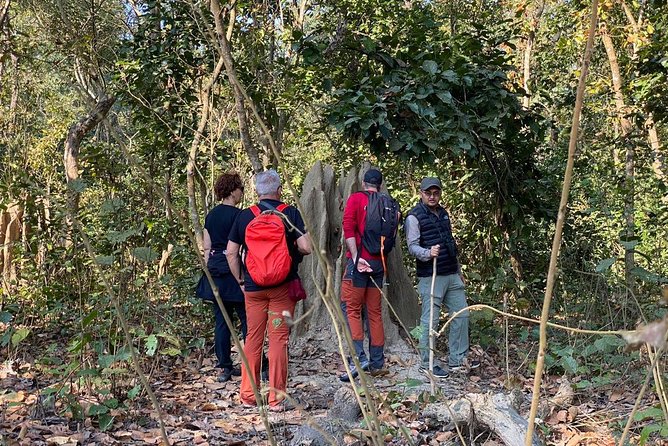
Even with early starts, the tour builds in resort time. On day 1, you arrive, refresh, then you’re set up for lunch and the evening activities. On day 2, you go back to the routine of breakfast after the morning safari and then head home.
Meals are included (dinner, lunch, breakfast), and the vibe matters when you’re traveling by bus. The resort portion has been praised for being quiet and relaxing, and people have highlighted clean facilities and delicious food.
The host team is also part of the experience. The name Rainbow Safari comes up in positive notes as being friendly and helpful. And the local guide Resham (also seen as Ramesh in some mentions) is specifically credited for being responsive and doing what people asked.
That guide responsiveness can matter on a short itinerary. When there’s a timing squeeze or you have a practical question, you want someone who can steer you without panic. Here, the tone seems to be calm and accommodating, which is exactly what you want when you’re crisscrossing between bus, resort, safari, and cultural stops.
Timing matters: the tight connection risk on a 1-night plan
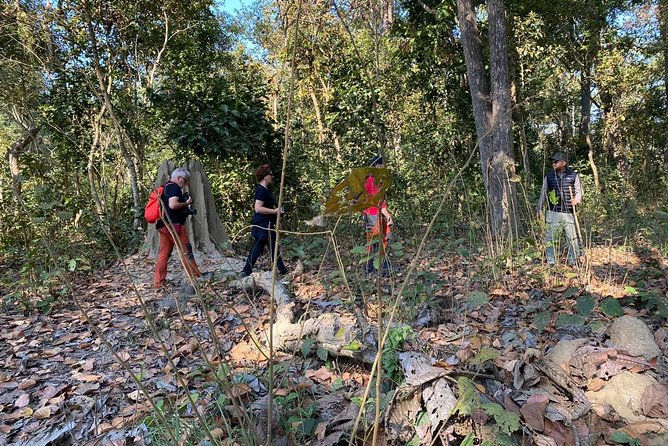
Here’s the candid part. Because this is a one night, two day trip with an early pickup and a planned set of activities, there’s less slack than on longer tours.
The most serious risk is bus delays. If your Kathmandu-to-Chitwan bus arrives late, you can lose afternoon time and end up missing part of the day’s safari or evening flow. One unhappy experience shared with this tour points out how little leeway there can be between bus arrival and the start of the safari. Another negative note argues that the itinerary may not be feasible as a one-night format when timing slips, meaning you may have to accept that the schedule is not forgiving.
So what should you do? I’d choose this tour only if:
- your Kathmandu travel day is predictable, and
- you’re comfortable with a tight itinerary where you rely on the operator and the transport timing.
If you’re the type who hates schedule stress, you might sleep better choosing a longer Chitwan stay where wildlife time is spread out.
Who this tour suits best (and who should skip it)
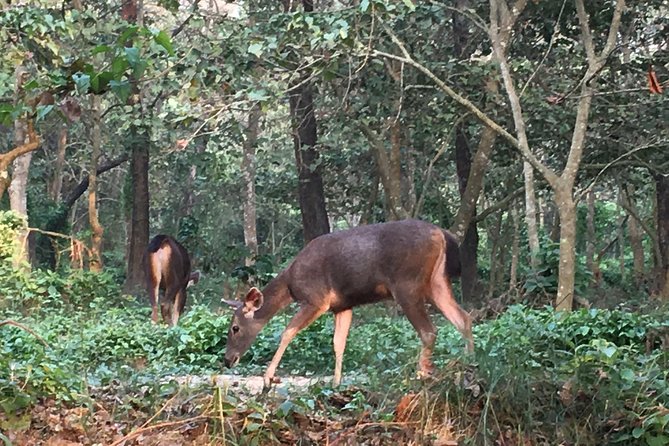
This tour fits you if you want value, structure, and a quick taste of Chitwan. You’ll like it if you’re okay with a morning safari and a cultural evening that’s part dance, part community visit.
You’re also a good match if you appreciate small-group travel. With a cap of 20 travelers, your experience is more likely to feel guided and less like a queue.
You should think twice if:
- tiger sightings are your only priority and you need guaranteed timing, or
- you know your Kathmandu departure day often runs late due to traffic or connections, or
- you want lots of free time on the ground.
Should you book this Kathmandu–Chitwan 1-night safari?
I’d book it if your goal is a well-rounded Chitwan National Park break that covers transport, safari, and core cultural stops without you babysitting logistics. The best value is the combination: jeep safari + Tharu village + elephant stable + meals, all within a two-day window.
I wouldn’t book it if you need major wiggle room for delays or if you expect a relaxed, slow schedule. This itinerary lives or dies by timing. When everything runs on time, it looks like a solid, enjoyable package with friendly hosting and good food. When timing slips, you feel it.
If you book, do two things: confirm pickup details clearly, and ask whether your safari timing supports your wildlife goals—especially if tiger is the one you’re hoping to see.
FAQ
What time is pickup in Kathmandu?
Pickup starts at 6:30 am from your hotel, then you’re transferred to the bus station.
How long is the Chitwan jungle safari tour?
It’s 2 days (about 1 night and 2 days).
What wildlife activity is included?
The tour includes a jeep safari in Chitwan National Park.
Are meals included in the price?
Yes. Dinner, lunch, and breakfast are included.
Do you visit the Tharu village and see a stick dance?
Yes. The itinerary includes a Tharu village visit and a sunset view point with Tharu stick dance in the evening.
Is transportation included between Kathmandu and Chitwan?
Yes. You get tourist bus transfer Kathmandu–Chitwan–Kathmandu plus hotel shuttle service.
How big is the group?
The tour has a maximum of 20 travelers.
Do you get a mobile ticket?
Yes. A mobile ticket is listed as part of the experience.
What is the cancellation policy for a full refund?
You can cancel up to 3 days in advance for a full refund. For a full refund, you must cancel at least 3 full days before the experience’s start time.
If you’d like, tell me your travel dates and whether tiger is your top goal—I can help you think through whether the morning safari timing fits your expectations.