REVIEW · KATHMANDU
Kathmandu: Pashupatinath Temple Evening Aarati Tour
Book on GetYourGuide →Operated by Aspiration Adventure Pvt Ltd · Bookable on GetYourGuide
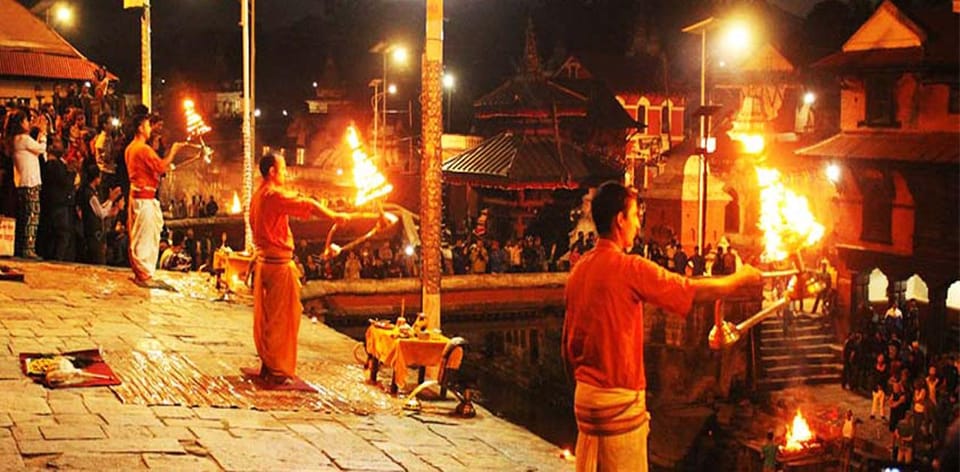
Few places hit like an evening temple ritual. This Kathmandu Pashupatinath Temple Aarati Tour takes you to the Bagmati River banks for a powerful night ceremony, with priests chanting Vedic mantras, bells ringing, incense burning, and lamps lifted toward Lord Shiva.
What I love most is the way the tour blends a short guided temple visit with real-time meaning during the ceremony—so you’re not just watching lights and smoke. I also like that it’s led by a licensed English-speaking guide, and the experience tends to be handled with care; guides like Ramesh and Rajat are repeatedly praised for patience and clear explanations, and the drive is run smoothly with friendly drivers such as Santosh. One drawback to consider: this is an active religious space, so you’ll need to follow instructions and work with crowds and camera limits in permitted areas.
In This Review
- Key things that make this tour worth your time
- Why the Pashupatinath evening aarti feels different from daytime sightseeing
- From Kathmandu hotel pickup to your temple photo stop
- The guided temple complex visit (and why it changes how you watch the aarti)
- What you’ll see during the Bagmati River aarti around 6 p.m.
- How to photograph the ceremony without turning it into chaos
- Price and value: is $45 for 3 hours fair?
- Who should book this tour (and who might want a different plan)
- The guides and drivers: what seems to matter most
- Should you book this Kathmandu Pashupatinath Evening Aarati Tour?
- FAQ
- What’s the duration of the Pashupatinath Temple Evening Aarati tour?
- What time does the aarti ceremony start?
- Where does the tour take place?
- Is hotel pickup and drop-off included?
- Is the tour private?
- What’s included in the ticket price?
- Is food or drinks included?
- Can I skip the ticket line?
- Is photography allowed?
- Can I cancel and get a refund?
Key things that make this tour worth your time
- Aarti on the Bagmati River at night: chanting, bells, oil lamps, incense, and classical music all in one scene
- A guided temple walk first: you get context before the ceremony starts
- Small-group feel with private transport: easier pacing than big group tours
- Photography is possible, but controlled: you can capture moments where permitted
- Practical timing: you arrive in late afternoon and catch the aarti starting around 6 p.m.
- Guides who explain the why, not just the what: well-paced, Q&A-friendly evenings
Why the Pashupatinath evening aarti feels different from daytime sightseeing
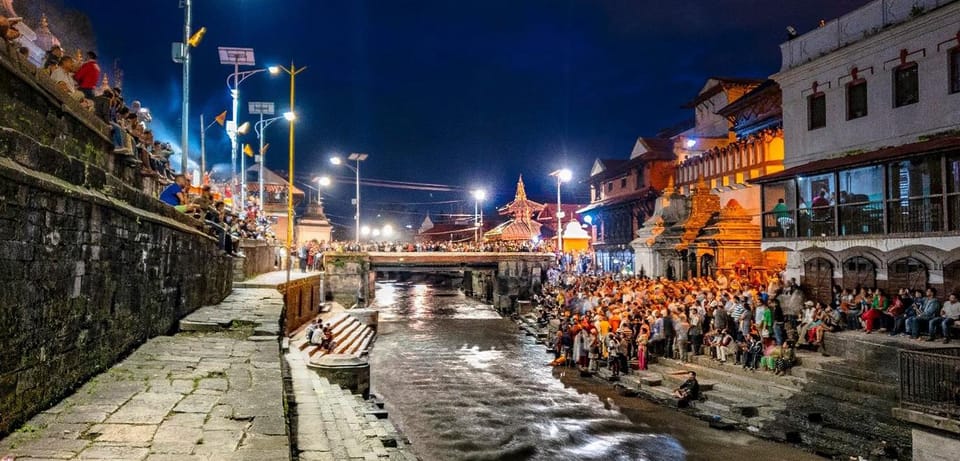
Daytime temple visits can feel like a checklist: photos, temples, moving on. The Pashupatinath evening aarti changes the mood fast. As night settles and the Bagmati River becomes the stage, you’re watching a ritual built for sound, rhythm, and focused attention—not casual sightseeing.
This tour gives you the best “why” behind what you see. Your guide helps you connect the actions you’ll witness—mantras, bells, incense, and the oil lamps being waved—back to Hindu belief and temple tradition, so it lands more deeply than a simple show.
And yes, it’s also visually memorable. Lamps flicker in the dark, the music carries across the riverbank, and the crowd’s attention pulls everything into one moving moment.
You can also read our reviews of more evening experiences in Kathmandu



From Kathmandu hotel pickup to your temple photo stop
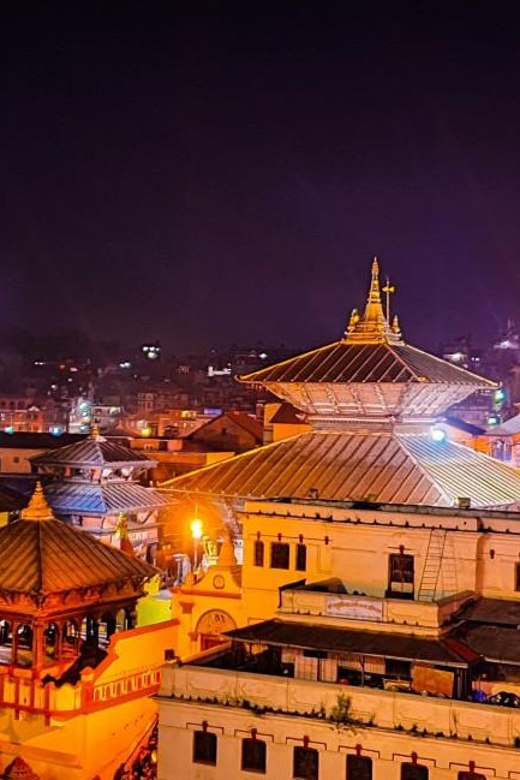
You start with hotel pickup in Kathmandu, then travel to Pashupatinath Temple on the Bagmati River. The drive matters here. You’re not rushing out at the last minute; you’re arriving in the late afternoon so you can orient yourself and settle in before the main ceremony.
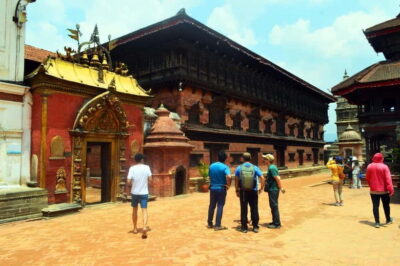
Once you reach the temple area, you’ll get a photo stop and a bit of sightseeing time guided by your host. This is a smart setup for two reasons. First, it helps you learn the layout before the crowd thickens. Second, it gives you breathing room to decide what you want to capture—especially since photography is only allowed in certain permitted areas.
If you care about travel photos, this sequencing helps. You’re not scrambling for angles while the ceremony is already underway.
The guided temple complex visit (and why it changes how you watch the aarti)
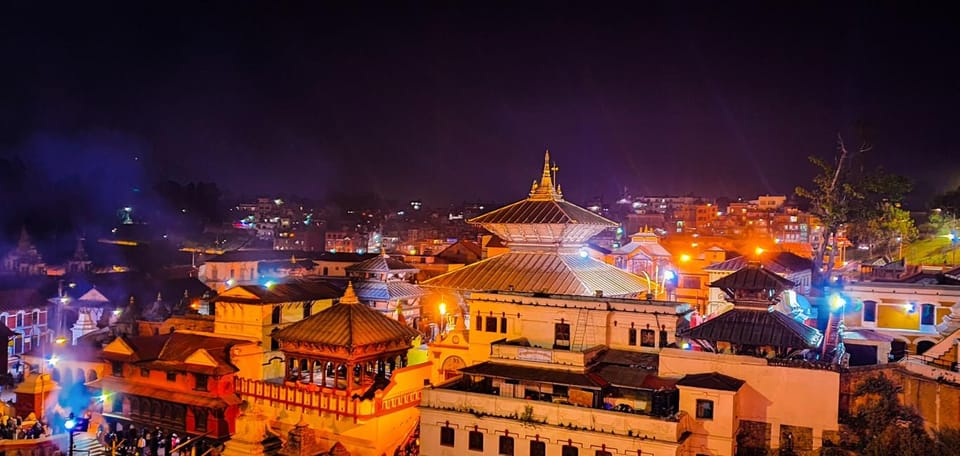
Before the aarti starts, you’ll tour the Pashupatinath temple complex with a licensed English-speaking guide. This part isn’t just “walk here, look there.” The goal is interpretation—explaining why this temple matters and how the nightly worship fits into the broader religious setting.
After the guided portion, you get time for independent exploration. That free window is useful because it lets you slow down, ask questions you didn’t think of earlier, or simply take in the atmosphere in your own way. Just keep an eye on the time as you’re preparing for the riverbank ceremony around 6 p.m.
Based on guest experiences, guides like Ramesh and Rajat are especially praised for being patient and approachable. In practice, that means you can ask basic questions without feeling rushed—and you’ll still get good context for the deeper ones.
What you’ll see during the Bagmati River aarti around 6 p.m.
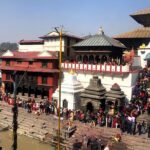
Around 6 p.m., the evening aarti becomes the center of everything. This is a nightly worship ritual, and the ceremony unfolds on the Bagmati River bank located on the temple’s eastern side.
The sequence you’ll see is vivid and multi-sensory:
- Priests chanting prayers toward Lord Shiva
- Vedic mantras being recited
- Bells ringing during key moments
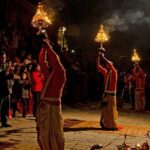
- Oil lamps being lifted and waved
- Incense burning and smoke filling the air
- A band playing classical instruments, with hymns sung to the gods
The effect is more than spiritual—it’s organized emotion. The crowd gathers with intent, and the ritual rhythms guide your attention. You’re not trying to understand everything at once; your guide helps you follow what’s happening and what it means.
One thing I’d keep in mind: if you’re expecting a quiet, museum-like atmosphere, this won’t be that. This is live devotion. People are present, engaged, and focused on the ceremony, and your job is to watch with respect and follow your guide’s positioning instructions.
How to photograph the ceremony without turning it into chaos
Photography is allowed, but only in permitted areas. That matters because the aarti involves close attention and sometimes strict movement. The best plan is simple: let your guide set your position first, then shoot from there.
I like that this tour gives you a temple orientation moment beforehand. You’ll know where you can stand, where you should move carefully, and how to avoid blocking others when things get intense. It’s also easier to capture the “in-between” moments—like the lead-up as priests prepare—rather than just the peak lamp-waving instant.
Practical tip: keep your camera ready but don’t sprint for angles. In these spaces, the best photos often come from waiting calmly and adjusting slowly when the rhythm shifts.
If you’re traveling with a phone camera, it’s still worth it. The scene has high contrast—lamps against darker water and sky—so even simple shots can look striking when timed well.





Price and value: is $45 for 3 hours fair?
At $45 per person for about 3 hours, the value depends on what you want to get out of the evening. If you want a guided, meaning-focused experience with transport and admission handled, it’s a strong deal.
Here’s what’s included:
- Hotel pickup and drop-off
- Transportation to and from Pashupatinath
- A licensed English-speaking guide
- Entry ticket to Pashupatinath
- All taxes and service charges
- Skip the ticket line
- Private group
That combination matters. Many “cheap” options in Kathmandu can leave you doing more legwork—finding the right entrance, waiting in lines, translating details, or trying to figure out ceremony flow on your own. This tour removes that friction, and it also builds in the right timing so you don’t arrive after the best parts have started.
What’s not included: food and drinks. I’d plan on eating before pickup, or be ready to grab something afterward on your own. The ceremony itself is your main event, and you won’t want stomach timing to steal attention from the ritual.
Who should book this tour (and who might want a different plan)
This experience fits travelers who want more than sightseeing photos. If you like culture with context—rituals explained in human terms—this tour is a good match.
It’s also a smart pick for photographers. The timing is built around arriving before the ceremony, plus you get a dedicated photo stop earlier. And because the guide helps with pacing, you’re less likely to miss moments while figuring out where to stand.
You might rethink booking if:
- You need a fully hands-off, quiet experience with minimal crowd contact
- You’re uncomfortable in active religious settings
- You want long stretches of free time with no guidance
For everyone else, it’s one of those Kathmandu evenings that gives you an actual “memory with meaning,” not just a checkmark.
The guides and drivers: what seems to matter most
While your exact guide may vary, the pattern in guest feedback is clear: people rate the guides highly for clarity, patience, and conversational explanations. Ramesh is singled out for being friendly and extremely helpful with extra insights into Hindu culture and rituals. Another guide, Rajat, is praised for being informative and answering questions.
There’s also a note that one guide (Ramesh) could chat in Spanish and English. If you speak Spanish, that’s a fun bonus you might appreciate.
On the logistics side, the driver experience is mentioned too—Santosh is described as polite, welcoming, and safe. For Kathmandu traffic, that’s not a small detail; it keeps the evening from becoming stressful before you even reach the temple.
Should you book this Kathmandu Pashupatinath Evening Aarati Tour?
Yes, if you want a guided night ritual experience at one of Nepal’s most important Hindu temples. The ceremony on the Bagmati River is the headline, but what makes this tour work is the prep—arriving early enough, touring the temple complex first, and having a guide explain what you’re seeing while it’s happening.
Book it if your travel style is: learn a bit, then watch carefully. You’ll likely leave with images you care about and a better sense of why the lamps, mantras, bells, and music are all part of one nightly rhythm.
Just go in with the right mindset. This isn’t a staged performance. It’s devotion in motion, and your job is to respect the space, follow guidance, and enjoy the moment as it unfolds.
FAQ
What’s the duration of the Pashupatinath Temple Evening Aarati tour?
The tour lasts 3 hours.
What time does the aarti ceremony start?
The ceremony starts around 6 p.m.
Where does the tour take place?
It’s in Kathmandu at Pashupatinath Temple along the Bagmati River.
Is hotel pickup and drop-off included?
Yes. Hotel pickup and drop-off in Kathmandu are included.
Is the tour private?
Yes, it’s a private group.
What’s included in the ticket price?
Hotel pickup and drop-off, transportation, a licensed English-speaking guide, entry ticket to Pashupatinath, and all taxes and service charges.
Is food or drinks included?
No. Food and drinks are not included.
Can I skip the ticket line?
Yes, the tour includes skip the ticket line.
Is photography allowed?
Photography is allowed in permitted areas, and there is a photo stop.
Can I cancel and get a refund?
Yes. Free cancellation is available up to 24 hours in advance for a full refund.