REVIEW · KATHMANDU
3-Day Chitwan National Park Jungle Safari Tour Package with Pick Up
Book on Viator →Operated by Welcome Nepal Treks P.ltd · Bookable on Viator
Three days, serious wildlife odds. This is a focused Chitwan National Park trip built for value: park entry is included, and you get a mix of river, land, and local culture without having to stitch anything together.
I love that the package feeds you—two breakfasts, two lunches, and two dinners—and that return transfers run by comfortable tourist bus. You also get a real cultural thread with a Tharu village visit and a chance to visit the visitor area before the wildlife action kicks in.
The one drawback to keep in mind: it’s a group setup with bus rides, so if you’re prone to motion sickness or you dislike long shared-vehicle routes, plan for that before you go.
In This Review
- Quick hits before you go
- Chitwan’s best ingredient: wildlife plus culture in the same package
- Kathmandu to Chitwan: the pickup that sets the tone
- Tharu village visit and the visitor centre: why it’s more than a warm-up
- Day 2’s sunrise canoe on the Rapti River
- Jeep safari, jungle walk, and the chance at big animals
- Tharu culture show: a calmer evening after active days
- Two nights near Chitwan: three-star comfort for a sane budget
- Meals included: food that helps you keep up
- Price and logistics: what your $180 is really buying
- The logistics reality check (shared buses mean shared time)
- Is this group safari right for you?
- Should you book this 3-day Chitwan jungle safari?
- FAQ
- How long is the Chitwan safari tour?
- Where is the tour pickup in Kathmandu?
- What meals are included?
- Is the Chitwan National Park entrance fee included?
- What wildlife activities are included?
- When does the canoe ride happen?
- What time do you leave Chitwan for Kathmandu?
- How many people are in the group?
- Can I cancel for a full refund?
Quick hits before you go
- Pickup + return transfers by tourist bus between Kathmandu and Chitwan, handled end-to-end
- National Park fee included, so you don’t have to budget for entry at the gate
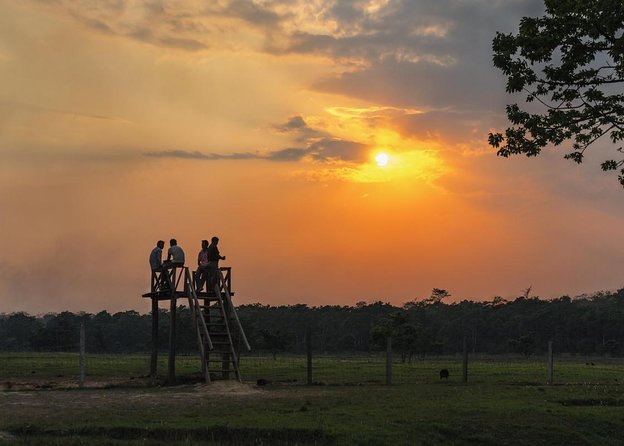
- Canoe ride on the Rapti River at sunrise, built for bird watching and crocodile spotting
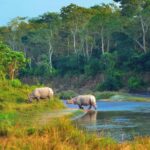
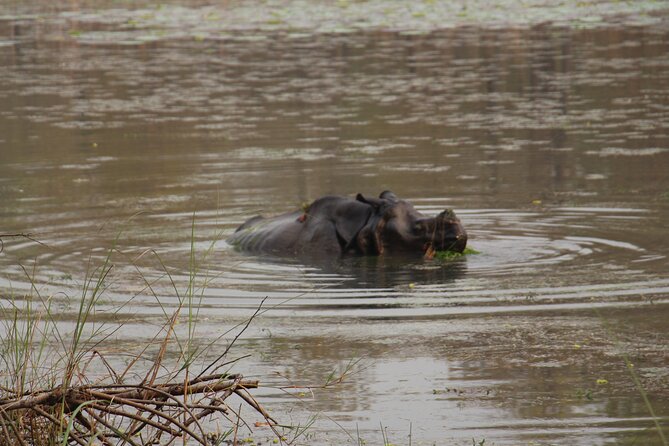
- Land safari time (Jeep safari + jungle walk) paired with wildlife chances like one-horned rhinoceros
- Tharu village + visitor centre + cultural show for context beyond the animals
- Max 25 people keeps the group manageable
Chitwan’s best ingredient: wildlife plus culture in the same package
Chitwan is one of Nepal’s easier places to do a wildlife trip without needing tons of planning. The park’s reputation is built on species you actually have a shot at—especially the one-horned rhinoceros—and your days are structured so you’re out in the moments when animals are most active.
What makes this tour appealing is that you’re not just ticking off a safari checklist. You also get a window into the people who have lived around this region for generations through a Tharu village visit and cultural programming. That matters because it helps you understand why the jungle and the river are treated as living spaces, not just scenery.
You can also read our reviews of more tours and experiences in Kathmandu


Kathmandu to Chitwan: the pickup that sets the tone
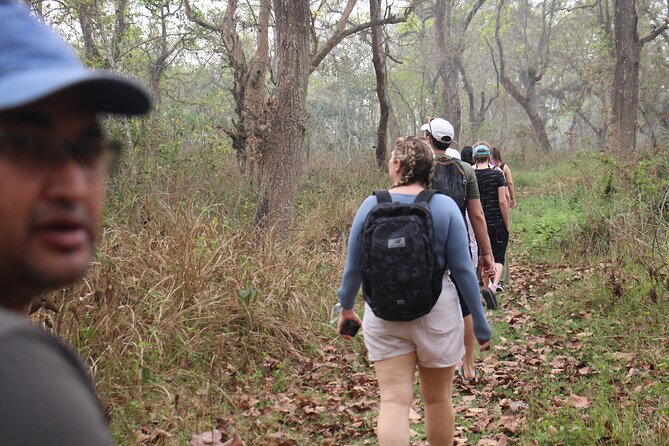
The experience starts in Kathmandu with staff meeting you at Sauraha Bus park/Tadi or Bharatpur Airport on arrival. From there, you’re transferred to the resort for refreshment, a briefing, and time to settle in before your first cultural stop.
That briefing piece is small but useful. It means you’re not walking into the next day blind, especially with the early mornings. And because it’s a group tour, the logistics are designed to keep you moving without the stress of arranging transport on your own.
Tharu village visit and the visitor centre: why it’s more than a warm-up
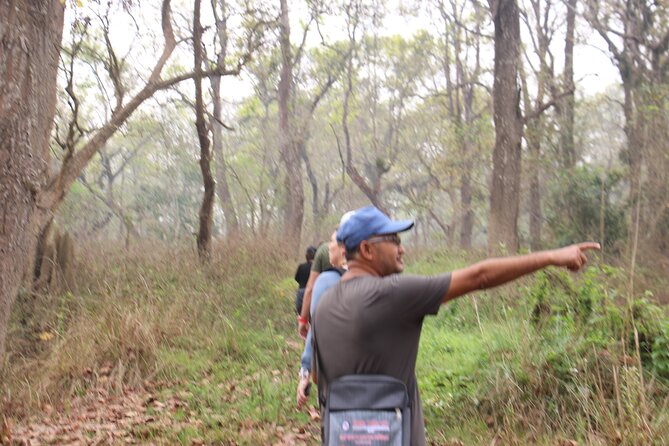
Day 1 includes a late-afternoon Tharu village tour (around 15:00). This is your chance to learn about day-to-day life and local customs in a nearby community. It’s also a good pace-break after travel, since you’re moving through a living cultural setting rather than rushing straight into long jungle hours.
You also stop at the National Park Visitor’s Centre, where you can pick up background on the park’s history. Even a quick visit here helps you interpret what you’re seeing later—why certain areas are protected, and what makes Chitwan’s habitat unique for the animals you came for.
Day 2’s sunrise canoe on the Rapti River
On day 2, the schedule starts early: a wake-up call at 06:00, followed by breakfast. You then head out for a canoe ride around 07:00 along the Rapti River.
This is the segment that many people remember first, because it’s calm compared with jeeps. The goal is bird watching and the chance to spot crocodiles—specifically marsh mugger crocodiles and another fish-eating crocodile species mentioned as part of the tour’s wildlife focus.
A canoe ride changes how you experience the park. You’re lower, quieter, and you feel the river’s rhythm. It’s also a smart way to get wildlife attention without relying entirely on vehicle-based sightings.
Practical note: sunrise can be cool, even when the day warms up. Bring layers you can remove easily, and keep your phone or camera protected in case of river mist.
Jeep safari, jungle walk, and the chance at big animals
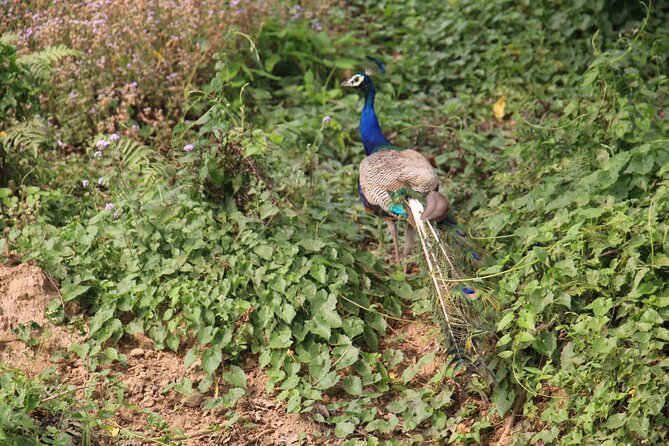
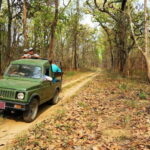
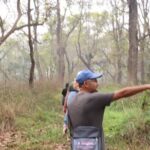
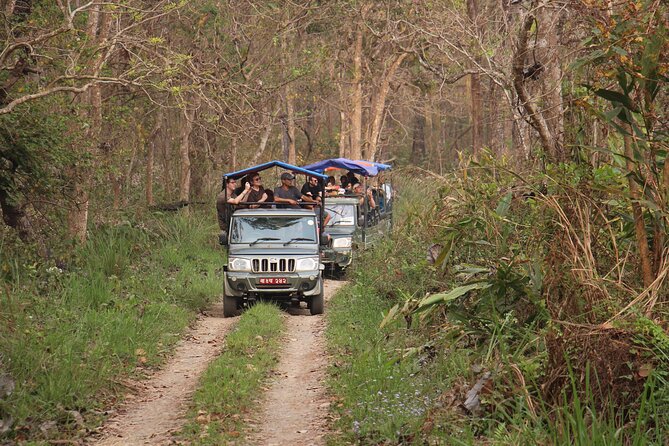
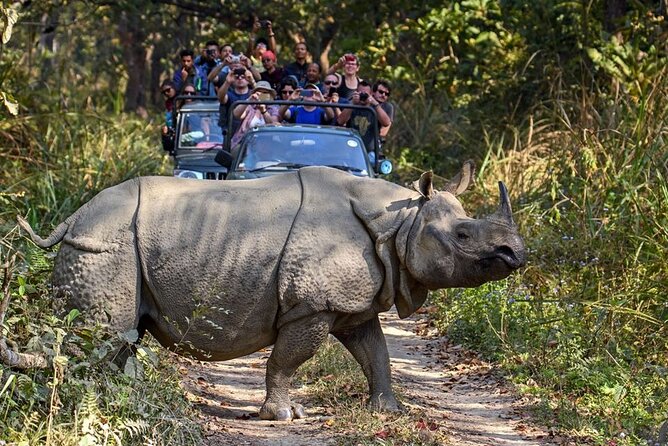
The tour’s wildlife core is built around a mix of Jeep safari and jungle walk time, plus bird watching at different points in the schedule. That combination matters because different animals show up in different ways. Some stay visible in open patches and near water edges, while others are easier to read through signs in the understory.
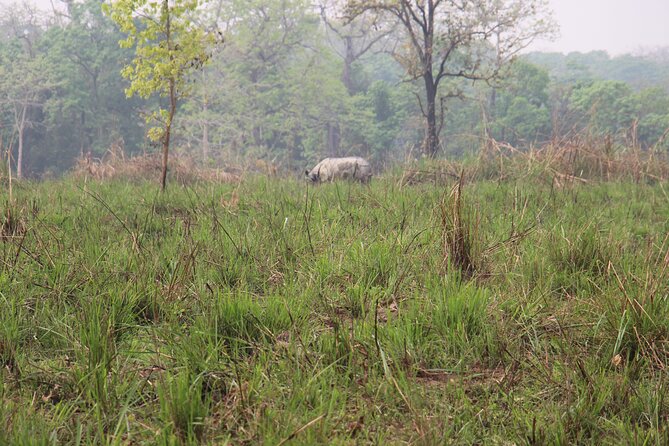
You’re aiming for memorable species such as the one-horned rhinoceros and, with luck, Royal Bengal tigers. But keep your expectations grounded. This is wildlife. You’re stacking odds through early timing and guided searching, not purchasing a guaranteed tiger sighting.
Also pay attention to group dynamics. The tour max is 25 travelers, which is not huge, but it still means you’ll be moving with others through the same areas. That can affect how quickly you get opportunities at sightings. The trade-off is value: you get a guided safari structure without private-tour pricing.
You can also read our reviews of more tours and experiences in Kathmandu

Tharu culture show: a calmer evening after active days
In addition to the village visit, the package includes a Tharu cultural show as part of the overall mix of cultural activities. This gives your evenings a purpose, not just a break after the next early wake-up.
If you like culture stops that actually connect to the region instead of feeling like a separate side quest, this works well. Chitwan isn’t just a zoo-like wildlife day. It’s a place with living communities and traditions tied to how people understand the land.
Two nights near Chitwan: three-star comfort for a sane budget
You stay two nights in a three-star resort near Chitwan. The point of this choice is clear: it keeps the tour economical while still giving you a proper base between safari windows.
One lodge name that shows up with this style of trip is Safari Adventure Lodge, often described as pleasant but basic, with friendly staff and food that people found satisfying. Even if your exact lodge ends up slightly different within the three-star category, the expectation is consistent: functional rooms, meals included, and a location designed for easy access to the day’s activities.
What you’ll want to do after long outdoor hours is simple: hydrate, rest, and recharge. With early starts, a reliable room matters more than luxury.
Meals included: food that helps you keep up
This tour includes two breakfasts, two lunches, and two dinners. For safari travel, that’s one of the biggest value levers. Food planning is where budget trips often get messy—especially with group timing. Here, meals are built into the schedule so you’re not hunting for food between activities.
It also means you can focus on being out during the best wildlife hours. When breakfast and lunch are handled, you’re less likely to lose time or energy. And yes, it helps the budget too. You’re not paying extra meals on top of the base price.
Price and logistics: what your $180 is really buying
The price is $180 per person, and the tour is positioned as an economical group option. For that money, you’re getting:
- Kathmandu–Chitwan–Kathmandu transfers on a tourist bus
- National Park entrance fee included
- Two nights at a three-star lodge near Chitwan
- Meals across the full 3 days (2 of each breakfast, lunch, dinner)
What’s not included is also straightforward: personal expenses like tips, beverages, laundry, and phone calls.
So is it good value? For most people, yes—because the package covers the big cost buckets: transport, lodging, and park entry. Those are the items that usually add up fastest if you try to build the trip alone.
The logistics reality check (shared buses mean shared time)
This is where you should plan with open eyes. One concern that pops up with shared routes is that bus travel can mean multiple stops. If you’re sensitive to motion, bring what you need to manage it.
There’s also mention of pickup timing not always matching hotel schedules perfectly for some people. The practical takeaway: be ready at the pickup point, and if you’re staying far from the main access roads, confirm your exact pickup location the day before.
Is this group safari right for you?
I think this tour fits best if you want:
- a guided Chitwan visit with minimal planning work
- a mix of canoe + jeep + jungle walk, plus bird watching
- real cultural add-ons through the Tharu village and cultural show
- a budget-friendly structure that includes meals and park entry
It’s also a strong pick if you’re traveling solo and want a handled experience. This operator’s service style is described as clear and supportive, including on-time pickup and drop-off, and that kind of care can matter when you’re navigating a new country by yourself. One organizer name you may encounter with this trip style is Dipendra, noted as friendly and helpful.
If your priority is a private safari with minimal driving and maximum control over timing, you may feel constrained in a group tour. And if you dislike early starts, know that mornings begin around 06:00 with wake-up and breakfast.
Should you book this 3-day Chitwan jungle safari?
Book it if you want a well-structured, value-forward Chitwan trip where the essentials are taken care of: transfers, park fee, lodge nights, and meals. The canoe ride timing and the mix of river/land wildlife searching are the kind of combo that makes a short visit feel complete.
Hold off if you have strong motion sickness issues or you hate the idea of shared transport with possible extra stops. In that case, you’ll likely be happier choosing a more flexible or private transport option.
Either way, set your wildlife expectations like a pro: early timing helps, guides help, but Chitwan wildlife still runs on its own schedule.
FAQ
How long is the Chitwan safari tour?
The tour runs for about 3 days, with two nights staying near Chitwan.
Where is the tour pickup in Kathmandu?
You’re met at Sauraha Bus park/Tadi or Bharatpur Airport, then transferred to the resort.
What meals are included?
The package includes two breakfasts, two lunches, and two dinners.
Is the Chitwan National Park entrance fee included?
Yes, the National Park fee is included.
What wildlife activities are included?
You can expect a mix of safari and nature activities such as a Jeep safari, canoe ride, jungle walk, and bird watching, plus cultural activities like the Tharu cultural show.
When does the canoe ride happen?
The schedule calls for a canoe ride along the Rapti River at around 07:00 on day 2.
What time do you leave Chitwan for Kathmandu?
Departure from Chitwan is at 08:00 on day 3, and the drive to Kathmandu is about 5–6 hours.
How many people are in the group?
The tour has a maximum of 25 travelers.
Can I cancel for a full refund?
Yes. You can cancel up to 24 hours in advance for a full refund.