REVIEW · KATHMANDU
UNESCO Five World Heritage Tour in Kathmandu
Book on Viator →Operated by Himalayan Advisor Pvt. Ltd. · Bookable on Viator
Few cities pack so many sacred sights.
This private full-day Kathmandu Valley circuit is built for culture-hungry travelers who want UNESCO World Heritage highlights without negotiating taxis. I especially like how it strings together major landmarks from Swayambhunath to Pashupatinath, plus extra stops inside the Durbar Square areas. Another plus: entry fees are included, and hotel pickup/drop-off covers the Ring Road zone (including Bouddha).
One thing to consider: it’s a tight schedule with lots of walking through temple courtyards and steps. If you’re the type who wants to linger for hours, you may feel slightly time-pressed during the 7 to 8 hour day.
In This Review
- Key Highlights You’ll Remember
- Price and Logistics: What $130 Buys You in Real Terms
- The 9:00 AM Start: Ring-Road Pickup That Saves Your Morning
- Swayambhunath: The Buddhist-Hindu World Heritage Landmark
- Amideva Buddha Park: A Quick Detour With Big Statues
- Kathmandu Durbar Square: Basantapur Tower to Kumari Chowk
- Basantapur Tower
- Degu Taleju Temple
- Kumari Chowk
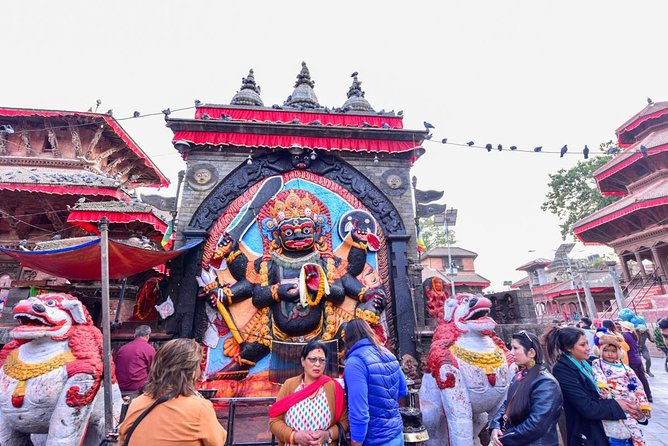
- Kaal Bhairab
- Patan Royal Palace: Transition From One Royal Courtyard to Another
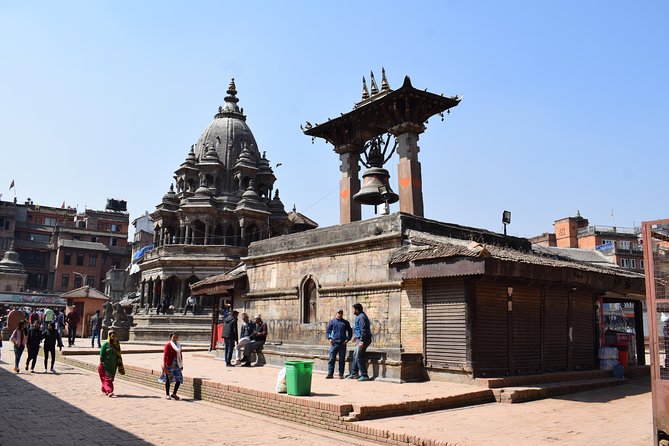
- Patan Durbar Square and Taleju Mandir: Newari Architecture in Action
- Patan Museum and the Golden Temple (Hiranya Varna Mahavihar)
- Patan Museum
- Golden Temple (Hiranya Varna Mahavihar)
- More Temple Stops in Patan: Vishwanath and Bhimsen
- Pashupatinath Temple: Hindu Complex With Hundreds of Shrines
- Boudhanath Stupa: A Buddhist Icon With Prayer Wheels
- Guides Matter: Shanti, Sarita, and Tej Set the Tone
- Pace and Walking: The Only Real Trade-Off
- Who This Tour Is Best For
- Should You Book This Tour?
- FAQ
- What time does the tour start?
- How long is the tour?
- What’s included in the price?
- Is food included?
- Is this tour private?
- Which major UNESCO sites does the itinerary cover?
- Can I get a full refund if I cancel?
Key Highlights You’ll Remember
- Private car pickup within the Ring Road, including the Bouddha area
- Entry fees handled for each Heritage site, so you can focus on the sights
- A guide-led religion-and-architecture story, often featuring experts like Shanti, Sarita, Shanthi, and Tej
- Kathmandu and Patan Durbar Square deep stops, from Basantapur Tower to the Golden Temple
- A smooth full-day arc that links Hindu and Buddhist icons without bouncing around alone
Price and Logistics: What $130 Buys You in Real Terms
At $130 per person, this tour is priced for convenience and time-saving. You’re not just paying for sightseeing—you’re paying for the parts that usually eat a day in Kathmandu: figuring out routes, getting to scattered landmarks, and sorting out admission at multiple locations.
What you get that matters:
- Private transport by car (so no waiting around for public buses or ride-hailing confusion)
- Hotel pickup and drop-off inside the Ring Road area (including Bouddha)
- A professional guide who connects what you’re seeing to how and why it developed there
- Entry fees included for the Heritage sites, which is one less thing to plan around
You start at 9:00 AM, and the total time is about 7 to 8 hours. That’s long enough to see real variety—temple complexes, royal courtyards, stupa space, and major pilgrimage sites—without requiring an early-morning nightmare like some multi-day treks.
Food is not included. I recommend planning for snacks or a proper lunch on your own, especially because temple days can mean you’ll pause a lot, then suddenly find your schedule tight.
You can also read our reviews of more historical tours in Kathmandu

The 9:00 AM Start: Ring-Road Pickup That Saves Your Morning
Kathmandu can feel confusing if you’re basing yourself outside the most active areas. This tour helps by picking you up and dropping you off inside the Ring Road area, including the Bouddha area. That coverage is a big deal because so many key UNESCO stops are linked to that corridor, and it cuts down time spent coordinating the “last mile.”
Because it’s private, it’s truly your group on the schedule. That matters when you want questions answered without the pressure of keeping pace with a larger bus group. In the reviews, guides like Shanti and Sarita are praised for being professional, polite, attentive, and able to answer questions with detail—exactly what you want when you’re moving fast through sacred spaces.
Also, the tour is described as suitable for most travelers. Still, be realistic: you’ll be in and around sites with stairs and uneven walking surfaces.
Swayambhunath: The Buddhist-Hindu World Heritage Landmark
Your day opens at Swayambhunath, a UNESCO World Heritage site that’s described as holy ground for both Buddhist and Hindu communities. The name is often associated with stupa views, and this stop is positioned as a spiritual “first chapter” for the valley.
Why this start works: it gives you a lens for everything that follows. Once you see how one sacred location can carry multiple traditions, the rest of the day feels less like disconnected stops and more like one continuing story.
Practical expectation:
- This is a longer-feeling stop compared to later courtyard moments, with about 1 hour set aside.
- You’ll likely spend time taking in the stupa area, then listening to how the guide frames the overlap of traditions here.
Amideva Buddha Park: A Quick Detour With Big Statues
Right near Swayambhunath, you stop at Amideva Buddha Park. This is a short break—listed at about 15 minutes—but it’s the kind of pause that prevents the day from turning into pure motion.
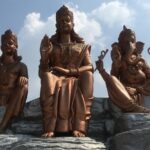
The park has three large statues of Shakyamuni Buddha, and it’s described as a small hangout place. For me, quick stops like this are part of what makes a day tour enjoyable: you catch different textures and scales, not only the biggest, most famous structures.
If you’re tired of squeezing in “photo stops,” this one is worth it because it’s specifically built around a calmer pace.
Kathmandu Durbar Square: Basantapur Tower to Kumari Chowk
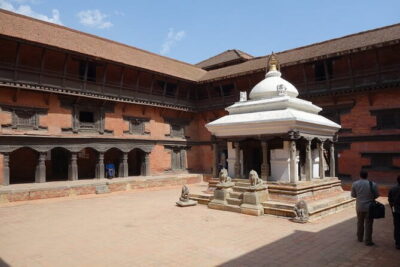
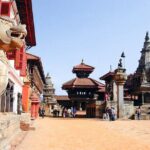
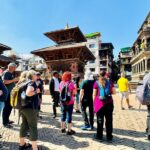
Next you shift to Kathmandu Durbar Square, a royal square tied to the valley’s historic and religious architecture. The tour includes multiple pieces within the square, with timing such as about 1 hour overall, then shorter focused visits.
This is where you start noticing how many of the landmarks are not single objects. They’re parts of a living layout: courtyards, towers, temples, and sacred corners that people still treat with respect.
Key stops within Kathmandu Durbar Square include:

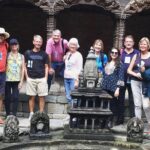

Basantapur Tower
You get about 30 minutes here. It’s specifically called out as one of the attractive places to visit in the Durbar Square area. I like this stop because it helps you orient yourself—tower shapes and sightlines make it easier to “read” the square as architecture, not just scenery.
Degu Taleju Temple
Then comes Degu Taleju Temple, located in Kathmandu Durbar Square and described as built in 1564. The years don’t just feel like trivia here. They help you understand why the Durbar Square sites feel like layered history rather than a single museum moment.
Kumari Chowk
You also visit Kumari Chowk, a courtyard in a red-brick, three-level building. It’s described as the former home of the Kumari, a girl selected to be the town’s living goddess until she reaches puberty. Even if you don’t know the tradition before you arrive, this stop is a striking cultural detail that anchors the square’s living role.
Kaal Bhairab
Another very short stop is Kaal Bhairab, described as a statue of Bhairav. It’s listed at about 5 minutes, which tells you it’s likely more about pointing out a specific sacred figure and symbolism than “wandering for ages.” That’s fine—this tour is structured to cover many points without losing the day.
Patan Royal Palace: Transition From One Royal Courtyard to Another
After Kathmandu Durbar Square, the tour moves to Patan, specifically the Patan Royal Palace area around the Durbar Square zone. The time given is about 1 hour.
Patan Royal Palace is described as one of the oldest royal palaces of Patan, and the tour notes nearby highlights such as the Krishna Temple and Tulaja Devi Temples, plus the Patan Museum and Golden Temple area nearby.
Why I like this transition: it changes the mood. You’re still in royal-courtyard territory, but now you’re comparing Kathmandu’s core with Patan’s version of the same idea—monuments shaped by regional identity and Newari architecture patterns.
Patan Durbar Square and Taleju Mandir: Newari Architecture in Action
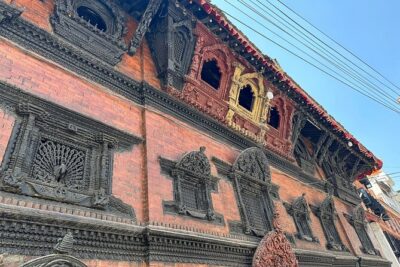
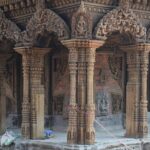
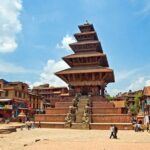
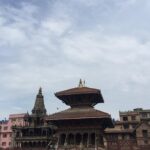
Then you head into Patan Durbar Square for about 45 minutes. This is described as the adobe for Newari architecture, where you’ll find many temples and artistic creations established by the Newar community.
After that, there’s Taleju Mandir Temple for about 15 minutes, with mention that it was rebuilt after a fire in 1676 by Srinivasa Malla.
This section is a good reality check for anyone expecting UNESCO stops to feel like fixed, finished relics. Durbar squares can show repair and reconstruction, and the guide’s job is to help you interpret those changes without flattening them into “damage.”
Patan Museum and the Golden Temple (Hiranya Varna Mahavihar)
Two stops here are designed for slower attention.
Patan Museum
You get about 15 minutes at the Patan Museum. It’s described as worth visiting, with old statues, carved windows, and wooden pillar details. Even with the short time, this museum stop helps you “translate” what you saw outside. You’re not only collecting visuals—you’re learning how artifacts and carvings relate to the spaces around them.
Golden Temple (Hiranya Varna Mahavihar)
Then you visit the Golden Temple (Hiranya Varna Mahavihar) for about 10 minutes. It’s described as a 12th-century temple with bronze statues, decorated with silver and golden elements, and it’s noted as a pagoda-style temple with a golden image of Lord Bu.
This is one of those stops where the emotional reaction tends to hit fast: the architecture and decoration are designed to feel special. But the value of a guide here is that you understand what you’re looking at beyond the surface sparkle.
More Temple Stops in Patan: Vishwanath and Bhimsen
The tour continues with a couple of short but specific temple moments:
- Vishwanath Mandir Temple (about 5 minutes), described as built during the reign of Siddhi Narsingh Malla and dedicated to God Shiva.
- Bhimsen Temple (about 15 minutes), built in 1680 by Srinivasa Malla, worshiped by the Newar community as a god of business and trade.
Even in short time windows, these stops add variety. They remind you that the Durbar Square and temple landscape isn’t only about royal prestige. It’s also about everyday beliefs tied to work, commerce, and local identity.
Pashupatinath Temple: Hindu Complex With Hundreds of Shrines
After the Patan side, the itinerary brings you to Pashupatinath Temple, for about 1 hour. This complex is described as a Hindu temple complex with over 500 shrines and temples and identified as the main temple for Shiva devotees.
This stop is important for two reasons:
- It’s a major “anchor” site for Hindu pilgrimage.
- It changes the feel of the day again, from Durbar Square architecture to a large-scale temple complex.
For a guide, this is prime territory. The best tours don’t just point at buildings—they help you understand why a temple complex can include so many shrines and how the layout supports religious practice.
Boudhanath Stupa: A Buddhist Icon With Prayer Wheels
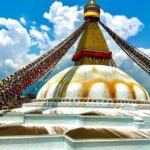
Finally, you visit Boudhanath Stupa for about 1 hour. This stupa is described as a 36-meter-high large dome-shaped structure, surrounded by prayer wheels and picture carvings of Buddha.
If you’ve spent the morning learning how Kathmandu layers Buddhist and Hindu sacred space, Boudhanath is a satisfying payoff. It’s less about royal architecture and more about the ritual environment itself.
A big practical plus: after all the Durbar Square courtyards and temple interiors, you get a different kind of scale—open stupa space and the visual rhythm of prayer wheels.
Guides Matter: Shanti, Sarita, and Tej Set the Tone
One of the strongest themes from the reviews is the quality of the guides. Names that come up include Shanti, Sarita, Shanthi, Tej, and Rabina.
Here’s what stood out in the feedback patterns:
- Guides are praised for being professional and service-minded
- They’re comfortable answering questions in detail
- Timing is described as impeccable, which matters when you’re trying to see a lot in one day
- Flexibility is valued; for example, one review praised patience during shopping and not making the experience feel rushed
For you, that translates into a better day. A guide who can explain what you’re seeing helps you avoid the common problem with fast UNESCO itineraries: you end up with photos but not understanding.
Pace and Walking: The Only Real Trade-Off
This tour is built for a full day, not a slow one. The stops are clearly planned with set durations—some short (like 5 to 15 minutes), some longer (about an hour).
If you’re comfortable moving through multiple sites, you’ll likely love the structure because it keeps the day from dragging. If you need long quiet time inside temples, plan for that trade-off. Think of this itinerary like a curated highlight reel with guided context, not a free-form wander.
Who This Tour Is Best For
This one fits best if you:
- Want to see Kathmandu Valley’s major UNESCO sites in one go
- Prefer a private car over solo navigation
- Like your culture and architecture explained, not just photographed
- Have limited time and want a full day that still feels organized
If you’re traveling with kids, or you’re very sensitive to walking, it might still be possible—but I’d approach the day with realistic expectations about steps and courtyards.
Should You Book This Tour?
I’d book it if you want the efficient, guided path through Kathmandu’s UNESCO highlights, especially if you’re staying within the Ring Road area. The value hits hardest when you compare what you’d otherwise spend in time and effort: transport juggling, entry tickets across multiple sites, and the risk of missing context.
Skip it or reconsider if you hate tight timing or want to stay at one site for half a day. This tour is designed to cover a lot of sacred terrain, and the best version of it is the one where you’re happy to move with the schedule.
If you do book, do one smart thing: come hungry for questions. With guides like Shanti and Sarita highlighted in reviews, the explanations are a big part of what makes the day click.
FAQ
What time does the tour start?
The start time is 9:00 AM.
How long is the tour?
It runs about 7 to 8 hours.
What’s included in the price?
Transport by private car, entry fees for the Heritage sites, a professional tour guide, and hotel pick up and drop off inside the Ring Road area (including Bouddha area) are included.
Is food included?
No. Food and drinks are not included.
Is this tour private?
Yes. It’s a private tour/activity, and only your group participates.
Which major UNESCO sites does the itinerary cover?
The stops include Swayambhunath, Kathmandu Durbar Square, Patan Durbar Square, Pashupatinath Temple, and Boudhanath Stupa.
Can I get a full refund if I cancel?
Free cancellation is offered. You can cancel up to 24 hours in advance for a full refund.