REVIEW · KATHMANDU
UNESCO Seven World Heritage Tour in Kathmandu
Book on Viator →Operated by Himalayan Advisor Pvt. Ltd. · Bookable on Viator
Seven UNESCO stops, one tight plan.
This is the kind of Kathmandu Valley day you plan for when time is short: a private car and guide take you from landmark to landmark without you piecing it together on your own.
I especially like the English-speaking guide approach, with clear explanations that connect Hindu and Buddhist worlds. I also like that entry fees for the seven heritage sites are included, so you can focus on the places instead of stopping to manage tickets; guides I saw named include Shanti, Pankaj, Kabita, Som, and Sarita.
One catch: it is a long, walking-heavy day, with stairs and hilltop temples, and you may want to protect your feet and energy from the start.
In This Review
- Key things to know before you go
- Price and what makes this day tour feel worth it
- Private car + English guide: the real advantage in Kathmandu
- Swayambhunath: Monkey Temple views and the 365-step warm-up
- A quick hop to Amideva Buddha Park
- Kathmandu Durbar Square and Kumari Chowk: royal power, still rebuilding
- Patan Durbar Square: Krishna Temple stonework and the Golden Temple
- Patan Museum stop: context when you want a break
- Bhaktapur Durbar Square: Nyatapola, 55 Windows, and Siddha Pokhari
- Changu Narayan: the hilltop temple that takes more time
- Pashupatinath and Boudhanath: two faiths, one UNESCO pair
- What to wear and how to pace yourself on a long day
- Should you book this Seven-Site Kathmandu day tour?
- FAQ
- How long is the Kathmandu UNESCO tour?
- What is included in the price?
- What is not included?
- Do you visit all seven UNESCO sites in Kathmandu Valley?
- Is it a private tour or a shared group?
- What should I wear?
- Is there a lot of walking or stairs?
- What’s the cancellation timeframe for a refund?
Key things to know before you go
- All seven UNESCO Kathmandu Valley sites in one day, so you get a complete first-time overview.
- Private vehicle with hotel pickup and drop-off, which is the practical way to beat Kathmandu traffic stress.
- English-speaking guide + included admission fees for the seven heritage stops, so logistics stay simple.
- A flexible pace with strong guiding, with multiple reviews mentioning guides who don’t rush you and adjust timing when needed.
- Expect real walking and stairs, including the famous climb at Swayambhunath and the extended hilltop visit at Changu Narayan.
Price and what makes this day tour feel worth it
At $180 per person, this is not a budget nap-and-tour situation. You’re paying for three big things that add up fast in Kathmandu: a private car, a guide for most of the day, and entry tickets included for the UNESCO stops.
If you’re trying to do these sites on your own, you’ll spend time figuring out routes, waiting around, and juggling tickets. On this tour, the rhythm is built for you. That matters in a city where traffic can turn a simple plan into a time sink.
Also, this is a private setup for your group (with group discounts available). So you’re not stuck in the “everyone, everywhere, always” mode that slows down meaningful stops.
The bottom line: this tour is best value when you want a high return on one day and you prefer guided context over trial-and-error navigation.
You can also read our reviews of more historical tours in Kathmandu

Private car + English guide: the real advantage in Kathmandu
Kathmandu is charming, but moving around can be chaotic. A private car with an on-the-ground English-speaking guide turns that chaos into a manageable schedule.
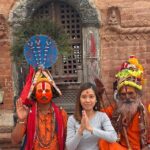
In reviews, guides like Shanti and Pankaj are repeatedly praised for being friendly and for keeping things organized without pushing. You’ll also feel the difference when your guide can answer the big questions on the spot: who built what, why the temples look the way they do, and how the Hindu and Buddhist sites sit side by side.
Practical tip: wear comfortable walking shoes from the start. This tour includes multiple temple areas where you’ll be climbing and moving around in short bursts. If you try to save your legs for later, later might run out.
Swayambhunath: Monkey Temple views and the 365-step warm-up
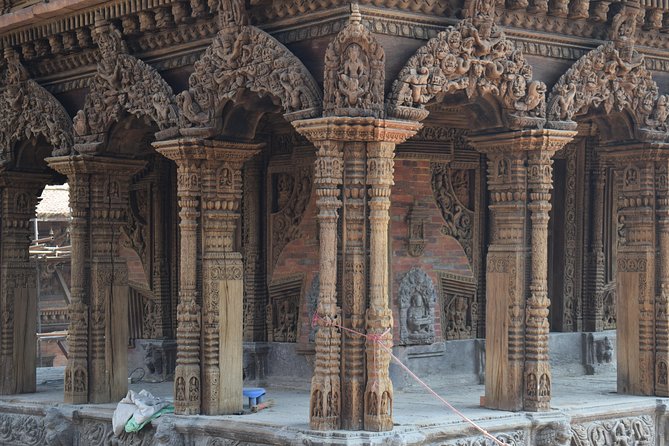
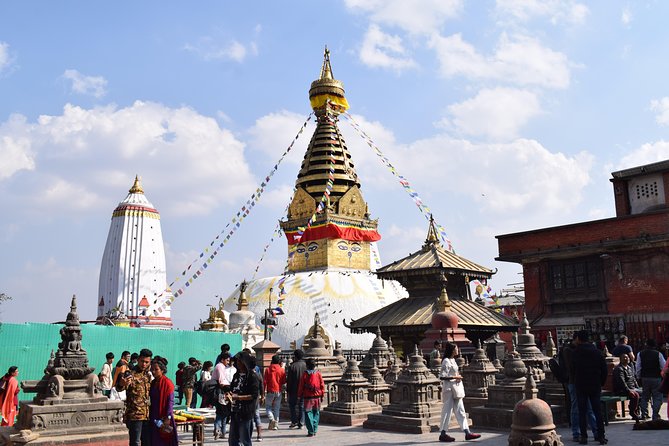
Swayambhunath (often called the Monkey Temple) is the classic opener for a reason. It sits on top of the hill, and you work your way up through steps that eventually deliver city views that are hard to forget.
On this stop, you’ll see prayer wheels and a cluster of Hindu and Buddhist shrines that coexist in the same area. It’s not a single-style, single-faith place. It feels lived-in, layered, and a bit of a visual puzzle—in a good way.
What I like about starting here is the perspective. From Swayambhunath, Kathmandu starts to make sense: where the river sits, how dense the city is, and why people keep returning to the same sacred spots for centuries.
How to enjoy it more:
- Use sun protection early, not later.
- Expect stair steps as part of the experience, not a surprise.
A quick hop to Amideva Buddha Park
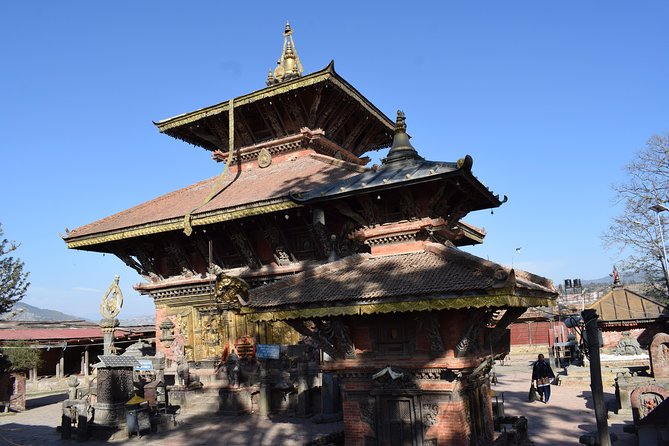
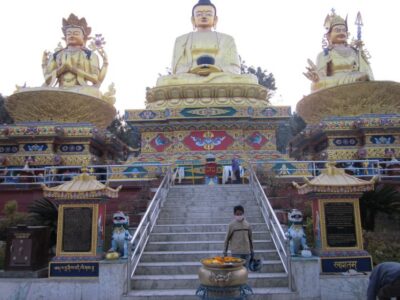
Right after Swayambhunath, you’ll get a short stop at Amideva Buddha Park. It’s brief, but it adds variety before you head into the denser palace-square areas.
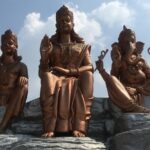
The feature here is simple: large Buddha statues on the hillside, with a calm, “pause for a moment” feel compared to the busy hilltop crowd.
Think of it as a breather stop. You don’t need to rush it, because the rest of the day is a marathon.
Kathmandu Durbar Square and Kumari Chowk: royal power, still rebuilding
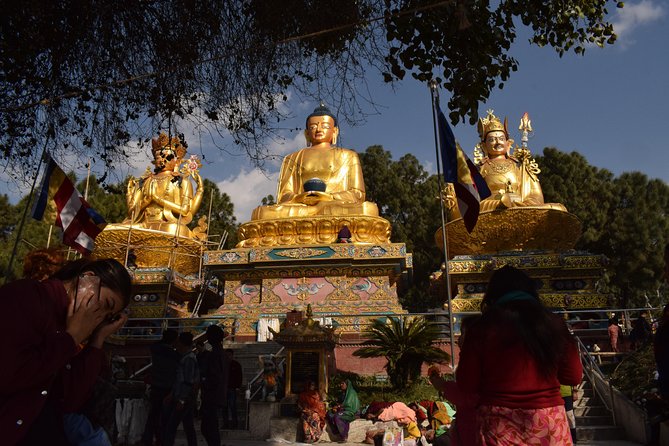
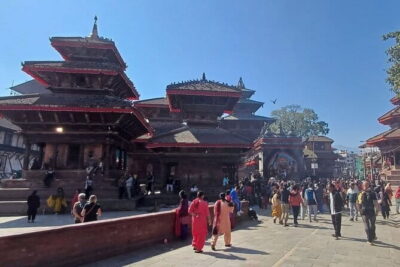
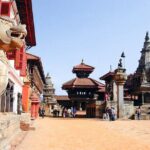
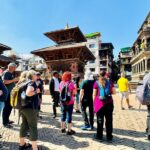
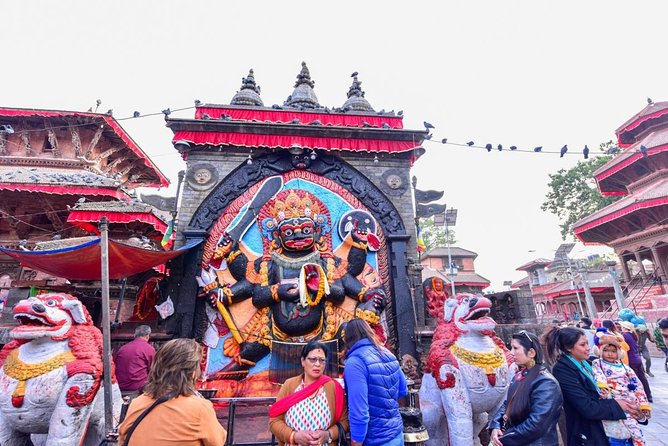
Kathmandu Durbar Square is where the old royal city energy shows up in stone and wood. It’s also a place where you may notice structures in reconstruction, which can change how the area feels. Even with that, there are still plenty of explorable spaces around.
Kumari Chowk is the key moment here. You’ll visit a sacred courtyard inside a distinctive red-brick, three-level building that was once home to the living goddess Kumari until her puberty marks a life change.
This stop is meaningful because it’s not just architecture. It’s about a role that ties religion, community, and tradition together in a very public way.
If you like to understand context as you go, this is where your guide’s explanations start paying off fast. Ask questions here. The site gives you plenty to work with.


Patan Durbar Square: Krishna Temple stonework and the Golden Temple
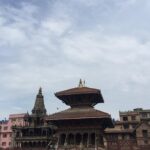
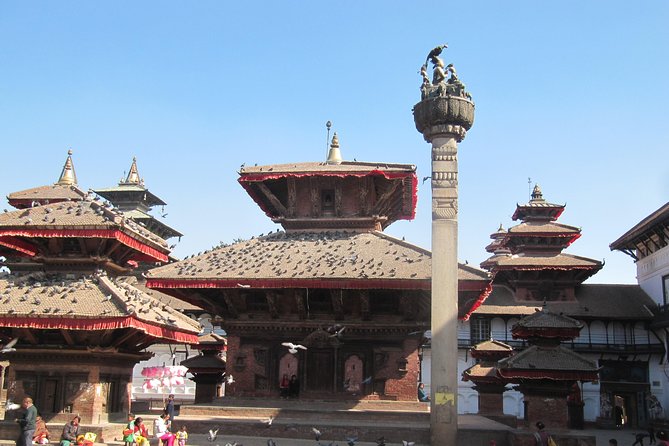
Patan Durbar Square (in Lalitpur) brings a different flavor. You’ll spend time in Newari-style spaces that feel detailed and layered, with lots of architectural focus.
One highlight is the stone-focused Krishna Temple area, where you’ll see stone-artistry and multiple shrines connected to the temple complex.
Then there’s the Golden Temple stop: Hiranya Varna Mahavihar, described as a 12th-century pagoda-style temple. You’ll notice metalwork features—bronze statues and other reflective elements are part of what makes the area eye-catching.
This is also where the day’s pacing matters. Patan feels rich, but it’s easy to feel hurried when you’re trying to keep up with a tight schedule. If your guide is doing their job right (and reviews consistently mention that), you’ll get just enough time to look closely without turning it into a checklist.
Quick sanity move: take a few minutes to just stand and look at the overall composition—rooflines, courtyards, and doorways—before you start hunting for the next view.
Patan Museum stop: context when you want a break
A visit to Patan Museum (set in Keshav Narayan Chowk) helps break up temple walking with indoor learning. It’s a short stop, but it can add context to what you’re seeing outside.
The tour description points out that you may learn about Nepalese tradition and history, and even material connected to historic Japanese civilization. Even if the museum isn’t the reason you booked, it can make the city feel less random.
If you get temple-fatigue (it happens), an indoor stop is a relief. You’ll come back outside refreshed.
Bhaktapur Durbar Square: Nyatapola, 55 Windows, and Siddha Pokhari
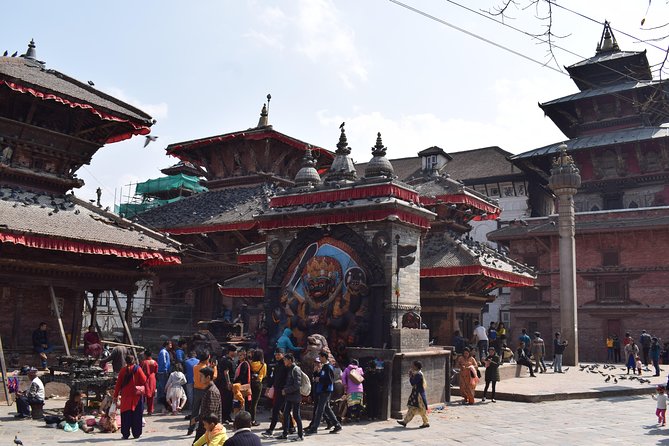
Bhaktapur is often called the City of Devotees, and the charm here is that many older buildings still feel intact. The UNESCO area gives you a walking sequence of temple landmarks that feel very “designed,” even when you’re just moving between spots.
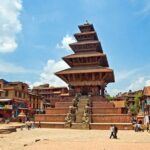
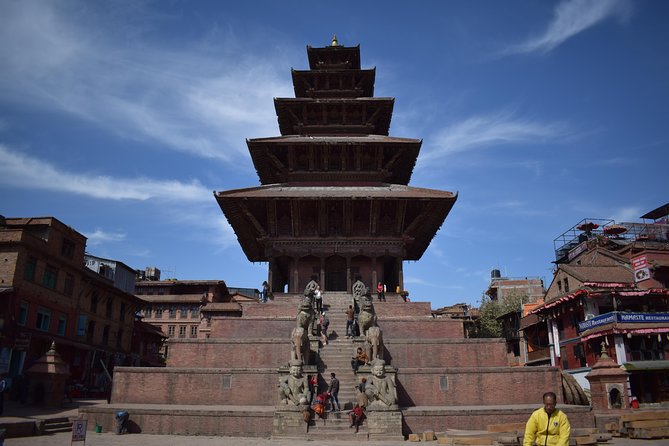
Nyatapola Temple is one of the biggest draws: a pagoda-style, five-leveled temple. You’ll hear it described as among the tallest pagodas in the region, and you can see why once you’re looking up at the sculpted rooflines.
Dattatreya Temple is another distinct stop in Bhaktapur, described as being built from a single tree stem. It’s one of those details that helps you remember this day is about craftsmanship, not just scenery.
The Palace of Fifty-Five Windows is exactly what it sounds like—windows carved in architectural beauty—so it’s a great photo stop, but also a good place to slow down and notice symmetry.
Then there’s Siddha Pokhari, a human-made pond near the first town gate. It’s listed with measurable details (171 meters long and about three meters deep), which makes the spot feel more than just scenic. It’s a local hangout vibe too.
Lunch note: lunch in Bhaktapur is your choice and not included. That’s actually a nice setup, because you can pick what fits your stomach and energy. If you want a view, your best plan is to eat somewhere convenient to your next walking cluster.
Changu Narayan: the hilltop temple that takes more time
Changu Narayan Temple is the oldest-temple anchor on this tour, described as dating back to the Licchavi period era of Nepal’s records. It’s also a hilltop stop, which is why this part of the day often feels more intense.
The temple is built with stone and wooden carvings. You can feel the craftsmanship here: you’re not only looking at a single “wow” moment, you’re reading the decoration.
Time matters at this stop. The tour gives it about an hour, which is enough to take in details without rushing into the next site.
If you’re choosing what to prioritize on a long day, I’d make Changu Narayan a top pick, because it’s a slower, more focused change of pace.
Pashupatinath and Boudhanath: two faiths, one UNESCO pair
This is where the tour shifts from palace-square energy to large religious complexes tied to belief, ritual, and pilgrimage.
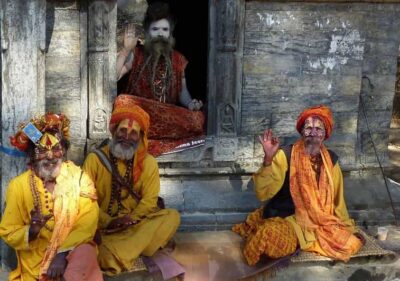
Pashupatinath Temple complex is described as huge, with more than 500 temples and shrines within about 0.64 hectares. It’s also a major Hindu pilgrimage center. If your guide explains what you’re looking at, this stop can quickly become the day’s most meaningful one rather than just another temple.
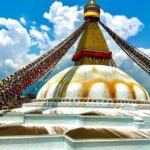
Boudhanath Stupa adds the Buddhist counterpart. It’s described as a massive stupa about 36 meters tall, with over 50 gompas around it. You’ll feel the scale right away, and the circular design makes the area feel purposeful rather than random.
If you want a simple way to enjoy both:
- Spend a few minutes observing people’s movement.
- Then look at carvings and ritual zones with your guide’s explanation in mind.
In at least one review, people mention seeing Hindu cremation activity in the Pashupatinath area as part of the evening timing. If you’d rather avoid that kind of ritual context, you should be aware that timing can affect what you notice.
What to wear and how to pace yourself on a long day
This tour requests smart casual dress code. I’d interpret that as: dress nicely enough for temples, but comfortable enough for lots of steps.
Your packing checklist should be boring and practical:
- Comfortable walking shoes (this is not a sneaker-only experiment)
- Sun protection
- Water bottle
- A light layer, especially if the weather shifts
One more real-world tip: tell your guide your walking limits early. Multiple guides mentioned in feedback are described as adjusting timing and pacing to match guests rather than forcing a rigid line.
Should you book this Seven-Site Kathmandu day tour?
Book it if:
- You have only one day and you want the complete UNESCO Kathmandu Valley overview.
- You like structured sightseeing with a guide explaining the religious and historical context as you move.
- You prefer a private car that reduces time waste in traffic.
Skip it or consider another option if:
- You don’t handle long days well. Expect walking, stairs, and a marathon schedule from morning into evening.
- You want deep time at just one site instead of a broad sweep of all seven.
If you land in the first group, this is a strong way to get your bearings fast and leave Kathmandu with a clear mental map of the valley’s sacred centers.
FAQ
How long is the Kathmandu UNESCO tour?
It runs for about 12 hours (approx.).
What is included in the price?
The tour includes a private vehicle, an English-speaking guide, entry fees for the seven UNESCO heritage sites, and hotel pickup and drop-off.
What is not included?
Lunch in Bhaktapur is not included (you choose where to eat), and tips/gratuities are not included.
Do you visit all seven UNESCO sites in Kathmandu Valley?
Yes. The tour is designed to cover all seven UNESCO-listed heritage stops in the Kathmandu Valley in one day.
Is it a private tour or a shared group?
It is a private tour/activity for your group only.
What should I wear?
The dress code is smart casual.
Is there a lot of walking or stairs?
Yes. You should expect significant walking and stairs, including major stair climbs at Swayambhunath and a hilltop temple visit at Changu Narayan.
What’s the cancellation timeframe for a refund?
Free cancellation is available up to 24 hours in advance of the experience start time for a full refund. Within 24 hours, it is not refunded.