REVIEW · KATHMANDU
From Kathmandu: Everest Flight with Window Seat and Transfer
Book on Viator →Operated by Cordial Trek Pvt. Ltd. · Bookable on Viator
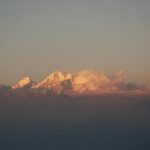
That early morning sky over Kathmandu is the point. This Everest Mountain Flight is a fast way to see the Himalayas without signing up for days on the trail. You get pickup in Kathmandu Valley, a guaranteed window seat, and an hour-long mountain flight that swings past major peaks in the Everest region.
I love how this tour is built for real schedules: you’re out the door at 5:30am, you’re back within a couple hours, and the main event is the flight itself. I also like the practical touches included in the price, like airport tax, hotel transfer, and an adventure certificate—small things that make the experience feel complete instead of rushed.
One consideration: the airport leg can be chaotic. Even with a smooth transfer, check-in and security can run slow, and if airplane windows are smudged you’ll want to be ready for worse visibility.
In This Review
- Key things to know before you go
- Why an Everest Mountain Flight Works for Kathmandu Time
- Meeting at 5:30am: Transfers, Window Seat, and the Day Plan
- The Aerial Route: Langtang Lirung to Everest and the Return Swing
- Everest from the Air: Seeing Sagarmatha in One Hour
- Namche Bazaar and Sagarmāthā National Park: What the Peaks Mean
- Makalu Barun National Park and the Second-Look Moment
- Price and Logistics: Is $69 Good Value?
- Window Smudges and Airport Chaos: How to Prepare
- Who Should Book This Everest Flight?
- Should You Book the Everest Flight with Transfer from Kathmandu?
- FAQ
- What time does the Everest Mountain Flight start?
- How long does this tour take in total?
- How long is the mountain flight itself?
- Is a window seat guaranteed?
- Does the tour include hotel pickup and drop-off?
- What happens if weather prevents the flight?
Key things to know before you go
- 5:30am departure helps you reach the flight area early and maximize daylight views
- Guaranteed window seat is the whole game for this activity
- Private hotel transfer in Kathmandu Valley keeps the morning simple
- About 50–60 minutes in the air means you see a lot without losing half a day
- Max 35 travelers keeps the group feeling manageable
- Weather-dependent flights can shift dates, so plan with flexibility
Why an Everest Mountain Flight Works for Kathmandu Time
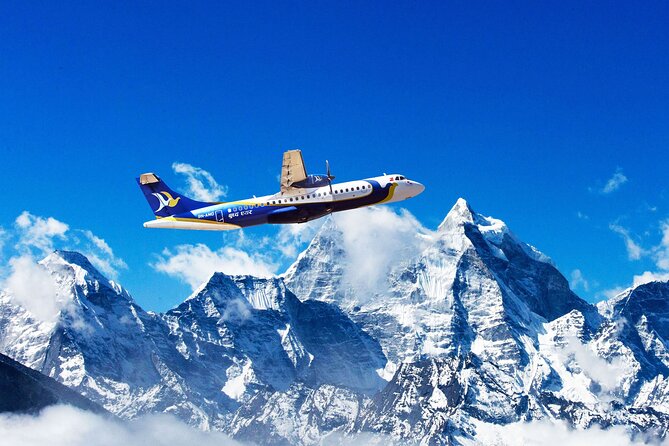
If you only have a day or two in Kathmandu, this is one of the most direct ways to get the Everest-area feeling. You trade porter bags and acclimatization concerns for a seat by a window and a quick sweep over the peaks.
The whole premise is simple: you take off from TIA (Tribhuvan International Airport) and fly a route that highlights the high mountains east of Nepal, including Mt. Everest (Sagarmatha). The plane then turns for a second look on the way back toward Kathmandu. That “go past, then re-approach from another angle” matters because mountain visibility changes fast with light and cloud cover.
You’ll also like that it runs all year long, so it’s not limited to a single season when the weather cooperates. Still, you should expect that fog, clouds, and wind can affect what happens on the day.
You can also read our reviews of more tours and experiences in Kathmandu
Meeting at 5:30am: Transfers, Window Seat, and the Day Plan
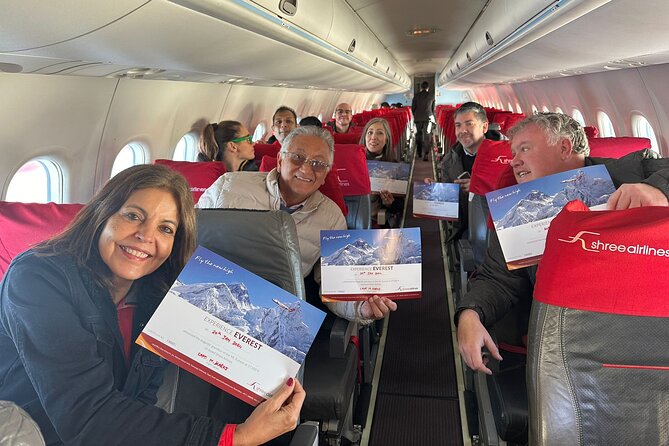
Your day starts early: the start time is 5:30am, and the total tour duration is about 2 to 3 hours. That total includes pickup and drop-off inside the Kathmandu Valley, so you’re not spending the whole morning trying to figure out transport.
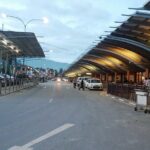
This is a private transportation setup, which is a big deal in Kathmandu. It means you’re not trying to stitch together taxi rides while keeping an eye on time. It also helps you get to the airport without that last-minute “where is everyone?” stress.
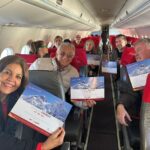
One key inclusion is the guaranteed window seat. For this type of flight, the seat choice is not a minor detail. From inside the plane, your view depends entirely on where you sit, and the best views only come if you can lean slightly, shoot photos, and keep your line of sight clear.
Finally, the tour uses a mobile ticket, and you’ll receive confirmation at booking time. You won’t be guessing what document you need at check-in.
The Aerial Route: Langtang Lirung to Everest and the Return Swing
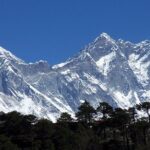
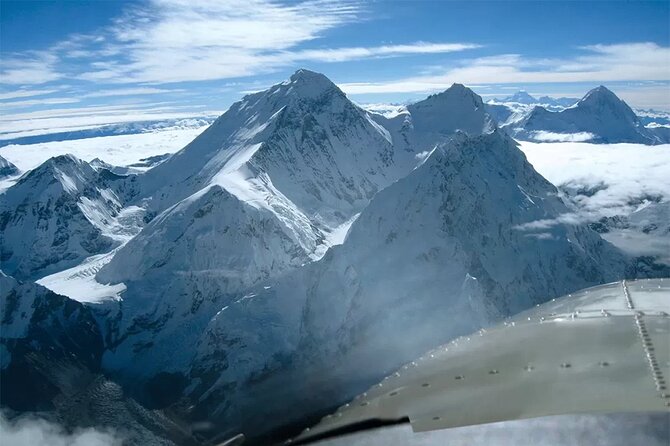
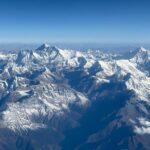
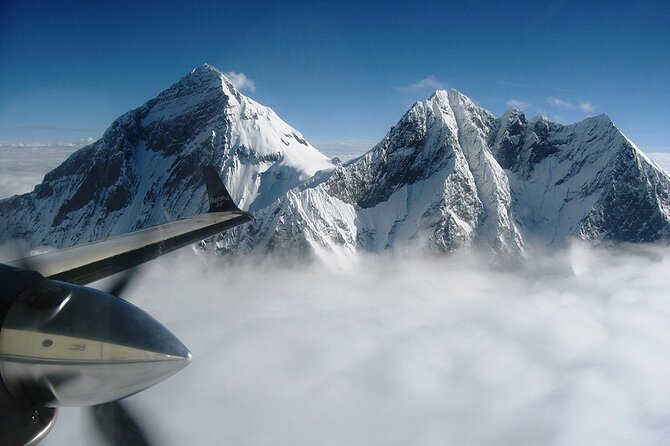
The flight route is the star of the show. The plane starts from TIA and flies east over the Himalayan arc, beginning with Langtang Lirung, then moving toward the Everest region. As you pass peaks, you’re essentially getting a moving panorama: sharp air, distant ridgelines, and the scale that only altitude can show.
The route is described as highlighting peaks east of Nepal, totaling about 20 of the highest peaks during the flight. After reaching Everest (8848m), the aircraft continues toward Chamlang, then makes a turn so you get a second look before returning to Kathmandu.
What this means for you in real life: you’re not just staring at one mountain. You get multiple chances to pick out peaks, compare shapes, and notice how clouds can slice the view. Even if you don’t get perfect clarity for every minute, the overall flight path is designed to keep your eyes busy.
Plan your expectations: the flight duration is typically 50 minutes to about an hour. That’s short enough to feel efficient, but long enough to notice the difference between “a peak in the distance” and “a peak dominating the horizon.”
Everest from the Air: Seeing Sagarmatha in One Hour
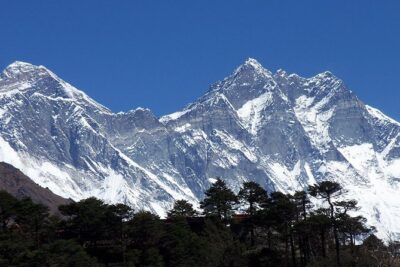
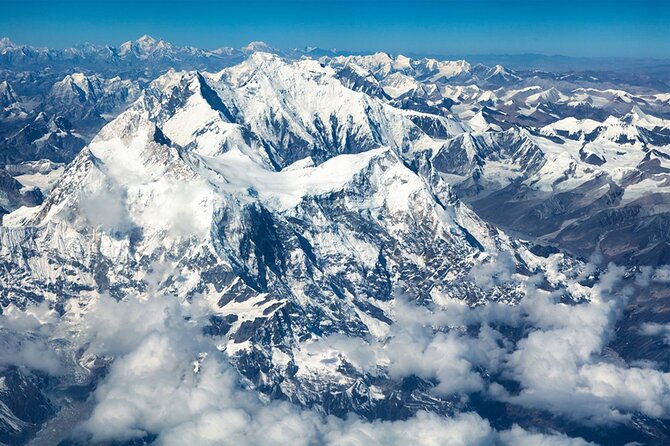
When you hear Everest flight, you’re probably imagining the famous, iconic peak. The good news is the tour is built around that moment: Mt. Everest (Sagarmatha, 8848m) is the central sighting.
From the air, Everest isn’t just about the height number. It’s about scale. On the ground, it’s often a distant silhouette. From above, you can sometimes see how the mountain sits in the surrounding ridge systems and how cloud layers break over the slopes.
You also get the broader geography that surrounds Everest. The flight route is tied to the Everest region dominated by Sagarmāthā National Park—a fact that matters because it helps you understand what you’re actually looking at, not just a single dot on the horizon.
One more practical note: because flights are weather-dependent, your best shot at a clean view is on days with clear skies. If clouds roll in, Everest can turn into a fog-edged shape. That doesn’t ruin the flight—it just changes the type of photos you’ll get.
Namche Bazaar and Sagarmāthā National Park: What the Peaks Mean
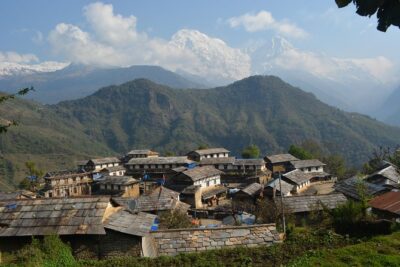
The itinerary lists stops that feel more like trekking stops than air-view stops, including Namche Bazaar and Sagarmāthā National Park. In practice, what you get from an airplane is interpretation from above: you’re likely flying over the broader areas associated with these names, even if you aren’t stepping into town or hiking trails.
Namche Bazaar is known as a key hub on routes toward Everest. Seeing it as part of the experience (even from the sky) adds meaning. It’s not just mountains; it’s the human side of the Himalayas—where trekkers rest, resupply, and adjust plans.
Sagarmāthā National Park is the official protected area dominated by Everest. When you connect that park name to what you see overhead, it helps you understand you’re flying through a real geographic zone, not a generic “mountain view” postcard.
Here’s the takeaway you can use while you’re on the plane: try to pick out features in layers. Look for how ridges line up, where valleys open, and how cloud cover changes the visibility of different elevations. The flight gives you a moving “map,” and you’ll start to recognize the Everest region as a system, not a single summit.

Makalu Barun National Park and the Second-Look Moment
After the main Everest sweep, the flight moves on toward Chamlang, then turns back for a second look. That second pass is one of the underrated parts of the route. Light shifts, clouds can thin, and the angle changes enough that the view can feel new again.
The itinerary includes Makalu Barun National Park as well. Even though you’re not landing or visiting it on foot, the inclusion signals you’re covering a wider slice of eastern Himalaya beyond just the Everest immediate area. Makalu Barun is known as an eastern extension area in the region of protected landscapes, and being aware of that adds context to what you’re seeing from above.
You might find the second-look section especially valuable if the first half is partially obscured. If clouds block one angle, you sometimes get a clearer view when the plane swings and the direction changes. That’s why the route matters more than just “seeing Everest.”
Price and Logistics: Is $69 Good Value?
At $69 per person, this flight sits in the “easy to justify” category for many Kathmandu visits. You’re paying for time efficiency and transport, not for a full-day tour machine.
Here’s what you should look at when judging value:
- You’re not just buying a flight. You also get hotel pickup and drop-off, airport tax, and a guaranteed window seat.
- The total time is short (2–3 hours), which is a big deal if you’re trying to fit things around jet lag, altitude worries, or a busy itinerary.
- The aircraft experience is weather-dependent, so the included adventure certificate and route structure make the payout feel more complete.
The main “cost” isn’t money—it’s your morning. You start at 5:30am, and that early wake-up can feel like a tax if you were hoping to sleep in. Still, if your priority is a quick Everest-area payoff, the price-to-time ratio is strong.
Also consider group size. With a maximum of 35 travelers, you’re not in a huge cattle-line situation, though the airport itself can still feel busy.
Window Smudges and Airport Chaos: How to Prepare
This is the part you can control a little, and it can make or break your photos.
From the feedback pattern, the biggest issues that can affect the experience are practical ones:
- check-in and security can involve long lines and occasional technology glitches (broken computers show up in reports)
- people can feel rushed, especially if you’re trying to get through security quickly
- window cleanliness can impact visibility
So here’s my advice for being ready:
- Dress for an early start and changing conditions. Even if Kathmandu mornings are cool, the airport environment can feel dry and brisk.
- Bring your own small cleaning option for glasses or camera lenses. If airplane windows are smudged, a quick wipe can improve what you see and photograph. You won’t fix everything, but you can improve your odds.
- Keep your mindset simple: the airport is the chaotic part; the flight is the reward. Plan to breathe, move calmly, and follow instructions fast.
Even with a transfer and a window seat guarantee, the airport process can still be stressful. If you treat it like the warm-up for the main event, you’ll enjoy the flight more.
Who Should Book This Everest Flight?
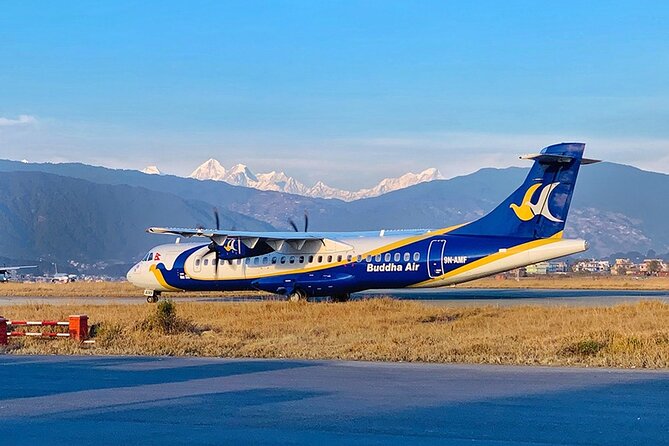
This is best for you if:
- you want an Everest-area view without trekking days away
- your time is limited and you don’t want a long commitment
- you care most about the view from above and not about walking around or guided museum-style stops
- you’re okay with an early start and weather-dependent scheduling
It may be less ideal if:
- you hate airport stress and want a very calm, slow-paced start
- you are extremely sensitive to photo quality and need perfect window clarity (because windows can be smudged)
- you want a flexible day with no early wake-up
Group size is capped at 35, which helps, and the private transfer means you’re not scrambling to coordinate transportation with strangers.
Should You Book the Everest Flight with Transfer from Kathmandu?
If your goal is the fastest, most direct Everest-area view, I think this is a strong booking. The combination of guaranteed window seat, hotel pickup/drop-off, and an hour of mountain flying at an easy $69 price point is hard to beat for value.
Book it if you can handle an early start and you understand that the day’s biggest variable is weather. If clouds are rolling in, you may need to accept partial views. Still, the route structure—peaks along the east Himalayan arc, the Everest moment, and a second-look return—keeps the experience worthwhile even when conditions are imperfect.
If you’re the type who needs zero airport friction, then be realistic: the airplane is smooth, but the airport can be a bit of a gauntlet. For most people, though, that’s a small price for seeing Everest from the sky.
FAQ
What time does the Everest Mountain Flight start?
The start time is 5:30am.
How long does this tour take in total?
The duration is approximately 2 to 3 hours, including pickup and drop-off.
How long is the mountain flight itself?
The mountain flight is about an hour (reported as roughly 50 minutes to up to an hour).
Is a window seat guaranteed?
Yes, the tour includes a guaranteed window seat.
Does the tour include hotel pickup and drop-off?
Yes. Pickup and drop-off from hotels inside Kathmandu Valley are included.
What happens if weather prevents the flight?
This experience requires good weather. If it’s canceled due to poor weather, you’ll be offered a different date or a full refund.