REVIEW · KATHMANDU
Everest Base Camp helicopter tour with landing
Book on Viator →Operated by Adventure Master Trek · Bookable on Viator
Everest Base Camp by helicopter starts before sunrise. What makes this day trip special is the landing at Everest Base Camp and the fact that they build in health monitoring tools like an oximeter and an oxygen kit. One thing to think about: it’s expensive, and if weather turns or you’re over the weight threshold, your plan can shift fast.
I like how the whole experience is built around big views with minimal effort. You’ll fly for about 5 hours, get picked up early from your Kathmandu hotel, and enjoy a gourmet mountain picnic once you’re at the right altitude. This is a high-cost way to get the Everest feeling without trekking for days.
In This Review
- Key highlights you’ll feel right away
- Why land at Everest Base Camp instead of just flying over
- The early morning rhythm: Kathmandu pickup to Lukla area flying
- Kala Patthar and Everest views: what you get from the air
- Syangboche and the Everest View Hotel stop: comfort at the threshold
- Everest landing plus mountain picnic: how the Base Camp time feels
- Safety and altitude support: the oxygen and oximeter angle
- Price and value: $1,600 plus the extras you must plan for
- Weather, timing, and weight rules that can change everything
- Who should book this helicopter tour, and who might rethink it
- Should you book the Everest Base Camp helicopter landing?
- FAQ
- What time is pickup?
- How long is the tour?
- Is this a private helicopter?
- Where is the ticket redemption meeting point?
- Does the tour include breakfast?
- Are Sagarmatha National Park permits included?
- Is travel insurance included?
- Is airport tax included?
- Is there a weight limit?
- What happens if the tour is canceled due to weather?
Key highlights you’ll feel right away
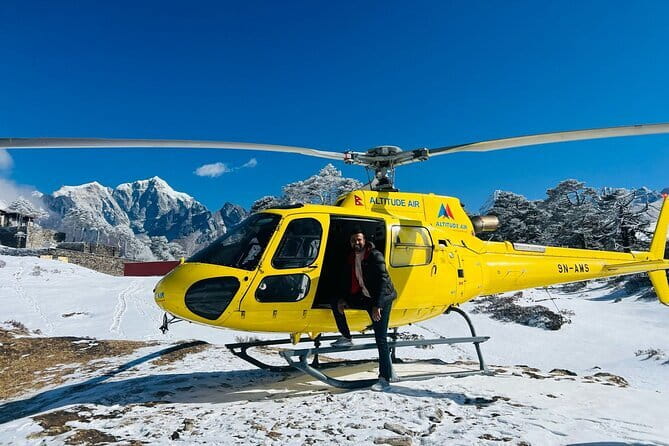
- A real Everest Base Camp landing, not just a flyover
- Oximeter checks and emergency oxygen/first-aid support included
- Multiple Everest-area viewpoints from the air, including Kala Patthar
- A Syangboche stop for dining at the Everest View Hotel area
- Small-group/private helicopter setup (up to 5 per ride)
Why land at Everest Base Camp instead of just flying over
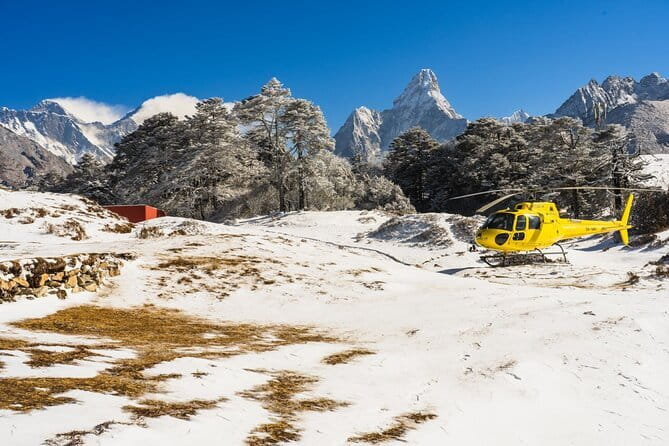
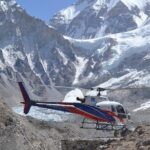
Here’s the main reason this tour works for so many people: you don’t just look at Everest from a window. You actually step onto the Base Camp area. That changes the whole vibe. From the air, the Himalaya can look like a postcard. On the ground, it feels real—bigger, quieter, and more intense, even if your time there is brief.
I also like that this tour is designed for the “I have limited time” traveler. You get a full Everest-day highlight without the long acclimatization hike that traditional routes demand. The tradeoff is that it’s not cheap, and it depends heavily on weather. Still, if your priority is a bucket-list landing, helicopter access is the fastest way to get it.
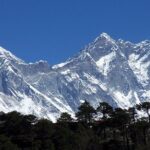
You’re also not locked into a single viewpoint. The route includes air time over major peaks like Everest, Lhotse, and Nuptse, plus a Kala Patthar flyover for high-altitude perspective. When you’re paying this kind of money, that variety matters—you’re buying more than one angle.
You can also read our reviews of more tours and experiences in Kathmandu
The early morning rhythm: Kathmandu pickup to Lukla area flying
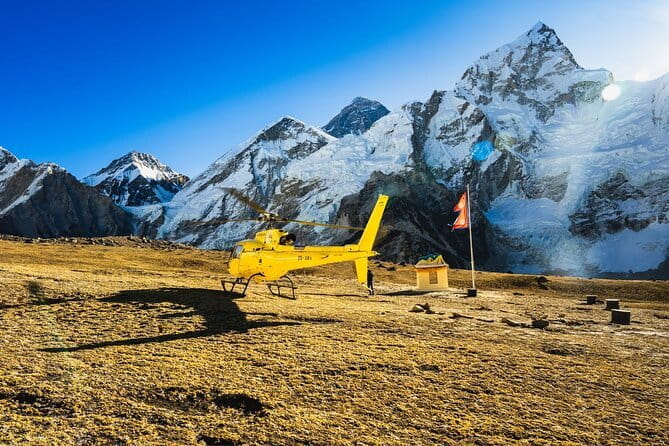
The day starts early—5:30 am pickup time. That early departure is not a gimmick. It’s practical. Clear skies matter up high, and morning weather often gives better visibility. You also want enough time for the whole airport flow without rushing.
You’ll be transported to the domestic airport area, and the process is handled so you can get to the helicopter quickly. Once airborne, you’ll cover a lot of ground in a short time, with views over rural Nepal before reaching the Everest region. One detail that comes up in firsthand accounts is a short refuel stop somewhere in the mountains. It’s usually brief, but it’s part of what makes this route work logistically.
This tour also includes flying to and from the Lukla area. Your flight pattern includes a Lukla landing and later a final takeoff from Lukla, depending on how the day’s sequence runs. Lukla—often associated with the traditional trekking gateway—adds a satisfying sense of “I’m in the Everest system,” even if you’re not hiking.
One practical consideration: the itinerary is compact. If you’re prone to motion sickness, being up in a helicopter early in the day can be a factor. Also, you’ll want to travel light and be ready for altitude air and chilly conditions.
Kala Patthar and Everest views: what you get from the air
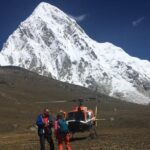
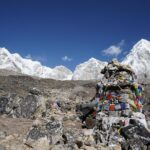
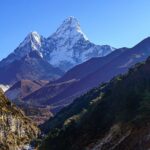
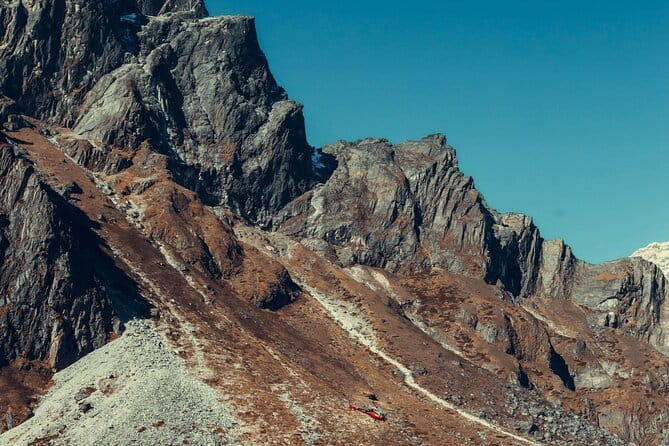
Kala Patthar is famous because it’s one of the best high viewpoints in the region. In this helicopter itinerary, you don’t hike there—you get the payoff from above. The plan includes a flyover of Kala Patthar and Everest Base Camp, giving you a bird’s-eye look at where the trekking routes and ridgelines converge.
From the helicopter, you tend to get two kinds of sight lines. First, you see the big geometry: the sharp ridges, the fall-off of glaciers, and how peaks stack against each other. Second, you get closer, faster views than you’d ever get by staying in one place at altitude. That speed is a double-edged sword—great for views, but it means you’ll want to be ready with your phone/camera settings before takeoff.
I also like that the tour is structured around multiple “wow moments,” not just one. The helicopter route is designed to keep you looking around. People often leave impressed by the sheer number of vantage points, because the vehicle and flight path naturally reposition your perspective.
If the day is clear, this is where you’ll feel the value most. Visibility can make or break the Everest experience, so you’re effectively buying a weather-dependent viewing window.
Syangboche and the Everest View Hotel stop: comfort at the threshold
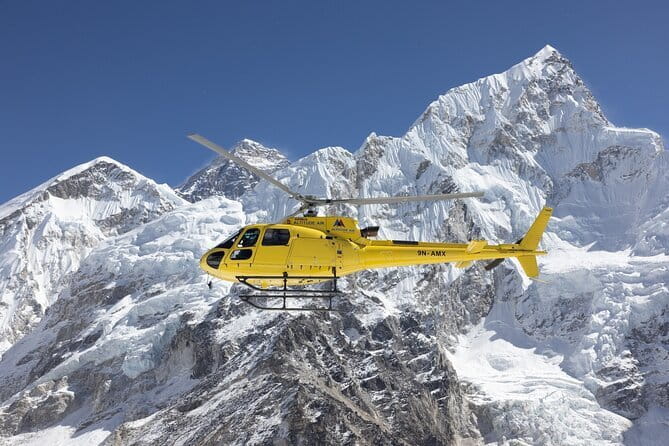
After the main flight legs, the tour includes time on the ground near Syangboche, described as the gateway area with a dining experience at the Everest View Hotel location. Even if you’re not spending hours, that stop is meaningful: it breaks up the day and gives you a chance to warm up, eat, and reset between flight segments.
This part is also psychologically important. You’re already in the Everest zone by this point, but dining at altitude feels like a “you made it” moment. It’s not just a meal stop. It helps you process what you’ve seen and gives your body a chance to calm down after helicopter motion.
Keep your expectations realistic: you’re not there for sightseeing tours around the hotel grounds in the way you might be on a multi-day stay. The stop is built for the schedule—get you comfortable, feed you, then return to the flight rhythm.
Also note what’s included and what isn’t. Breakfast is listed as an extra cost (so plan that in your morning), but the tour includes a gourmet mountain picnic tied to the Base Camp time on the ground.
Everest landing plus mountain picnic: how the Base Camp time feels
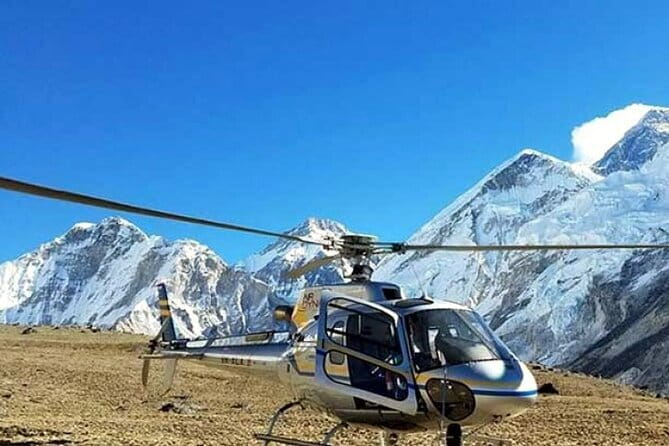
The center of the day is the Base Camp landing and the on-site picnic. That’s the moment most people are paying for. A landing is a rare experience in this region, and it changes the day from “spectator” to “participant.”
Here’s what I think you should expect, based on how these operations are set up: you’ll be guided through the process once you arrive at the Base Camp area, and the time on the ground is designed to maximize the experience while keeping things efficient. You’ll also be sitting in a cold, high-altitude environment where every small comfort matters—so the picnic is more than a nice add-on. It’s part of making the landing feel complete.
In practice, the tour includes health support gear. There’s a service fee for an oxygen tank and first-aid kit, and you’ll also have an oximeter to check pulse and oxygen saturation. That doesn’t mean you should ignore cold, wind, or altitude reality. It means the team is watching the right indicators.
And yes, even if you’re not hiking, it’s still an altitude setting. You’ll want to take slow breaths, sip water if you can, and avoid dramatic exertion while you’re outside.

Safety and altitude support: the oxygen and oximeter angle
Let’s talk safety in plain terms. This tour includes helicopter insurance coverage for passengers, plus access to medical-related support like oxygen tank and a first-aid kit service fee. There’s also an oximeter used to monitor oxygen saturation, pulse, and heart rate.
I appreciate this because it treats altitude as a variable, not a detail. Helicopter trips remove the physical strain of trekking, but they don’t remove altitude itself. Everest Base Camp sits in a high-altitude environment. Monitoring helps the team make quick calls if someone’s numbers look off.
Also, pay attention to the weight-related rules. The tour lists a total weight per passenger limit of 207 lbs, and if you’re more than 100 kg, it will cost extra. That’s not trivia. It affects your eligibility and your price.
One more safety reality: helicopter days are weather-driven. The tour requires good weather, and if it’s canceled due to poor conditions, you’ll either get a different date or a full refund. That flexibility is helpful, but it also means your calendar needs some breathing room.
Price and value: $1,600 plus the extras you must plan for
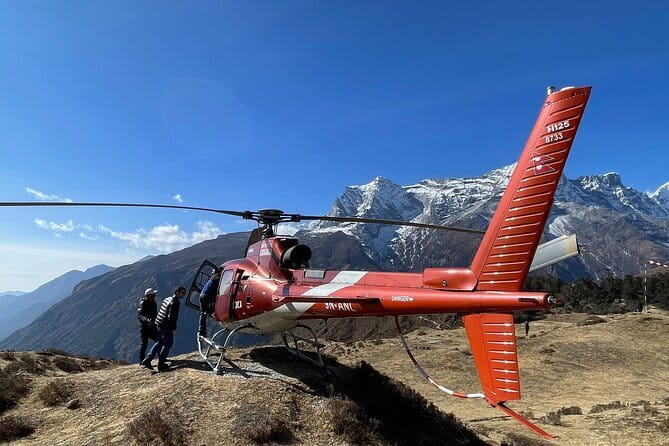
At $1,600 per person, this isn’t a casual activity. You’re paying for a private helicopter ride with Base Camp landing, plus multiple high-altitude viewpoints, plus on-board/ground support gear for oxygen and first-aid, plus the medical monitoring via oximeter.
What’s included:
- Private transportation
- Helicopter insurance (covers passengers too)
- Oximeter checks
- Service fees for oxygen tank and first-aid kit
- Private helicopter ride to Everest Base Camp (up to 5 people per ride) and return flight to Kathmandu
- A mountain picnic at altitude
What’s not included (and these add up):
- Breakfast cost: $35
- Travel insurance
- Sagarmatha National Park permits: $45 per person (two permits)
- Airport tax at Tribhuvan International Airport: $7 per person
So the real budget check is simple: you’re not just comparing $1,600 to other tours. You’re comparing the whole package of “helicopter + landing + altitude food + safety systems,” then adding the mandatory extras (permits and airport tax) and any personal choices (like breakfast and travel insurance).
If you’re doing this because you want a one-day Everest landing, it can be strong value relative to alternatives that take weeks, but it still demands careful money planning.
Weather, timing, and weight rules that can change everything
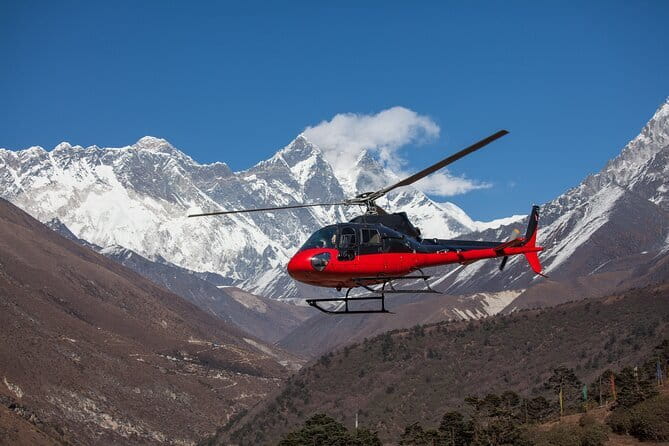
This tour requires good weather. That’s not a marketing line—it’s the core constraint for high-altitude helicopter operations. If the day turns cloudy or conditions reduce visibility, you may get offered a different date or a full refund. Either way, you need to plan with a little flexibility.
Timing matters too. You’ll start at 5:30 am, and the whole schedule moves based on flight windows. That means no late breakfast in bed. Come ready.
Now add the weight constraints. The tour lists:
- Total weight per passenger: 207 lbs
- If you are more than 100 kg: extra cost applies
That’s important for families and couples splitting costs. It’s also important if you’re near the threshold. If you’re unsure, ask directly before you finalize.
The biggest practical tip I can give you: treat this like a “weather appointment,” not a guaranteed sightseeing ticket. If you only have one day in Kathmandu and no flexibility, your risk goes up.
Who should book this helicopter tour, and who might rethink it
This tour is a great match if you want Everest access with minimal time and no multi-day trekking. The moderate physical fitness requirement fits people who can handle an early start and some cold exposure, but don’t want days of hiking or the physical effort of reaching the region by foot.
It also suits you if you’re traveling as a small group. The helicopter ride is private up to 5 people per ride, which can feel more comfortable than joining a larger shared group day.
Who should consider alternatives:
- If you strongly need a guaranteed fixed date regardless of weather
- If you’re over the stated weight limits and the pricing/eligibility details won’t work
- If your budget can’t handle the extra costs like breakfast, permits, and airport tax
If you’re the type who wants to “feel” Everest rather than just see it, the Base Camp landing plus picnic is the key. It’s the closest thing to a direct hit on your Everest bucket list without committing to a long trek.
Should you book the Everest Base Camp helicopter landing?
If you’re dreaming of stepping onto the Everest Base Camp area and you can accept the weather dependency, I think this is a smart, high-impact choice. The included health monitoring tools, oxygen/first-aid support, and the small-group helicopter ride help justify why it costs this much.
My decision rule is simple: if you have at least some scheduling flexibility and your group fits the weight requirements, booking makes sense. If you’re on a tight timeline with no backup day, you’re taking on risk that a weather change could disrupt.
FAQ
What time is pickup?
Pickup starts at 5:30 am.
How long is the tour?
It runs about 5 to 6 hours total (with flight time of about 5 hours).
Is this a private helicopter?
Yes. The helicopter ride is private up to 5 people per ride.
Where is the ticket redemption meeting point?
Ticket redemption is at Hotel Everest View, Lukla – Shyangboche Marg, Khumjung 56000, Nepal.
Does the tour include breakfast?
No. Breakfast costs $35 extra.
Are Sagarmatha National Park permits included?
No. The two permits cost $45 per person and are not included.
Is travel insurance included?
No, travel insurance is not included.
Is airport tax included?
No. Airport tax at Tribhuvan International Airport is $7 per person.
Is there a weight limit?
Yes. Total weight per passenger is listed at 207 lbs. If you are more than 100 kg, there will be extra cost.
What happens if the tour is canceled due to weather?
If canceled due to poor weather, you’ll be offered a different date or a full refund.