REVIEW · KATHMANDU
Monkey Temple – Swayambhunath Tour – Private/Small Group
Book on Viator →Operated by Amazing Kathmandu Tours · Bookable on Viator
Monkeys aren’t the point here; the stories are. This Swayambhunath (Monkey Temple) small-group tour threads together Kathmandu’s origin myths and the living religious life around the hilltop. You’ll walk through neighborhood temples before reaching the main stupa, with an English-speaking local guide connecting the dots between Hindu and Buddhist traditions.
What I like most is the small group size (max 5), which keeps the pace human and questions welcome. I also love that the guide’s talk is practical, not just lecture—especially if you’re into how legends explain why people pray, celebrate, and build.
One thing to plan around: Swayambhunath involves stairs (often described as 365) and some uneven walking, so it may not suit anyone with knee issues or severe asthma. Also, the main Swayambhunath entrance fee is paid separately in cash at the temple.
In This Review
- Key things you’ll notice on this tour
- Why Swayambhunath feels different from a typical temple visit
- From Thamel to the first shrines: setting the myth stage
- Bhagwan Pau and the walk toward the 365-stair entrance
- The Swayambhunath hilltop: the stupa, the stories, and the view
- Harati Ajima Temple: when architecture and myth meet
- World Peace Pond: a calm counterpoint on the west side
- Manjushree Temple and the Kathmandu Valley origin viewpoint
- Amideva Buddha Park: big statues, big scale, simple circuit
- Shova Bhagawati and the river-adjacent shrine feel
- Walking back to Thamel: finishing the loop without stress
- Price and tickets: what $15 really covers
- Who should book (and who should skip it)
- Quick practical tips before you go
- Should you book this Monkey Temple / Swayambhunath tour?
- FAQ
- How long is the Monkey Temple – Swayambhunath tour?
- How many people are on the tour?
- Is the Swayambhunath entrance fee included in the tour price?
- Where does the tour start?
- Is an English-speaking guide provided?
- What fitness level do I need?
Key things you’ll notice on this tour
- Max 5 people means you actually get answers, not just background noise
- Thamel start at Pumpernickel Bakery makes the meeting point easy to find
- Hindu + Buddhist connections show up at multiple stops, not just the main stupa
- Temple-to-temple walking gives you a sense of the area’s daily religious rhythm
- Big photo moments with viewpoint time come built into the route
- One cash ticket for Swayambhunath keeps the rest of the experience straightforward
Why Swayambhunath feels different from a typical temple visit
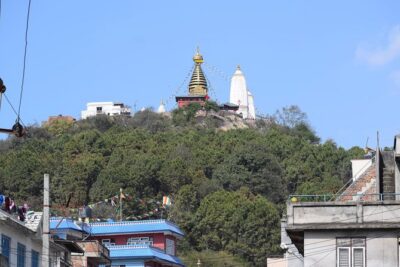
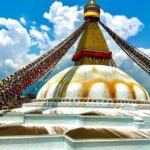
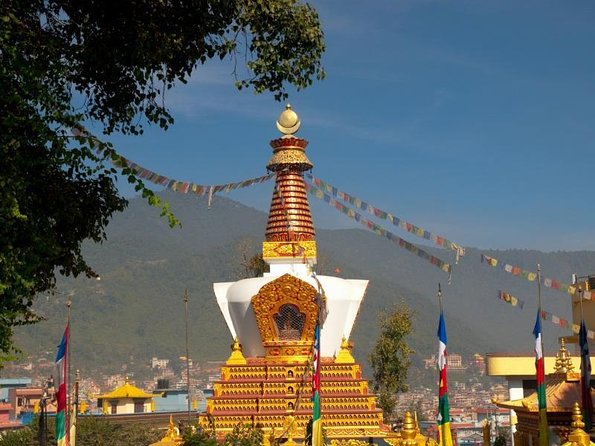
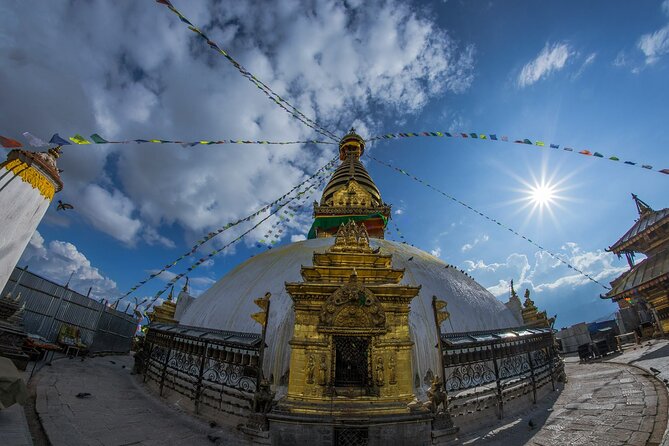
Swayambhunath is one of Nepal’s most important Buddhist stupas, but the experience doesn’t feel like a single “must-see monument.” It’s more like a small spiritual world. The hilltop stupa sits at the center, while nearby shrines and ponds pull you into the surrounding stories.
This is where I think the tour format helps. You’re not just dropped at one ticket window. You start in Thamel, move through the neighborhoods, and then arrive ready to understand what you’re looking at. When religious ceremonies are happening, your guide can also help you make sense of what you’re seeing and why it matters.
And yes, it’s called the Monkey Temple for a reason. But in this tour, the focus stays on people, legends, and the meaning behind the sacred spaces.
You can also read our reviews of more private tours in Kathmandu
From Thamel to the first shrines: setting the myth stage
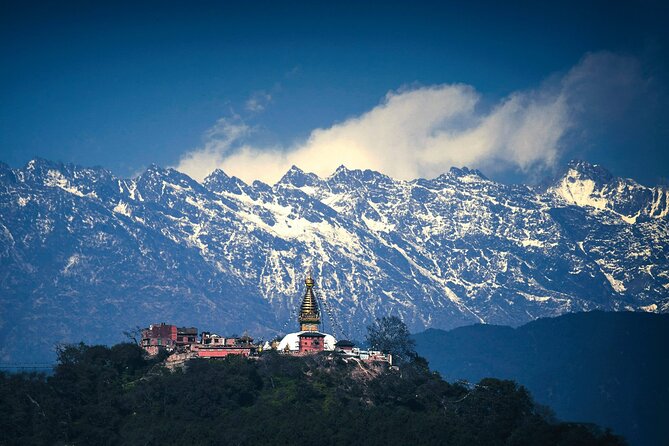
The tour starts at Pumpernickel Bakery in Thamel. From there, you head toward Swayambhu—about a 30-minute reach to the first key area. It’s a sensible start if you’re short on time, because you’re not wasting the morning zigzagging.
Before you even hit the hill, you pass through stops tied to Kathmandu’s older religious map. Two examples you’ll hear about along the way:
- Indrayani / Luti Ajima: linked to a 13th-century Licchavi king, Gunakamdev, who (in local legend) established eight Matrikas connected to Khadga. This kind of story turns a quiet shrine stop into a quick lesson in how dynasties and religion get tied together.
- Bijeshwori Temple: considered sacred to both Hindu and Buddhist followers, with a strong pilgrimage reputation among Tibetan Buddhists. The point isn’t to memorize the affiliations—it’s to notice how shared worship can shape a neighborhood.
These early stops are good value because they make the later hilltop complex easier to read. Without them, Swayambhunath can feel like a “pretty stupa + views” day. With them, it starts to feel like a place with layers.
Bhagwan Pau and the walk toward the 365-stair entrance
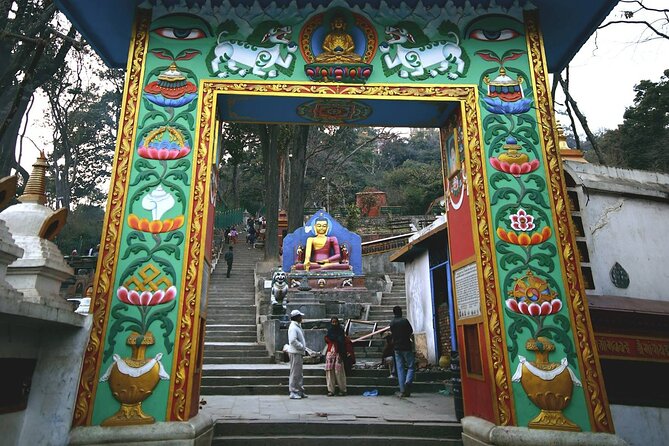
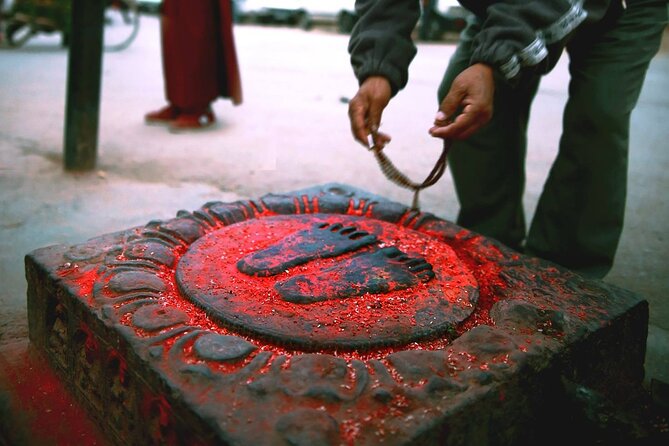
Next you reach Bhagwan Pau, described as the feet of Lord Buddha at the bottom of the Swayambhu hill. This matters because it acts like a threshold. You’re transitioning from the neighborhood approach into the sacred climb.
You get a short reset time here—rest, drink water, and get ready—before the main entrance begins with 365 stairs. Even if you don’t count every step (please don’t—your legs will revolt), the idea of 365 gives the climb a calendar feel. It’s religion translated into architecture and rhythm.
Practically: plan to move at a steady pace. The tour is about walking with stories, not racing up and down. If you’re sensitive to stairs, this is the moment to decide how you’ll handle the climb.
The Swayambhunath hilltop: the stupa, the stories, and the view
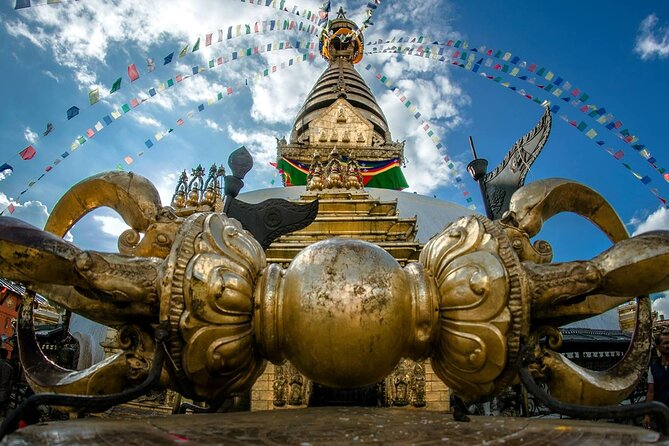
This is the highlight. Swayambhunath is treated as the main attraction, and you’ll spend about 40 minutes exploring the neighborhood around the stupa.
The key value here is interpretation. Your guide ties the legends of how Swayambhunath is described as self-originated to the broader origin stories of the Kathmandu Valley. That turns the stupa from a landmark into a living reference point—one locals connect to creation myths and spiritual explanations.
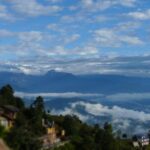
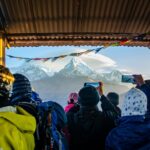
And you don’t just get story time. The hilltop area naturally delivers panoramic moments. If you’re doing Kathmandu in a hurry, this is a smart use of a few hours: you get a major sacred site plus the high-ground perspective that makes the city make sense.
One logistics note: the Swayambhunath entrance fee is not included. You’ll pay 200 Rupees in cash directly to temple authorities (about US$1.50). Keep some cash ready. Paying at the temple is normal here, but it’s still the one place where you don’t want to show up empty-handed.
Harati Ajima Temple: when architecture and myth meet
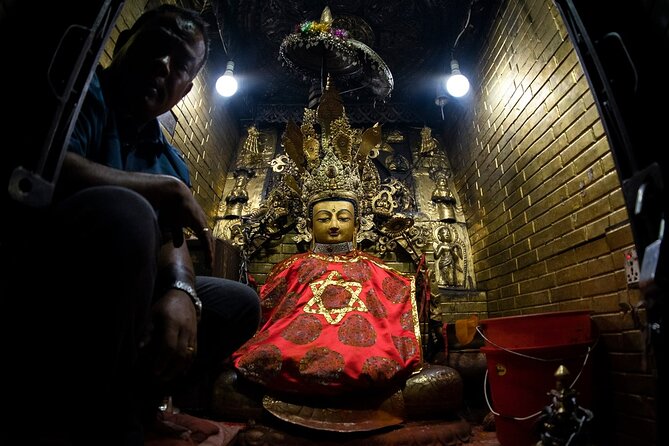
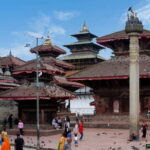
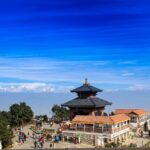
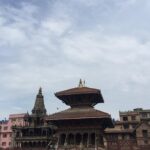
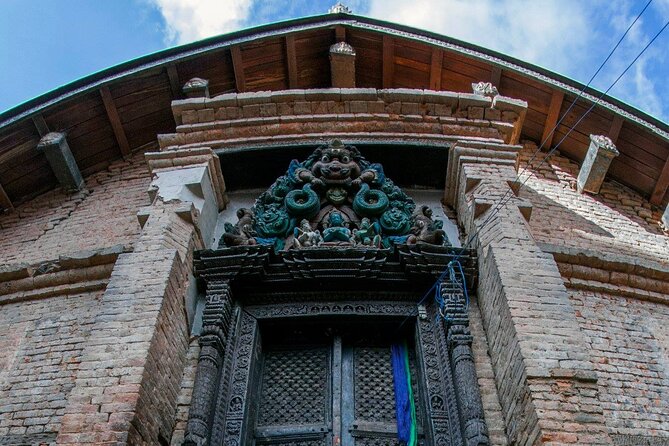
After the main stupa area, the route shifts to smaller-scale but meaningful stops. One is Harati Ajima Temple, where you’ll notice the unique Nepalese pagoda-style architecture.
This stop is about turning a name into a story. You’ll hear how Harati became Mother Harati—including why people around the valley worship her. Even though this is a short segment (about 5 minutes), it’s the kind of stop that gives you a fuller sense of who the “important figures” are in local devotion.
This is also where you’ll appreciate the guide’s approach. The stories aren’t random folklore thrown at you. They connect the physical space to the religious reasons people keep returning.
World Peace Pond: a calm counterpoint on the west side
Next comes World Peace Pond, on the western side of Swayambhunath. In the middle sits a brass statue of a Buddha on a lotus flower. There are also words on the wall written in English, which can make this stop feel more accessible if you’re not reading Nepali scripts.
This is a good pause in the middle of temple-hopping. If the stairs and crowds (even in small group mode) start to wear you down, ponds like this offer a visual breather. You’re still in the sacred space, but you’re not climbing or pushing through another entrance.
Manjushree Temple and the Kathmandu Valley origin viewpoint
From the pond area, you head to Manjushree Temple, a smaller shrine dedicated to Maha Manjushree. Here the focus shifts back to Kathmandu’s origins—specifically the legend of how the valley was turned into a city from a great lake.
You’ll also get panoramic views of the western side from this part of the hill. That’s one reason this stop earns its time. It gives you a mental map: valley legend in one direction, city reality in another.
If you enjoy “why this place matters” more than just “what this place looks like,” this is one of the stops that will click.
Amideva Buddha Park: big statues, big scale, simple circuit
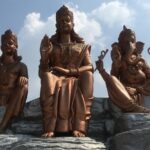
Then you’ll walk through Amideva Buddha Park, known for three enormous idols:
- Amitabha Buddha (Amideva) at 67 feet
- Chenrezig and Padmasambhava at 64 feet each
You’ll do a walk-around, and your guide connects these figures to the broader spiritual story of Buddhism. Even if you don’t care about statue dimensions, the scale alone helps you understand why people treat this place as special. It’s hard to be blasé next to figures that size.
This stop also helps pace the day. After the stupa complex, the park gives you open space and a circuit you can take in without constant re-entry to tight temple passages.
Shova Bhagawati and the river-adjacent shrine feel
The route continues with Shova Bhagawati, a shrine devoted to the goddess Bhagwati on the bank of the Bishnumati River. You’ll hear that it’s one of the four major Bhagwati temples in Kathmandu.
Even with a shorter time window here, the value is context. You’re seeing that the Swayambhu area isn’t purely Buddhist architecture. It sits inside a broader religious geography where Hindu devotion matters just as much.
If you like tours that show how religious traditions share real space, you’ll appreciate this.
Walking back to Thamel: finishing the loop without stress
At the end, you head back toward Thamel—walking back from the Swayambhu area toward the Kathmandu Eco Hotel area and then back toward the starting point near Pumpernickel Bakery.
This return matters for two reasons. First, it helps you end where you started, which keeps the day simple. Second, it gives you one last look at neighborhood life as you leave the hilltop world.
If you want extra time, you may be able to explore around Swayambhu on your own before heading back, as long as you manage your own timing.
Price and tickets: what $15 really covers
The price is $15 per person for a tour that runs about 3 hours and stays within a maximum group size of 5. For Kathmandu sightseeing, this price feels like it buys three things at once:
- An English-speaking guide who can connect the myths to what you’re seeing
- A multi-stop temple circuit, not just a single site
- A small-group pace, which helps on stairs and makes Q&A possible
Two small costs to note:
- Swayambhunath entrance fee (200 Rupees) is paid separately in cash directly to temple authorities.
- Coffee/tea is not included, so if you want a drink after, you’ll need to buy it nearby.
The tour also includes a mobile ticket, which is a nice modern touch. And there’s mention of youth/student pricing for students with a student card, which can make the value even better if that applies to you.
Who should book (and who should skip it)
I’d send this tour to you if you:
- Want meaning, not just photos
- Enjoy stories about Hindu and Buddhist connections
- Like walking tours and don’t mind stairs
- Have a limited time window in Kathmandu but want a high-impact morning
You might want to skip or choose a gentler option if:
- You have severe asthma or knee problems (the tour isn’t advised for those)
- You can’t handle uphill walking and uneven temple paths
Also, this is a solid pick for solo travelers. The small group size and the guide-led navigation through neighborhoods tends to feel safer and more organized than doing everything alone.
Quick practical tips before you go
Here’s how to set yourself up for an easier morning:
- Bring cash for the Swayambhunath entrance fee
- Wear shoes with real grip for stairs and uneven ground
- Bring water—there’s time to rest and drink along the climb approach
- Plan to move at a steady walking pace; the timing assumes you’re up for it
Should you book this Monkey Temple / Swayambhunath tour?
If you want a short Kathmandu morning that makes Swayambhunath make sense, this is an easy yes. The small group size, the mix of Hindu and Buddhist stops, and the guide’s story-driven explanations give you more than a standard “see the stupa” outing. It’s also priced in a way that feels fair for the time and guidance.
Book it if your priority is understanding the place, plus getting viewpoints and a temple circuit in about three hours. Skip it if stairs and walking strain are a concern for your body today.
FAQ
How long is the Monkey Temple – Swayambhunath tour?
It runs about 3 hours (approx.).
How many people are on the tour?
It’s a private/small group experience with a maximum of 5 travelers.
Is the Swayambhunath entrance fee included in the tour price?
No. The Swayambhunath entrance fee is 200 Rupees, paid in cash directly to temple authorities.
Where does the tour start?
You meet at Pumpernickel Bakery on Paryatan Marg in Kathmandu.
Is an English-speaking guide provided?
Yes. The tour includes an English speaking guide.
What fitness level do I need?
The tour recommends a moderate physical fitness level and it’s not advised for travelers with severe asthma or knee problems.