REVIEW · KATHMANDU
Everest Base Camp Helicopter Tour
Book on Viator →Operated by Sublime Trails Pvt. Ltd · Bookable on Viator
Everest, without the multi-day grind. This helicopter tour gives you bird’s-eye views of Everest Base Camp and Kala Patthar, with a quick hop from Kathmandu that fits into a half-day schedule. I also like the finish at Hotel Everest View, where breakfast comes with a balcony-style mountain backdrop. The main drawback to consider is the price: you’re paying for a very short time in the air, plus early-morning logistics and extra fees.
Here’s the trade-off: you skip the hard trekking days, but you do have a shorter look. The payoff is clear if your time (or legs) are limited, or if you’d rather spend your day staring at glaciers than climbing to them. One more practical note: higher-altitude weight limits can affect how your group runs, so your exact timing at Pheriche may vary.
In This Review
- Key Things You’ll Notice on This Everest Helicopter Day
- Everest Base Camp by Helicopter: Why This Works for Real People
- The Morning Starts at Tribhuvan Airport (And Yes, It’s Early)
- Lukla: A Quick Refuel Stop That Sets the Tone
- Pheriche: Where Weight Limits Can Change Your Timing
- The Main Event: Pheriche to Everest Base Camp Views
- Breakfast at Hotel Everest View: The Day’s Most Enjoyable Sitting
- Group Size, Comfort, and the Small Details That Matter
- Price and Value: Paying for Time, Not Just Air Minutes
- Who Should Book This (and Who Might Prefer Another Option)
- Should You Book? My Straight Answer
- FAQ
- How long is the Everest Base Camp helicopter tour?
- What time does the tour start in Kathmandu?
- Where is the meeting point?
- How many people are in a group?
- What is included in the price, and what costs extra?
- Is there a weight limit for passengers?
- What happens if weather is poor?
Key Things You’ll Notice on This Everest Helicopter Day
- A very early 5:00 am start that’s designed to get you flying while the weather is most cooperative
- Flight segments that add up to minutes in the air, but the full experience is about 4 to 5 hours total
- Lukla and Pheriche stops that keep the operation safe and on schedule, including a short refuel break
- Weight-based group splitting at higher altitude, which can mean one portion heads to Everest Base Camp first
- Window-seat requests matter, and the team has arranged them before through guide Ram’s support
- Breakfast at Hotel Everest View (not included) that feels like the summit of the day—even from a chair with coffee
Everest Base Camp by Helicopter: Why This Works for Real People
Not everyone wants Everest as a training plan. A multi-day trek can be life-changing, but it’s also slow, physically demanding, and time-consuming. This helicopter option is for the moments when you want the landmark views without the slog.
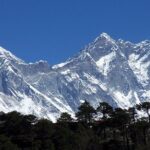
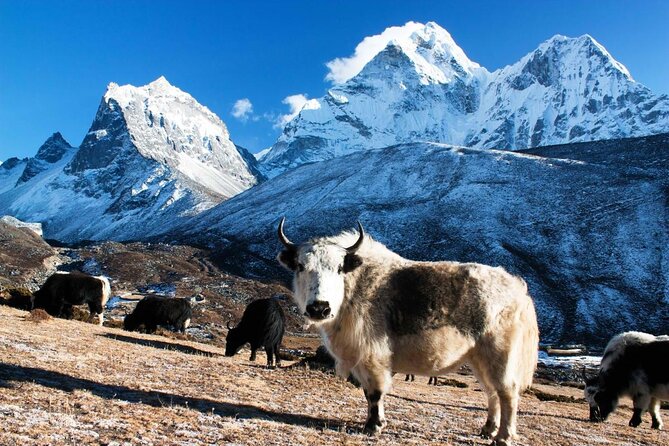
What I like about this setup is that it’s built around a practical goal: get you far into the Everest region fast, then let you “see the whole picture” from above. You’re not guessing what Everest looks like—you’re looking down at Everest Base Camp, Kala Patthar, glaciers, and peaks in a way walking routes can’t match.
The other big advantage is pacing. You’re not spending days in transit between tiny villages and altitude checkpoints. Instead, you’re spending a short, focused stretch in the air, then using your remaining time for a real reward at the end.
You can also read our reviews of more tours and experiences in Kathmandu
The Morning Starts at Tribhuvan Airport (And Yes, It’s Early)
Your day starts at Tribhuvan International Airport in Kathmandu, with the activity ending back at the same meeting point. The start time is 5:00 am, so plan for a disciplined wake-up and an efficient morning routine.
The tour includes private transportation and pickup is offered, meaning you’re not trying to navigate Kathmandu traffic at dawn. You’ll shuttle to the airport (from your hotel or a location of your choice), then board the helicopter.
Bring layers. Even if Kathmandu is comfortable, you’re heading into chilly air fast. A lot of the “feel” of this tour is controlled by morning weather and temperature, so dressing for cold makes the refuel break and waiting periods more tolerable.
Lukla: A Quick Refuel Stop That Sets the Tone
After boarding, the first notable stop is Lukla, built around a short refueling break. This is one of those moments where you get your bearings and feel the shift from city air to mountain air.
The stop is brief—about 15 minutes—but it matters. You’ll likely get a first look at the Himalayan vibe without needing to hike a step. It’s also a time to adjust to the cold air before you go higher.
Here’s your practical move: treat Lukla like a “gear check” moment. Make sure your hands are warm, your hat is secure, and your camera settings are ready. You don’t want to be fiddling when the windows of visibility open.
Pheriche: Where Weight Limits Can Change Your Timing
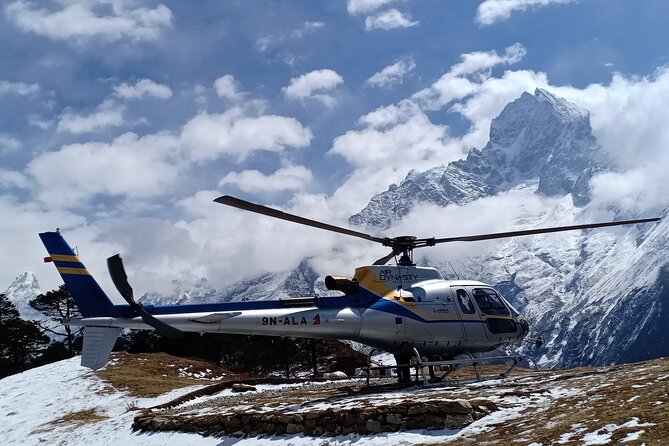
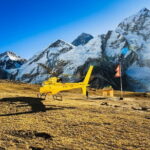
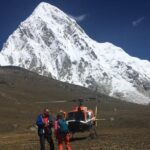
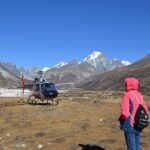
Next comes Pheriche, and this stop is more than scenery. You’ll be split into two groups due to a restricted passenger weight limit at higher altitudes. One group gets shuttled to Everest Base Camp for the helicopter portion, while the other group explores the surroundings and waits their turn.
This is the part that can surprise people. Even though the tour is scheduled as a single experience, your personal timeline can differ depending on which group you’re in. If you’re expecting nonstop movement, build in patience.
The upside is that the operation is deliberate. Weight restrictions are not random theater; they’re part of keeping the flight safe. It also helps explain why a “short flight time” still turns into a half-day program.
The Main Event: Pheriche to Everest Base Camp Views
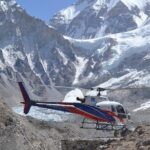
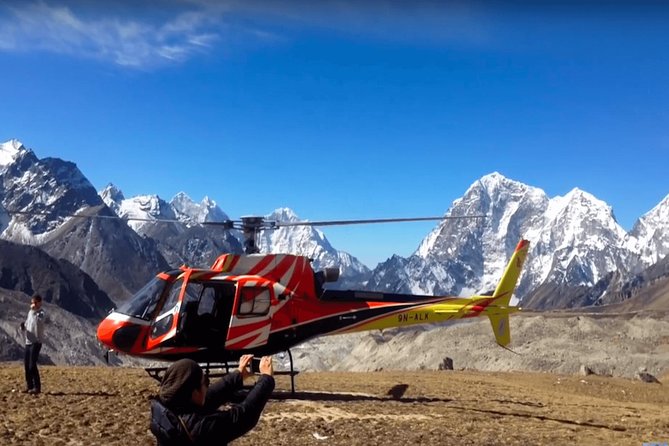
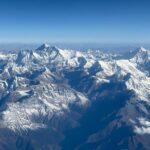
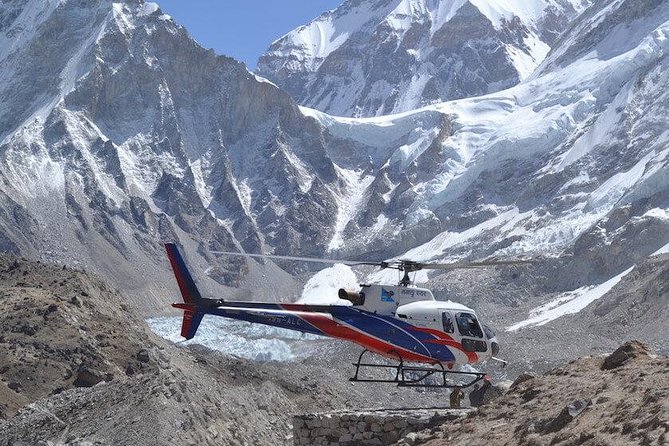
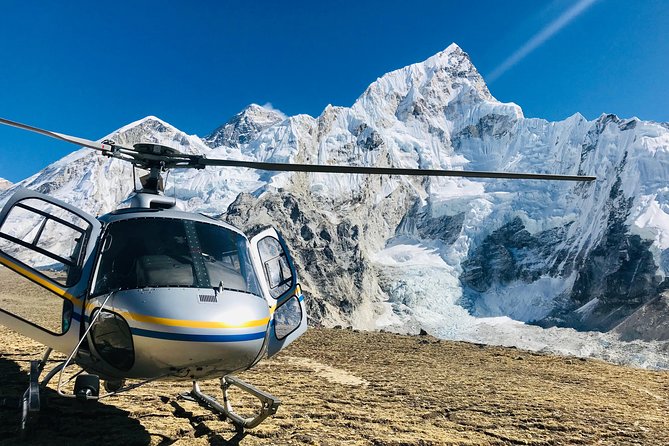
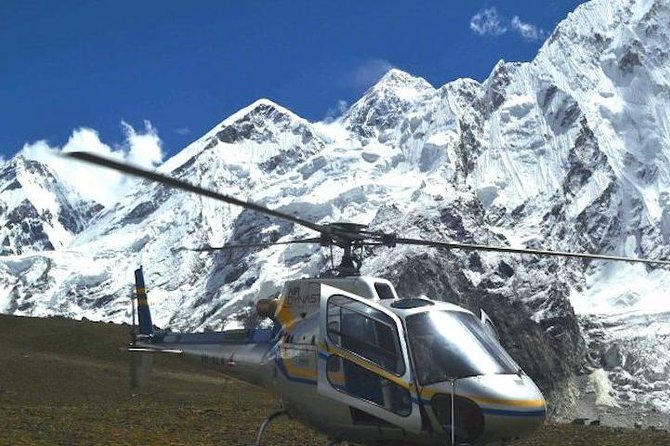
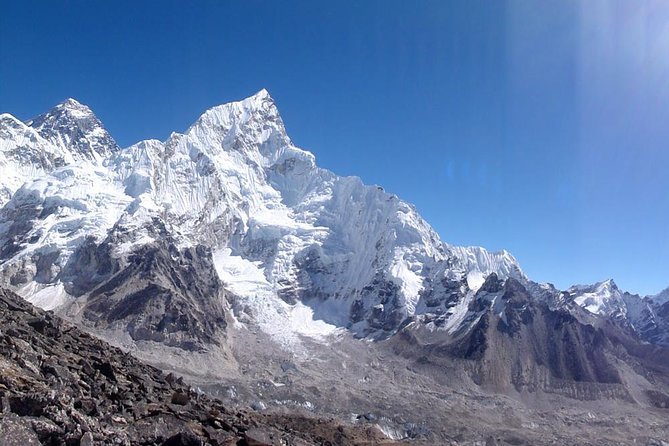
The highlight is the flight from Pheriche toward Everest Base Camp. This is where you get the most famous visuals in quick succession: glaciers, snow-capped massifs, and the look of Everest Base Camp itself from above.
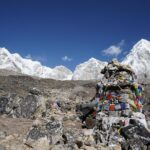
You’ll also see Kala Patthar and surrounding peaks in a single overhead view. The value here is compression. On foot, you’d spend days getting this kind of bird’s-eye comprehension. By air, you get it fast, which is the core promise of this tour.
A note on expectations: the flight time is listed as around 4 to 5 minutes. That doesn’t mean the tour is 4 to 5 minutes total; it means the key “overhead look” window is short. Your job is to be ready—camera charged, lens wiped, and your seat positioned so you can catch the best angles.
If you care about viewing, this is where a window seat matters. The team has arranged window seats in the past, so if it’s important to you, request it early through the operator team headed by Ram.

Breakfast at Hotel Everest View: The Day’s Most Enjoyable Sitting
After the mountain views, you finish at Hotel Everest View for breakfast. It’s listed as about 30 minutes, and breakfast isn’t included, so plan on paying for it.
Why this stop is worth your attention: you’re eating at altitude with the Himalaya close enough that you feel it in your face. The terrace/balcony view is described as a true scene-stealer, and it matches what this kind of tour is really about—an easy, earned moment of awe.
This is also a smart move for your body. After cold air and brief waiting periods, breakfast gives you something warm, with time to breathe and settle your nerves. If you’re prone to motion sickness, the break helps you get grounded before the return.
Group Size, Comfort, and the Small Details That Matter
This experience is limited to a maximum of 16 travelers, which helps keep the day calmer. Helicopter tours can feel chaotic when lots of people are crowding around gates, but a smaller cap usually means less bumping, fewer coordination problems, and more room to focus on the view.
There’s another comfort factor: mobile ticketing. That reduces the “where’s my paper ticket” panic at dawn. You’ll still want to keep your phone charged, though, since you’ll be using it at the start.
Also keep in mind the passenger weight limit: the tour lists a total weight per passenger of 265 lbs. If you’re near that number, plan to confirm early and be realistic about how group splitting might play out.
Price and Value: Paying for Time, Not Just Air Minutes
The price is $1,600 for the tour, with helicopter ride from Kathmandu to the Everest region and return, plus private transportation. That’s a lot of money for what sounds like a tiny amount of flight time, and you’re not wrong to think about value.
Here’s the value logic that makes sense for this product:
- You’re buying a shortcut to Everest’s most iconic visuals—Base Camp and Kala Patthar—without the days of trekking and altitude exposure
- You’re compressing an enormous region into a half-day window, which can be priceless if you have limited time
- You’re getting an organized operation with specific stops for refuel and timing, not just a “hop on and hope” style trip
Now the not-so-fun part: the tour price doesn’t include everything. You’ll pay Sagarmatha National Park entrance fee at Lukla Airport—listed as $55 per person—and breakfast at Hotel Everest View isn’t included.
If you do this math and still want it, that’s when the price becomes “reasonable” for your priorities. If your priority is walking and immersive trekking, then you might prefer a trekking itinerary instead. But if your priority is a fast Everest hit, this is one of the more direct routes.
Who Should Book This (and Who Might Prefer Another Option)
This tour fits best when:
- You want a one-day experience tied to Everest Base Camp without a multi-day trek
- You have limited time in Nepal and still want the signature views
- You’re okay with a structured schedule and quick look windows
- You value a morning helicopter day plus a warm finish with breakfast
It may not fit as well if:
- You’re sensitive to early starts and cold conditions
- You want a long time on the ground in the Everest region (this is not that kind of tour)
- You’re uncomfortable with the idea that higher-altitude weight limits can split the group
If you’re traveling as a couple or friends, it can also be a good fit because the experience is small-capped. Just remember: the Pheriche split means you could end up separated into different timing waves.
Should You Book? My Straight Answer
I’d book this Everest Base Camp helicopter tour if you want the landmark views and you’re ready to pay for time savings. The combination of Everest Base Camp and Kala Patthar views from the air, plus breakfast at Hotel Everest View, gives you a strong “Everest day” even without trekking days.
I would pause and reconsider if you’re mainly after a long, on-foot experience or if the price would sting without the views. Also, because the experience depends on good weather, you should have flexibility in your Nepal schedule.
If you do book, one smart move is to ask the team about window-seat preferences early. Another is to confirm your warm clothing plan before you leave Kathmandu. Everest doesn’t care how excited you are—it still sends cold air.
FAQ
How long is the Everest Base Camp helicopter tour?
The tour is listed as approximately 4 to 5 hours total.
What time does the tour start in Kathmandu?
The start time is 5:00 am.
Where is the meeting point?
You meet at Tribhuvan International Airport on Ring Rd, Kathmandu 44600, Nepal, and the tour ends back at the same meeting point.
How many people are in a group?
This experience has a maximum of 16 travelers.
What is included in the price, and what costs extra?
The price includes private transportation and a helicopter ride from Kathmandu to Everest Base Camp and return. You’ll pay an entrance fee for Sagarmatha National Park at Lukla Airport ($55 per person), and breakfast at Hotel Everest View is not included.
Is there a weight limit for passengers?
Yes. The tour lists a total weight per passenger limit of 265 lbs.
What happens if weather is poor?
This experience requires good weather. If it’s canceled due to poor weather, you’ll be offered a different date or a full refund.