REVIEW · KATHMANDU
Old Kathmandu Walking Tour, Historic World Heritage Durbar Square
Book on Viator →Operated by Three Jewels Adventures · Bookable on Viator
Old Kathmandu rewards slow footsteps. This walking-and-temple morning strings together local markets and sacred courtyards in the same route, finishing at Kathmandu Durbar Square and Kumari Chowk. You get the feel of how Hindu and Buddhist life shares space in Kathmandu.
I especially love how the tour starts at Bikramshila Mahavihar (Thambahil), a rare site that even explains why Thamel’s name stuck. I also love that the guide keeps the stops practical, including a relaxed tea or coffee chat at the end.
One thing to plan for: entry fees are not included for Kathmandu Durbar Square premises (and Swayambhu Stupa), so your final cost can be a bit higher than the headline price.
In This Review
- Key highlights you’ll care about
- Starting in the right place: from Thamel to Old Kathmandu
- The guides make the route feel personal
- Thambahil (Bikramshila Mahavihar): the “why” behind Thamel’s name
- Asan Bazaar: where daily life meets sacred shopping
- Janabaha Dyo (Seto MachhindraNath Temple): compassion in carved icons
- Itum Bahal: an 11th-century Buddhist monastic complex in plain view
- Kathmandu Durbar Square: UNESCO architecture and royal-era temples
- Kumari Chowk: the living goddess setting
- Kathesimbu / Dharmakirti Vihara: a Swayambhu replica that adds meaning
- Cafe Mitra: the right kind of ending for a city morning
- Price and value: how $28 can still be a full morning
- Who should book this Old Kathmandu walking tour
- Should you book this one?
- FAQ
- Meeting point and start time
- Where does the tour end?
- How long is the tour?
- Is pickup offered?
- Is this tour private or shared?
- What is included in the price?
- Are entry fees included?
- Is there a ticket you receive on your phone?
- How far in advance is it typically booked?
- What happens if I need to cancel?
Key highlights you’ll care about
- Hotel-lobby start in Thamel (or a quick pickup) that keeps the morning easy
- Thambahil (Bikramshila Mahavihar), tied to the name Thamel and rarely visited by outsiders
- Asan market for a real look at everyday shopping, from food to spiritual items
- Durbar Square plus Kumari Chowk for the living goddess setting and UNESCO architecture
- A calmer stupa stop (Kathesimbu/Dharmakirti Vihara) with a Swayambhu replica perspective
- Coffee/tea at Cafe Mitra to wrap it up with questions while things are still fresh
Starting in the right place: from Thamel to Old Kathmandu
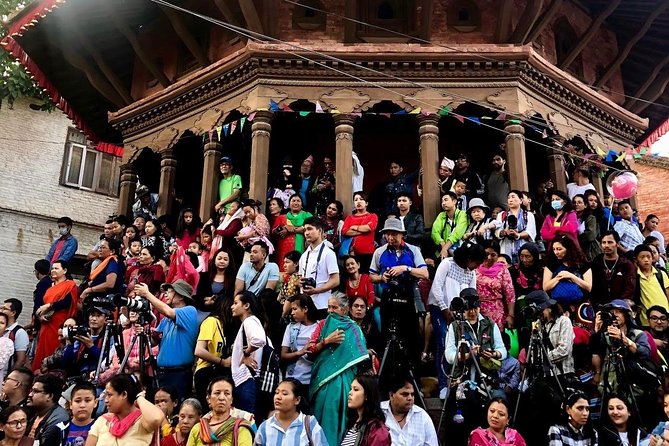
This tour is built for people who want to understand Kathmandu instead of just ticking boxes. It starts in the heart of the old city, not hours away, and it’s designed so you’re moving quickly from one kind of place to another—market, courtyard monastery, then major temple squares.
If you’re staying in tourist Thamel, you’ll either meet the group right around your hotel area or get picked up and driven only a short stretch (about 20 minutes). That matters because old Kathmandu walking routes can be slow and crowded, and you don’t want to lose your best daylight time just getting oriented.
The tour runs about 4 to 5 hours, and it feels like a morning you can actually fit into a busy itinerary. You’ll be on your feet for the full stretch, so wear comfortable shoes and expect lots of looking up at carvings and pagoda-style details.
You can also read our reviews of more walking tours in Kathmandu


The guides make the route feel personal
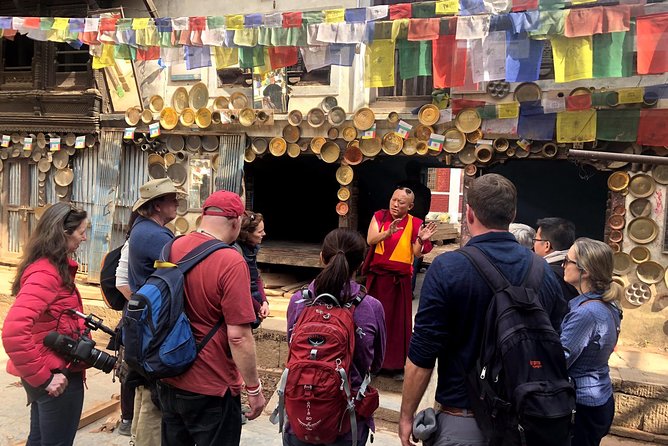
This is a private tour, meaning it’s only your group. That changes the whole tone of the morning: you can ask questions at the places you care about without everyone else waiting for the answers.
Guides are local and hands-on. In past groups, guides such as Mahesh Shreshtha and Modo have been praised for pointing out the details you’d normally miss—like why a shrine matters to locals, or what a courtyard layout is telling you. If you enjoy learning through conversation (not lecture), this style fits well.
Also, the tour ends with a coffee or tea moment with your guide. That’s not just a break. It’s a chance to ask practical questions like where to go next, what’s worth paying for, and how to avoid spending your time in the wrong places.
Thambahil (Bikramshila Mahavihar): the “why” behind Thamel’s name
The morning starts at Bikramshila Mahavihar, also known locally as Thambahil. This is a rare Buddhist monument tied to the native Newar community, and it’s the kind of stop outsiders often skip.
What makes it special is the connection to your modern base. The name Thamel is said to come from this historic site. So as you stand here, you’re not only seeing an old monument—you’re also learning how Kathmandu’s old layers shaped the place you’re staying.
Admission here is listed as free, which is a nice bonus. More importantly, it sets the tone: the tour isn’t trying to rush you into the biggest square. It’s teaching you how to look at Kathmandu from the ground up.
Asan Bazaar: where daily life meets sacred shopping
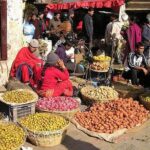
Next comes Asan, Kathmandu’s oldest living market. This is where locals buy and sell daily-use goods: vegetables, clothing, metal items, and even spiritual items. In other words, it’s not a museum market built for tourists.
You’ll walk through a slice of real commerce and street rhythm. Look for the way stalls and side lanes overlap with religious life. Kathmandu can feel like it’s “all temples,” but Asan reminds you that people still live here in the most practical way possible.
The listed stop time is short, so don’t expect a long shopping spree. Use the time to notice how locals move through the area and what kinds of goods show up in the same market block.
Admission for the Asan stop is also free, which keeps the morning from turning into a pay-at-every-corner exercise.
Janabaha Dyo (Seto MachhindraNath Temple): compassion in carved icons
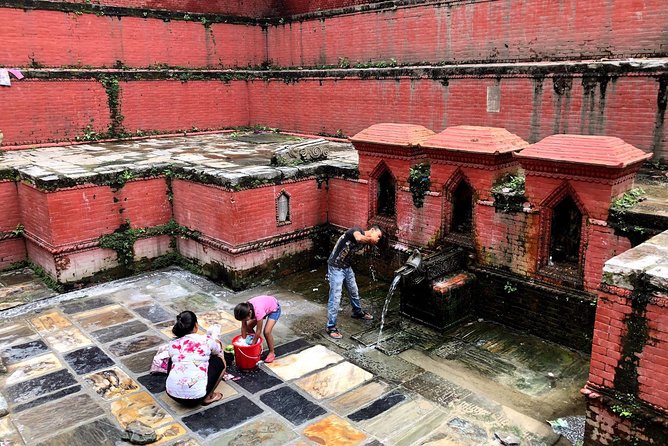
After the market, the tour shifts into shrine territory at Janabaha Dyo, also connected with the Seto MachhindraNath Temple. This is where you start feeling the Buddhist thread strongly.
It’s described as a native deity of Kathmandu and Tibetan Buddhists, known as Avalokitesvara, or the god of compassion. One very specific detail you’ll hear about is the shrine’s 108 engraved icons of Avalokitesvara. Those aren’t just decorations; they’re part of how devotees understand the deity’s many forms.
This stop also runs about 15 minutes and is listed as free admission. That’s enough time to slow down, spot the icons, and get the meaning of the place without feeling dragged through it.
If you like symbolism you can actually point to, this is one of the stronger stops for photos that still come with context.
You can also read our reviews of more historical tours in Kathmandu

Itum Bahal: an 11th-century Buddhist monastic complex in plain view
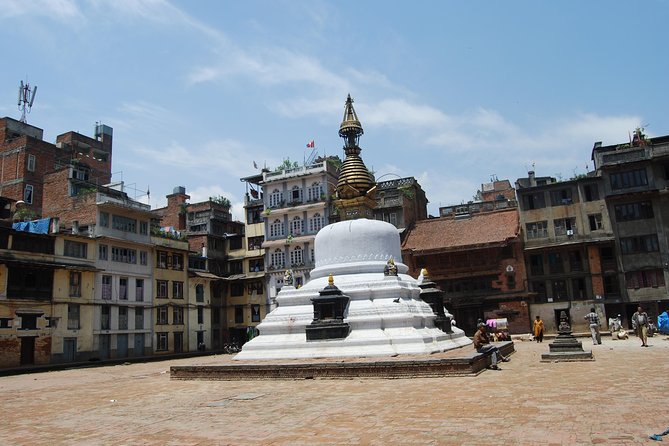
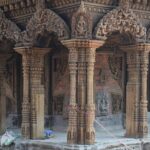
Then you’ll reach Itum Bahal, described as a once-large Buddhist monastery complex in ancient Kathmandu. The highlight here is age and layout. The complex is said to date back to the 11th century, with a remaining section of the original monastic building and courtyards linked to the goddess Tara.
This is the kind of place that works well on a walking tour because it’s all about noticing transitions: building to courtyard, courtyard to side passage. Even if you’re not an architecture expert, you’ll pick up how the monastic world was organized.
Admission is free, and the stop lasts about 30 minutes, which gives you time to actually absorb the space. This is also a good pause point if you want a break from market noise.
Kathmandu Durbar Square: UNESCO architecture and royal-era temples
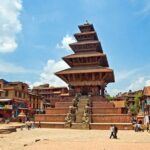
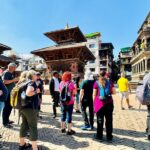
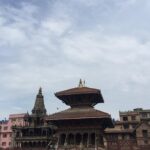
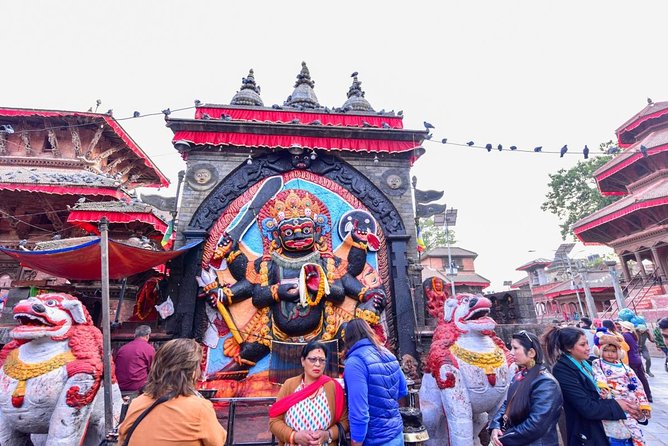
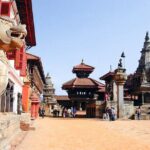
Next is the big one: Kathmandu Durbar Square. This is listed as a 17th-century palace area of Nepal’s kings, surrounded by temples and traditional art and architecture.
Durbar Square can feel overwhelming if you’re walking alone. With a guide, you can focus on what matters: the way the square is framed by temple buildings, and how the space communicates power, devotion, and community life in the same physical area.
One practical note: the entry fee is not included for Kathmandu Durbar Square premises. You’ll want to budget for that separately so there’s no surprise at the gate.
This stop is also where Kumari comes into the story. Even if you’re only partially familiar with the living goddess tradition, the surrounding temple context makes it easier to understand why this place is so important to locals.
Kumari Chowk: the living goddess setting
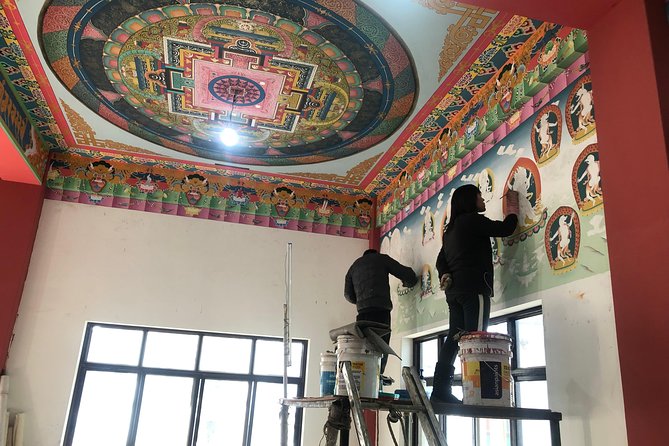
Within Durbar Square is Kumari Chowk, home to Kumari, the living goddess. The building here is described as about 300 years old, with notable traditional art and architecture.
The real point of this stop is not just to see a name on a sign. It’s to understand how a sacred role is tied to a specific courtyard setting. This is where religious tradition shows up as a visible part of daily Kathmandu space.
Your timing matters here. The tour includes a focused stop at Kumari Chowk (around 20 minutes), so if you want the best chance to see what’s happening in and around the space, stay attentive and don’t treat it like a quick photo stop.
As with Durbar Square, entry fees are not included for this area, so plan for that cost when budgeting.
Kathesimbu / Dharmakirti Vihara: a Swayambhu replica that adds meaning
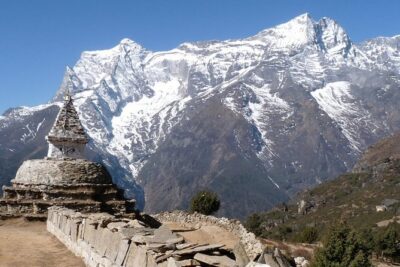
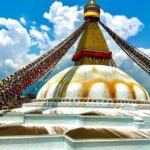
After Durbar Square, the route continues through old town to the Buddhist stupa complex of Kathesimbu (Dharmakirti Vihara). The key detail here is that it houses a replica of the Swayambhu Stupa, described as an important pilgrim site.
I like this stop because it shifts your perspective. When you’ve just walked the biggest temple square, a smaller stupa complex can feel like a “breather.” But it’s actually doing work: it explains how sacred significance gets repeated, carried, and remembered in different corners of Kathmandu.
This stop adds depth without adding more stress. If you enjoy connecting the dots between sites, you’ll appreciate it.
Cafe Mitra: the right kind of ending for a city morning
The tour wraps back in Thamel at Cafe Mitra. You’ll have a drink of your choice (coffee or tea is included as part of the experience), and you can talk casually with your guide about what you saw.
This ending matters more than people think. Kathmandu is crowded with temples, courtyards, and street-level history. A short chat helps you sort out what you just learned, and it helps you plan the rest of your trip with fewer wasted stops.
It also gives you a chance to ask the easy questions you didn’t want to ask earlier, like what area to visit next or what to skip if time is tight.
Price and value: how $28 can still be a full morning
At $28 per person, this tour is priced for value. The big reason is that it’s not just a walking map. You get private transportation, a guided route through multiple significant sites, and a tea/coffee payoff at the end.
You also get a mobile ticket and a private-group setup, which can be a real win compared to group tours if you prefer a calmer pace.
Just remember the one cost item that can change your total: Durbar Square entry fees are not included, and the experience notes that Swayambhu Stupa fees are also not included. That means your final spend might land above the $28 depending on what you pay at the sites.
If you’re the type who wants a guided morning before you start wandering on your own, this is the kind of tour where that logic holds up. The guide helps you see what you would otherwise overlook, so the price feels more like a “learning fee” than just transportation and time.
Who should book this Old Kathmandu walking tour
This tour fits best if you want:
- A short, structured morning that still feels local
- Less-common religious stops in addition to the big-name square
- A guide-led flow from markets to monasteries to UNESCO-level architecture
- A friendly end where you can ask questions (instead of being dropped and forgotten)
It also suits people staying in or near Thamel who don’t want a complicated logistics puzzle before they begin.
If you hate walking, this probably isn’t your day. It lasts 4 to 5 hours, and it’s a street-and-temple route. If you prefer a slower, sit-down museum-style approach, you might find this more active than you want.
Should you book this one?
Book it if you’re trying to get your bearings fast and you care about seeing Kathmandu in a way that connects markets, monasteries, and major temple spaces.
Skip it (or consider a different format) if you only want a single highlight in the Durbar Square area and you’re hoping everything is included price-wise. The entry fees for key sites mean you’ll want to budget, and the walking time means you should plan it for the day you’re feeling your best.
FAQ
Meeting point and start time
The tour starts at Amrit Marg, Kathmandu 44600, Nepal, with a start time of 9:00 am.
Where does the tour end?
The tour ends at Cafe Mitra, Thamel Marg, Kathmandu 44600, Nepal.
How long is the tour?
It runs about 4 to 5 hours (approx.).
Is pickup offered?
Yes. Pickup is offered, and the start is described as either at your hotel lobby in Thamel or reached by a short drive (about 20 minutes).
Is this tour private or shared?
It’s a private tour/activity, so only your group participates.
What is included in the price?
The experience includes private transportation and coffee and/or tea.
Are entry fees included?
No. Entry fees are listed as not included for Kathmandu Durbar Square premises and Swayambhu Stupa. Other stops on the route are described as having free admission tickets.
Is there a ticket you receive on your phone?
Yes. The tour includes a mobile ticket.
How far in advance is it typically booked?
It’s often booked about 32 days in advance.
What happens if I need to cancel?
You can cancel for a full refund if you cancel at least 24 hours before the experience’s start time.