REVIEW · KATHMANDU
PashupatiNath and BoudhaNath – Private/Small Group
Book on Viator →Operated by Amazing Kathmandu Tours · Bookable on Viator
If religion could be explained with your feet on the ground, this is it. You’ll move from Pashupatinath’s Hindu last rites to Boudhanath’s Tibetan Buddhist practice, with a guide who keeps the meaning clear and the questions coming. I love the small group size (max 5), because it feels personal in places that normally feel overwhelming, and I also love the practical walk-through of ceremonies and symbolism rather than vague facts. One drawback to plan for: entrance fees at Pashupatinath and Boudhanath are not included and you’ll pay cash at the sites.
There’s also a built-in reality check. At Pashupatinath, only Hindus can enter the main temple, so you’ll focus on what you can access and see the cremation area at Aryaghat instead of expecting full temple access. On the Buddhist side, you’ll get straight to stupa basics—prayer flags, the Four Noble Truths, and the eightfold path—then continue into monastery and thangka art learning.
Overall, this is the kind of tour that makes Kathmandu’s religious harmony feel less like a headline and more like what you’re walking through right now.
In This Review
- Key highlights worth your time
- Why This 3-Hour Hindu and Buddhist Tour Works in Kathmandu
- Pashupatinath: What You See When Only Hindus Enter the Main Temple
- Aryaghat Crematoria and the 16 Samskaras You Can’t Learn from Photos
- Deer Park to Mandir Stops: Shiva’s Journey and the Name That Sticks
- Gorakhnath Mandir and Guhyeshwari Shaktipeeth: Shiva to Shakti on One Route
- Boudhanath Stupa: Vajrayana Basics You Can Use Immediately
- Guru Lhakhang Monastery: Padmasambhava and the Dharma Chakra Story
- Thangka Center and Healing Bowls: Art, Mandala, and Meaning
- Price and Entrance Fees: What You’re Really Paying For
- What to Expect on the Ground: Pace, Group Size, and Questions
- Who This Tour Suits Best (and Who Might Want Another Option)
- Should You Book PashupatiNath and BoudhaNath?
- FAQ
- How long is the Pashupatinath and Boudhanath tour?
- What is the group size for this tour?
- Is the tour price $15 all-inclusive?
- How much are the entrance fees, and how do I pay?
- Where does the tour start and end?
- Does the tour include an English-speaking guide?
- What does the tour cover at Boudhanath?
- Is free cancellation available?
Key highlights worth your time
- Small group (max 5) keeps the pace human and your questions answerable
- Pashupatinath to Aryaghat with clear explanation of the 16 Hindu samskaras
- Boudhanath basics like prayer flags, Four Noble Truths, and the eightfold path
- Vajrayana context at the stupa so the rituals start making sense
- Thangka school + mandala ideas plus hands-on feel for healing bowls
Why This 3-Hour Hindu and Buddhist Tour Works in Kathmandu
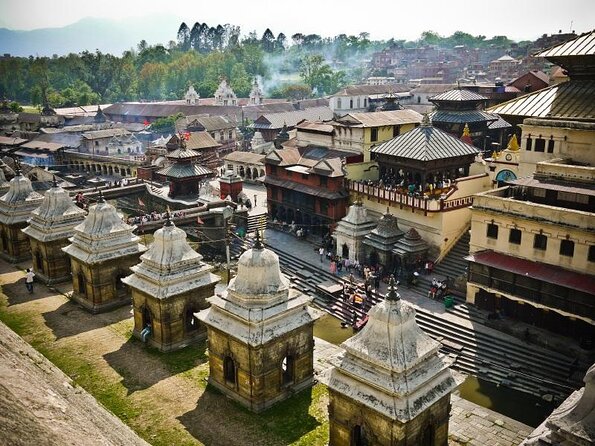
Kathmandu can feel like information overload. Temples are everywhere, religious symbolism is everywhere, and most of it stays confusing if you only rely on guidebooks. This tour is short—about 3 hours—so you get to see two of the city’s biggest spiritual anchors without spending your whole day stuck in lines or trying to translate what you’re looking at.
The real value isn’t just the sights. It’s the guide-led interpretation: last rites, rites of passage, Shiva and Shakti stories, and Buddhist teachings at Boudhanath, all tied together so you can recognize patterns. That’s why people consistently rate this tour highly, and why guides like Santosh show up in feedback with a lot of praise for answering questions and adjusting on the fly.
You can also read our reviews of more private tours in Kathmandu
Pashupatinath: What You See When Only Hindus Enter the Main Temple
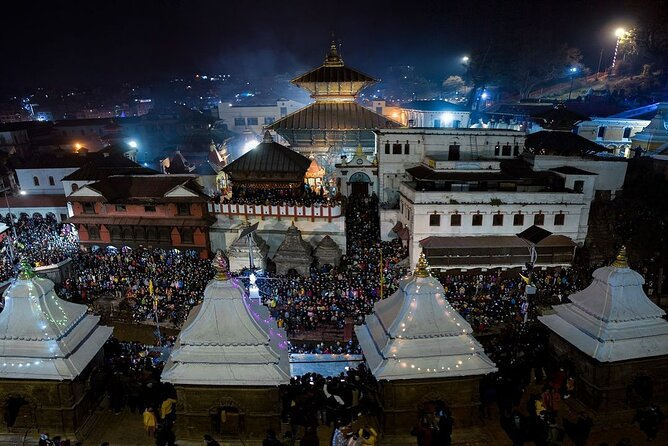
Your first focus is Pashupatinath Temple, one of the oldest Hindu temples in the Kathmandu Valley. You’ll get orientation fast so you know what matters there and what role the temple plays for Hindu devotees around the world. Since only Hindus are allowed inside the main temple, your time shifts toward the surrounding areas where you can still understand the religious flow.
What I like about this approach is that it prepares you. Instead of you arriving with the expectation of entering everywhere, you learn what you can access and why. That mindset makes the crematoria area later much easier to handle respectfully.
Aryaghat Crematoria and the 16 Samskaras You Can’t Learn from Photos
Next comes Aryaghat, the crematoria area. This is the part many people find emotional because you’re not looking at religion from a safe distance—you’re seeing how last rites are actually performed. It’s also where the guide explains Shodasha Samskaras, meaning the 16 rites of passage in a Hindu’s life.
Even if you’re not religious, this is one of the most practical ways to understand Hindu worldview. You start connecting life stages, duties, and rituals into a single system instead of treating ceremonies as isolated events. If you have questions—what something means, why a ritual happens, how families think about it—this is the moment when a good guide can make those answers feel grounded instead of academic.
A quick consideration: crematoria are intense. If you’re sensitive to strong scenes, come ready with patience and respect, and don’t push for photos. The point is understanding, not collecting.
Deer Park to Mandir Stops: Shiva’s Journey and the Name That Sticks
From the crematoria zone, the tour moves to Mrigasthali Deer Park. This stop is shorter, but it adds a key layer: the geography of stories. You’ll hear how the area connects to the journey of Lord Shiva and why the place is named the way it is.
This is a smart breather in the middle of the tour. After heavy topics at Aryaghat, you get a lighter pace while still staying in religious narrative mode. It also helps you see Kathmandu’s religion as something tied to place names, paths, and everyday landmarks.
Gorakhnath Mandir and Guhyeshwari Shaktipeeth: Shiva to Shakti on One Route
Next you rest briefly at Gorakhnath Mandir Temple. Then you move onward via Guhyeshwari Temple and into the story framework of Guru Gorakhnath. This is still Hindu context, but the idea expands from ritual practice into lineage, teaching, and myth.
After that comes Guhyeshwari Shaktipeeth Temple, where you’ll hear the story of Satidevi and the concept of Shaktipeeth. Shaktipeeth are tied to powerful symbolism about the divine feminine, so this stop helps you understand why Hinduism in Nepal isn’t just temple architecture and festivals—it’s also a map of belief.
Then the tour starts bending toward Buddhism, with travel time (about 20 minutes) to reach Boudhanath. That transition matters because Nepal’s religious identity isn’t boxed into separate worlds. You’ll feel that shift as you move closer to the stupa.



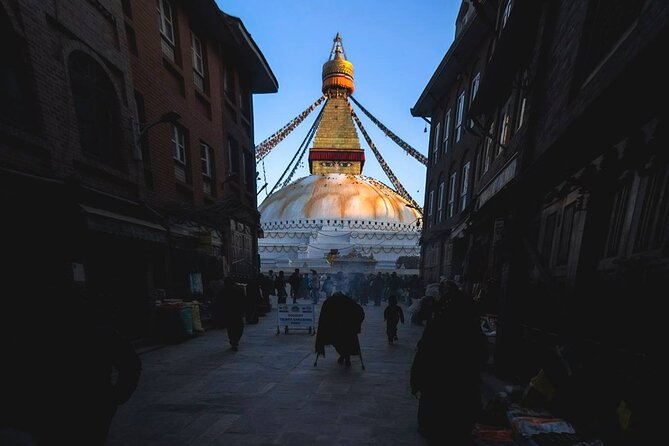
Boudhanath Stupa: Vajrayana Basics You Can Use Immediately
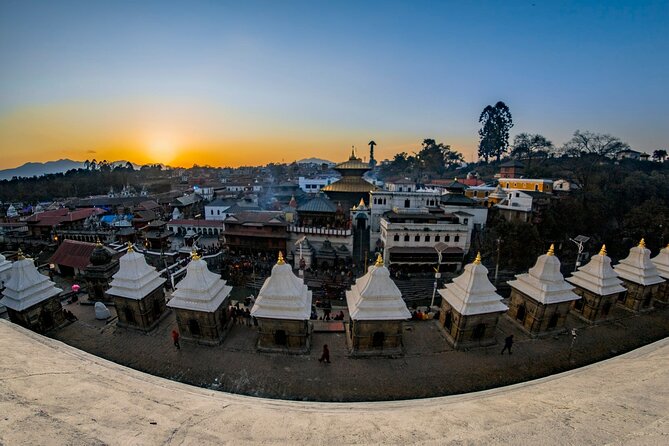
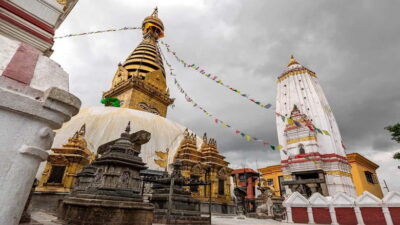
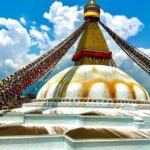
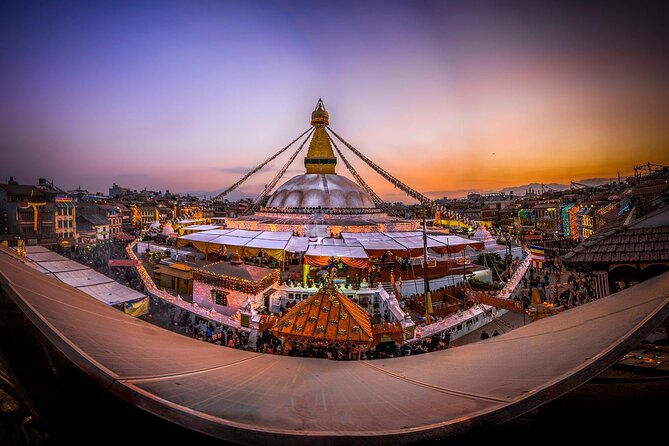
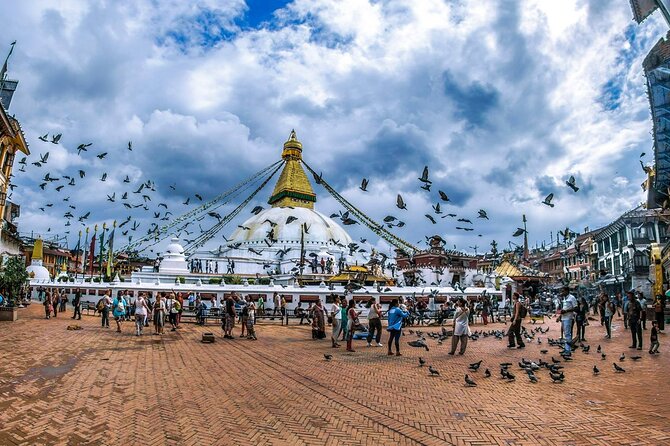
Boudhanath Stupa is the big visual anchor here—described as the second largest stupa of its kind in the world. It’s famous for Tibetan Buddhism and especially Vajrayana Buddhism, and the tour gives you the basics so you can read what you’re seeing.
Inside your head, you’ll start organizing the stupa through recognizable elements:
- prayer flags and what they represent
- the Four Noble Truths
- the eightfold path (the guide focuses on these core ideas)
This is where I think a guide really earns their fee. Without explanation, Boudhanath can turn into just textures and crowds. With explanation, you know what ritual motion and symbolism aim to communicate.
One more practical note: your admission fee for Boudhanath is not included, and you pay in cash at the entrance. Bring the right attitude and the right small bills, and you’ll avoid the awkward hunt mid-tour.
Guru Lhakhang Monastery: Padmasambhava and the Dharma Chakra Story
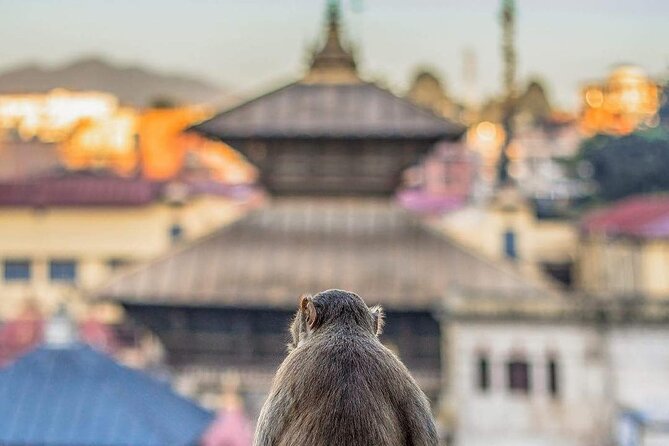
After Boudhanath, you visit Guru Lhakhang Monastery. This stop is brief, but it’s designed to show you what a typical Buddhist monastery looks like and to connect visual space with key figures.
You’ll hear about Guru Padmasambhava and Dharma Chakra Pariwartana. Even when the time is short, these names anchor your understanding of why monasteries function as more than quiet buildings. They’re part of teaching systems, practice spaces, and living traditions.
If you’re the type who likes to ask why something matters, this is a good stop for that. A guide like Santosh tends to invite questions and answer in a way that makes concepts feel less abstract and more grounded.
Thangka Center and Healing Bowls: Art, Mandala, and Meaning
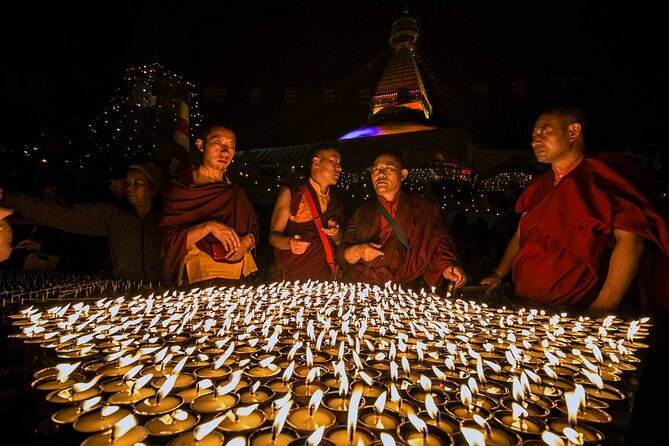
The final stop is at a Boudhanath Stupa Thanka Center, also described as a school of thangka painting. This is a practical creative ending: you’ll learn about intricate thangka art, mandala concepts, and the basics of healing bowls.
This part is valuable because you see how religious ideas travel through art forms. Mandalas aren’t only decorative; they’re structured representations of spiritual concepts. Thangka painting is similar—images as a teaching tool, not just a souvenir.
Admission for this stop is included, which helps keep the budget predictable on the tail end. And honestly, it’s a nice way to end after intense topics earlier in the tour. You leave with something you can look at later and actually understand.
Price and Entrance Fees: What You’re Really Paying For
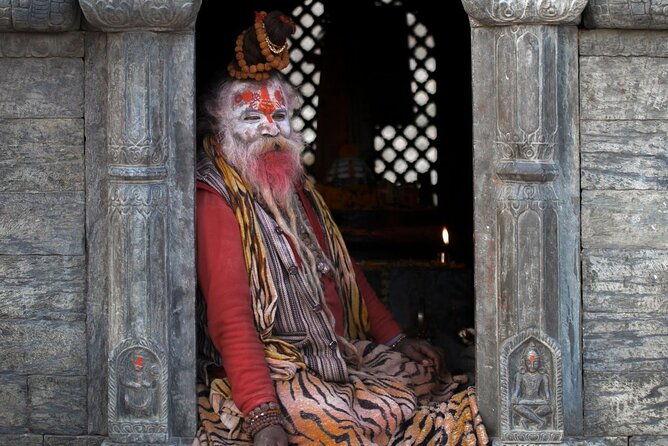
The tour price is listed as $15 per person, and it’s a small-group experience (max 5) with an English-speaking guide. On average, people book it about 18 days ahead, which hints that demand is steady and guides want time to match you with the right day-of logistics.
But here’s the math you should do before you book:
- Entrance fees are not included for Pashupatinath and Boudhanath.
- Pashupatinath entrance is listed at NRP 1000 (about US$9).
- Boudhanath entrance is listed at NRP 400 (about US$4).
- You pay entrance fees in cash at the entrance.
So your all-in cost is roughly $28 if you add the typical entrance fees on top of the $15 tour price. That might sound like a lot until you compare it to what you get: interpretive guidance through Hindu last rites and Buddhist stupa teachings, plus a thangka-art learning stop, all in a short 3-hour window.
I like how this pricing works for short attention spans. You’re paying mainly for guided sense-making and a curated route, not for being dropped at a gate with zero context.
What to Expect on the Ground: Pace, Group Size, and Questions
This tour is built for clarity. The stop timing is tight but not rushed—roughly 15 minutes at Pashupatinath, 30 minutes at Aryaghat, then a sequence of shorter stops that culminate at the stupa area. It ends at the Boudhanath Gate, and you’re free to explore the area after the tour.
The small group size makes a difference in sacred spaces. You can ask questions without feeling like you’re competing with a crowd. The guide also has flexibility, and that showed up in feedback about Santosh adjusting the schedule to accommodate an arati ceremony request.
One more practical point: you’re near public transportation, so you’re not trapped in one part of town. Still, plan your day buffer. You’ll likely need a little time to digest what you saw—especially around Aryaghat.
Who This Tour Suits Best (and Who Might Want Another Option)
This is a great fit if you want a guided, respectful introduction to both Hinduism and Buddhism in Kathmandu. The mix of Shiva/Shakti storytelling, cremation rites explanation, and then Vajrayana stupa basics makes it ideal for first-timers who want to understand meaning fast.
It’s also a strong choice if you’re the type who asks questions. The guide style highlighted in feedback focuses on answering, adapting, and explaining symbolism rather than just reciting facts.
I’d be cautious if you’re very sensitive to the crematoria environment. The tour does include time at Aryaghat, and that’s not a light topic. You can still go, but go with emotional preparation and skip the urge to turn it into entertainment.
Should You Book PashupatiNath and BoudhaNath?
I’d book this if you want a focused, small-group Kathmandu experience that connects two major religious sites with plain-language explanations. The $15 tour cost feels reasonable once you factor in the guide-led interpretation and the thangka learning stop, even with the extra cash entrance fees you’ll pay on site.
Book it with confidence if you want to understand what you’re seeing—especially the 16 samskaras at Aryaghat and the teaching basics at Boudhanath. And if you’re someone who cares about how ceremonies work in real life, ask your guide early about what you can realistically see during your visit.
If your priority is only photo time and general sightseeing, you might find the religious depth a bit heavy for such a short window. But if your goal is understanding, this is one of the most practical ways to do it in just a few hours.
FAQ
How long is the Pashupatinath and Boudhanath tour?
It lasts about 3 hours.
What is the group size for this tour?
The maximum group size is 5 people.
Is the tour price $15 all-inclusive?
No. The tour price is $15 per person, but entrance fees for Pashupatinath and Boudhanath are not included.
How much are the entrance fees, and how do I pay?
Pashupatinath entrance is listed at NRP 1000 (about US$9) and Boudhanath at NRP 400 (about US$4). You pay entrance fees in cash at the entrance.
Where does the tour start and end?
It starts at Gaushala Bus Stop in Kathmandu and ends at Boudhanath Gate.
Does the tour include an English-speaking guide?
Yes, the tour includes an English-speaking guide.
What does the tour cover at Boudhanath?
You’ll get an introduction to Buddhism basics at Boudhanath Stupa, including prayer flags and teachings like the Four Noble Truths and the eightfold path, plus a monastery visit and thangka art learning.
Is free cancellation available?
Yes. You can cancel up to 24 hours in advance for a full refund.