REVIEW · KATHMANDU
Local Bazaar Walking Tour in Kathmandu with Professional Guide
Book on Viator →Operated by Liberty Holidays · Bookable on Viator
Kathmandu’s markets can feel like organized chaos. This private walking tour helps you read Asan and Indra Chowk like a local, then folds in a UNESCO stop at Kathmandu Durbar Square with the royal palace, Hanuman Dhoka. I like that it’s structured but still flexible, and I especially like the hotel pickup/drop-off so you’re not spending your limited energy figuring out transport. One thing to keep in mind: you’ll be on your feet for about 3.5 hours, so bring good shoes and expect crowds and heat.
If you want real context while you shop or snack, a pro guide makes a big difference. You’ll move through narrow alleyways where everyday life runs right beside old architecture, and you’ll get pointed toward key temples and market specialties. Just know that lunch is not listed as included, even though the route is timed for a traditional Nepali meal break.
In This Review
- Key highlights at a glance
- Why Asan and Indra Chowk are the Kathmandu you actually want
- Price and logistics: what $100 buys you (and what it doesn’t)
- Meeting up at your hotel: the advantage of being picked up
- Stop 1: Asan Bazaar and the narrow-lane feel of old Kathmandu
- Stop 2: Indra Chowk and the market specialties you’ll want to find
- Kathmandu Durbar Square: why the UNESCO stop belongs in a bazaar tour
- Lunch break: how to time your meal without spoiling the walk
- Guide quality matters more than you think
- What to wear and bring for a comfortable bazaar walk
- Tips for choosing the right time of day
- Who this private Kathmandu bazaar tour fits best
- Should you book this Kathmandu bazaar walking tour?
- FAQ
- How long is the Kathmandu bazaar walking tour?
- Is hotel pickup and drop-off included?
- What areas does the tour cover?
- Is lunch included in the price?
- Are entrance fees required for the places on the route?
- What should I bring for the walk?
- Is this tour suitable for older travelers?
Key highlights at a glance
- Asan Bazaar and Indra Chowk in one run: old neighborhoods plus market specialties, all on foot
- UNESCO Kathmandu Durbar Square + Hanuman Dhoka: a royal-court setting inside a modern city
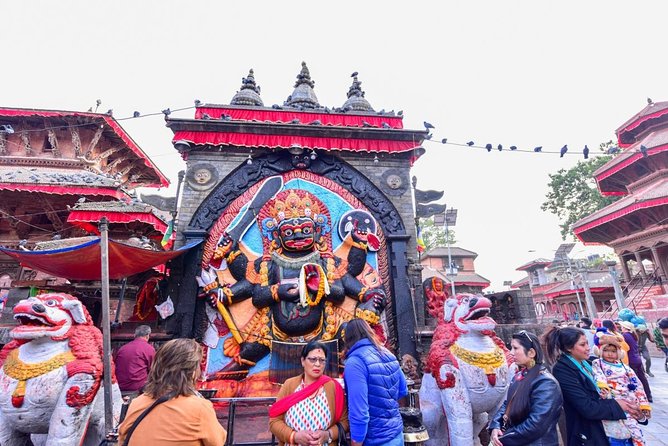
- Temple spotting with local details: including Seto Machhendranath and Aakash Bhairav
- Street-food and wedding-market stops: fried momo stands and jewelry-style bead and ornament shops
- Pro guide pace: time for questions, plus photo and shopping pauses
- Air-conditioned transport: hotel-to-start and end-of-tour transfers by private vehicle
Why Asan and Indra Chowk are the Kathmandu you actually want
If Kathmandu is new to you, bazaars are the fastest way to get your bearings. Asan and Indra Chowk sit in the city’s historic core, so you’re not just shopping—you’re watching how commerce, religion, and neighborhood life overlap.
Asan is known for narrow lanes and that mix of everyday movement with older buildings still standing close by. Indra Chowk, on the other hand, is where you feel the market intensity more directly: fruit and vegetables, spices, textiles, and all the little specialty counters that make a bazaar feel like a living map.
This tour works because it gives you a human guide to interpret the scene. You’re not left to guess what you’re looking at, and you can aim your questions while you’re already standing in the right place.
You can also read our reviews of more walking tours in Kathmandu


Price and logistics: what $100 buys you (and what it doesn’t)
At $100 per person, this is positioned as a private walking tour with professional guidance, plus hotel transport. For many visitors, that’s the sweet spot: you get local context without spending time negotiating taxis, waiting for group tours, or trying to cover too much territory on your own.
What’s included:
- Hotel pick-up and drop-off (private vehicle)
- Air-conditioned vehicle for the transfers
- Expert tour guide
- Walking sightseeing
What’s not included:
- Lunch (even though you’ll be in the right area/time for a traditional Nepali lunch stop)
- Alcoholic drinks
- Tips for the guide and driver
- Entrance fees, if any are required (the tour notes that most local areas don’t require them)
My practical take: you’re paying mostly for time saved and interpretation gained. If you prefer to wander independently, you can—but then you lose the why behind the where. If you want a guided path through crowded streets, the cost starts to make more sense fast.
Meeting up at your hotel: the advantage of being picked up
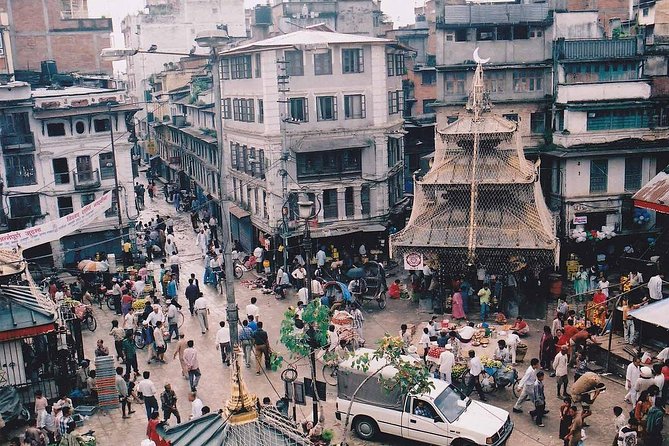
The start is designed to reduce friction. You get pick-up from your Kathmandu hotel using an air-conditioned vehicle, then you meet your guide for the walking portion. At the end, you’re taken back by private transfer.
That matters in Kathmandu because traffic and route-finding can steal energy. A smooth start and a clean finish mean you can focus on the bazaar experience instead of logistics.
One detail to plan around: pick-up and drop-off is stated for hotels inside the Kathmandu city ring road. If your hotel is outside that ring, there may be an extra charge. Before you go, confirm the exact pickup point so you’re not surprised on day-of.
Stop 1: Asan Bazaar and the narrow-lane feel of old Kathmandu
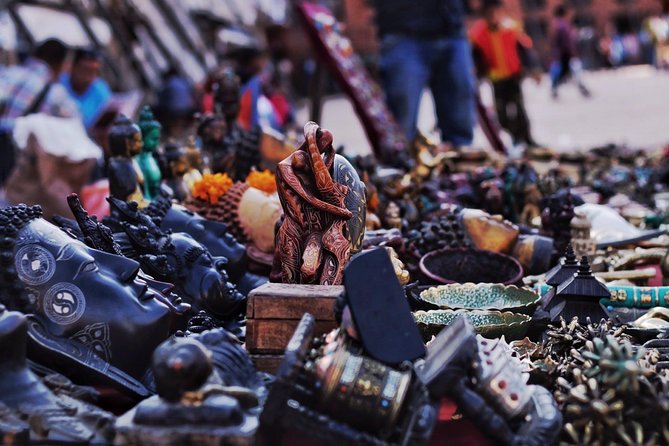
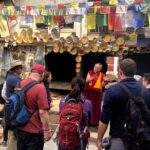
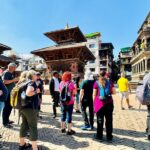
Asan is where the tour starts with the historic market area: a busy marketplace that’s part of the Kathmandu Valley’s daily rhythm. With your guide, you’ll walk along narrow alleyways where modern life and older architecture sit side by side.
This stop is about atmosphere plus context. You’ll see:
- How the market environment is woven into neighborhood streets
- Artisan wares and market vendors lining the route
- A sense of how the area functions in real daily time, not just as a photo backdrop
A smart way to use this hour: come in ready to ask questions. Point out what catches your eye—brass, bronze, copper work, spices, fabrics—and let your guide connect the dots between what you’re seeing and what it means locally.
If you’re someone who gets tired in crowds, Asan is still manageable, but you’ll want those comfortable shoes. The lanes can be tight, and it’s easy to rush if you’re trying to keep up with a busy group pace—so if you like a slower rhythm, a private guide helps.
Stop 2: Indra Chowk and the market specialties you’ll want to find
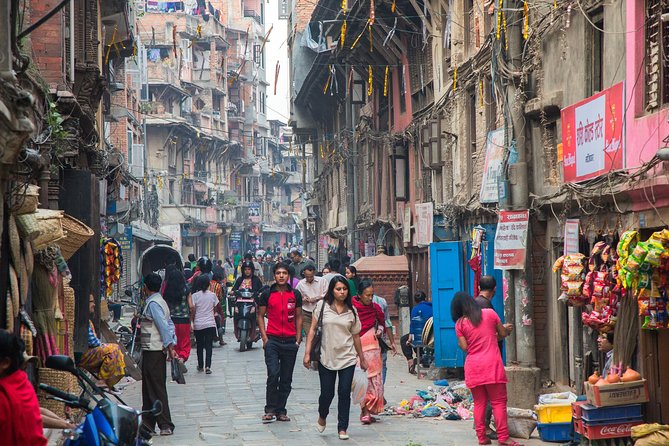
After Asan, the walk shifts into Indra Chowk, often described as a centuries-old market zone that feels especially dense with colorful shops and stalls.
This is where the tour earns its keep for shoppers. Indra Chowk is packed with:
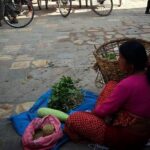
- Produce markets (fruit and vegetables)
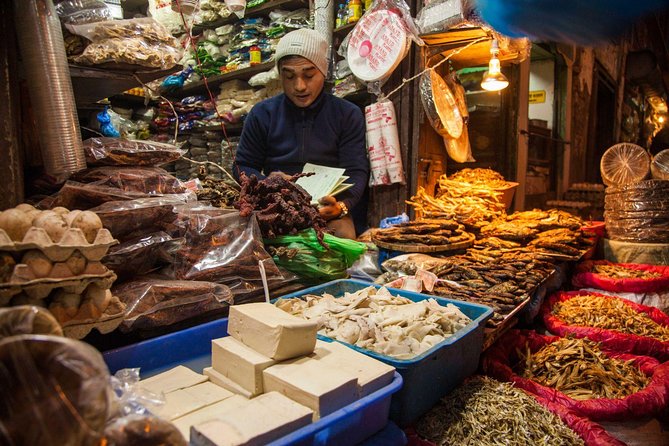
- Aromatic spices in multiple counters and blends
- Textiles
- A specialist area selling beads, bangles, and wedding ornaments—exactly the kind of detail that’s hard to spot and understand without guidance
There’s also temple-spotting built into the route. You’ll pass landmarks including:
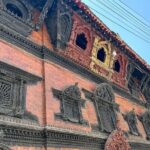
- Seto Machhendranath, noted for intricate wood carvings
- Aakash Bhairav, guarded by lion statues
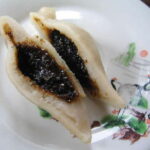
And yes, street food shows up naturally. The route includes fried momo street stalls—useful if you want a snack break without having to hunt for somewhere that looks welcoming.
Practical consideration: Indra Chowk is lively, and that means shopping can turn into a time sink. The upside is that the guide can help you prioritize what to look for. The downside is that you may find it hard to resist buying small items along the way, especially wedding-related ornaments.
You can also read our reviews of more guided tours in Kathmandu
Kathmandu Durbar Square: why the UNESCO stop belongs in a bazaar tour
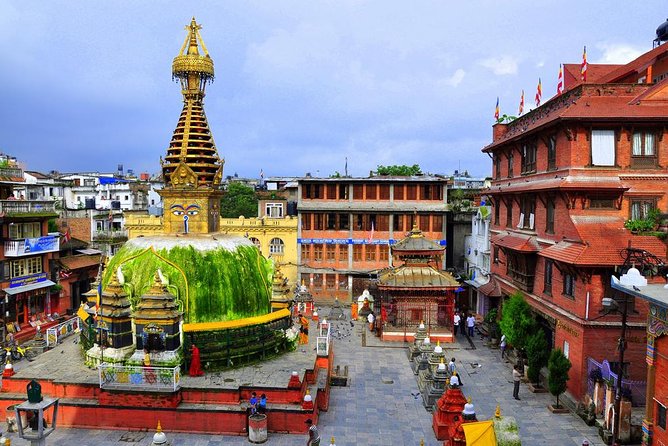
A bazaar tour risks becoming only about shopping unless there’s a cultural anchor. This is where the Kathmandu Durbar Square stop matters.
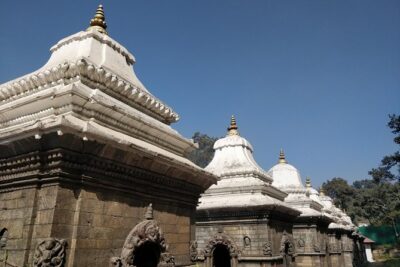
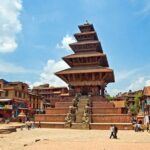
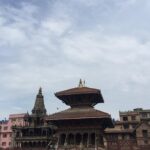
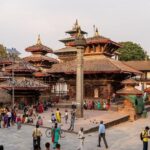
You’ll visit this UNESCO-listed site and see the royal palace area known as Hanuman Dhoka. It’s a very different mood from the market lanes: more monumental, more historical, and more about architecture and power.
What I like about combining Durbar Square with bazaar streets is the contrast. You get to see how Kathmandu’s center of everyday commerce sits near the structures that shaped older political and cultural life. Even if you’re not a formal history fan, this pairing helps you understand why the city feels layered.
When you reach this stop, take a moment to slow down. You’ll get more out of it if you look at doors, courtyards, and carvings rather than treating it like another quick waypoint. The guide’s job is to give these buildings meaning while you’re standing in front of them, not after you’ve left.
Lunch break: how to time your meal without spoiling the walk
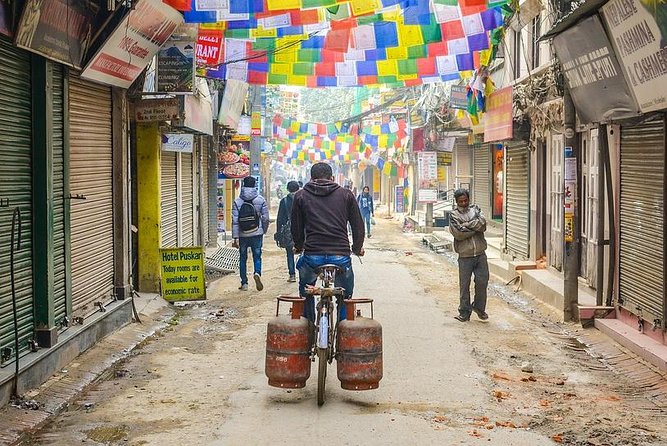
The tour route is scheduled so you can join locals for traditional Nepali cuisine during lunch time. That said, lunch is listed as not included, so plan to pay for your meal on the spot.
This is actually good for control. You can choose what suits your hunger level and spice comfort. And because you’re in the market zone, you’ll likely find options that feel practical and familiar to people who shop and work around here every day.
My advice: go for a lighter first meal if you’re sensitive to rich foods while walking. You’ll still have time afterward to keep exploring, and you won’t feel weighed down during the final transfer.
Guide quality matters more than you think
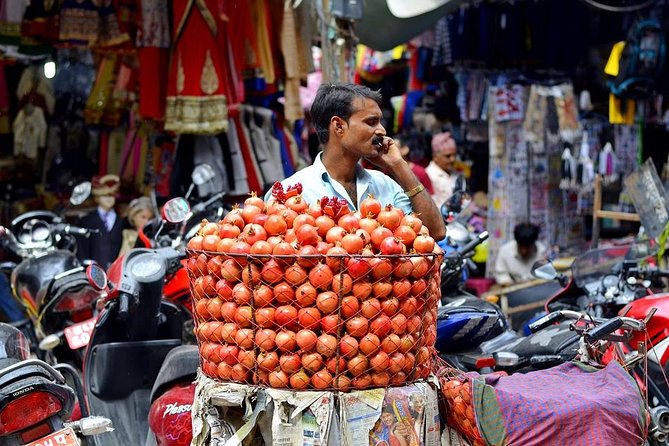
This kind of tour is only as good as the guide. The pace is intentionally flexible, with room for photo stops and time to look around.
One guide name that comes up is Bharat. In the way he was described, the emphasis was on being patient while people paused for photos and shopping. That’s not a small thing. In markets, photo stops and browsing can easily stretch your time. A guide who can keep the flow while still letting you take your time makes the experience feel relaxed instead of frantic.
If you want the best value from your money, use that private format. Ask practical questions:
- What’s usually made here versus sold here?
- Which items are most “everyday use” versus souvenir-style?
- What should I know about the temples I’m seeing?
What to wear and bring for a comfortable bazaar walk
This tour is easy on paper—just walking and sightseeing—but Kathmandu streets are not a mall. Heat, sun, and cobbles matter.
The tour recommends:
- Comfortable walking shoes
- Sunglasses and sunscreen
- At least 1 liter of drinking water per person
I’d add one simple mindset: dress for frequent stops. Markets make you pause—right in front of the shop you want, not at the next landmark. If you can walk comfortably at that pace, you’ll enjoy the whole route more.
Also note: it’s not recommended for participants age 75+. If you or someone in your group has mobility limitations, this one may be too much walking even if the pace is guided.
Tips for choosing the right time of day
The tour duration is about 3 hours 30 minutes. That gives you a compact footprint, which helps, but it doesn’t remove the fact that you’ll be outdoors in a busy market setting.
If you’re choosing between days, think about weather and your own energy. Morning or earlier-afternoon starts often feel easier on foot traffic and sun exposure. If you go later in the day and you’re worn out, you may rush instead of noticing details like the wood carvings and the lion statues at Aakash Bhairav.
Who this private Kathmandu bazaar tour fits best
This tour is a strong match if:
- You want a guided introduction to Kathmandu’s market life
- You care about seeing key culture sites like Durbar Square (UNESCO) without adding extra tours
- You like to shop but don’t want to feel lost or pressured
- You prefer hotel convenience over figuring out transport
It may be less ideal if:
- You dislike walking for 3+ hours, even at a moderate pace
- You’re traveling with someone who can’t handle crowded streets or uneven sidewalks
- You mainly want a quiet, scenic walk rather than an active market atmosphere
Should you book this Kathmandu bazaar walking tour?
If you want Kathmandu to feel like a real place fast, I think this is a good booking. The pricing is fair for what you’re getting: private guidance, hotel pickup/drop-off, and a route that connects markets with Kathmandu Durbar Square and Hanuman Dhoka.
Book it if you’re curious about local life and you want the guide to explain what you’re seeing while you’re walking through Asan and Indra Chowk. Skip it only if you’d rather roam on your own with minimal structure, or if walking time is a deal-breaker.
FAQ
How long is the Kathmandu bazaar walking tour?
The tour lasts about 3 hours 30 minutes.
Is hotel pickup and drop-off included?
Yes. You get hotel pick-up and drop-off included, with an air-conditioned vehicle used for transfers.
What areas does the tour cover?
It focuses on Asan Bazaar and Indra Chowk Bazaar, plus a visit to Kathmandu Durbar Square where you can see Hanuman Dhoka.
Is lunch included in the price?
Lunch is not listed as included. The tour route is timed for a traditional Nepali lunch stop, but you should expect to pay for it.
Are entrance fees required for the places on the route?
Entrance fees are not included. The tour notes that most local areas don’t require entry fees.
What should I bring for the walk?
Bring comfortable walking shoes, sunglasses, sunscreen, and at least 1 liter of drinking water per person.
Is this tour suitable for older travelers?
It is not recommended for participants age 75+.