REVIEW · KATHMANDU
Historical Kathmandu
Book on Viator →Operated by Nepal Holiday Makers Tours and Travels · Bookable on Viator
A long temple day can feel overwhelming. This one keeps it simple: major Hindu sights in and around Kathmandu with private AC transport and hotel pickup. You get a morning start and a smooth point-to-point route, so you’re not spending your day figuring out traffic and timings.
I especially like two things. First, the comfort: a private driver in an AC vehicle, plus water in the car. Second, the mix of stops is practical for a first trip—Pashupatinath, Budhanilakantha, a Shaktipeeth nearby, and then Patan Durbar Square.
One thing to plan for: entrance fees and meals aren’t included, so budget a bit extra once you’re on the ground. Also, do a quick confirmation of the pickup location; one experience involved a guide not meeting the group at the expected bridge, which turned a normal start into a long wait.
In This Review
- Key highlights to know before you go
- Historical Kathmandu in One Private Temple Day
- Price and Logistics for a Private Temple Day
- What’s Included: Vehicle, Water, and Fees
- What’s Not Included: Entrance Fees and Meals
- Stop 1: Pashupatinath Temple by the Bagmati River
- Stop 2: Budhanilkantha’s Open-Air Vishnu Pool
- Stop 3: Guhyeshwari Shaktipeeth Next to Pashupatinath
- Stop 4: Doleshwor Mahadeva Temple in Bhaktapur
- Stop 5: Patan Durbar Square and Krishna Mandir
- Timing Tips: How to Make the Most of a 9:45 Start
- Driver and Tour Management: What You’ll Notice on the Ground
- Who This Tour Fits Best (and Who Might Want Something Else)
- Should You Book Historical Kathmandu?
- FAQ
- How long does the Historical Kathmandu tour take?
- What time does the tour start, and where do I meet?
- Is hotel pickup and drop-off included?
- Are entrance fees included?
- Is this a private tour?
- Is a mobile ticket used?
Key highlights to know before you go
- Private door-to-door comfort in Kathmandu with hotel pickup and drop in the Thamel area
- Pashupatinath timed for the daytime open window, since the main temple is open 5:00 am–12:00 pm
- Several stops have free admission, including Budhanilakantha and Guhyeshwari Shaktipeeth
- A strong temple lineup without rushing, with multiple hours at the biggest sites
- Experienced, cooperative driving matters here, and drivers like Nethra are specifically noted as helpful
- Some tickets and lunch are on you, so bring a plan for entrance payments and food
Historical Kathmandu in One Private Temple Day
This tour is built around Hindu sightseeing across the Kathmandu Valley, focused on big temple names rather than small side streets. You start in the Thamel area around 9:45 am, and you end back there, which makes the day feel manageable even if you’re new to Nepal.
The best part is the rhythm. You don’t just get “a view from the van.” You get time at each site, including a longer stop at the main complex in the east (Pashupatinath) and time to walk around Patan Durbar Square.
If you care about seeing the real places of worship—temples used by locals, not just photo stops—this route fits that goal well. It’s also a good match if you want a day that’s culturally focused without needing to switch neighborhoods every 20 minutes.
You can also read our reviews of more historical tours in Kathmandu
Price and Logistics for a Private Temple Day
At $160, this is priced like a private city experience, not a budget group bus. The value comes from the basics that normally cost you time and stress: hotel pickup/drop, a private AC vehicle, and point-to-point transport between sites.
Here’s how I’d think about value. Entrance fees are not included, but transportation and the administrative parts are. That means the day stays predictable: you’re paying for a clean run, not improvising.
The tour is also explicitly private, meaning it’s only your group. That tends to help at temples, where you may want to pause, ask questions, or move at a comfortable walking pace without a crowd pressure you didn’t ask for.
What’s Included: Vehicle, Water, and Fees
You’re not left to piece the day together. This tour includes:
- Private AC vehicle with a private driver
- Hotel pickup and drop (starting and ending in Thamel)
- A bottle of mineral water per person (1000 ml) per day
- Sightseeing transport point to point
- All fees and taxes tied to the tour operation
In plain terms: the “hard part” of a temple day in Kathmandu is usually getting from place to place without losing hours. This takes that off your plate.
And the water matters more than it sounds. A day of walking in temple areas can leave you thirsty fast, and you don’t want to negotiate for a bottle every stop.
What’s Not Included: Entrance Fees and Meals
You should budget separately for entrance fees at some sightseeing points. The tour notes that admission tickets are not included for Pashupatinath Temple and Krishna Mandir (at Patan Durbar Square).
Also, lunch and snacks aren’t included. That means you’ll want to plan where you’ll eat, or carry something simple if that works for you.
Finally, tips and personal expenses aren’t covered. If you’re the type who likes to show appreciation to your driver, have some small bills ready.
A practical tip: don’t assume the free-admission stops are “no cost.” You may still run into donation boxes or local rules about entering certain areas. The only way to stay calm is to treat this as: transport is handled, but on-the-spot temple costs are yours to manage.
Stop 1: Pashupatinath Temple by the Bagmati River
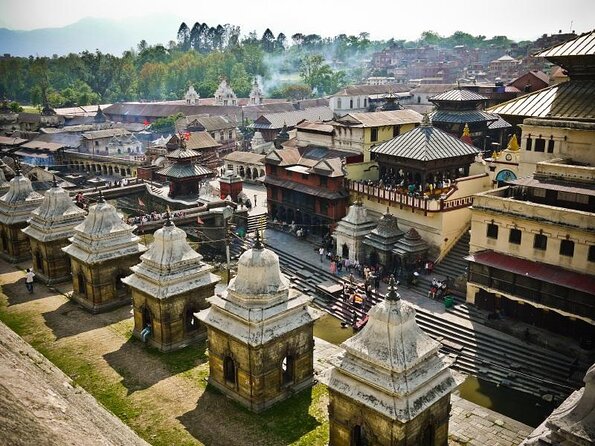
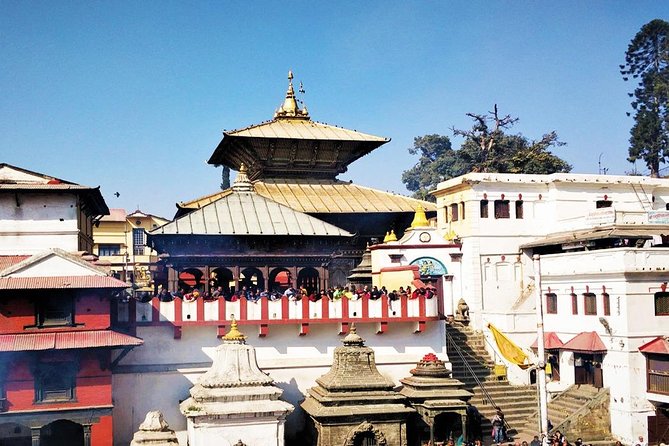
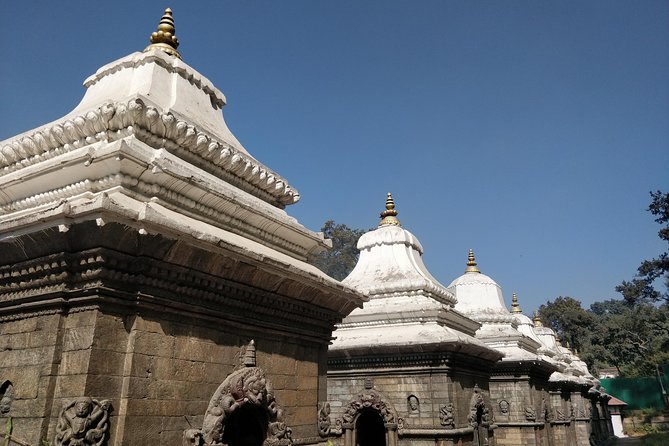
Pashupatinath is the headline stop. It’s described as one of the biggest Hindu temples of Lord Shiva, located beside the Bagmati river with Bankali Forest in the surrounding area.
You get about 2 hours here, but the timing is also worth thinking about. The main temple opens 5:00 am to 12:00 pm, then reopens 4:00 pm to 7:00 pm in the evening. Since the tour starts at 9:45 am, you’re usually in the morning-open window, not the afternoon reopening.
That affects your experience. When you arrive before noon, you’re less likely to feel like you’re “rushing to catch a window.” You also get more flexibility to observe without feeling forced into the exact second.
One more practical thing: Pashupatinath has areas that can feel crowded or active as the day moves forward. If you like photos, I’d focus on getting the best angles early in your visit, then shift to slower walking and respectful observation once you’re inside.

Stop 2: Budhanilkantha’s Open-Air Vishnu Pool
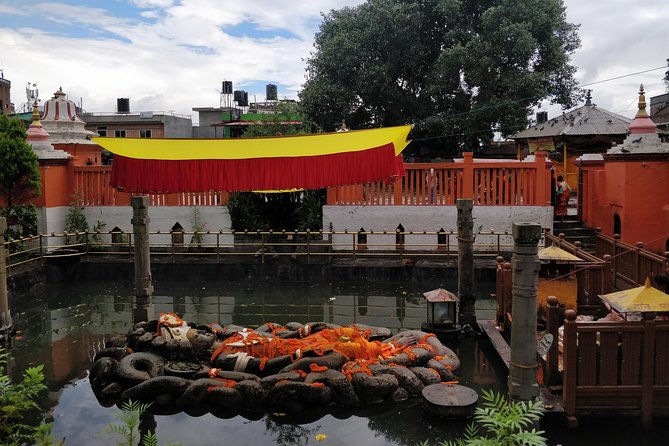
Budhanilkantha is a quieter, different-feeling stop. It’s an open-air temple of God Vishnu, and it’s believed to be one of the oldest temples in Kathmandu.
The standout feature here is the pool with a reclining statue of Vishnu. The site is also known as Narayanthan, which is a nice detail to keep in mind if you ask anyone on-site what to look for.
You’ll spend about 1 hour. Admission is listed as free, which makes this stop a great value add. Even if you’re temple-tired, this is the kind of location that’s easier to enjoy because the main attraction is visually clear and you can take your time around it.
Because it’s open-air, wear something that works for walking. You’ll likely be moving in and out of shaded areas depending on the moment.
Stop 3: Guhyeshwari Shaktipeeth Next to Pashupatinath
This stop is short but meaningful. Guhyeshwari Shaktipeeth is described as a famous Shaktipith of Goddess Parwati, and it’s located just beside Pashupatinath Temple.
You get about 30 minutes, and admission is free. Even with limited time, this is worth it because it changes the focus from Shiva to the Shakti tradition tied to Parwati.
The temple is said to have been built by Pratap Malla around the 17th century. There’s also a belief recorded about it being the spot where Sati’s hips or hind part appeared. If you’re the kind of traveler who likes the stories behind sacred sites, this stop gives you that layer without eating your whole day.
Since it’s next to Pashupatinath, it also helps the day feel connected rather than fragmented. You’re not traveling far just to switch concepts.
Stop 4: Doleshwor Mahadeva Temple in Bhaktapur
Doleshwor Mahadeva is the “stretch” stop because it’s situated in Bhaktapur (outside the core Kathmandu city area). It still fits the theme: it’s important to devotees of Lord Shiva.
You’ll spend about 2 hours here, and admission is listed as free. The key story angle is the link to Kedarnath: it’s believed that Kedarnath has the body of a bull, and Doleshwor Mahadev has the head of a bull, so the Kedarnath trip is incomplete without visiting Doleshwor Mahadev.
Now, a word of realism. If you’re expecting a giant “wow” complex like Pashupatinath, you might have to adjust your expectations. But if you enjoy understanding how sacred geography connects across Nepal, this bull-head connection is the kind of detail that makes a temple stop feel personal and purposeful.
Because the stop is longer than the Shaktipeeth one, you’ll likely have time to slow down and take in the setting rather than just passing through.
Stop 5: Patan Durbar Square and Krishna Mandir
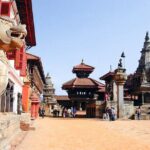
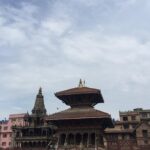
Your last major cultural anchor is Patan Durbar Square. This is where the tour shifts from single temples to a larger historic square setting.
Within Patan Durbar Square, you’ll focus on Krishna Mandir, described as a famous attraction for Hindu devotees and tourists. The temple is noted as one of the finest stone monuments, built in 1637 A.D. by Siddhi Narsinha Malla.
You get about 2 hours for this area, and admission tickets are listed as not included. Plan for that extra cost here even if the rest of the route felt lighter on admissions.
Practically, Patan’s squares can be busy, so I like to treat the time in this stop as two phases: first, get the main sights you came for; then, spend the remaining time wandering calmly and reading the temple details that catch your eye.
If you enjoy architecture and carving work, Krishna Mandir is the reason you’ll want to stay more than just “see it once and go.”
Timing Tips: How to Make the Most of a 9:45 Start
Starting at 9:45 am is a smart choice for temple days because it lands you inside the morning open period for Pashupatinath (open 5:00 am–12:00 pm). If the schedule stays smooth, you avoid the pressure of rushing to the afternoon reopening (4:00 pm–7:00 pm).
Still, temple days in Kathmandu depend on pace and walking. Keep your own mindset flexible. If you’re the type who wants every minute to be exact, you might feel impatient when you hit active areas of worship.
Also, remember that at least one other stop (Patan Durbar Square’s Krishna Mandir) has admission costs not included. If you’re paying entrance fees while you’re tired, you’re more likely to fumble with timing or money. I’d keep small cash ready just in case and keep your ticket-ready items in one easy pocket.
If you’re worried about losing time, use the first big stop (Pashupatinath) as your anchor. It’s the longest one and the most time-sensitive due to the stated opening hours.
Driver and Tour Management: What You’ll Notice on the Ground
The tone of the operator is largely positive in the way they run logistics. One driver name—Nethra—shows up as especially helpful. That kind of small detail matters because the driver is the difference between a calm day and a day where you’re stressed about turns, parking, and where to stand.
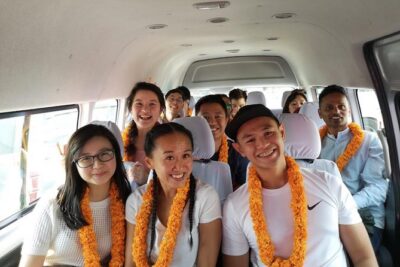
There’s also evidence of friendly, hands-on communication from the operator side. One mention even references a welcoming experience on arrival, which suggests they try to make the beginning of your trip feel supported, not chaotic.
That said, do not blindly assume everyone shows up exactly as planned. One experience involved waiting about an hour because the guide didn’t meet at the expected bridge location. So my advice is simple: confirm the pickup point the night before, and if you’re already waiting, keep your phone accessible and be ready to call or message based on whatever contact details you receive at booking.
Think of it as responsible travel, not paranoia. One small confirmation saves a lot of annoyance.
Who This Tour Fits Best (and Who Might Want Something Else)
This is a strong fit if you:
- Want major Hindu temple highlights in one day
- Like private transport and a fixed plan
- Prefer not to navigate public transport and taxi wrangling for multiple sites
It’s also ideal if your trip is short and you want to use one day for religious and cultural context in the Kathmandu Valley, including a stop in Bhaktapur.
You might consider a different option if you:
- Really hate paying entrance fees on arrival
- Want a fully guided experience with an on-site guide included for every stop (this tour doesn’t list a guide as included)
- Plan to rely on included meals (lunch and snacks are not included)
The tour is built around sightseeing time and transport. It doesn’t read like a food day or a shopping day. If that matches your priorities, you’ll enjoy it.
Should You Book Historical Kathmandu?
I’d book it if you want a smooth, temple-focused day with hotel pickup in Thamel, comfortable transport, and a route that hits several major sites without turning your day into a transport marathon.
You should book with eyes open if you’re on a tight budget for entrances and food, because admission tickets at key stops aren’t included and lunch/snacks aren’t provided. Still, the transport and water are handled, which keeps the day from turning into a scavenger hunt.
Before you go, do two things: confirm pickup location and bring a small plan for money for entrance fees and a place to eat. If you do that, this kind of private temple day can be a satisfying use of time in Kathmandu.
FAQ
How long does the Historical Kathmandu tour take?
The duration is listed as 1 to 7 hours (approx.). With the included stops and time at each location, expect it to lean toward the longer end if you want to take your time.
What time does the tour start, and where do I meet?
It starts at 9:45 am and the meeting point is Thamel, Kathmandu 44600, Nepal. The tour ends back at the meeting point.
Is hotel pickup and drop-off included?
Yes. Hotel pickup and drop are included, and you’ll be using a sightseeing vehicle on a point to point basis.
Are entrance fees included?
Not all of them. Entrance fees for sightseeing points are not included, and the stops that specifically note this are Pashupatinath Temple and Krishna Mandir.
Is this a private tour?
Yes. It’s a private tour/activity, so only your group will participate.
Is a mobile ticket used?
Yes. The experience includes mobile ticket use, and you’ll receive confirmation at the time of booking.
If you want, tell me your travel dates and what you care about most (architecture, rituals, photos, slower pace), and I’ll help you decide whether this route fits your style.