REVIEW · KATHMANDU
Kathmandu: 3 hours night Pashupatinath Aarti Tour
Book on GetYourGuide →Operated by Dream Noble Adventure Pvt. Ltd. · Bookable on GetYourGuide
Pashupatinath at night hits different. The whole Bagmati riverfront turns into a living religious stage, and the pagoda temple with its silver doors feels more like a shrine than a landmark. This 3-hour tour is a practical way to see Pashupatinath at the hour when devotion and rituals are front and center.
I like two things a lot: first, you get hotel pickup and drop-off with smooth transportation, so you spend energy on the experience instead of figuring out streets in Kathmandu. Second, the guide experience matters here; you’ll have a licensed English-speaking guide (with Hindi and Nepali support too), which helps you understand what you’re seeing around the main temple and riverside cremation area.
The main drawback to consider is that things can be time-sensitive in Kathmandu. In one case involving a city strike, a guide arrival was delayed by about 1.5 hours, and you may need patience if traffic or events affect timing.
In This Review
- Key highlights you can actually use
- Pashupatinath Aarti at night: what you’re really signing up for
- The 3-hour flow: how the timing works in your favor
- Entering the complex: what a good guide changes
- The main temple area: Shiva devotion in full view
- The Bagmati River setting: why the location matters
- Arya Ghat and cremation: what you should know before you go
- The aarti ceremony: what you’ll likely see in motion
- Pickup, drop-off, and the value of being moved at night
- Price check: is $35 a fair deal for this kind of visit?
- What to bring (and what not to bring) for a smoother evening
- Who this tour fits best
- When it doesn’t go perfectly: why patience matters here
- Should you book this night Pashupatinath aarti tour?
- FAQ
- How long is the Pashupatinath night aarti tour?
- Where can I be picked up and dropped off?
- What’s included in the $35 per person price?
- Are food and drinks included?
- What language is the guide?
- What should I bring, and what’s not allowed?
Key highlights you can actually use
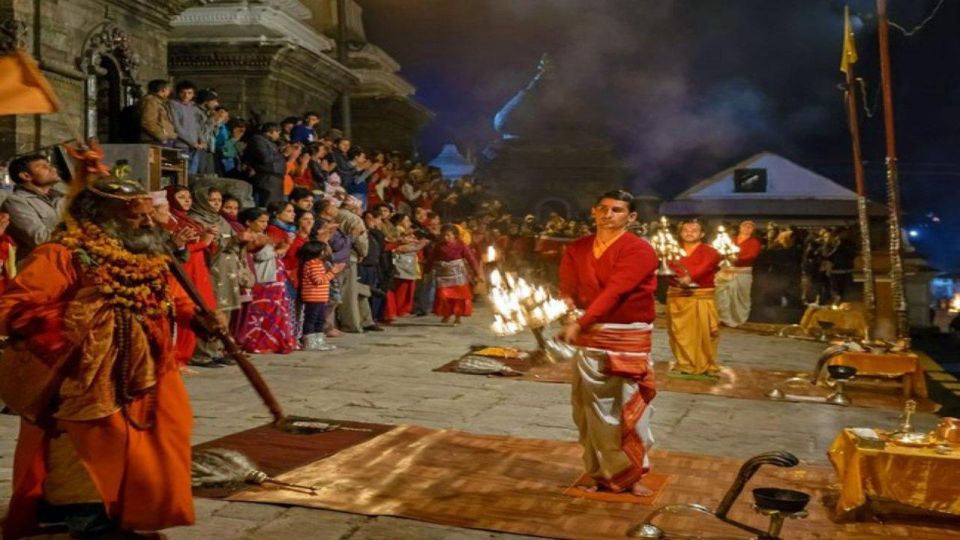
- Night aarti atmosphere along the Bagmati River, when the temple complex feels most alive
- Licensed guide (English, plus Hindi and Nepali) to explain what matters and where to stand
- UNESCO World Heritage complex stretching on both sides of the Bagmati River
- Arya Ghat cremation site viewing as part of how Hindus understand the river and moksha
- Easy hotel transfers from either Thamel or even Pashupatinath as pickup/drop points
Pashupatinath Aarti at night: what you’re really signing up for
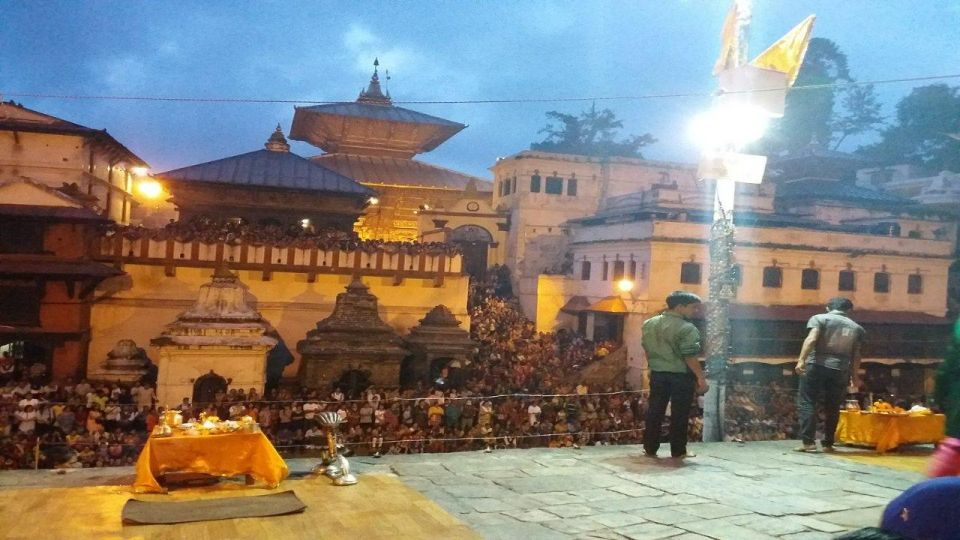
This tour is not just a temple stop. It’s a short, guided window into how Hindu worship flows through daily life in Kathmandu—especially after dark when the aarti ceremony and the riverfront mood pull everything together.
Pashupatinath is dedicated to Lord Pashupatinath, an incarnation of Shiva, and it’s one of the most important pilgrimage sites for Hindus worldwide. The temple complex stretches along both banks of the Bagmati River, so you’re not only looking at buildings—you’re looking at a sacred geography where ritual, water, and community all meet.
The architecture adds weight to the experience. The main pagoda-style temple has a golden roof and intricately carved silver doors, and even though the origins are often traced back to the 5th century, the current structure reflects later reconstructions (the 17th-century look is the one most visitors will recognize).
You can also read our reviews of more evening experiences in Kathmandu



The 3-hour flow: how the timing works in your favor
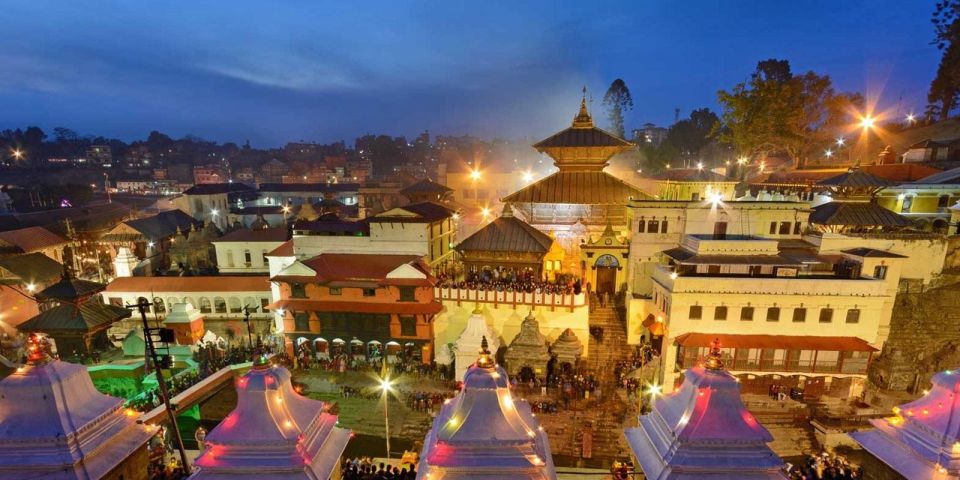
Three hours sounds short, but in a place like Pashupatinath it’s actually a smart length. Night rituals move with the crowd and the flow of worshippers, and you don’t want a “stare for an hour, leave, and hope for the best” situation.
You’ll start with pickup and transport from either Thamel or the Pashupatinath Temple area, then head into the complex for your guided visit. You’ll get about 2.5 hours at the temple site itself, which is enough time to see the main areas without feeling rushed in every direction.
When you return, you’ll be dropped back at one of two options—Thamel or Pashupatinath Temple—so you’re not stuck trying to solve the last mile in the dark.
Entering the complex: what a good guide changes
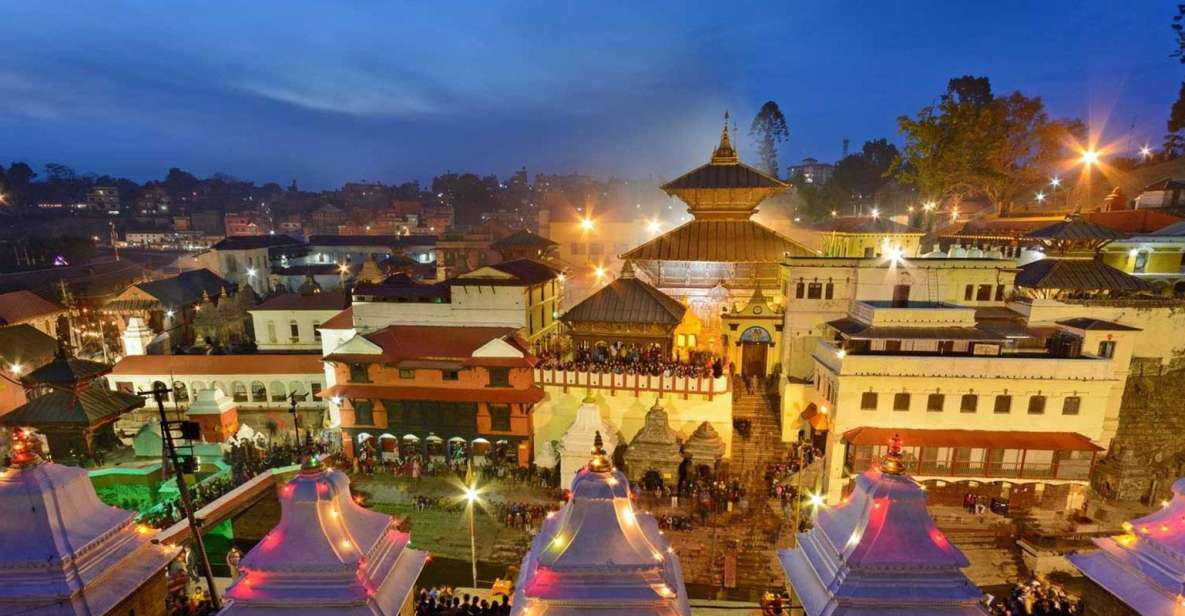
You could show up on your own, but a guided approach is the difference between wandering and understanding. With a licensed English-speaking guide (and Hindi/Nepali support), you’re more likely to grasp what the key spaces are for—especially around the cremation area and the way people move during ritual times.
A good guide also helps you make practical choices: where to wait, how to watch without blocking others, and how to connect the ceremony you’re seeing with what the site means. That matters because Pashupatinath is not a single-photo temple. It’s a whole complex: smaller temples, ashrams, and significant riverside spaces all tied to the Shiva devotion.
You’ll also have your entry ticket handled as part of the tour, which removes one common friction point for evening visits.
The main temple area: Shiva devotion in full view
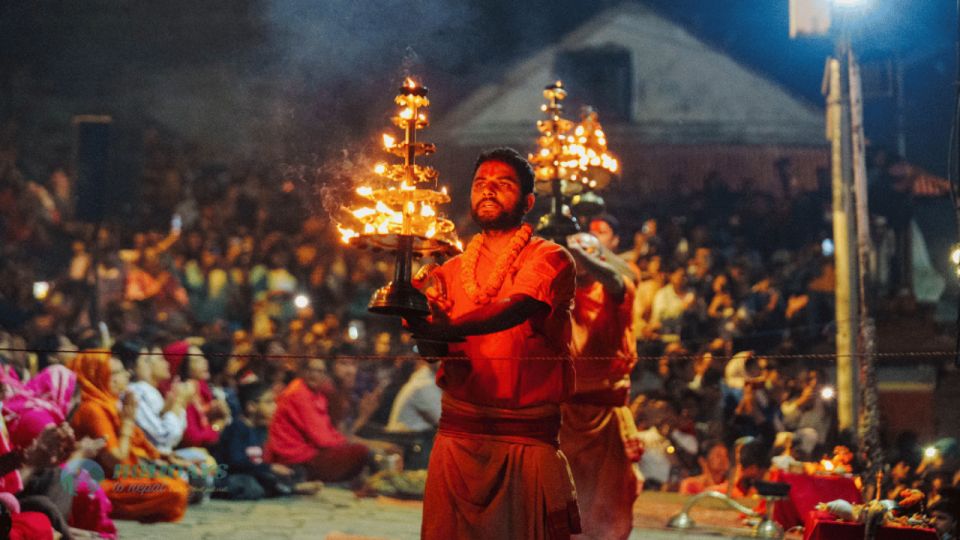
At the center is the main pagoda-style temple with the golden roof and carved silver doors. Even if you don’t read the symbolism, you’ll feel why this place is famous: the reverence is visible, and the architecture supports the ritual focus.
During your visit, you’ll be able to experience the traditional atmosphere that draws pilgrims in large numbers. If your timing lines up with major festival seasons, Maha Shivaratri is especially significant here, bringing devotees from across Nepal and neighboring countries. Even outside peak festivals, the daily devotion keeps the complex moving and meaningful.
Look beyond the building itself. What makes Pashupatinath special is how worship is practiced across the complex—people aren’t just sightseeing; they’re offering prayers and participating in the spiritual rhythm of the riverside.
The Bagmati River setting: why the location matters
The Bagmati River isn’t just scenery here. It’s part of the spiritual framework of the site, and that shows up in how the complex is laid out on both banks.
Because you’re visiting as part of a night aarti experience, the riverfront setting tends to feel more intense than daytime. Light, reflections, and the movement of devotees all shape what you notice. You’ll likely spend time orienting yourself along the river’s edge so you understand where the main worship focus sits.
This also affects practical behavior. You’ll want to keep your steps careful and your phone use respectful, because the area is active and sacred.
You can also read our reviews of more tours and experiences in Kathmandu




Arya Ghat and cremation: what you should know before you go
One of the standout features of this tour is that it includes the cremation side of Pashupatinath—specifically the riverside cremation site known as Arya Ghat. This is an important location for Hindu cremations, and it’s traditionally believed that cremation here helps the soul attain moksha, liberation from the cycle of rebirth.
That can be emotionally heavy for some visitors. If you’re sensitive to death-related rituals, treat this part of the experience with extra care. Don’t rush your viewing, and don’t treat it like a spectacle.
Also, expect that the cremation area is not designed for casual gawking. You’ll want to follow your guide’s cues on where to stand and how to observe respectfully.
The aarti ceremony: what you’ll likely see in motion
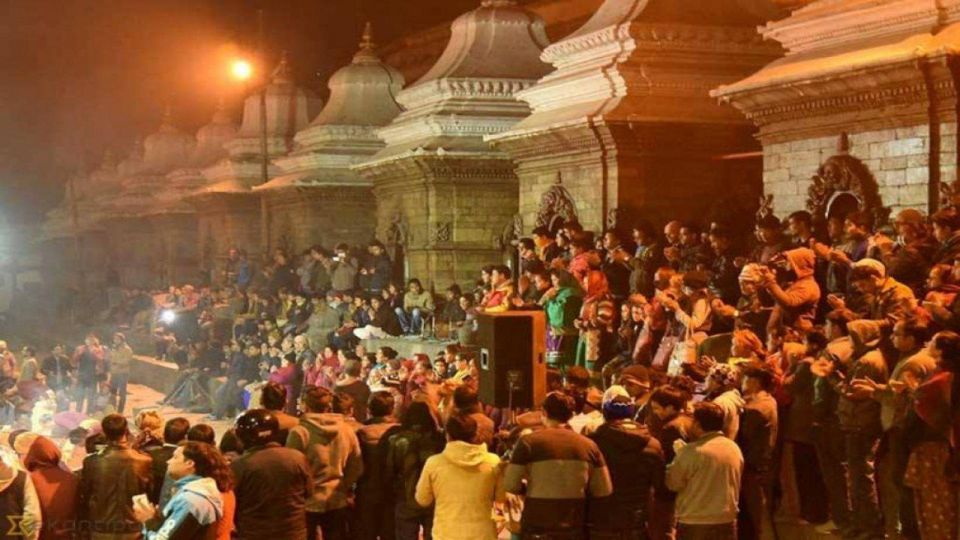
The tour is built around the sense of “night ritual.” You should expect to experience the aarati ceremony connected with Shiva devotion, with a guided explanation helping you connect the action to the meaning.
Aarti is not only about watching flame and movement. It’s about collective participation—people offering prayers in a shared space, synchronized by faith and tradition. In a guided setting, you’ll usually get helpful context on what’s happening and why the ceremony is central to the experience.
If you’re the type of traveler who likes rituals but hates feeling lost, this is a good match. Your guide can help you understand what you’re seeing without turning it into a lecture.
Pickup, drop-off, and the value of being moved at night
For many visitors, the biggest question is simple: will I be stuck figuring out logistics after dark? With this tour, hotel pickup and drop-off are part of the package, which is a real value at night when crowds and traffic can make everything harder.
There are two pickup options: Thamel or Pashupatinath Temple. For drop-off, you can choose Thamel or Pashupatinath Temple again. That flexibility is useful if you’re already staying near Thamel’s restaurant and shop area or if you prefer to start/end closer to the complex.
The price includes transportation to and from Pashupatinath, the guide, and the entry ticket. At $35 per person for a 3-hour experience with a licensed guide and round-trip transport, the value hinges on whether you care about context and convenience more than you care about doing everything solo.
Price check: is $35 a fair deal for this kind of visit?
For a short evening temple visit, $35 can be either a steal or a waste—depending on what you’d otherwise pay and how you’d manage the logistics.
Here’s what you’re getting:
- Hotel pickup and drop-off
- Transportation to and from Pashupatinath
- Licensed English-speaking guide
- Entry ticket
- All taxes
- A 2.5-hour guided visit on site
What you’re not getting:
- Food and drinks
If you would otherwise pay separately for transport and a guide, the bundled price starts looking reasonable. And if you’re trying to do this without wasting time on finding the right entrance and managing the evening schedule, the convenience alone can justify the cost.
If you’re already comfortable navigating on your own, and you don’t care much about explanations, you might feel like you’re paying for guidance you’d skip. But for most visitors, the guide context makes this tour worth it, especially when rituals and sacred spaces have rules that aren’t obvious at first glance.
What to bring (and what not to bring) for a smoother evening
This tour is straightforward, but the rules matter at Pashupatinath. Bring:
- Passport or ID card
- Comfortable clothes for walking and standing
- Cash
Plan to follow the restrictions:
- No drones
- No alcohol or drugs
- A note on wheelchairs: the tour is listed as wheelchair accessible, but non-folding wheelchairs are not allowed
Because the experience includes sacred ritual spaces and riverside areas, wearing comfortable footwear and dressing respectfully will make your night easier.
Who this tour fits best
This is a strong pick if you want:
- A guided night visit focused on aarti
- A short, structured time block rather than an all-day temple crawl
- Help understanding what you’re seeing, especially around the cremation site and Shiva devotion
It may be less ideal if you:
- Dislike witnessing cremation-related rituals
- Need total flexibility on timing (because evening plans can be affected by city events and traffic)
- Want a long, slow sightseeing session without a schedule
If you’re traveling solo, couples, or in a small group and you want the cultural depth without logistical stress, this tour can be a smart way to experience Pashupatinath efficiently.
When it doesn’t go perfectly: why patience matters here
Even with a good operator, Kathmandu evenings can be unpredictable. In one instance, a strike delayed the guide’s arrival by about 1.5 hours, but the guide still stayed helpful and ready to answer questions. That’s the kind of attitude that helps you get the most out of a short tour when timing changes.
So I’d treat this as a flexible evening plan. If you’re the type who hates delays, have a backup idea for after the tour—like a nearby meal back in Thamel—so you’re not scrambling.
Should you book this night Pashupatinath aarti tour?
I’d book it if you value convenience and meaning over DIY wandering. With a licensed guide, entry ticket included, and hotel transfers built in, it’s a practical way to experience Pashupatinath after dark—especially the aarti ceremony and the wider spiritual setting around the Bagmati River.
I would hesitate if cremation rituals will be upsetting for you, or if you need a perfectly timed itinerary with zero delays. If you decide to go, go respectfully, dress comfortably, and let your guide set the pace. In a place like Pashupatinath, that’s how you turn a short visit into a memorable one.
FAQ
How long is the Pashupatinath night aarti tour?
The tour runs for about 3 hours total, with around 2.5 hours spent visiting Pashupatinath with a guided tour.
Where can I be picked up and dropped off?
Pickup and drop-off options include Thamel and Pashupatinath Temple. Pickup can be from either location, and you’ll be returned to either Thamel or Pashupatinath Temple.
What’s included in the $35 per person price?
It includes hotel pickup and drop-off, transportation to and from Pashupatinath, a licensed English-speaking guide, entry ticket to Pashupatinath, and all taxes.
Are food and drinks included?
No. Food and drinks are not included, so you’ll want to plan to eat separately.
What language is the guide?
The live tour guide can speak Hindi, English, and Nepali.
What should I bring, and what’s not allowed?
Bring your passport or ID card, comfortable clothes, and cash. Drones are not allowed, and alcohol or drugs are not allowed.