REVIEW · KATHMANDU
Everest Base Camp Trek | Deluxe Lodges | Both Way Helicopter Ride
Book on Viator →Operated by Life Himalaya Trekking · Bookable on Viator
Flying in, trekking out feels different. This Everest Base Camp package lets you trade some hours of grinding footwork for a 45-minute scenic helicopter to Lukla, then follow a classic route through Sherpa towns to the Everest Base Camp area. I especially like that it pairs that time-saver with real “get used to altitude” pacing, not just a rushed stamp to the summit-view spots.
The second thing I like is the included cold-weather setup: a -20°C sleeping bag and a warm down jacket mean you’re not gambling on rental quality in Kathmandu. The main consideration is medical risk planning: travel insurance for your own rescue and evacuation isn’t included (you’ll want that handled before you go).
In This Review
- Quick hits before you go
- Why this Everest Base Camp plan feels more doable
- The helicopter trade you’re actually making
- Kathmandu warm-up: pickups, Thamel hotels, and a smooth start
- Day 2: Lukla by helicopter, then Phakding on a manageable first day
- Day 3: Hillary Bridge to Namche Bazaar and the first real altitude test
- Day 4: Syangboche and Everest View Hotel option for acclimatization comfort
- Day 5: Tengboche Gompa day—monastery stops and big sense-of-place moments
- Day 6: Pangboche Boudha Bihar and the Imja Khola Valley scenery focus
- Day 7: Dingboche acclimatization day—climb high, sleep low
- Day 8: Lobuche—memorials, long effort, and real elevation gain
- Day 9: Gorakshep, Everest Base Camp, and the helicopter return from the Everest Base Camp area
- Day 10: Kala Patthar sunrise and finishing with the back-to-Kathmandu connection
- Comfort and gear: what deluxe-style lodging really means here
- Permits, guiding, and safety support that keeps the trip from feeling chaotic
- Price check: does $3,332 feel like value or sticker shock
- Who should book this, and who should think twice
- Should you book this Everest Base Camp + Heli return trek?
- FAQ
- How long is the Everest Base Camp trek on this package?
- Are helicopter flights included?
- What meals are included during the trek?
- Which permits are included?
- What cold-weather gear is provided?
- How much luggage can I bring?
- Is hotel accommodation in Kathmandu included?
- Is travel insurance for rescue and evacuation included?
Quick hits before you go
- Both-way helicopter legs: you skip some trekking time by flying from Kathmandu to Lukla and back the same way.
- Heli return from Gorakshep: you don’t have to hike all the way back out after the hardest days.
- Built-in acclimatization days around Namche/Syangboche and again around Dingboche, with the climb high/sleep low approach.
- Proper support for altitude conditions: first-aid kits include an oxi-meter, plus guide/porter accidental insurance is included.
- Cold-weather gear included: down jacket and a -20°C sleeping bag (returned after the trip).
- Lodge comfort + meals: twin-share best-available lodges during the trek, plus set breakfasts/lunches/dinners.
Why this Everest Base Camp plan feels more doable
This is an Everest Base Camp trek designed for people with limited time who still want the real experience: village trails, monastery stops, and the big payoff viewpoints. The clever part is how it compresses the trip without pretending altitude is optional.
You’ll start with the helicopter hop to Lukla (about 45 minutes) for that classic “Nepal begins in the air” feeling. Then you walk the Dudh Koshi river corridor and cross into the busier Sherpa heartland—Namche Bazaar, Tengboche, Pangboche, and the high-altitude villages. Finally, you get the famous late-morning/early-morning drama: Everest Base Camp plus a sunrise-style push to Kala Patthar.
You can also read our reviews of more hiking tours in Kathmandu
The helicopter trade you’re actually making
A helicopter return changes your emotional energy. After you hit the Everest Base Camp area, you don’t face the same long, grinding multi-day slog back down on foot. That matters when you’re tired, slightly dehydrated, or running low on motivation after high altitude.
The trade-off is that your trek days are more “scheduled around key elevations.” If you prefer long, slow days purely at walking pace, you might feel the structure more than the freedom. But for most people, the time savings is exactly why this version exists.
Kathmandu warm-up: pickups, Thamel hotels, and a smooth start
Your trip begins in Kathmandu with a hotel transfer after you land at Tribhuvan International Airport. The package includes private transportation pick-up and drops, and you stay two nights in a 3-star hotel with breakfast—one night before the trek and one night after it.
Why that matters: Kathmandu is where you need sleep, food you can digest, and time to sort small things (clothes layers, charging gear, getting used to the city air). Having that hotel block built in usually prevents the most common early-trip chaos: showing up late, scrambling for beds, or eating something that doesn’t sit well before you head uphill.
You’ll also meet the provider at Life Himalaya Trekking in Narsingh Chowk Marg. If you like having a clear meeting point and a team waiting for you, this setup is designed for exactly that.
Day 2: Lukla by helicopter, then Phakding on a manageable first day
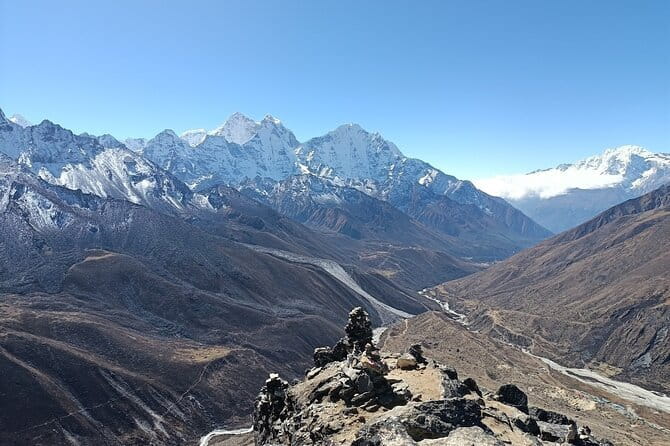
The most noticeable start is the helicopter flight from Kathmandu to Lukla. You’ll get a scenic route view over Everest and Kanchenjunga, and then you land ready to walk. From there, Day 2 becomes the “good intro” kind of trekking day: not too long, with enough time to acclimatize.
You hike from Lukla to Phakding, following a gentle route along the river corridor. The point here is simple: build a rhythm early while your body is still fresh enough to handle altitude changes.
Practical tip: on Day 2, keep your pace controlled. With any Everest trek, the biggest performance killer is going too fast on day one.
Day 3: Hillary Bridge to Namche Bazaar and the first real altitude test
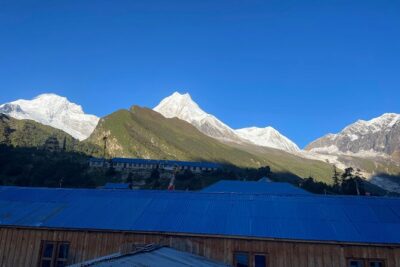
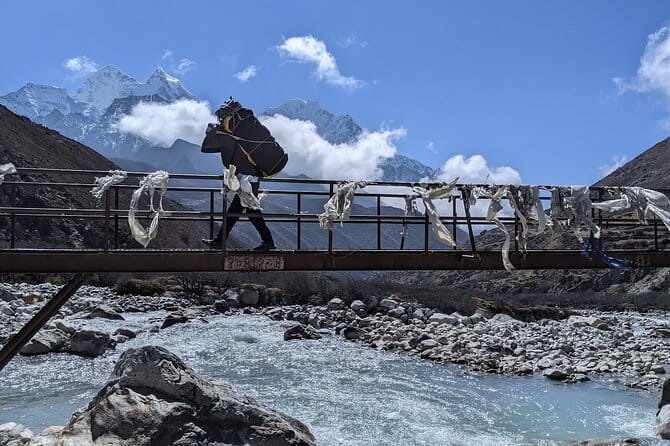
After breakfast, you’ll continue toward Monjo and pass through the area around the Hillary Bridge and pine-forest stretches along the Dudh Koshi River. This is a classic “Nepal feels real” day—trails with river views and small village life between the larger milestones.
The day’s key moment is the approach to Namche Bazaar after the last steep climb. Once you reach Namche, Everest starts peeking over the Lhotse–Nuptse mountain range. Even if you’re not chasing views all day, that peek is a big psychological shift: you’re now in the Everest zone.
This day matters because it sets up the next block of acclimatization. Don’t turn Day 3 into a race.
You can also read our reviews of more tours and experiences in Kathmandu
Day 4: Syangboche and Everest View Hotel option for acclimatization comfort
Day 4 is your first dedicated acclimatization day. You hike up to Syangboche, a village with a small airstrip area. The main goal is to raise elevation gradually while giving yourself the chance to settle.
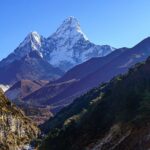
A big highlight is the Everest View Hotel area at about 3,880 m. The package notes this as an option (so it’s not baked into the core trek like a required stop). If you choose to go, it’s essentially a “coffee with the big view” moment—Everest, Ama Dablam, Lhotse, and other major peaks in sight when conditions are clear.
Then you return to Namche for a more relaxed afternoon: explore the local market, restaurants, massage/spa options, and rest. Namche Bazaar is one of the places where you can actually catch your breath and manage small logistics.
Day 5: Tengboche Gompa day—monastery stops and big sense-of-place moments
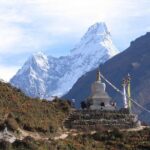
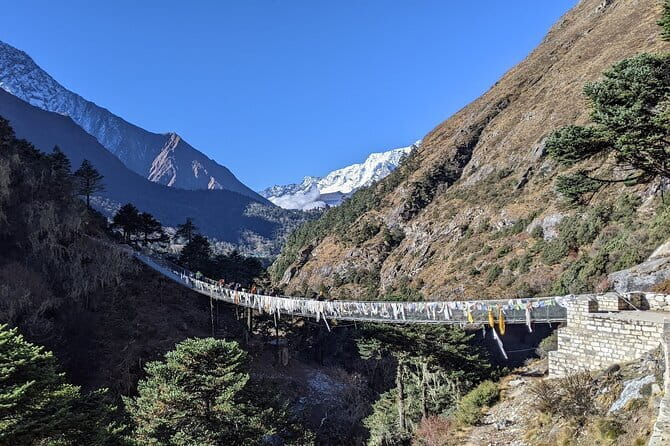
Day 5 follows the Dudh Koshi corridor again, with a long suspension bridge crossing before you move through Imja Khola Valley. You’ll reach Tengboche Gompa, one of the most important spiritual landmarks along this general Everest route.
Why this stop is worth it: monastery areas often feel quieter and slower than the market zones, and the views around Tengboche can hit hard. Even if you’re tired, it’s one of the moments that gives you that “this is why I came” pause.
A practical note: these days can feel busy in terms of switching between steep sections and flatter stretches. Take breaks before you feel drained, not after.
Day 6: Pangboche Boudha Bihar and the Imja Khola Valley scenery focus
Your Day 6 leads you to Pangboche Boudha Bihar, with a morning start and hiking time around 5 hours. The description emphasizes that the landmark day gives you outstanding scenery while also supporting better altitude management than some more aggressive days.
You’ll spend time with Ama Dablam and other peaks in view when weather cooperates, and you’re moving in a zone where the trail is both physically demanding and visually unforgettable. The key here is balance: you want your body working, but you don’t want to burn out.
Day 7: Dingboche acclimatization day—climb high, sleep low
Day 7 is your second acclimatization day, centered around Dingboche. The “rule” is spelled out: climb high and sleep low. You’ll hike up toward a higher point, then return to sleep lower.
This approach is a smart response to a simple truth: altitude doesn’t negotiate. You need time for your body to adjust, and the itinerary builds those adjustment days in the right places.
I also like how the schedule doesn’t pretend acclimatization is optional. It’s built into the trek structure instead of tacked on as a suggestion.
Day 8: Lobuche—memorials, long effort, and real elevation gain
On Day 8, you’re heading to Lobuche. The day is described as a relatively lighter trekking day, but it still brings significant altitude gain. You’ll follow steep slopes, pass through the Dughla valley area, and encounter the memorial at Thukla.
This kind of stop matters. It’s not just sightseeing. Memorials along the route remind you that Everest trekking is serious business and that good decision-making—pace, hydration, and turning back if needed—keeps people safe.
Physically, plan for a longer day even if the label says lighter. At this altitude, effort adds up fast.
Day 9: Gorakshep, Everest Base Camp, and the helicopter return from the Everest Base Camp area
Day 9 is the big payoff day: leaving Lobuche, you trek toward Gorakshep. The route includes glacier terrain and takes about 4 hours to reach Gorakshep, then you continue toward the Everest Base Camp point.
What makes this day special is the combination of two realities:
1) you still earn the Everest Base Camp experience on foot, and
2) you’re not forced to spend extra days hiking back down after the main effort.
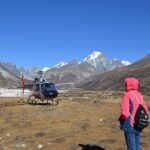
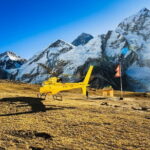
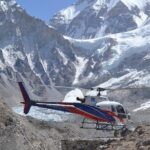
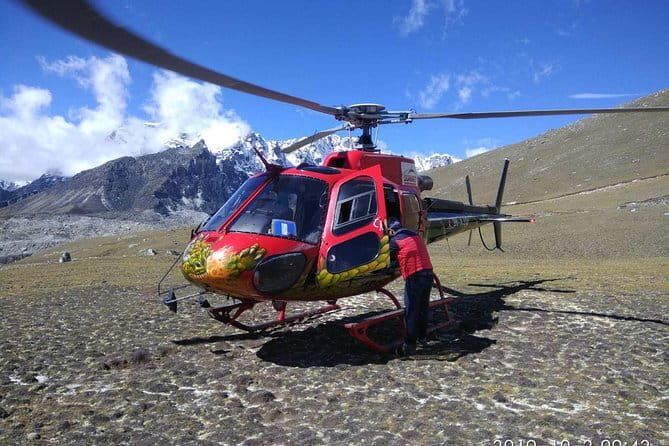
Then you fly by helicopter from the Everest Base Camp area (Gorakshep) to Lukla, as included in the plan.
This is also where service quality can really show. A trip like this lives or dies on timing: getting you to the right place for the right flight window, with the right gear packed and the right bodies moving at safe pacing.
Day 10: Kala Patthar sunrise and finishing with the back-to-Kathmandu connection
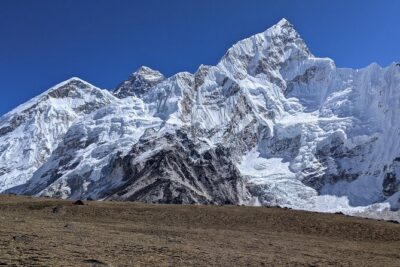
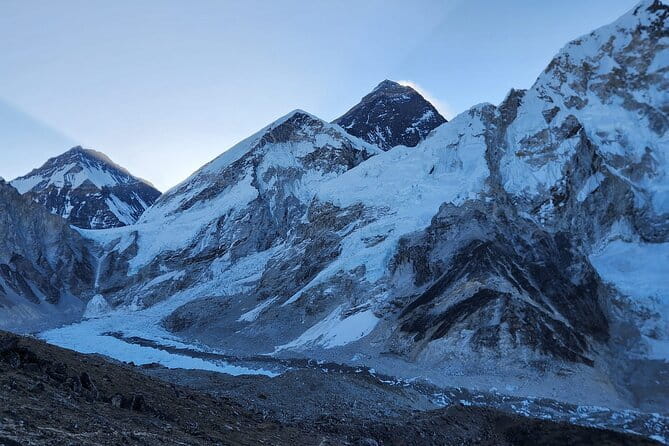
Day 10 starts before sunrise with a hike to Kala Patthar. The purpose is straightforward: catch the sunrise across the face of Mt. Everest and the surrounding panoramas.
Even if you’re tempted to sleep in, Kala Patthar is often the moment people remember most from Everest treks—not because it’s comfortable, but because it’s dramatic and rewarding.
After that, the trek portion ends and your plan ties back into the included return flights. The overall package includes the helicopter from Lukla back to Kathmandu.
Comfort and gear: what deluxe-style lodging really means here
This tour includes twin-share best available lodge accommodation during the trek, plus the full meal plan: 10 breakfasts, 8 lunches, and 8 dinners. In the mountains, having meals built into the package is more than convenience. It reduces decision fatigue when you’re tired and altitude-slow.
You also get practical mountain gear:
- Warm down jacket
- Sleeping bag rated to -20°C
- A trekking bag/duffel and t-shirt
- A trail map
And yes, you’ll need to return the jacket and sleeping bag after the trip. The upside is you avoid buying or renting extremely cold-rated gear yourself, which is often the hidden cost in cold-weather trekking plans.
Another good detail: first-aid kits are included for staff and groups, and they mention an oxi-meter. That doesn’t remove risk, but it signals the team plans for altitude issues rather than treating them like surprises.
Permits, guiding, and safety support that keeps the trip from feeling chaotic
You’re covered on the paperwork side with the Sagarmatha National Park permit and the Pasang Lhamu Rural Municipality Permit included. That matters because permits in Nepal aren’t something you want to chase last-minute.
On the human side, you’ll hike with an experienced, government-licensed trek guide and porters. The package states 1 porter for every 2 people, plus it includes guide/porter salary, equipment, food, transportation, and accidental insurance.
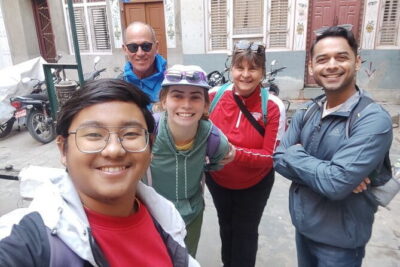
One thing I really like about trips like this: clear organization. In the feedback you can see themes around team communication and professionalism—people name guides like Rabin, Tika, Pramod (and also a communicator named Shiba). The common thread is that the guides are described as attentive and safety-minded, and that they adjust to your pace when needed.
Price check: does $3,332 feel like value or sticker shock
At $3,332 per person, this isn’t a cheap Everest add-on. But you’re paying for specifics that drive real cost, especially in Nepal at altitude:
- Multiple helicopter flights (Kathmandu to Lukla, Lukla to Kathmandu, plus return from the Everest Base Camp area to Lukla)
- Lodging in Kathmandu (two nights in a 3-star hotel) with breakfast
- Guide and porter support, plus equipment and food for the staff
- Permits
- Cold-weather gear (down jacket + -20°C sleeping bag)
- Meal plan covering most days on the trek
The value angle is time and fatigue management. If you’ve got limited days, helicopter logistics can turn “impossible schedule” into “very likely trip.” You still get the full Everest story beats, including Namche, Tengboche, Dingboche, Lobuche, Everest Base Camp, and Kala Patthar.
Where it can stop feeling like value is if you already have your own cold-weather gear, your insurance situation is solid, and you’re willing to hike longer. In that case, you might prefer a more traditional EBC trek. But if you want a shorter version that prioritizes key milestones, the price starts making sense.
Who should book this, and who should think twice
This tour is a strong match if you:
- have limited time and want a 10-day Everest Base Camp experience
- prefer lodge-based trekking over camping
- want the gear bundle (down jacket and -20°C sleeping bag)
- like having an organized team managing permits, guides, and logistics
I’d think twice if you:
- want a totally self-paced trek where you choose every schedule detail
- have no room in your budget for helicopter costs
- aren’t planning to cover rescue/evacuation insurance for yourself (since it’s not included)
If you’re already fit and altitude-aware, this style can feel like a practical compromise: Everest intensity with less mountain downtime.
Should you book this Everest Base Camp + Heli return trek?
I’d book it if you want Everest Base Camp and Kala Patthar without sacrificing your whole month to trekking. The combination of helicopter time-savers, serious acclimatization days, and lodge + meal planning makes it easier to execute well.
The one “don’t skip” checklist item: make sure you have proper travel insurance that covers rescue and evacuation to high altitude, since the package explicitly doesn’t include it for you. If that’s covered, you’re choosing a well-structured way to see Everest in a shorter window—without turning the experience into a logistics headache.
FAQ
How long is the Everest Base Camp trek on this package?
The trek is listed as 10 days (approx.).
Are helicopter flights included?
Yes. Helicopters are included as a sharing ride from Kathmandu to Lukla and Lukla to Kathmandu, plus a sharing flight from Everest Base Camp (Gorakshep) to Lukla.
What meals are included during the trek?
The package includes 10 breakfasts, 8 lunches, and 8 dinners.
Which permits are included?
You’re covered for the Sagarmatha National Park (Mt. Everest) trek permit fee and the Pasang Lhamu Rural Municipality Permit fee.
What cold-weather gear is provided?
You’ll be provided a warm down jacket and a sleeping bag rated to -20°C (returned after the trip).
How much luggage can I bring?
The luggage allowance is 10kg for a big bag and 5kg for a handbag.
Is hotel accommodation in Kathmandu included?
Yes. The package includes two nights in a 3-star hotel in Kathmandu with breakfast—one night before and one night after the trek.
Is travel insurance for rescue and evacuation included?
No. Travel insurance for rescue and evacuation up to 5500m is listed as not included.