REVIEW · KATHMANDU
Everest Base Camp Tour & View Point by Helicopter from Katmandu
Book on Viator →Operated by Himalayan Mentor · Bookable on Viator
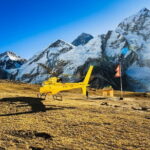
Everest, from the sky, without the trek grind. This helicopter tour is built for big-altitude views, including a close look at Kalapatthar (5,545m) and Everest Base Camp, plus glacier and Khumbu Region scenery from above. You start early from Kathmandu and fly a circuit that’s more about perspective than endurance.
I love how small-group the experience is (max five passengers and a pilot), which makes the whole thing feel focused rather than chaotic. I also like the plan includes a landing at Everest View Hotel in Syangboche (3,870m), with an optional breakfast in front of the mountain panorama. It’s a nice way to turn a short flight into a proper memory-maker.
One key consideration: at Pheriche, the group may split because of thin air, and only up to three passengers go to the Everest Base Camp / Kalapatthar section. If you’re in a group of five, you need to be comfortable with the idea that not everyone will be on the highest landing portion.
In This Review
- Key points worth knowing
- The helicopter route: what you’re really buying
- Timing and your early start from Kathmandu (TIA)
- Stop 1–2: Kathmandu to Lukla fuel drop
- Stop 3: Pheriche area, then the group split
- The main event: Kala Patthar (5,545m) and Everest Base Camp flyover
- Stop 4: Syangboche landing at Everest View Hotel (optional breakfast)
- Stops 5–6: Lukla fuel refill and back to Kathmandu
- Price and value: what $1,800 covers (and what it doesn’t)
- The aircraft and weight limit you should take seriously
- Weather rules the experience (and how the tour responds)
- Who this helicopter tour is best for
- The human factor: organization that reduces stress
- Should you book this Everest helicopter tour?
- FAQ
- What time does the Everest Base Camp helicopter tour start?
- Where is the meeting point?
- How long is the tour?
- What helicopter route stops are included?
- Is breakfast included?
- How many passengers are on the flight?
- Is there any weight limit?
Key points worth knowing
- Max five passengers per flight with a pilot, so you’re not packed in like a bus.
- Kala Patthar and Everest Base Camp are the targets, with flyovers designed for the best angles.
- Lukla fuel stops are built into the route, so you get predictable breaks instead of surprises.
- Pheriche split may limit who goes to the Everest Base Camp / Kalapatthar section.
- Everest View Hotel landing at Syangboche (with optional breakfast) adds time for photos on the ground.
- Weather matters for the schedule, since the tour can be rescheduled or refunded if conditions are poor.
The helicopter route: what you’re really buying
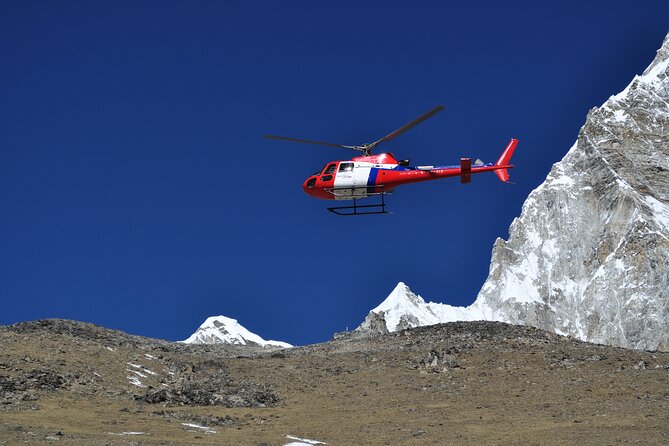
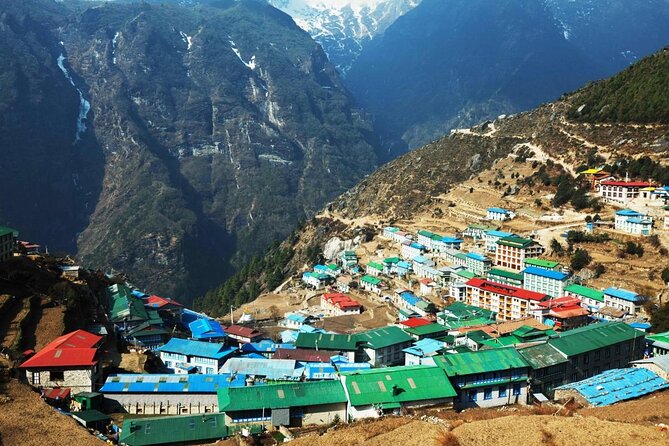
This isn’t a “fly by Everest and hope for the best” kind of tour. The whole route is planned around visual access to the Everest region, starting with the high viewpoints you associate with the classic trek: Kalapatthar and Everest Base Camp.
Think of it as a fast, high-altitude sightseeing loop. You’re trading days of hiking for a few hours where you can still see the Khumbu glaciers, the texture of the valleys, and the Everest area from angles most people never get.
You can also read our reviews of more tours and experiences in Kathmandu
Timing and your early start from Kathmandu (TIA)
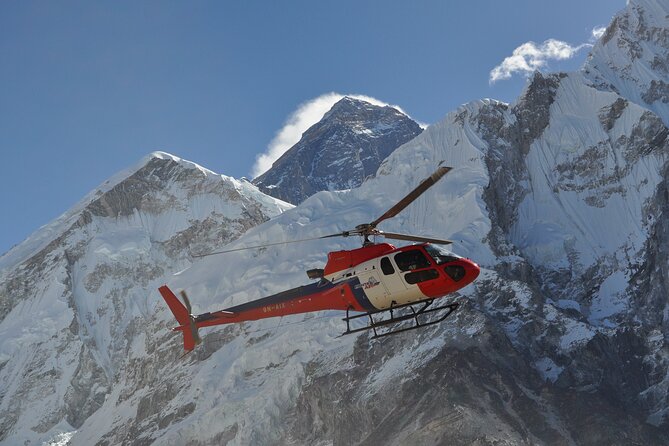
Your day starts at the TIA Domestic Terminal parking lot in Kathmandu, with a start time of 6:15 am. That early departure matters because weather tends to behave better earlier in the day, and you’ll want clear visibility for maximum payoff.
The total duration is about 3 hours 55 minutes (approx.), and the flight time is about 3 hours. Pickup and drop-off are included, so you’re not left hunting for a transfer before you’re even on the aircraft.
Stop 1–2: Kathmandu to Lukla fuel drop
You begin at the domestic terminal and take off toward the Lukla area. Lukla is the first practical stop, mainly because fuel has to be dropped for the return leg.
This is one of those details that can sound minor until you’re sitting on a helicopter schedule and realizing the route has real-world logistics behind it. The stop is short—about 10 minutes—but it keeps the whole operation safer and more efficient.
Stop 3: Pheriche area, then the group split
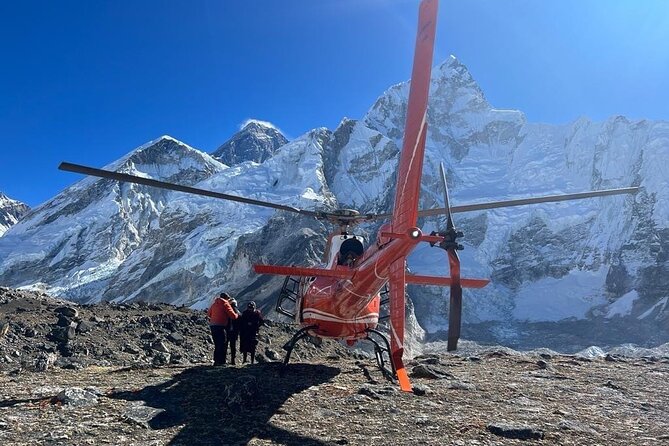
At Pheriche, the plan changes based on altitude limits. Because the air gets thin at high elevations, there’s a cap on how many passengers can go into the Everest Base Camp / Kalapatthar section—only up to three.
That’s the tour’s biggest “read the fine print” moment. If you’re traveling as a duo or solo, you’re more likely to be in the smaller group that gets the highest portion. If you’re part of a full five-person group, you should expect that some people may only experience the route from the portion that allows wider access.
Even if you’re not in the group that goes all the way, you’ll still get the core aerial viewing moments. The key is understanding that altitude changes how the experience is delivered, not just how it looks on a brochure.
The main event: Kala Patthar (5,545m) and Everest Base Camp flyover
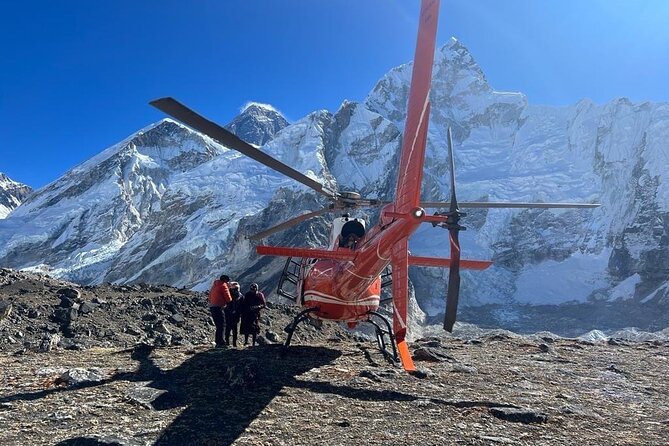
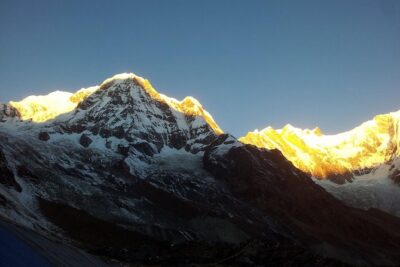
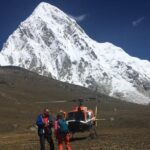
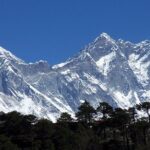
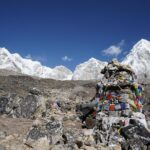
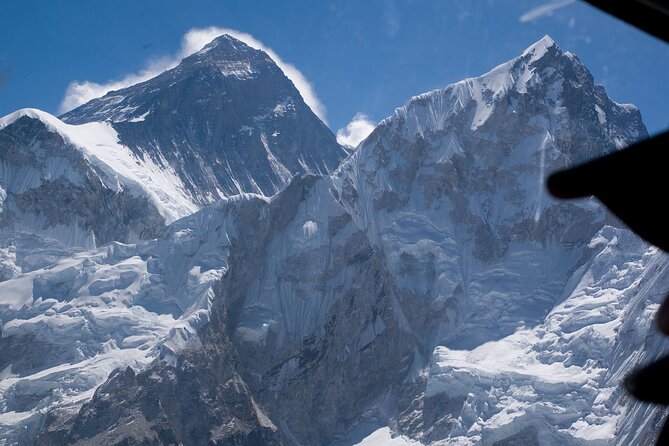
The highlight is simple: you fly over the area around Kalapatthar (5,545m) and Everest Base Camp (5,364m). These are the names that anchor the Everest trek, and the helicopter gives you quick access to that same visual impact.
Kalapatthar is about the viewpoint feel—big height, big sky, and the Everest area spread out below. Everest Base Camp is about context: you see where the trek goal sits in relation to glaciers and ridges, and you get the sense of scale that photos often flatten.
A smart tip here is to treat this like your one shot for the clearest photos. Keep your camera ready, watch the horizon when the aircraft reorients, and don’t wait until you think you’re already close.

Stop 4: Syangboche landing at Everest View Hotel (optional breakfast)
After the flyover portion, the route continues toward Syangboche (3,870m). You’ll land at Everest View Hotel, which is a major part of why this tour feels more complete than a pure helicopter loop.
There’s an optional breakfast opportunity, and it’s timed so you can sit in front of the mountain views. Even if you skip breakfast, the landing itself gives you time on the ground and a chance to reset before the return flight.
This stop is also psychologically valuable. A lot of helicopter tours leave you back in the air with no “landing payoff.” Here, you get a proper pause—short, but real.
Stops 5–6: Lukla fuel refill and back to Kathmandu
Before returning to Kathmandu, there’s another Lukla stop for a fuel refill (about 10 minutes). Then you fly back to Kathmandu and end where you started—back at the meeting point.
These return logistics are part of the deal. The upside is that the pacing feels steady: quick transitions, predictable short stops, and then you’re back in Kathmandu for the rest of your day.
Price and value: what $1,800 covers (and what it doesn’t)
The price is $1,800 per person, and value here isn’t about bargains. It’s about whether you want to buy time and access.
What you’re getting for that price:
- An Everest helicopter flight in group sharing (max five passengers) with a pilot
- Hotel pickup and drop-off
- Fuel surcharge
What’s not included:
- Optional breakfast at Everest View Hotel
- Travel insurance and emergency evacuation cost
- Everest National Park Permit & Municipality fee
- Airport tax
For me, the value question boils down to this: you’re paying to skip the trek’s physical grind and compress the Everest experience into under four hours. If you’re short on time, have health limits, or simply don’t want to spend weeks acclimatizing and hiking, this can feel like a fair exchange. If you’re hoping for a low cost way to “try Everest,” you might feel sticker shock once you factor in what’s not included.
The aircraft and weight limit you should take seriously
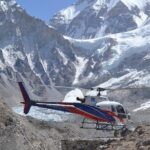
The itinerary notes the helicopter model as a Eurocopter 350 B3. That helps because it signals you’re not on a tiny sightseeing craft with unpredictable comfort.
There’s also a weight cap stated as 176 lbs per passenger (total weight). If you’re near the upper end, you’ll want to confirm with your operator before you commit, because weight limits affect both safety and who can fly.
Weather rules the experience (and how the tour responds)
This tour requires good weather. If conditions are poor, the experience can be canceled and you’ll be offered either a different date or a full refund.
That matters because the Everest region can be affected by cloud cover quickly. The good news: the tour plan doesn’t pretend weather isn’t real. It builds in a response, so you’re not left hanging.
My practical advice is to treat your tour day as a “weather-day” priority. If you stack other plans for the same morning, you’ll feel the stress if the helicopter schedule needs to change.
Who this helicopter tour is best for
This is a strong fit if:
- You want Everest views quickly without multi-day trekking
- You’re traveling with limited vacation time
- You’re comfortable with a high-altitude day that’s short but intense visually
- You like a structured route with clear stops and a clear endpoint
It’s less ideal if:
- You want maximum certainty that everyone in your group will access the highest landing portion, since the Pheriche split limits who goes to the Everest Base Camp / Kalapatthar section
- You’re traveling with strict budget expectations, given that park permits and airport taxes aren’t included
- You’re very sensitive to early starts, since the meeting time is 6:15 am
The human factor: organization that reduces stress
What really improves this experience is how the operator handles logistics in a place where small delays can snowball. In the past, people have praised Kesh from Himalayan Mentor for being proactive with pre-communications and for handling the complexity of the Everest area with clear planning.
That kind of organization matters more than it sounds. When you’re dealing with thin air, early flights, and a schedule that depends on weather, you want a guide who reduces your uncertainty before you ever reach the airport.
Should you book this Everest helicopter tour?
If your main goal is to see Kalapatthar and Everest Base Camp from the air and you’d rather spend a few hours flying than weeks hiking, this tour makes sense. The small group size, the focused route, and the Syangboche landing at Everest View Hotel (plus the optional breakfast) give you a well-rounded experience for the time it takes.
I’d book it if:
- You’re flexible on weather and can shift plans if needed
- Your priority is views and access, not trekking
- You’re okay with the possibility of a group split at Pheriche
I’d think twice if:
- Your group is expecting the exact same highest landing portion for everyone
- You’re not ready for the stated weight limit
- You want a fully transparent total cost upfront, since permit fees and airport tax are listed as not included
FAQ
What time does the Everest Base Camp helicopter tour start?
It starts at 6:15 am from the TIA Domestic Terminal parking lot in Kathmandu.
Where is the meeting point?
The meeting point is TIA Domestic Terminal parking lot, Kathmandu 44600, Nepal. The tour ends back at the same meeting point.
How long is the tour?
The duration is about 3 hours 55 minutes (approx.), with flight time of about 3 hours.
What helicopter route stops are included?
The route includes stops for fuel at Lukla (about 10 minutes each way), a split/group handling at Pheriche (about 25 minutes), flyovers of Kala Patthar and Everest Base Camp, and a landing at Everest View Hotel in Syangboche.
Is breakfast included?
Breakfast at Everest View Hotel in Syangboche is optional and not included in the base price.
How many passengers are on the flight?
It’s a group-sharing flight with a maximum of 5 travelers plus a pilot.
Is there any weight limit?
Yes. The stated total weight per passenger is 176 lbs.