REVIEW · KATHMANDU
Seven World Heritage Day Tour in Kathmandu Nepal
Book on Viator →Operated by Himalayan Planet Adventures · Bookable on Viator
Seven UNESCO sites in one long day. This tour ties together Kathmandu Valley’s big-hitters like Swayambhunath, Pashupatinath, and Boudhanath, with a local guide and private vehicle planning so you don’t burn time figuring out logistics.
I especially like the hotel pickup/drop-off inside the Ring road. It turns a hectic day into something you can actually enjoy, and it keeps you moving smoothly between neighborhoods. I also appreciate the guide flexibility—when one traveler needed a slower pace and fewer stairs, guide Pankaj adjusted on the fly, and guide Shanti Karki is praised for giving clear context that makes the places easier to understand.
The main catch is that it’s a 10–12 hour sprint. Some stops are brief, and most of the heritage entrances are not included, so factor in entrance fees and quick photos over long hangs at every site.
In This Review
- Key things to know before you go
- A 10–12 hour UNESCO sweep of Kathmandu Valley
- Price and value: what $65 buys you (and what it doesn’t)
- Pickup, private vehicle, and guide support that actually helps
- Swayambhunath and Amideva Buddha Park: start with views and symbolism
- What to watch for
- Kathmandu Durbar Square and Kumari Chowk: royal courtyards and living tradition
- A practical note
- Patan Durbar Square: Krishna carvings, a golden temple, and Patan Museum
- A good way to enjoy Patan
- Bhaktapur Durbar Square: Nyatapola, 55 Windows, and Siddha Pokhari breathing space
- The drawback: Bhaktapur is more walking than you expect
- Changu Narayan Temple plus Pashupatinath: the spiritual scale gets serious
- A practical mindset
- Boudhanath Stupa: a calmer end after the big temple days
- How to plan your day so it feels fun, not frantic
- Who this tour suits best (and who might want a different plan)
- Should you book the Seven World Heritage Day Tour?
- FAQ
- What’s the total duration of the Kathmandu seven UNESCO sites tour?
- Does the tour include hotel pickup and drop-off?
- Is food included in the price?
- Are entrance fees included?
- How many UNESCO World Heritage Sites are included?
- Is transportation private?
- Is this a private tour?
Key things to know before you go
- Seven UNESCO World Heritage Sites in one day without DIY transport stress
- Ring road hotel pickup and drop-off keeps your morning from turning into a scavenger hunt
- Private vehicle, your guide, and practical pacing between widely separated sites
- A mix of major and lesser-visited stops, like Amideva Buddha Park and Changu Narayan
- Brief but meaningful time windows (some stops are 5–30 minutes), best for checklists plus good explanations
A 10–12 hour UNESCO sweep of Kathmandu Valley
This is built for people who want the highlights fast, but not in a chaotic way. The tour moves you through Kathmandu Valley’s most famous spiritual and royal-site clusters in a single day, using private transport to cut the travel hassle.
That time range matters. Ten to twelve hours sounds big until you realize the route covers multiple distinct areas—temple complexes, palace courtyards, and stupa sites—plus you’ll want a little buffer for walking and photo stops.
If you have limited time in Kathmandu, this is a strong way to get your bearings quickly: you’ll see the key shapes of Nepali sacred architecture (stupas, courtyards, pagodas, and temple compounds) and you’ll learn what to look for beyond random sightseeing.
You can also read our reviews of more historical tours in Kathmandu

Price and value: what $65 buys you (and what it doesn’t)
At $65 per person, the real value is the package logic. You’re paying for private vehicle transport, a professional local guide, and hotel pickup/drop-off (within the Ring road), which saves time and reduces the hassle of negotiating rides all day.
Food and drinks aren’t included, but that’s also common in Nepal day tours. You can usually buy small meals and snacks as you go, and it gives you freedom to choose what sits well with your stomach during a long day.
Plan for entrance fees. The tour doesn’t include heritage site admission for all stops, and the exact costs depend on the sites and your choices. The good news: several stops are listed as free (like Kumari Chowk, Nyatapola Temple, and Dattatreya Temple), so not every ticket line will eat your budget.
Pickup, private vehicle, and guide support that actually helps
This tour is set up as a private group experience—only your group participates. That matters because you can keep a more comfortable rhythm with your guide, instead of being dragged by a large crowd.
You also get a professional tour guide and hotel transfers using a private vehicle. Even if you know Kathmandu a bit, moving between the Durbar Squares and the major temples can still be slow without a plan.
Two guide traits come up in the feedback you have here:
- Pacing flexibility: one traveler specifically requested minimizing stair climbing, and guide Pankaj accommodated that. If you’re not great with stairs, it’s worth mentioning your limits early.
- Context that makes scenes make sense: Shanti Karki is praised for detail and historical/cultural explanations that help the sites connect as a story, not just separate photo locations.
Also, you’ll use a mobile ticket. It’s a small thing, but it helps on a day packed with stops.
Swayambhunath and Amideva Buddha Park: start with views and symbolism
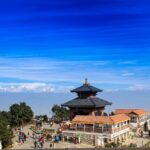
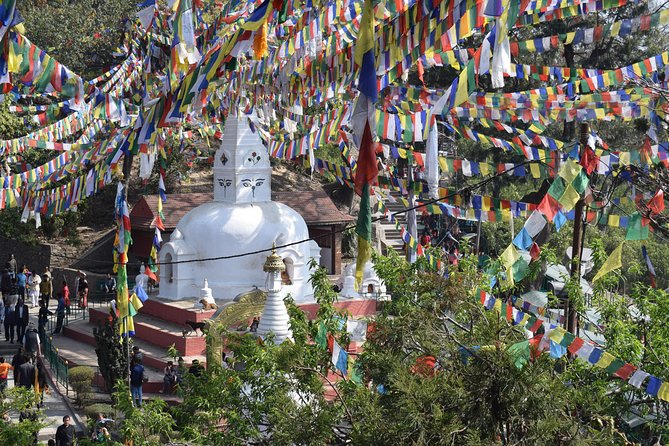
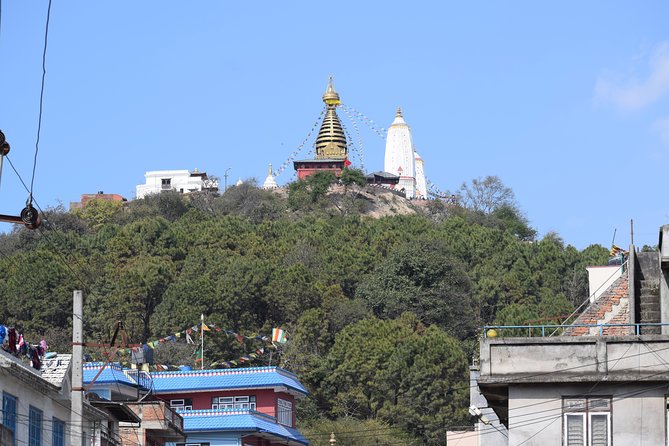
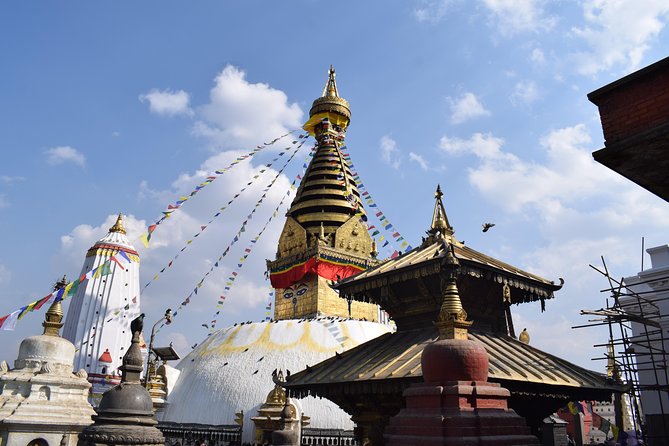
The day begins at Swayambhunath, a UNESCO-listed Buddhist pilgrimage site. You’ll reach it from two entrances—either via an inclined walk up or another route—so the first decision is how you want to manage effort. Expect walking and likely some steps as you get higher toward the main stupa area.
Swayambhunath is one of those places where it helps to have someone explain what you’re seeing: the symbolism, the layout, and why people climb here even when they’re short on time.
Right after, you’ll stop at Amideva Buddha Park. This one is quick (about 30 minutes) and listed as free admission. It’s a nice change of pace: big Shakyamuni Buddha statues with smaller religious and architectural elements around them. If Swayambhunath feels intense or crowded, Amideva can feel calmer and more open.
What to watch for
- If stairs are your challenge, ask your guide for the easiest path early. You’ll get far more out of the day if your legs aren’t screaming by stop two.
- Start photos early. Swayambhunath is the kind of place where the best shots are often the ones you take before you’re tired.


Kathmandu Durbar Square and Kumari Chowk: royal courtyards and living tradition
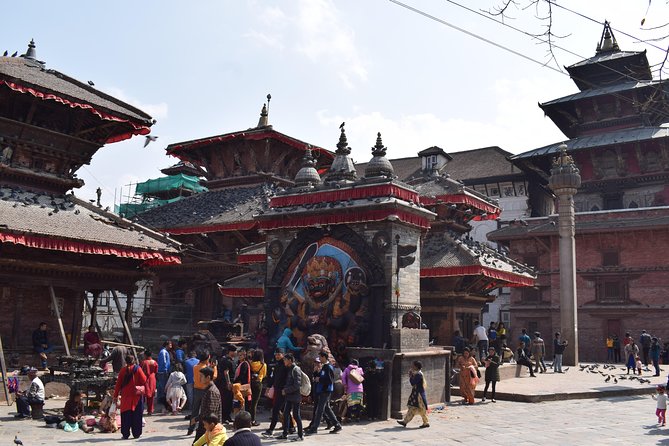
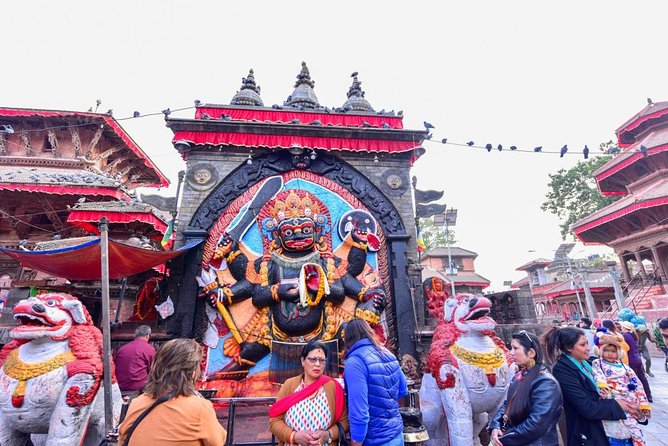
Next up is Kathmandu Durbar Square, another UNESCO site. This is where the “old Kathmandu” feel becomes physical—historic buildings and architectural details, and that mix of sacred space and civic life that the valley is famous for.
Admission is listed as not included here, and your time is about an hour. That’s not enough for a slow museum-style visit, but it is enough to understand the layout and identify the major monuments while your guide puts them into context.
Then you’ll head to Kumari Chowk, a short stop (around 5 minutes) and free admission. This is where the living goddess Kumari is associated with a Newari-style courtyard tradition. You may see the three-level structure that marks the space.
Even with such a short visit, Kumari Chowk is worth it because it anchors the day in living culture—not only temples, but also a human tradition tied to a specific place and community.
A practical note
Kumari Chowk is quick by design. Don’t treat it like a long photo tour—treat it like a brief cultural stop that adds meaning to the surrounding architecture.
Patan Durbar Square: Krishna carvings, a golden temple, and Patan Museum
The tour then moves to Patan Durbar Square in Lalitpur, another UNESCO site. It’s described as a treasure chest of Newari architecture, with that signature red-brick feel you’ll associate with Durbar Squares. Your time here is about an hour, and entrance is not included.
Patan also stacks interesting extras inside the broader Durbar Square experience:
- You’ll see the Krishna temple stone architecture with 21 shrines and carvings tied to stories like the Ramayana and Mahabharat.
- You’ll visit Golden Temple (Hiranya Varna Mahavihar), listed as about 15 minutes. Admission is again not included. The description notes bronze statues and silver-and-gold decorations, and a pagoda-style temple feel.
- You’ll stop at Patan Museum, around 30 minutes, connected to Keshav Narayan Chowk. Admission is listed as not included.
This sequence is smart because you get both the “outside” beauty (courtyards and carvings) and an indoor layer (museum artifacts and lifestyle records). Even if the museum time is limited, it can make your next stops feel less random.
A good way to enjoy Patan
Use Patan to connect themes:
- How the carvings tell stories
- How temple architecture signals beliefs
- How civic palace spaces double as cultural hubs
Bhaktapur Durbar Square: Nyatapola, 55 Windows, and Siddha Pokhari breathing space
Bhaktapur is where the day can feel the most rewarding, especially if you like palace courtyards and pagoda temples. You’ll spend about 2 hours at Bhaktapur Durbar Square (UNESCO), with admission listed as not included.
Several stops cluster here, and some are free:
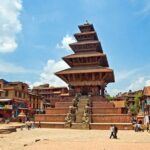
- Nyatapola Temple (about 10 minutes, free): a sculpted pagoda-style temple with five levels and a tall roofed silhouette.
- Dattatraya Temple (about 15 minutes, free): associated with a belief about construction using a single tree stem.
- 55 Window Palace (about 15 minutes, free): exactly 55 windows carved into palace courtyards.
- Siddha Pokhari (about 15 minutes, free): a long human-made pond that works as a short break spot and local hangout area.
These free time pockets matter on a long day. If your energy drops after hours of temples and courtyards, Siddha Pokhari is a real palate cleanser. You get a pause without the stress of a transit stop or “another ticket line.”
The drawback: Bhaktapur is more walking than you expect
Bhaktapur’s sites are compact, but you’ll move around a lot inside and between monuments. If you have mobility limits, plan to tell your guide early so they can help you pace and choose the easiest paths.
Changu Narayan Temple plus Pashupatinath: the spiritual scale gets serious
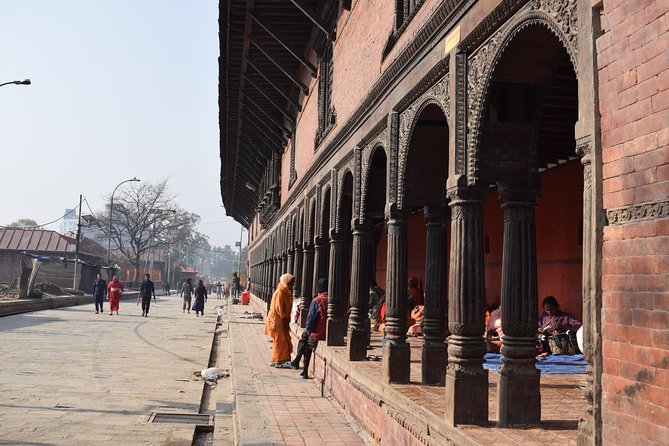
Next comes Changu Narayan Temple, noted as one of the least visited UNESCO sites. It’s listed as about 30 minutes, with admission not included.
The description frames it as a cultural-craft scene as well. You’ll be in a village setting where you may see Newari craftsmen doing traditional carving work—so it’s a nice break from the bigger, busier “must-see” temple crowds.
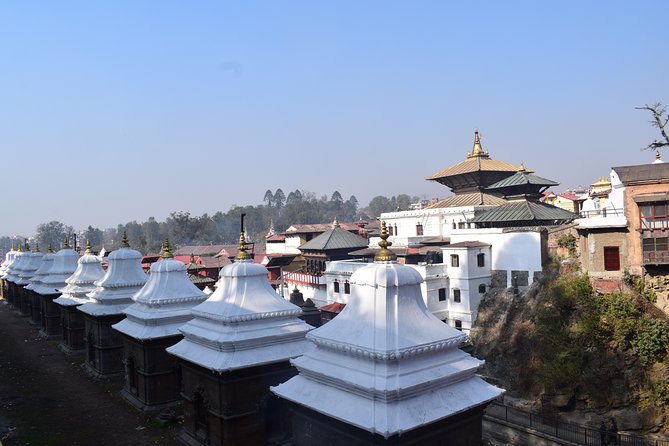
Then the tour heads to Pashupatinath Temple, one of Nepal’s greatest temple complexes. This is described as having over 500 temples and shrines across the area, covering about 0.64 hectares. Your stop is about an hour, and admission is listed as not included.
Pashupatinath is also a Hindu pilgrimage focal point. This means your visit isn’t only about architecture—it’s about ritual energy. Even if you’re not there to worship, being present helps you understand the sacred “why” behind the buildings.
A practical mindset
At Pashupatinath, slow down mentally. You’ll absorb more if you treat it as a living temple complex rather than a single monument.
Boudhanath Stupa: a calmer end after the big temple days
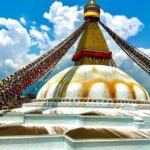
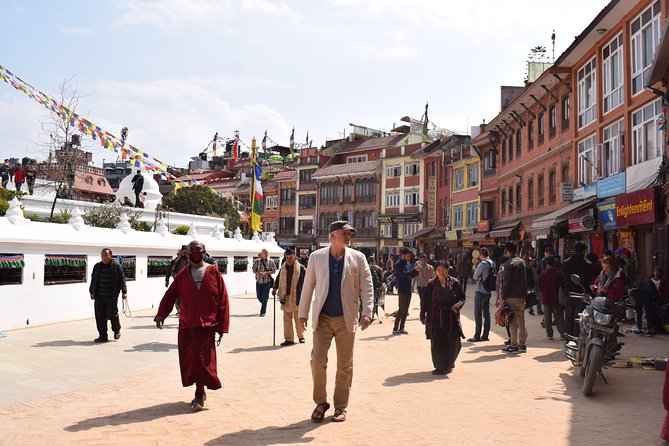
You’ll finish with Boudhanath Stupa, a major Buddhist pilgrimage destination. It’s described as 36 meters tall with more than 50 gompas nearby, which explains why this area feels like a Buddhist center even when you’re just walking around.
Your time here is about an hour, with admission listed as not included. After Durbar Squares and temple compounds, the stupa’s scale and surrounding monastic spaces can feel like a deep exhale.
It’s a strong finale because it puts a different “shape” on Kathmandu’s sacred architecture—massive mandala-style design, lots of visual rhythm, and a calmer atmosphere than royal courtyards or busy temple entrances.
How to plan your day so it feels fun, not frantic
Here’s the common-sense approach that makes a long UNESCO day work:
- Wear shoes you trust. Even “quick” stops involve walking, and some sites include stairs.
- Bring water and simple snacks. Food isn’t included, and you don’t want to be stuck waiting for the next place to eat.
- Ask your guide about stair routes at the first stop. If Pankaj could adjust pacing for one traveler, you can do the same—just request it.
- Set expectations for time. Some stops are 5 minutes, others 2 hours. This is a checklist tour with real guidance, not a slow wandering day.
If you’re the kind of traveler who likes structure—knowing the “why” and hitting key sites without getting lost—this tour fits you well.
Who this tour suits best (and who might want a different plan)
This is ideal if:
- You have limited time in Kathmandu Valley and want all the big UNESCO hits.
- You want private transport so your day doesn’t collapse into taxi logistics.
- You enjoy learning from a guide and seeing how sites connect as part of one valley story.
It’s less ideal if:
- You want lots of free time for long museum-style browsing.
- You have significant mobility challenges and can’t manage stairs or uneven walking.
- You hate the idea of entry fees piling up during the day.
If you’re traveling with kids, it can work if everyone stays patient. But the day is long and many stops are short, so you’ll likely need snacks and a cheerful attitude.
Should you book the Seven World Heritage Day Tour?
I think it’s a yes for many first-time visitors who want maximum value out of a limited schedule. The $65 price makes sense because the tour bundles transport, a guide, and pickup/drop-off into one package, so you’re not paying more in time and confusion than in cash.
Book it if you want a well-timed route through Swayambhunath, Kathmandu Durbar Square, Patan Durbar Square, Changu Narayan, Bhaktapur Durbar Square, Pashupatinath, and Boudhanath—and you like the idea of learning as you go.
Skip it if your dream day in Nepal is slow, quiet, and flexible. This one is structured, long, and ticket-dependent. Still, if you plan your shoes, your snack strategy, and your stair comfort early, it can turn into one of the most efficient cultural days you’ll have in Kathmandu Valley.
FAQ
What’s the total duration of the Kathmandu seven UNESCO sites tour?
The tour runs about 10 to 12 hours.
Does the tour include hotel pickup and drop-off?
Yes. Hotel pickup and drop-off inside the Ring road are included.
Is food included in the price?
No. Food and drinks are not included, and you can buy food at each site.
Are entrance fees included?
No. Entrance fees for heritage sites are not included (they depend on the sites and choices). Some stops are listed as free.
How many UNESCO World Heritage Sites are included?
The tour is designed to include seven UNESCO World Heritage Sites in Kathmandu Valley.
Is transportation private?
Yes. You travel by private vehicle, and you have a professional local guide.
Is this a private tour?
It’s listed as a private activity, so only your group will participate.