REVIEW · KATHMANDU
Private Full-Day Kathmandu All 7 UNESCO World Heritage Sites Tour
Book on Viator →Operated by Breakfree Adventures Pvt. Ltd. · Bookable on Viator
Seven UNESCO sites, one tight Kathmandu day. I like the way this tour links hilltop temples and royal squares into one practical circuit, so you spend the day seeing Kathmandu Valley’s big-ticket heritage instead of hopping around on your own. It also keeps the pace readable, thanks to a private guide who can explain what you’re looking at as you go.
I also like the simple setup: hotel pickup and entrance fees are built into the price, which makes this easier to budget than doing temples one-by-one. The one real trade-off is that meals and drinks are not included, so you’ll want to plan for snacks and water during the long 9 to 11 hour day.
In This Review
- Key Things You’ll Notice On This 7 UNESCO Day
- Why This 7 UNESCO Kathmandu Route Works
- Your Guide: The Difference Between Seeing and Understanding
- Stop-by-Stop: What You’ll Actually Do at Each UNESCO Site
- Swayambhunath (Monkey Temple) for Hilltop Views and Sacred Atmosphere
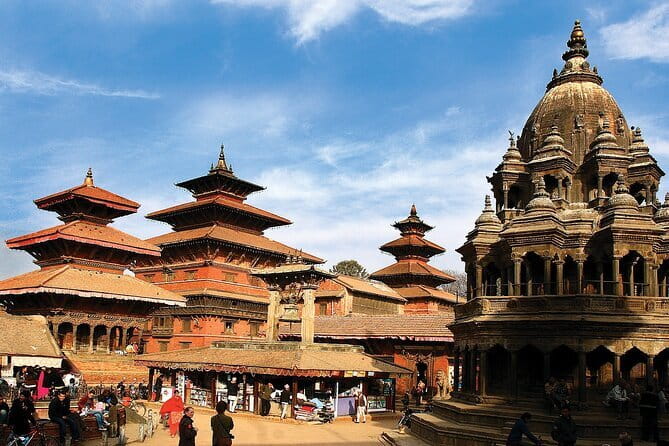
- Kathmandu Durbar Square for Palaces, Courtyards, and the City’s Heart
- Patan Durbar Square for Newari Craft and Dense Architectural Detail
- Bhaktapur Durbar Square for the Longer Royal Square Experience
- Changu Narayan Temple for an Oldest-Temple Feel on a Hill
- Boudhanath Stupa for Scale, White Dome, and Buddhist Worship
- Pashupatinath Temple for Hindu Devotion by the Bagmati River
- Transportation, Timing, and What to Bring for a 9 to 11 Hour Day
- Price and Value: Is $80 a Good Deal for 7 UNESCO Sites?
- Who Should Book This Tour (and Who Might Want Something Else)
- Should You Book the Private Full-Day 7 UNESCO Kathmandu Tour?
- FAQ
- FAQ
- Which UNESCO sites are included on this tour?
- How long is the Private Full-Day Kathmandu All 7 UNESCO World Heritage Sites Tour?
- Is hotel pickup and drop-off included?
- Are monument entrance fees included in the price?
- Does the tour include a private guide and private transportation?
- Are meals and drinks included?
- Is this tour private or shared with strangers?
- Do I need to print tickets, or do I get a mobile ticket?
- Is free cancellation available?
Key Things You’ll Notice On This 7 UNESCO Day
- All 7 UNESCO stops in one day: fast, focused, and ideal for first-timers
- Private, hotel-to-hotel convenience: fewer headaches than DIY transport
- Expert local storytelling from guides such as Razz, Shankar, Subash, Bithya, Dipaak, and others
- Entrance fees handled for you (Swayambhunath is free; the rest are included)
- A route with moderate walking on hilltops and around temple complexes
Why This 7 UNESCO Kathmandu Route Works
Kathmandu Valley’s UNESCO list is impressive, but it’s also spread out. What I like about this full-day format is the logic: you hit the big sites in a sensible order, and you do it in a private vehicle that handles fuel, parking, and charges. That means you can focus on the buildings, the rituals, and the views instead of managing routes, tickets, and timing.
Because the tour runs about 9 to 11 hours, it’s not a slow, meander-at-your-own-pace kind of day. It’s more like a guided highlight reel with enough time at each stop to understand what you’re seeing. If you prefer lingering long enough to feel completely unhurried, you might find some segments feel time-tight. But if you want the most UNESCO value out of one day, this structure delivers.
You can also read our reviews of more private tours in Kathmandu
Your Guide: The Difference Between Seeing and Understanding

The quality jump on a private heritage day is the guide. On this route, you’ll meet guides who are comfortable explaining the meaning behind what’s in front of you—religion, royal history, and the Newari artistry behind the temples and courtyards.
Names that show up in past experiences include Razz, Shankar, Subash, Bithya, and Dipaak—and the common thread is clear explanations and real local context. One guide style to watch for: the good ones don’t just read facts. They answer questions, explain symbolism, and help you connect the dots across sites. That’s especially useful on this tour, because you’re moving between Hindu temples, Buddhist stupa worship, and Durbar Square palaces—three different cultural worlds in one day.
Stop-by-Stop: What You’ll Actually Do at Each UNESCO Site
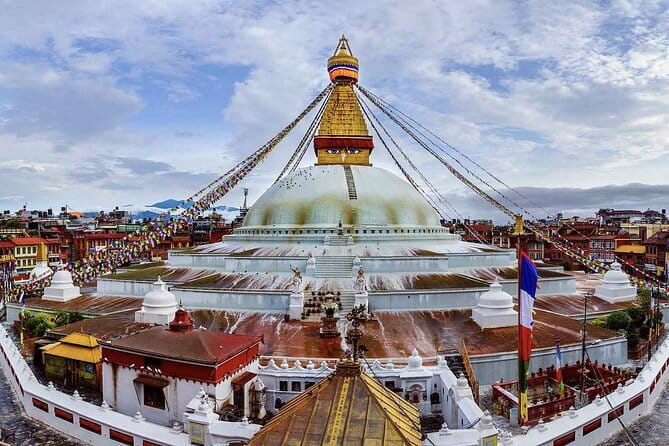
Swayambhunath (Monkey Temple) for Hilltop Views and Sacred Atmosphere
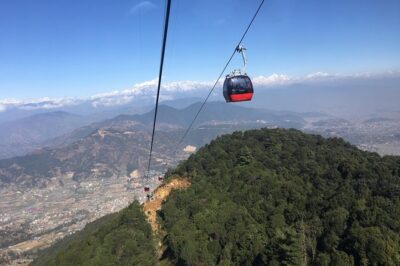
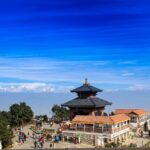
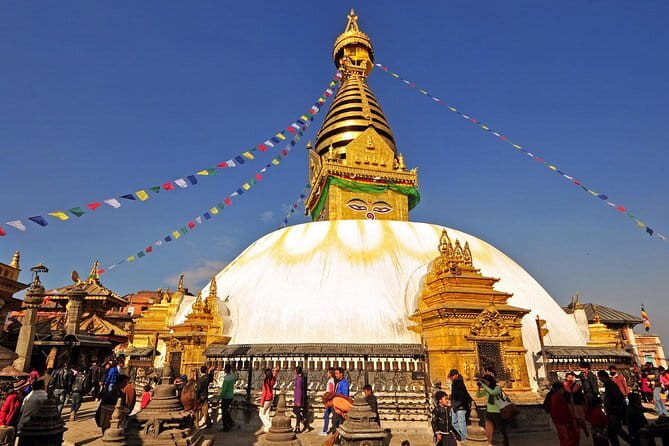
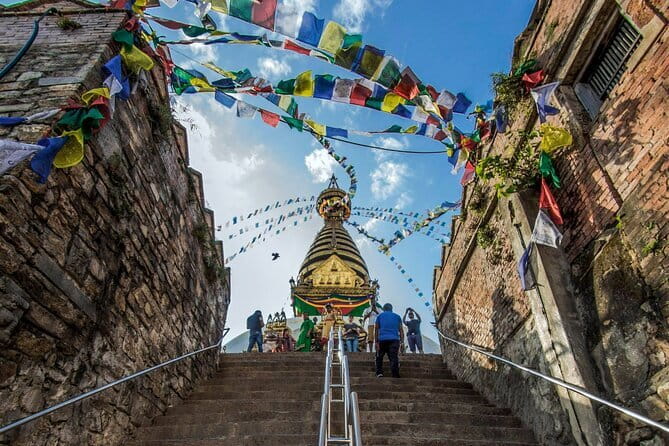
You start at Swayambhunath, a UNESCO site perched on a hill overlooking Kathmandu Valley. The admission here is free, and you’ll have about 45 minutes. This is the kind of place where the view is part of the show: from up high, you can see the city texture below, and the temple complex feels like a destination rather than a roadside stop.
This is also a great orientation stop. Seeing Swayambhunath first helps you understand Kathmandu Valley as a whole—where the main sights sit and how the geography shapes the way people built sacred places.
Practical tip: because it’s hilltop terrain, plan for some walking and steps. The tour lists a moderate physical fitness level, and Swayambhunath is one of the places where that matters most.
Kathmandu Durbar Square for Palaces, Courtyards, and the City’s Heart
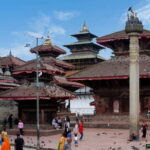
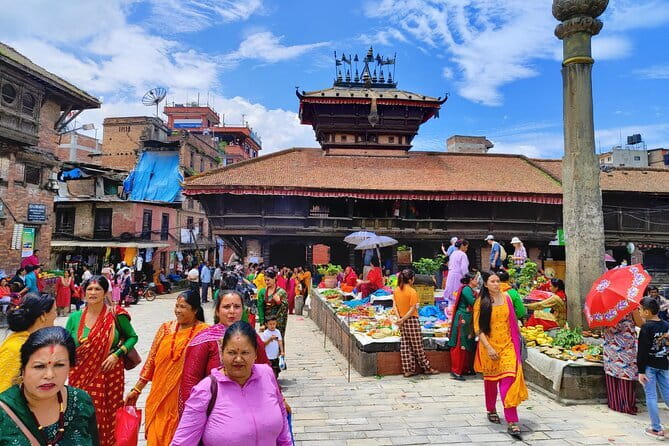
Next is Kathmandu Durbar Square, about 45 minutes with admission included. This is described as a historical and cultural heart of Nepal, and it makes sense once you’re inside the complex of palaces, courtyards, and temples.
Durbar Squares can feel like a maze at first—so having your guide point out the key buildings and explain the royal and religious roles helps a lot. Even if you’re not a hardcore architecture person, Durbar Square is where you start to feel how strongly power, craft, and spirituality shaped the city.
Watch your time here. This is a “look up, look around” stop, and it’s easy to spend too long wandering unless your guide keeps you moving.
You can also read our reviews of more historical tours in Kathmandu


Patan Durbar Square for Newari Craft and Dense Architectural Detail
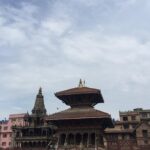
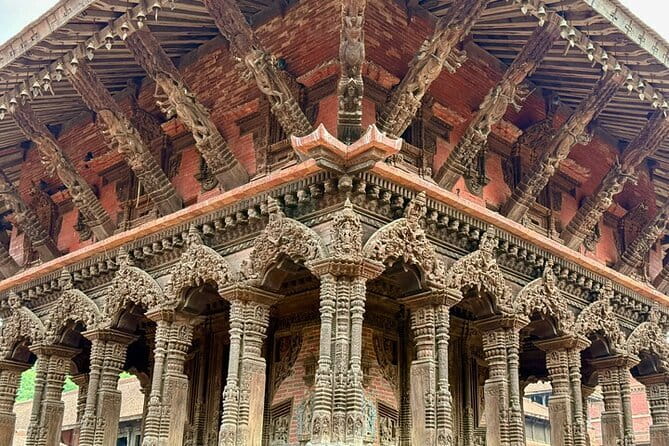
Then you head to Patan Durbar Square (in Lalitpur) for about 1 hour, with admission included. Patan is known for its Newari craftsmanship and architectural heritage, and you’ll see how that reputation forms in stone: detailed temple forms, ornate courtyards, and a strong sense of design purpose.
I like this stop because it offers contrast with Kathmandu Durbar Square. You’re still in the Durbar-Square family, but the artistic character feels different. With the guide’s explanations, you can start noticing patterns: how different pieces of the complex communicate status, devotion, and community identity.
If Bhaktapur later feels like the most intense version of this style, Patan is a good “bridge” stop that helps you compare.
Bhaktapur Durbar Square for the Longer Royal Square Experience
Bhaktapur Durbar Square is your next Durbar stop, and it gets the longest time before you shift gears: about 1 hour 30 minutes, with admission included. Bhaktapur’s royal square is known for intricate architectural brilliance and gives you more breathing room to absorb the details.
This is one of the best stops on the route if you enjoy walking slowly across history. It’s also where a guide can really help by pointing out what to focus on—otherwise it’s easy to treat it like one big temple complex and miss the distinctions between areas.
Because this is a longer stop, it’s a good moment to reset mentally. By now you’ve already seen two major Durbar Squares. Bhaktapur gives you the chance to compare and sharpen what you’re noticing.
Changu Narayan Temple for an Oldest-Temple Feel on a Hill
Next comes Changu Narayan Temple, about 25 minutes with admission included. This is noted as the oldest temple in Nepal and it’s dedicated to Lord Vishnu. The temple sits on a hilltop, so you’re back in that slightly elevated, panoramic-feeling setting.
Even with less time here, Changu Narayan matters because it’s not just another stop. It’s a shorter visit with big historical weight, and the hilltop setting gives it a sense of separation—like the temple is the destination, not part of the city grid.
This stop is also a good place for slower, quieter attention. You’ll be switching from the extended palace-square world back to a more temple-centered focus.
Boudhanath Stupa for Scale, White Dome, and Buddhist Worship
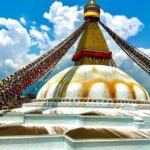
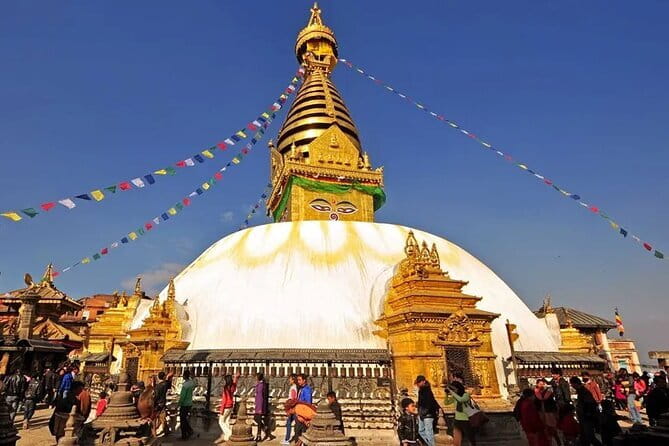
After that, you visit Boudhanath Stupa for about 30 minutes, with admission included. This UNESCO site is described as one of the world’s largest spherical stupas, standing roughly 36 meters tall, with a massive white dome.
If Kathmandu Durbar Squares are about royal architecture and temple courtyards, Boudhanath is about Buddhist worship shaped by scale. The sheer size changes how you experience it. Instead of focusing on one building component, you tend to take in the whole form and the way people approach the space around it.
It’s also a strong “palette cleanser” in the day: you shift from Hindu temple focus and back into Buddhist ritual space before ending at Pashupatinath.
Pashupatinath Temple for Hindu Devotion by the Bagmati River
Your final stop is Pashupatinath Temple for about 30 minutes, with admission included. This is one of the most sacred Hindu temples in the world, dedicated to Lord Shiva, and it sits along the Bagmati River.
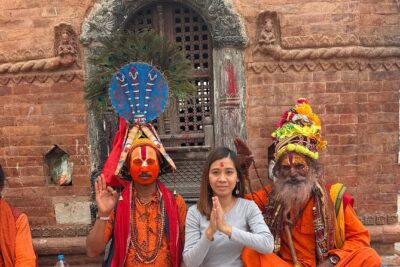
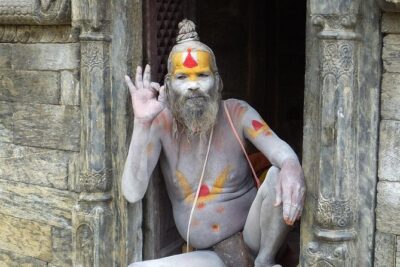
This stop is often the most emotionally intense part of the tour, even for visitors who aren’t steeped in Hindu traditions. A good guide helps you understand what you’re seeing in a respectful way—how the temple’s spiritual importance connects to the river setting and to the broader Hindu world.
Time here is shorter, but it’s a strong close to the day because you end with something living and devotional, not only historical stone.
Transportation, Timing, and What to Bring for a 9 to 11 Hour Day
This tour uses a private car/van with fuel and parking covered, so you’re not wrestling with public transport during a long circuit. That matters because the distances between Kathmandu, Patan, Bhaktapur, and the outer temple zones add up fast.
Still, the “private” part doesn’t mean “zero walking.” With multiple temple complexes and hilltop sites like Swayambhunath and Changu Narayan, you should expect moderate walking and stairs. If you’re comfortable with that, the pace makes sense.
What to bring:
- Water and a small snack since meals and drinks are not included
- Comfortable shoes with decent grip for temple-area paths
- Light layers, since a full day can shift temperatures
If you like to travel light, you’ll be fine, but don’t skip the basics—this itinerary is a full-day effort.
Price and Value: Is $80 a Good Deal for 7 UNESCO Sites?
At $80 per person, this is priced for value if your priority is maximum UNESCO coverage in one day. Here’s what you’re getting for the money: a professional private guide, hotel pickup and drop-off, private transportation, and entrance fees for all listed sites (with Swayambhunath specifically free).
What’s not included is also clear: meals and drinks, plus customary tips for the guide and driver. That’s normal for private guiding, but it’s smart to keep it in mind so you don’t feel surprised at the end of the day.
The biggest value factor is not just the ticket cost—it’s the time saved. Without a private route and guide, you’d still spend time coordinating transport and figuring out which tickets you need for each UNESCO stop. Paying for the structure often ends up cheaper than paying for uncertainty.
Who Should Book This Tour (and Who Might Want Something Else)
This is a great match for:
- First-time visitors who want the complete Kathmandu Valley UNESCO set in one day
- Culture and history fans who like to understand the meaning behind temples and palace squares
- Travelers who prefer a private vehicle and a guide that can handle pacing and timing
You might want a different option if:
- You need meals included in the price
- You dislike longer days with multiple hilltop and temple stops
- You prefer to spend most of your day photographing in one place rather than moving constantly
Should You Book the Private Full-Day 7 UNESCO Kathmandu Tour?
If your goal is a smart, guided UNESCO overview of Kathmandu Valley, I’d say yes—with one condition: plan for snacks and water and wear good walking shoes. The tour’s strength is its all-in structure: private pickup, a guide who can make the sites easier to understand, and entrance fees handled for the temples and squares that matter most.
For the cost, it’s hard to beat a full-day route that strings together Swayambhunath, Kathmandu Durbar Square, Patan Durbar Square, Bhaktapur Durbar Square, Changu Narayan, Boudhanath, and Pashupatinath into one guided day. Just remember it’s 9 to 11 hours, not a half-day stroll.
FAQ
FAQ
Which UNESCO sites are included on this tour?
You’ll visit Swayambhunath (Monkey Temple), Kathmandu Durbar Square, Patan Durbar Square, Bhaktapur Durbar Square, Changu Narayan Temple, Boudhanath Stupa, and Pashupatinath Temple.
How long is the Private Full-Day Kathmandu All 7 UNESCO World Heritage Sites Tour?
The duration is about 9 to 11 hours.
Is hotel pickup and drop-off included?
Yes. Hotel pick-up and drop-off are included in the package.
Are monument entrance fees included in the price?
Yes. Admission to the listed sites is included (Swayambhunath is listed as free, while the other stops are included).
Does the tour include a private guide and private transportation?
Yes. You get a professional private guide and a private vehicle, with fuel, parking, and applicable charges covered.
Are meals and drinks included?
No. Meals and drinks are not included in the package.
Is this tour private or shared with strangers?
It’s private. Only your group participates.
Do I need to print tickets, or do I get a mobile ticket?
The tour includes a mobile ticket.
Is free cancellation available?
Yes. You can cancel up to 24 hours in advance for a full refund.