REVIEW · KATHMANDU
Kathmandu: Wood Carving Workshop with Local Artisan (Thamel)
Book on GetYourGuide →Operated by Relax Getaways Pvt. Ltd · Bookable on GetYourGuide
A chisel turns a souvenir into a story. This Kathmandu wood carving workshop in Thamel is hands-on, small-group, and built around real technique, not just watching. I especially like the step-by-step carving coaching and the chance to work with traditional tools and materials while learning the cultural meaning behind Nepalese designs. One possible downside: the class can feel more craft-focused than lecture-focused, so if you want deeper history, you may wish you had extra time to ask.
In practical terms, it’s a solid way to add something creative to your Kathmandu schedule without committing a whole day. You get a workshop setting, tools and materials provided, and you leave with something you carved yourself. If you’re short on hand strength or have limited patience for detailed work, that’s the main thing to consider before you start.
In This Review
- Key Things I’d Prioritize
- Wood Carving in Thamel: A Creative Break From Kathmandu’s Chaos
- From the First Minute: Tools, Wood Types, and How You Start
- The Carving Workflow: Outlining to Detailing (No Mystery Steps)
- Symbols You’ll See in Nepalese Woodwork (and What They Mean)
- Learning With a Local Artisan: Why the Human Part Matters
- What You Take Home: Your Own Carved Souvenir
- Price and Value: Does $42 Make Sense?
- Who This Workshop Fits Best (and Who Might Want Another Option)
- Practical Tips Before You Sit Down With a Chisel
- Should You Book This Kathmandu Wood Carving Workshop?
- FAQ
- How long is the Kathmandu wood carving workshop?
- What location is this class in?
- How much does the workshop cost?
- Is the group size small?
- What language is the instruction in?
- What do I learn during the session?
- Are tools and materials provided?
- What should I bring or wear?
- Are there rules during the workshop?
- Can I cancel or pay later?
Key Things I’d Prioritize
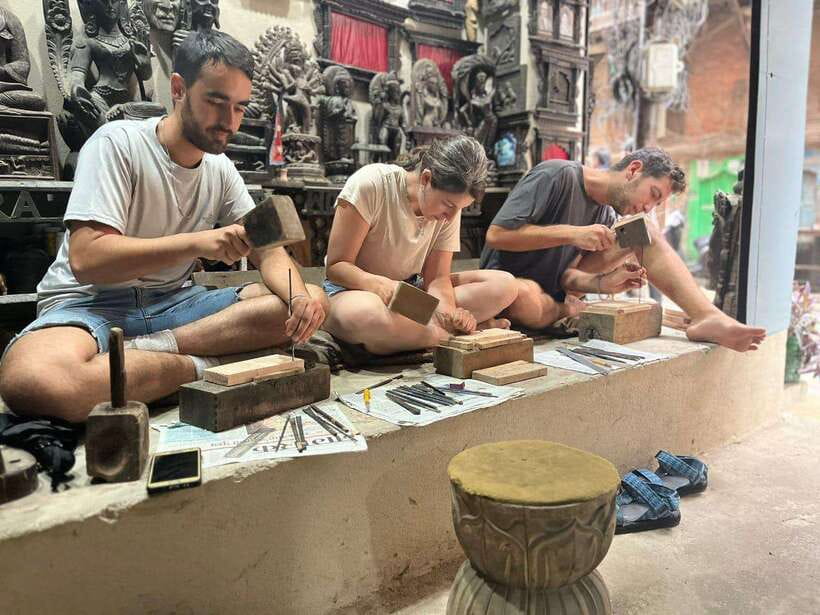
- Small group (up to 4) means you’ll get real feedback while carving
- Tools and materials provided so you can show up and start immediately
- Practice the core steps: outlining, chiseling, and detailing on your wooden block
- Cultural motifs explained through lotus, mandalas, deities, and mythical creatures
- English instruction with an artisan who can guide you through mistakes fast
Wood Carving in Thamel: A Creative Break From Kathmandu’s Chaos
Kathmandu can be loud. Traffic honks, shop doors slide, and your brain is always doing math—altitude, time, routes, and prices. This is the kind of experience that slows you down on purpose.
The workshop takes place in a local setting in Thamel (Bagmati Zone), and it runs about 3 hours. With a small group capped at 4, you aren’t squeezed into a big class where half the time goes to waiting your turn. The vibe is simple: sit, learn, make marks in the wood, repeat until your carving starts to look like something.
I like that the class is designed for beginners as well as people who already do arts and crafts. They walk you through the tools first, then you practice techniques directly on a pre-cut wooden block, so you don’t spend your whole time figuring out where to hold the chisel.
You can also read our reviews of more tours and experiences in Kathmandu


From the First Minute: Tools, Wood Types, and How You Start
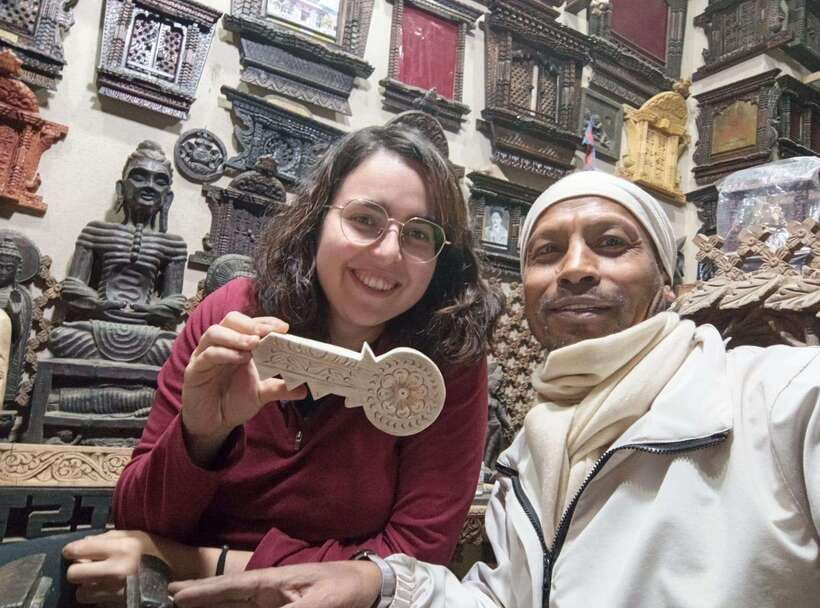
Before you carve, you get an overview of what you’re working with. That matters, because wood carving is one of those crafts where the “right move” depends on the material.
You’ll learn about traditional carving tools such as chisels and hammers, plus the types of wood often used in Nepal—sal and teak come up. If you’ve never handled carving tools before, this is where you’ll get your bearings fast: how the tool behaves, how to control the cut, and how to avoid digging too deep too quickly.
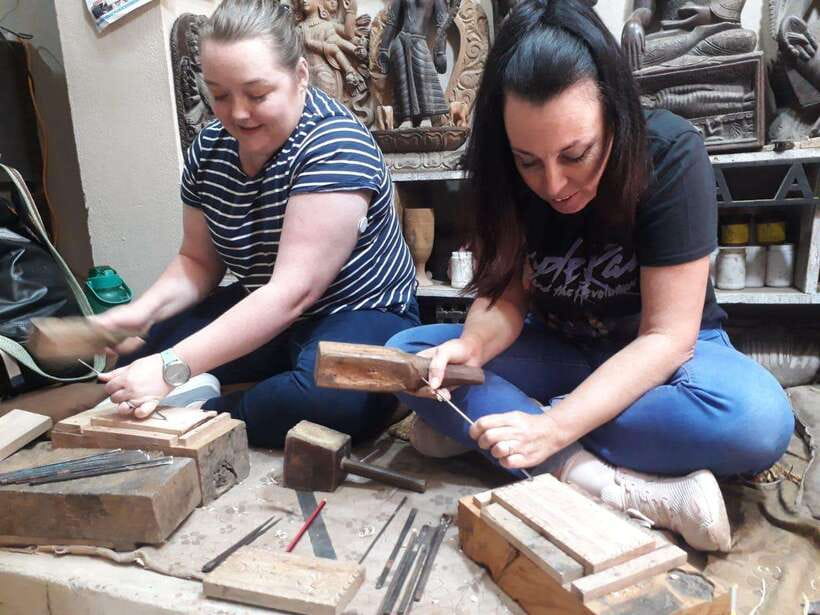
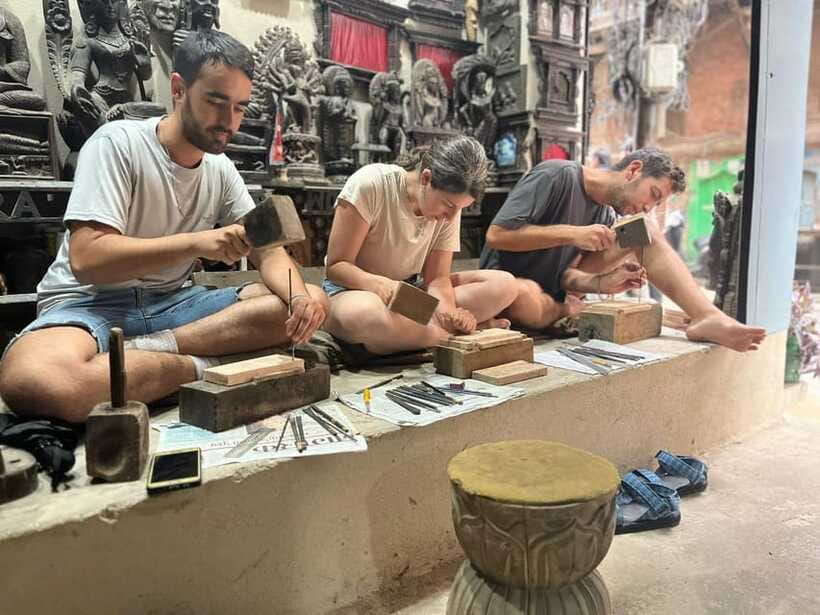
Then comes the practical part. Your instructor helps you start your chosen design on a wooden block, and you move into the core techniques: outlining, chiseling, and detailing. Outlining is basically your safety rail—you define the shape first. Chiseling is where the form takes shape. Detailing is the time you build character into the piece.
A nice bonus is that the workshop doesn’t treat symbols as trivia. Motifs connect to how Nepalese woodwork shows up in temples and traditional architecture, so the patterns you’re making aren’t just decorative. You’re building something with meaning.
The Carving Workflow: Outlining to Detailing (No Mystery Steps)
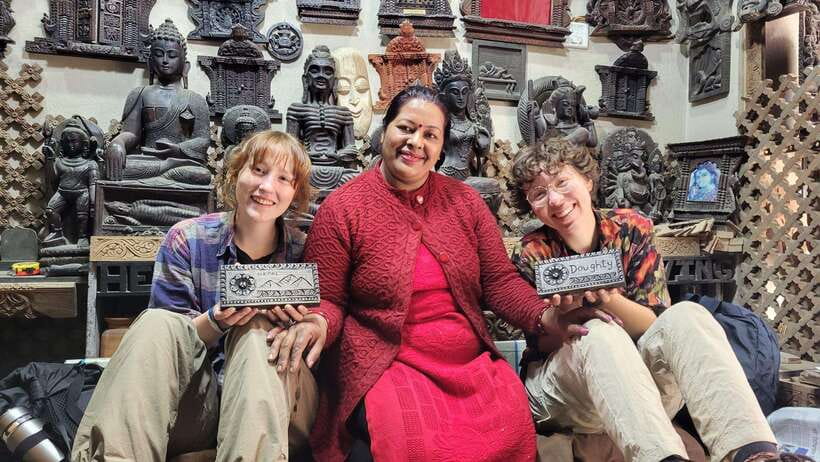
The biggest difference between a good carving class and a “try it once” souvenir shop is guidance during the difficult moments. Here, you don’t just get a demo and then left alone.
You start by practicing your outlining, marking key lines and shapes so your carving has direction. Then you work through chiseling, removing material in controlled steps. Finally, you move to detailing, which is what makes the carving feel intentional instead of rough.
The instructor gives tips and corrections along the way. In past sessions, the teacher Hera has been described as warm, encouraging, and patient—especially with people learning from scratch. His instruction and friendly rhythm help you stick with the steps even when the first cuts don’t look perfect.
One thing to keep expectations realistic: you’re learning technique while carving, and a 3-hour session means your final result is limited by time. That’s not a deal-breaker—it’s part of the value. You’ll leave with a genuine keepsake and real skills you can use again, not a rushed box-check project.
Symbols You’ll See in Nepalese Woodwork (and What They Mean)
Wood carving in Nepal is closely tied to religion, architecture, and the art of storytelling through design. You’ll hear how the craft goes back to the Licchavi period (4th–9th century), when artisans started adorning temples and palaces with intricate wooden elements. Later, it flourished under the Malla dynasty (12th–18th century), leading to the famous wooden masterpieces that still draw attention today.
Another key thread you’ll get is the role of the Newar community in preserving and mastering the craft in the Kathmandu Valley. They’re associated with the kind of detailed work you can spot in major architectural landmarks, including the Kasthamandap (House of Wood), the 55-Window Palace in Bhaktapur, and the Peacock Window.
In the workshop, you’ll also connect motifs to what you’re carving. Common motifs often include lotus flowers, mandalas, and mythical creatures. These are patterns with cultural and spiritual weight, often inspired by Hindu and Buddhist iconography.
If you’re an art lover, this part changes the whole feeling of the class. You’re not just making a decorative item; you’re participating in a visual language that has traveled through centuries of Nepalese craftsmanship.
Learning With a Local Artisan: Why the Human Part Matters
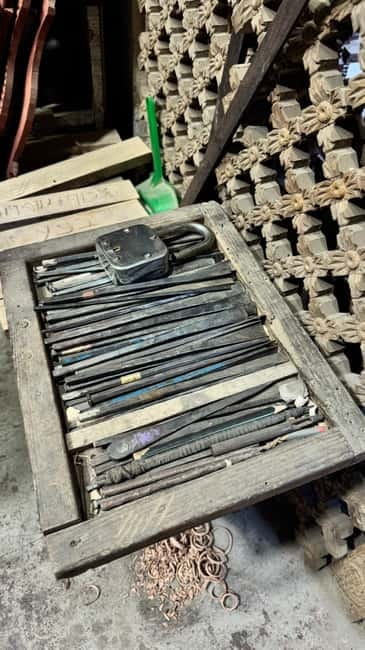
This workshop is guided by a skilled local artisan, and that’s a big deal. Crafts like this live in small choices: how much pressure to use, how to correct a curve, when to stop and reassess the outline.
In at least some sessions, the teacher Hera has been described as funny, kind, and patient, and his wife has been mentioned as warm as well. That kind of supportive energy makes a beginner feel safe enough to try. You can focus on learning the technique instead of worrying about making mistakes.
Also, the instruction language is English, which keeps the class practical. You’re not constantly trying to translate what you’re doing in real time—your brain stays on the carving.
Small-group limits (up to 4) help here too. If you’re carving a tricky curve or dealing with a stubborn spot in the wood, you’re more likely to get direct help quickly.





What You Take Home: Your Own Carved Souvenir
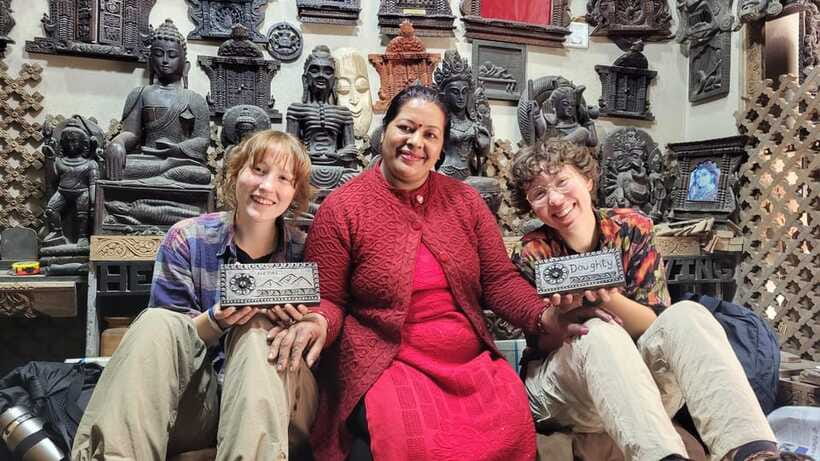
The goal is straightforward: you create your own wooden piece and take it home. The workshop provides the tools and materials, so you’re finishing your souvenir instead of sourcing supplies.
In other experiences like this, the final object can feel generic. Here, the class is built around your carving work during the session—so the finished piece reflects the choices you made and what you practiced while learning.
It also helps that the class encourages practice on the wooden block with step-by-step feedback. By the time you reach detailing, you can see your progress in a way that feels real, not theoretical.
There’s also an emotional payoff. When you’ve used a chisel yourself, you appreciate every dent and smooth edge as part of the process. Your souvenir becomes a story you can actually explain.
Price and Value: Does $42 Make Sense?
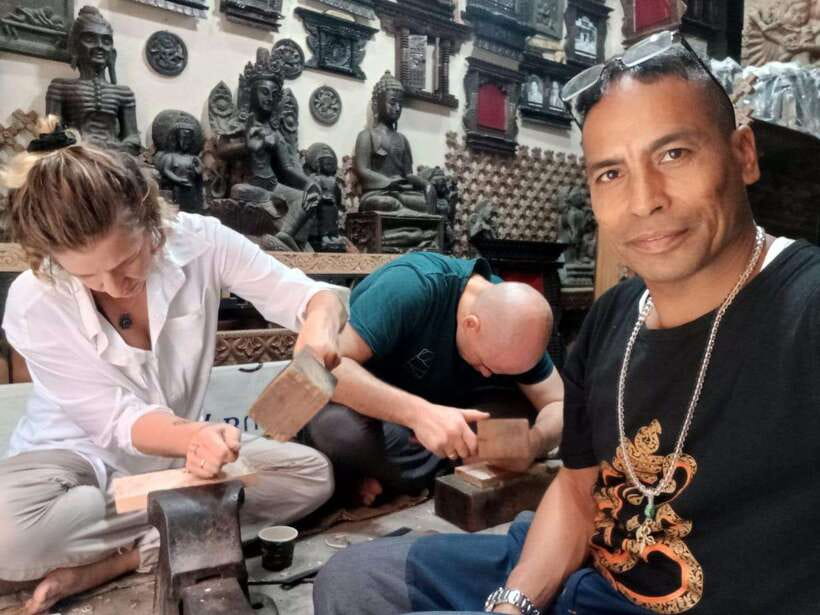
At $42 per person for 3 hours, the price is worth considering if you want a hands-on skill, not just an activity with photos.
Here’s why the value works:
- Tools and materials are included, so you’re not paying extra for supplies.
- You get guided instruction from an artisan and time to practice multiple techniques.
- Small-group size (up to 4) supports more feedback.
- Government taxes and VAT are included, which keeps the final cost from surprising you.
The trade-off is time and scope. A single 3-hour class isn’t the same as multi-day training, so don’t expect professional-level mastery. But for most visitors, that’s the point. You’re paying for a guided introduction that results in a take-home piece and a practical feel for how wood carving works.
If you love arts and crafts, or you’re the kind of person who collects skills instead of only magnets, it’s a smart spend.
Who This Workshop Fits Best (and Who Might Want Another Option)
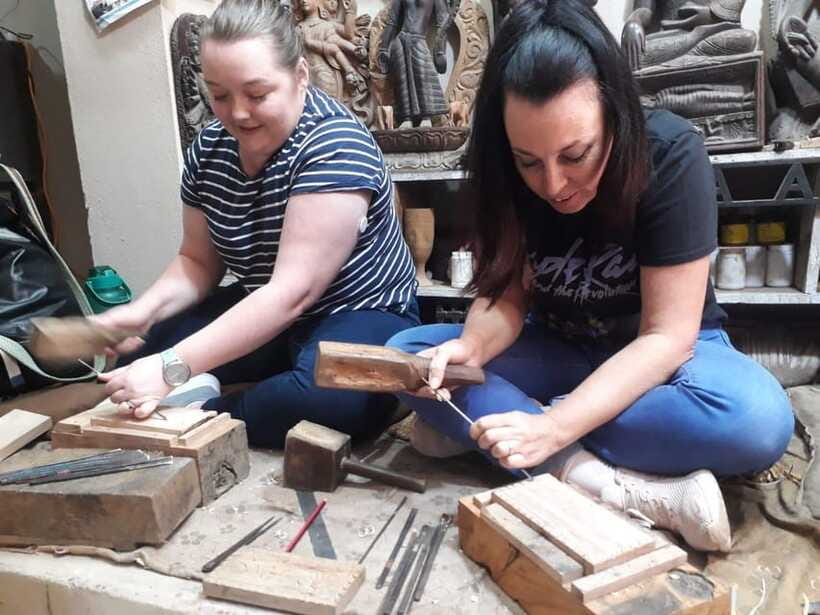
This is a great match if you:
- Want a hands-on Nepal experience in a short time window
- Are comfortable starting as a beginner and learning by doing
- Like cultural context but don’t need a long academic lecture
- Want an actual souvenir you made, not something assembled for you
It might feel less ideal if you:
- Expect a very heavy focus on history and cultural analysis
- Some sessions mention you might want more of that context, especially if you’re the type who reads deep into the background of a craft.
- Have trouble with steady fine-motor work
- The class depends on you doing outlining, chiseling, and detailing, which takes patience.
The good news: the experience is set up for multiple skill levels, and the instructor guidance helps you keep moving even when you hit a tough step.
Practical Tips Before You Sit Down With a Chisel
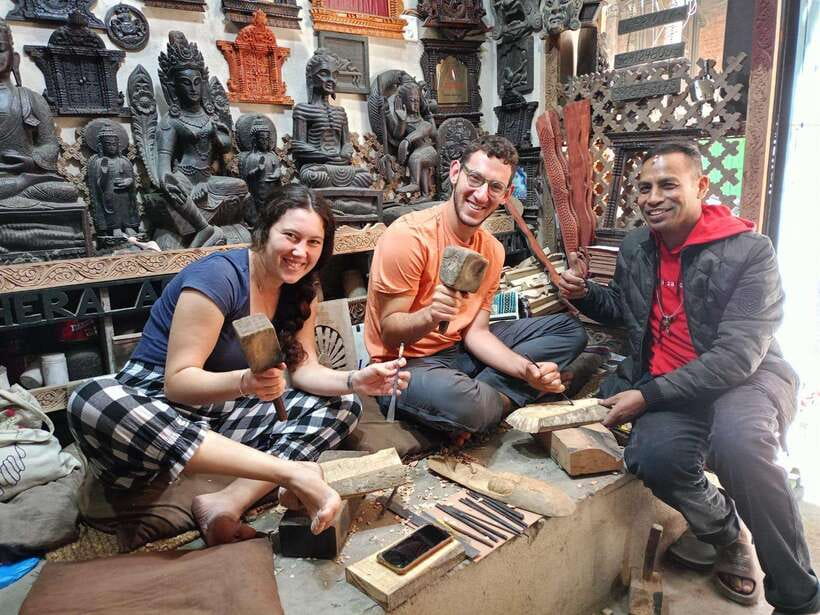
You don’t need special gear, but you should show up ready to work.
Bring comfortable clothes. You’ll be seated for the session, using tools, and focusing on careful movements. Also, no smoking is part of the rules, so keep that in mind if you’re planning your day around breaks.
Since your instructor works in English, it helps to come with a simple idea of what kind of motif you want if you already know your preferences. If you don’t, that’s also fine—you can learn what’s common in Nepalese woodwork as you go.
Finally, give yourself a little buffer time around the appointment. Kathmandu schedules can run on their own rhythm, and you’ll enjoy the class more if you aren’t rushing.
Should You Book This Kathmandu Wood Carving Workshop?
I’d book it if you want a meaningful, practical Nepal experience that produces something you can hold in your hands on the way home. The combination of small group size, English instruction, and structured carving practice makes it feel like you’re learning real technique, not just making a quick craft.
If you’re hoping for a long, detailed lecture on the entire evolution of Nepalese woodwork, you might end up wanting more than the workshop time allows. That said, the craft stories—Licchavi to Malla, plus Newar influence and symbolic motifs—are enough to give your hands-on work a sense of purpose.
For the best decision, ask yourself one question: do you want to leave Kathmandu with a souvenir that came from your own effort? If yes, this class is an easy choice.
FAQ
How long is the Kathmandu wood carving workshop?
The workshop lasts 3 hours.
What location is this class in?
It’s in Bagmati Zone, Nepal, with the experience based in Thamel.
How much does the workshop cost?
The price is $42 per person.
Is the group size small?
Yes. It’s a small group, limited to 4 participants.
What language is the instruction in?
The instructor teaches in English.
What do I learn during the session?
You practice wood carving techniques like outlining, chiseling, and detailing on a wooden block, and you learn about tools, patterns, and cultural significance.
Are tools and materials provided?
Yes. All necessary tools and materials are provided.
What should I bring or wear?
Wear comfortable clothes.
Are there rules during the workshop?
Yes. Smoking is not allowed.
Can I cancel or pay later?
You can cancel up to 24 hours in advance for a full refund, and you can reserve now and pay later.