REVIEW · KATHMANDU
Kathmandu and Patan Heritage and Living Goddess Experience Tour
Book on Viator →Operated by Bold Himalaya Treks and Travels Pvt Ltd · Bookable on Viator
A living goddess stops you in your tracks. This short Kathmandu walk lines up Living Goddess Kumari moments, UNESCO Kathmandu Durbar Square sights, and a quiet detour to Shree Gha in one focused route.
I like two things a lot: the close-up feel of seeing Kumari at Basantapur, and how the guide gives you clear context for the temples, courts, and stone details you otherwise might race past. You also get a practical blend of spiritual sites plus a local market stop that helps you understand daily city life.
One thing to consider: it’s mostly on foot, including a 30-minute walk, so comfy shoes matter and the schedule can feel tight if you’re slower or easily tired.
In This Review
- Key highlights worth your time
- Kathmandu’s Kumari and Durbar Squares, in one compact walk
- Starting from Ason Tanna Decor: Shree Gha to the Ason market vibe
- Kathmandu Durbar Square: temples, museum time, and the Kumari moment
- Basantapur Durbar Square and Kumari’s residence inside the Malla & Shah era
- The quiet-to-loud spiritual contrast you’ll feel on this route
- The guide makes or breaks a 2.5-hour tour
- Price and value: is $50 fair for this walking format?
- What to expect day-of: timing, walking, and pacing
- Who should book this tour (and who might skip it)
- Should you book the Kathmandu and Living Goddess walk?
- FAQ
- How long is the Kathmandu and Patan Heritage and Living Goddess Experience Tour?
- Is hotel pickup included?
- Will I see Kumari, the Living Goddess?
- What sites are included on the route?
- Are entrance fees included?
- How much does the tour cost?
- Is this a private tour?
- Is tipping included in the tour price?
- Can I get a full refund if I cancel?
Key highlights worth your time

- Living Goddess Kumari experience at Basantapur Durbar Square
- Shree Gha shrine stop before you hit the big temple complex
- UNESCO Durbar Square entrance fee included (for the relevant site visit)
- Malla & Shah-era architecture context explained on the ground
- Local market + short snack breaks for a real Kathmandu feel
- Certified, trained guide experience with drop-off options after the tour
Kathmandu’s Kumari and Durbar Squares, in one compact walk
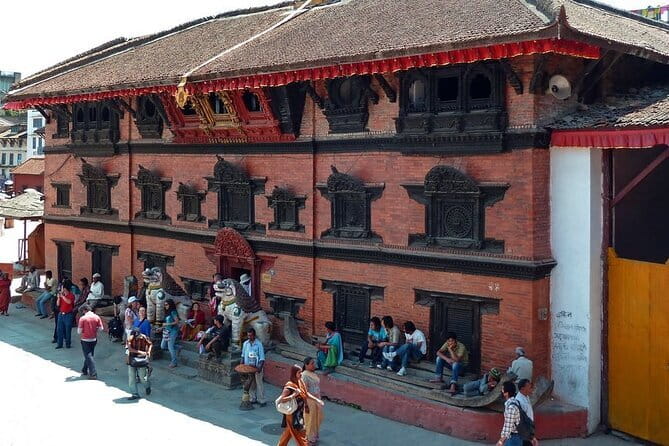
If you want a Kathmandu introduction that isn’t just a checklist, this is a good format. You get a guided route through major temple areas, and you also get the rare headline moment: seeing Kumari, the Living Goddess.
The tour is branded Kathmandu and Patan Heritage, but the stops you’ll work with are firmly in Kathmandu’s Durbar Square universe—Kathmandu Durbar Square and Basantapur Durbar Square. That means you’ll spend your time where the symbolism and stonework are thickest, with a guide translating what you’re looking at as you go.
It’s about 2 hours 30 minutes total, and it moves at a walking pace. The upside is you’re not sitting around waiting for the next highlight; the downside is you’ll want energy and good footwear.
You can also read our reviews of more historical tours in Kathmandu

Starting from Ason Tanna Decor: Shree Gha to the Ason market vibe
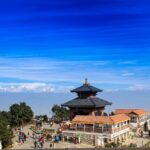
The tour begins with a meet-up at your hotel, then a 30-minute walk. The first key moment is passing Shree Gha, a serene Buddhist shrine. It works as a mood reset: Hindu temple crowds and ritual energy are coming next, so this quiet stop helps you switch gears mentally.
After that, you reach a local market area (Ason is the name you’ll hear tied to this region). This isn’t a shopping marathon. Think of it as a chance to see daily life up close—where people buy what they need, where small stalls sit shoulder-to-shoulder, and where the city’s cultural texture shows up in ordinary things.
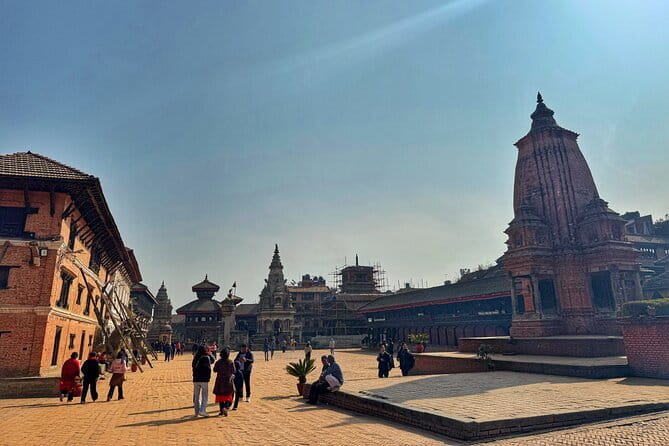
Then you move into Kathmandu Durbar Square, where you’ll see temples and museums. This is the UNESCO zone that gives you the big architectural payoff, and it’s also where the Living Goddess experience may come up as part of the viewing route during the visit.
At the end of this first segment, you return along the same route. That matters more than it sounds. Re-walking helps you notice details you might miss the first time, and it keeps logistics simple when streets are busy.
Practical note: the itinerary indicates admission tickets are not included, but the tour also lists UNESCO Durbar Square fee entrance fee included. Translation for you: you should expect at least the key Durbar Square entrance to be covered, while other add-on admissions (if any) may require separate payment. If you want zero surprises, ask your guide what’s already included before you arrive.
Kathmandu Durbar Square: temples, museum time, and the Kumari moment
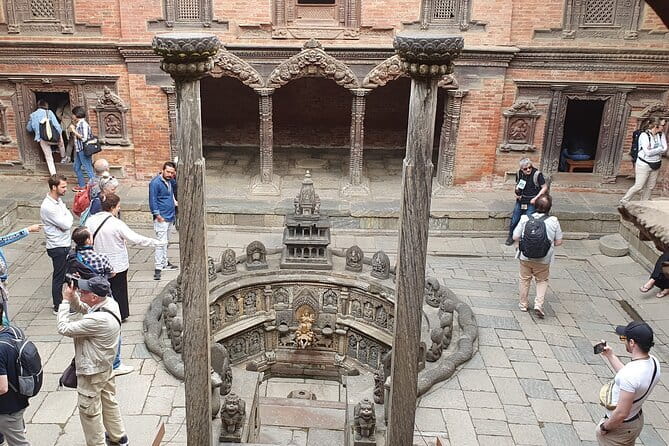
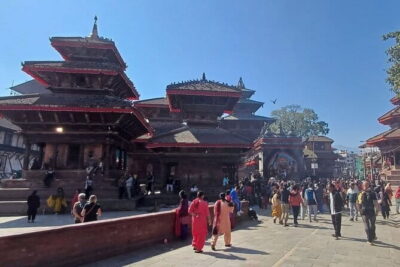
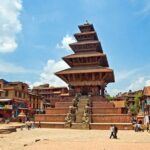
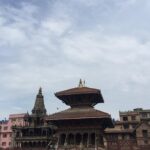
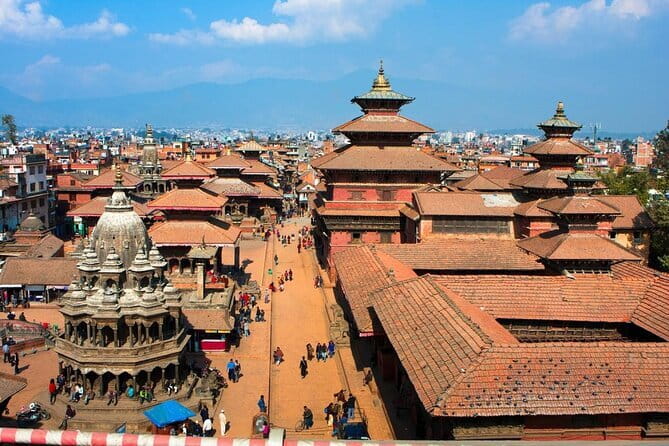
Kathmandu Durbar Square is where you go to see the city’s temple architecture concentrated in one area. During this tour portion, you’ll visit temples and museums, then work in time around the Living Goddess viewing element.
The value here is not just the sights—it’s what the guide helps you understand. Without context, Durbar Square can feel like a maze of stone carvings and doorways. With a trained guide, you start noticing patterns: how the space is shaped for ritual, how different elements connect to Newari tradition and Hindu practice, and why certain motifs keep repeating.
This is also where you’ll likely get a better sense of Kathmandu’s heritage beyond the postcard angles. You’re not being rushed from one click spot to the next. You have enough time to look, ask, and connect the dots.
If you’re short on time in Kathmandu, Durbar Square is a smart place to spend it. It gives you scale fast: you can see how monumental these buildings are, and you can feel how central this space is to religious life.
Basantapur Durbar Square and Kumari’s residence inside the Malla & Shah era

The second stop shifts you to Basantapur Durbar Square, also UNESCO-listed. This is where the tour really locks in on Kumari’s residence area and the broader complex that surrounds it.
You’ll be picked up before the start time for this portion, then you begin in Basantapur. Here, the guide focuses on architecture tied to the Malla & Shah dynasty period, spanning roughly the 12th through the 19th centuries. That historical framing matters, because Basantapur doesn’t feel like generic temple scenery—you understand it as built and rebuilt across major eras.
You’ll also see key religious and cultural details, including Kumari’s residence, a central figure in Newari culture and Hindu religion. This is the Living Goddess moment that makes the tour special, and it’s also the reason many people book it even though it’s a short walking itinerary.
Another highlight you’ll hear about is a 17th-century stone sculpture of Kalvairabh. It’s not just a random carving. It’s the kind of detail that signals the way the complex preserves religious symbolism through time.
There’s also time to explore a local museum on-site. That’s useful because Durbar Square is one thing; the museum context helps you connect what you’re seeing with objects, stories, and interpretations that you might not pick up just by looking at stone.
After the tour, you can choose to be dropped off at your hotel or continue exploring nearby streets and markets on your own. For many people, that extra freedom is part of the value—Durbar Square isn’t the end of Kathmandu’s story. It’s a strong start.
The quiet-to-loud spiritual contrast you’ll feel on this route
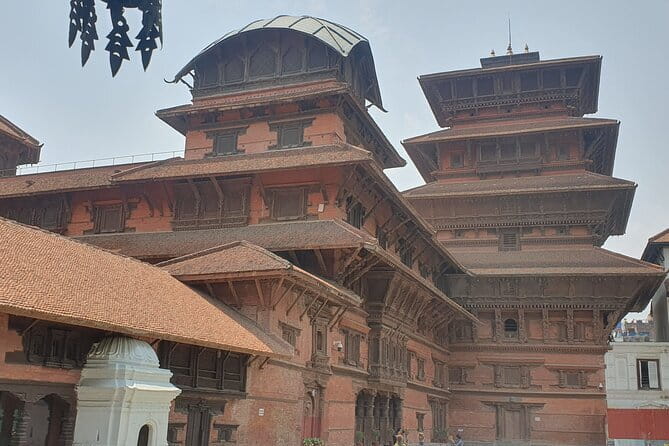
This tour has a built-in contrast that I appreciate: it’s not only about Hindu temple energy. You start with Shree Gha, a Buddhist shrine, then you move into Durbar Square’s Hindu space and Newari cultural context.
That rhythm changes how you experience the city. You’re not just checking religious sites; you’re watching how different traditions coexist in the same urban fabric, sometimes in the same neighborhoods, and often within walking distance.
It also makes the Kumari element hit harder. Seeing a living deity practice isn’t something you can fully understand from explanation alone. When you’re also witnessing the surrounding spiritual atmosphere—shrines, temples, carved stone, and local rituals—the experience lands more clearly.



The guide makes or breaks a 2.5-hour tour

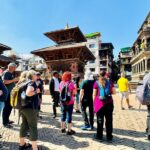
With a short tour, you want a guide who can turn stone and symbolism into something you actually understand in real time. This experience leans on that. The tour includes a well experienced, certified and trained tour guide, and the effect is exactly what you’d hope for: you don’t feel lost in architectural complexity.
In particular, guides like Badri and Sovit (also spelled Sobit in some cases) are praised for being kind and for keeping the explanation on point. That kind of guide style matters when you’re walking through active religious space, because you’ll want to know what you’re seeing and what you should be respectful about while looking.
You’ll also benefit if your guide helps you connect the “why” to the “what.” For example, when you see Kumari and learn where she fits in Newari culture and Hindu religion, it changes the whole experience from sightseeing to cultural understanding.
And yes, there’s room for real Kathmandu breaks. One of the perks mentioned in guidance is being able to stop for something simple like chai and momos during the walk. On a tour this short, that’s not a distraction—it helps you pace yourself and enjoy the city while you’re still in “walk mode.”
Price and value: is $50 fair for this walking format?
At $50 per person, this tour price is positioned as a strong value for what’s included. You get:
- A walking tour timed for a 2 hours 30 minutes total experience
- A certified, trained guide
- UNESCO Durbar Square fee entrance fee included for the relevant visit
- Pickup offered, plus the convenience of a mobile ticket
- A private setup where only your group participates
Could you do Durbar Square on your own? Sure. But you’d need to (1) navigate efficiently in a traffic-heavy area, (2) understand what you’re looking at, and (3) manage the timing for the Kumari viewing element. For many people, that’s the entire reason they book a guided walk.
A quick fairness check: the itinerary also notes admission tickets are not included, so if you’re the kind of person who expects every single possible entry fee to be covered, ask ahead. Still, the big UNESCO fee is listed as included, and that’s the most expensive line item for most visitors.
Also consider the format. A private experience is often priced higher than group tours, so the “only your group participates” setup is part of what makes the $50 number feel reasonable.
What to expect day-of: timing, walking, and pacing
This is a walking itinerary with two main segments. The first segment is built around the 30-minute walk out from your hotel, then a market + Durbar Square visit before returning along the same path.
The second segment centers on Basantapur Durbar Square and the Kumari residence area, with time around a local museum and the Kalvairabh sculpture. Total time is about 2.5 hours, so your schedule won’t stretch.
If you’re sensitive to stairs or crowded areas, this may feel like a challenge at certain points. The good news is that you aren’t commuting between distant neighborhoods. You’re moving within the Durbar Square zones.
Tip about comfort: wear shoes you can walk in for a while and that won’t make you slip on uneven stone. In temple areas, you may pause often—long pauses are part of the experience.
Who should book this tour (and who might skip it)
Book it if:
- You want your Kumari experience guided, with context and respectful navigation
- You like short tours that hit the main UNESCO temple areas efficiently
- You want a mix of Hindu and Buddhist stops rather than only one tradition
- You appreciate a guide who can explain the meaning behind architecture and religious objects
You might skip it if:
- You have very limited mobility and can’t handle a chunk of walking and uneven surfaces
- You prefer long, slow museum time over temple courtyards and quick interpretive stops
- You expect every admission ticket everywhere to be covered without questions (since the itinerary notes admission tickets as not included, even though UNESCO Durbar Square fee entrance is included)
Should you book the Kathmandu and Living Goddess walk?
If you want a high-impact introduction to Kathmandu’s spiritual architecture in a short time, this is a smart booking. The key is the pairing: Kumari at Basantapur plus Durbar Square’s UNESCO temple complex, with Shree Gha used as a calming spiritual contrast.
The best reason to book is the guide-led context—2.5 hours is enough time to get real understanding, but only if you have someone translating what you’re seeing as you move.
If you’re flexible, comfortable walking, and interested in Newari culture and Hindu religious tradition, this tour is likely to fit your pace perfectly.
FAQ
How long is the Kathmandu and Patan Heritage and Living Goddess Experience Tour?
It’s approximately 2 hours 30 minutes in total, split across two main stops.
Is hotel pickup included?
Pickup is offered, and for the second portion (Basantapur Durbar Square) you’ll be picked up before the tour begins.
Will I see Kumari, the Living Goddess?
Yes. The itinerary includes viewing Kumari in the Durbar Square area, including the Living Goddess residence at Basantapur.
What sites are included on the route?
The tour includes Shree Gha (a Buddhist shrine), a local market stop, Kathmandu Durbar Square, and Basantapur Durbar Square, plus a local museum and the Kalvairabh stone sculpture.
Are entrance fees included?
The tour lists the UNESCO Durbar Square fee entrance fee as included. The itinerary also notes admission tickets are not included, so it’s worth asking what’s covered versus what might require separate payment.
How much does the tour cost?
The price is $50.00 per person.
Is this a private tour?
Yes. Only your group will participate.
Is tipping included in the tour price?
Tips for the guide are not included.
Can I get a full refund if I cancel?
Free cancellation is available. You can cancel up to 24 hours in advance for a full refund. If you cancel within 24 hours, the amount paid is not refunded.