REVIEW · KATHMANDU
Kathmandu: 7 UNESCO World Heritage Private Day Tour with Lunch.
Book on Viator →Operated by Travel with Ram · Bookable on Viator
Seven UNESCO sites in one day sounds good. This private Kathmandu tour strings together iconic UNESCO World Heritage locations across the valley, led by Ram, a licensed local guide with 20+ years in tourism. I like that it’s built for real pacing and real explanations, not just a drive-by checklist, and that you get hotel pickup with air-conditioned comfort.
My second big reason to like this tour is the practical food plan. You’re covered with an included box lunch (1 liter bottled water, muffin/croissant, fruits, and juice), so the day stays smooth even when you’re moving between squares and temples. There’s also an all-inclusive option if you’d rather have entrance fees handled and enjoy a Nepali traditional thali set.
The main trade-off to consider is that it’s an 8-hour whirlwind through major religious and historic sites. Admission isn’t included for the private tour unless you choose the all-inclusive option, and you should expect some walking between stops, plus tips and personal expenses are on you.
In This Review
- Key things I’d bet on before you book
- A licensed local guide: why Ram matters
- Logistics that make or break an 8-hour day
- The UNESCO circuit: what you’ll see at each stop
- Kathmandu Durbar Square (Hanuman Dhoka)
- Patan Durbar Square (Lalitpur)
- Swayambhunath (Monkey Temple)
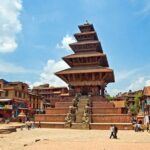
- Bhaktapur Durbar Square
- Boudhanath Stupa
- Pashupatinath Temple (on the Bagmati River)
- Changu Narayan Temple
- Lunch that keeps the day moving (and the details that matter)
- Price and value: what $10 is really buying
- Pacing, comfort, and a smooth way to see Kathmandu Valley
- Should you book it?
- FAQ
- How long is the Kathmandu UNESCO day tour?
- Is hotel pickup and drop-off included?
- What’s included in the lunch?
- Are entrance fees included in the tour price?
- Does the tour have an all-inclusive option?
- Is this tour private or shared?
- Is there a guide, and will they speak English?
- What’s the cancellation policy?
Key things I’d bet on before you book
- Ram’s private-guide attention helps you keep momentum without feeling rushed.
- Seven UNESCO stops in one day is the fastest way to cover Kathmandu Valley highlights.
- Hotel pickup and drop-off reduces hassle, especially on a limited visit.
- Box lunch details are included, so you won’t be hunting for food mid-route.
- All-inclusive option exists for entrance fees and Nepali thali set.
- Mobile ticket convenience helps simplify entry timing.
A licensed local guide: why Ram matters
This tour is built around one person: Ram. He’s described as licensed, with over 20 years in tourism, and that combo matters in Kathmandu. You’re not just looking at monuments; you’re hearing what the sites mean in daily life—spiritual routines, historical layers, and why certain squares and temples still pull people in.
One of the clearest themes from feedback about Ram is his attention to detail. That shows up in the way a private guide can adjust in the moment—pointing out what’s worth your time, helping you interpret what you’re seeing, and keeping your route flowing. Another practical thing: when you travel quickly, it can be hard to find guides who don’t slow everything down. Here, the tour is set up so Ram can respond to the group’s pace and keep the day working.
You can also read our reviews of more private tours in Kathmandu
Logistics that make or break an 8-hour day
The tour runs about 8 hours, with pick up from and drop off at your hotel by private vehicle. That’s a big deal in Kathmandu, where traffic and navigation can turn a sightseeing plan into a time gamble. The air-conditioned private transport helps you reset between stops, especially when you’re bouncing between UNESCO clusters.
It’s also a private tour/activity, meaning it’s only your group. That usually translates to fewer compromises: you can ask questions without the whole group waiting, and your schedule doesn’t have to bend around strangers. If you’re traveling with friends or family, that flexibility is where value often lives.
A small but real timing note: with seven major sites, you’ll want to treat this as a “see it all” day rather than a “linger forever” day. Think of it as a guided highlight circuit with thoughtful storytelling, not a slow museum-style stroll.
The UNESCO circuit: what you’ll see at each stop
This is a route that makes sense geographically and thematically: royal palace squares, major Buddhist sites, and key Hindu temples. Here’s what each stop brings, and how to approach it so the day feels rewarding instead of exhausting.
Kathmandu Durbar Square (Hanuman Dhoka)
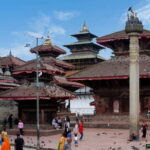
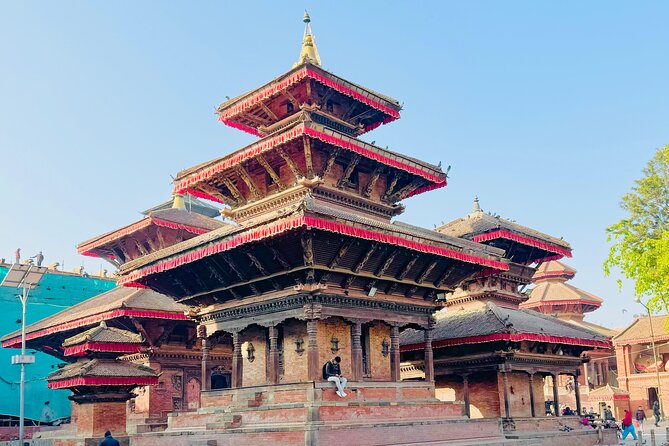
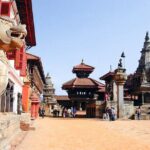
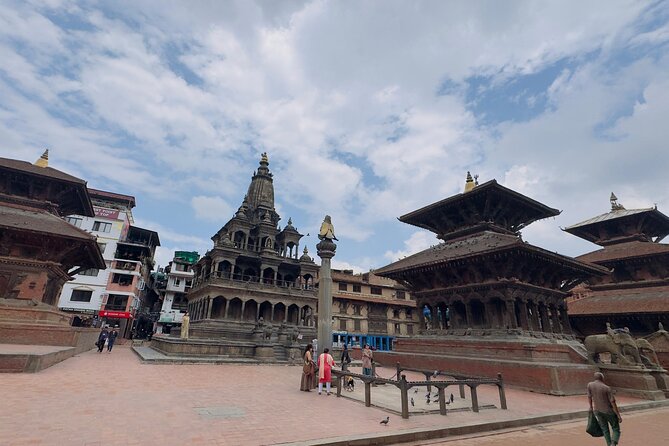
Your first major stop is Kathmandu Durbar Square, also known as Hanuman Dhoka. It’s a historic royal palace complex in the heart of Kathmandu and a UNESCO World Heritage Site. This place works well at the beginning of the day because it sets the historical tone: you’re standing in the kind of central space that explains how power and culture used to cluster in cities.
Plan to give yourself time to look around, not only at the main structures. Palace complexes like this often reward side details—carvings, courtyards, and the way buildings relate to the square. The guide’s job here is to connect the architecture to the people who lived and ruled there.
Consideration: admission isn’t listed as included unless you choose the all-inclusive option. If you’re the kind of traveler who hates last-minute add-ons, check which option you booked early.
Patan Durbar Square (Lalitpur)
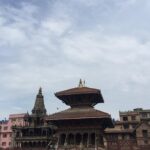
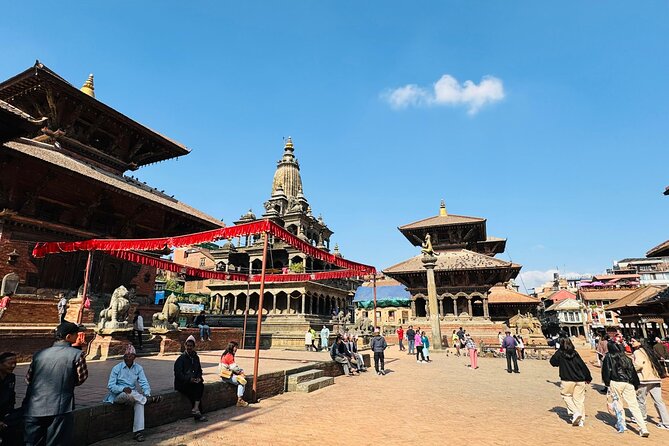
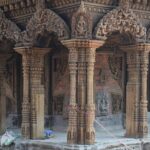
Next is Patan Durbar Square in Lalitpur. This stop is strongly tied to Newari art and architecture, and it was once the royal palace of the Malla kings. The location in the heart of Lalitpur also gives your day a nice change of scenery from Kathmandu’s core energy.
If you like craftsmanship—stonework, facades, and the overall “designed for humans” layout of these squares—Patan is often the kind of place where a good guide makes a difference. Your best move is to slow your attention for a bit even if you’re keeping a fast pace, because this is where architectural storytelling pays off.
You can also read our reviews of more historical tours in Kathmandu

Swayambhunath (Monkey Temple)
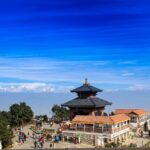
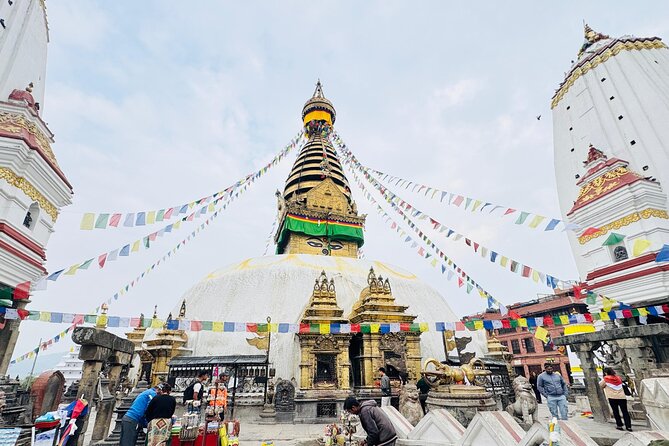
Swayambhunath, also known as the Monkey Temple, is a Buddhist stupa perched on a hill. It’s one of Nepal’s oldest and most sacred Buddhist sites, and the payoff is the panoramic views of the valley.
This stop is a useful break from palace-square density. You’re going uphill, you’re changing perspective, and you’re seeing how the valley’s layout relates to the spiritual geography. The stupa itself is the focal point, but the views are part of the experience—so don’t rush your photo time unless you’re trying to keep the whole day extremely tight.
Consideration: with hilltop sites, the walking and stairs can add up across the whole route. Comfortable footwear matters more than you’d think for a day like this.
Bhaktapur Durbar Square
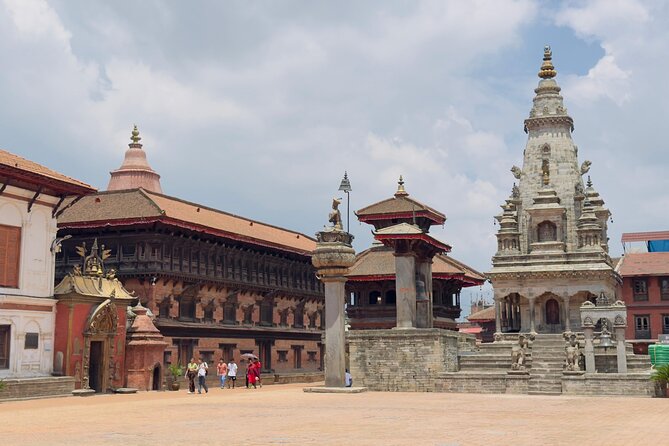
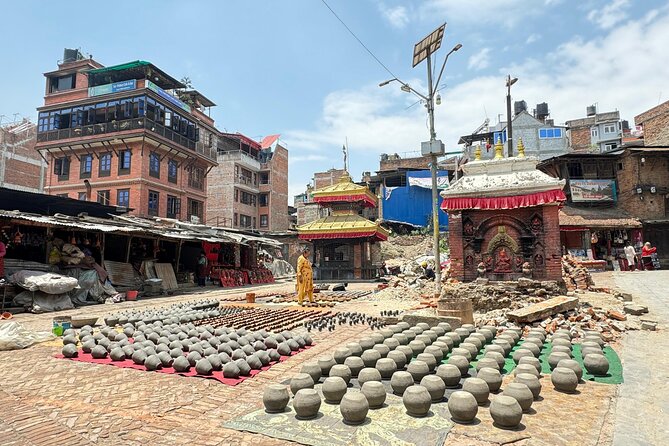
Bhaktapur Durbar Square is described as beautifully preserved and showcasing Newar civilization. Bhaktapur is an ancient city, and the Durbar Square is the kind of UNESCO site where you can feel the layers of the past continuing in the present.
This is a good stop when you want to see how different Durbar Squares can feel distinct. Kathmandu’s and Patan’s are not the same vibe, and Bhaktapur’s tends to feel more “kept in motion by tradition” than “just monuments.” Your guide’s explanations can help you spot what’s practical, not just decorative.
The time allowance shown here is longer than some other stops (listed as 2 hours), which is a hint that you’ll get more room to look. Use that time to take in the overall layout, then come back to one or two details that the guide points out.
Boudhanath Stupa
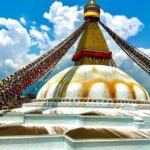
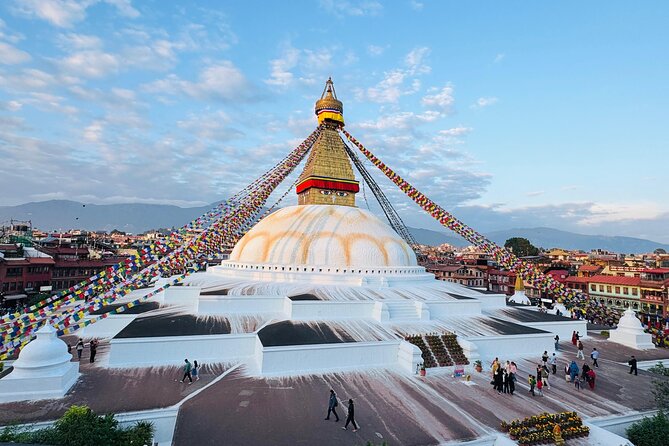
Boudhanath Stupa is one of the largest and most sacred Buddhist stupas in the world. It’s in Kathmandu and UNESCO-listed, and it’s instantly recognizable thanks to the massive white dome and a gold-topped spire.
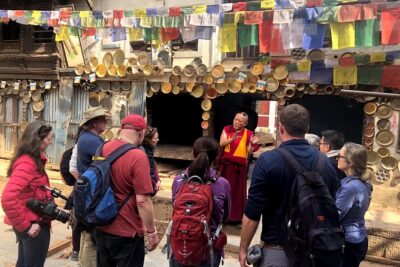
This stop is spiritually different from the Durbar Squares. You’re in a space that functions as a living Buddhist landmark, and the guide can help you understand what you’re seeing beyond the surface look of a “very big stupa.” If you like atmosphere and ritual, this is often the most relaxing stop because you can shift gears from “palace architecture” to “religious space.”
Consideration: the day includes both Buddhist and Hindu sites. If you’re sensitive to the intensity of crowds or ceremonies, it helps to keep a small mindset shift: treat each site as a different kind of encounter, not one single “tour stop.”
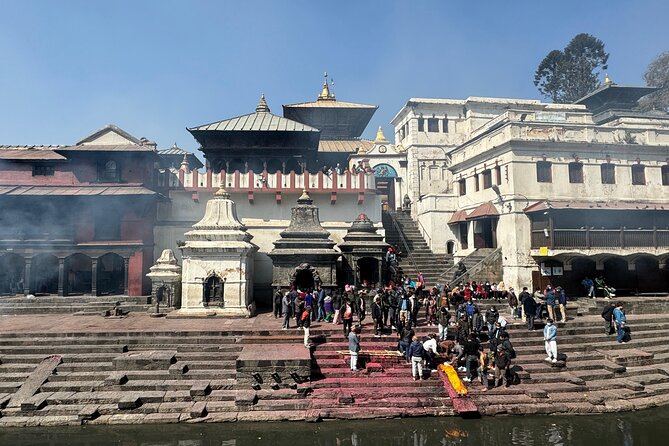
Pashupatinath Temple (on the Bagmati River)
Pashupatinath Temple is a major Hindu temple dedicated to Lord Shiva. It sits on the banks of the Bagmati River and UNESCO recognizes the site for its global religious importance.
This is the part of the route that turns the cultural lens toward Hindu sacred space. Pashupatinath can feel like the spiritual center of the city for many visitors, not only because it’s famous, but because it’s meaningful. The guide’s storytelling helps connect what you see—the temple setting and the devotion—with why this site matters.
Changu Narayan Temple
The final UNESCO stop is Changu Narayan Temple, an ancient Hindu temple on a hill above the big Mandayi canyon. It’s dedicated to Lor (the description is truncated, but it clearly ties the temple to a specific deity figure in local tradition), and it can be seen from Bhaktapur.
This ending works nicely because it feels quieter than some of the larger-city landmarks. A hilltop viewpoint and a smaller, older temple setting can help you end on something more focused and less crowd-driven—especially after Durbar Squares and major stupas.
The stop time shown is about 40 minutes, so aim to use that window to absorb the temple setting and the view rather than trying to fully “tour” everything. Let the guide’s direction shape where you place your attention.
Lunch that keeps the day moving (and the details that matter)
You get a box lunch with the tour. It includes water (1 liter bottled water), a muffin, croissant, fruits, and juice. That’s not just “you’ll have something to eat.” It’s specific, and the specificity matters because it reduces uncertainty.
If you’ve ever had a day tour where lunch turns into an expensive scavenger hunt, you’ll understand why this setup feels good. It also makes the 8-hour plan more realistic—no long detours just to find food.
There’s also an all-inclusive option that includes food and entrance fees, plus a Nepali traditional thali set. If your biggest worry is budgeting surprise costs mid-day, this all-inclusive approach can be the simpler path.
Price and value: what $10 is really buying
The listing price shows $10.00 per person, and the tour is designed to include several core value pieces: private air-conditioned transportation, an English-speaking professional city tour guide, pick up and drop off by private vehicle, and the box lunch.
The key thing to understand is what’s not automatically included: entrance fees may not be covered unless you pick the all-inclusive option. That means your final cost can depend on your ticket choices and the option you select.
So the real value question becomes: do you want to manage entrances yourself, or do you want everything bundled?
- If you’re comfortable paying entrance fees on-site and want the lower base cost, the private option may fit.
- If you’d rather avoid friction and have food plus entrance fees handled, the all-inclusive option often feels easier.
Also keep in mind tips and personal expenses aren’t included. That’s normal for tours, but for value calculations, you should mentally earmark some extra spending.
Pacing, comfort, and a smooth way to see Kathmandu Valley
This tour is built for travelers who want structure. You’re seeing all seven UNESCO World Heritage sites tied to Kathmandu Valley in one day, and the route is organized so you’re not constantly asking where to go next.
The private guide aspect is the difference-maker. When a tour covers major landmarks, you can end up with the feeling that you’re moving fast with no context. Here, Ram’s role is to add meaning and practical interpretation—helping you understand what you’re looking at and making the “why” stick.
One more practical point: mobile ticket is mentioned as a feature. That usually means less fuss on the day, as long as you keep your phone charged.
Should you book it?
Book this tour if:
- you want to cover the big UNESCO sites in one efficient day
- you value a private guide who can respond to your pace
- you like having lunch handled so your day stays on schedule
- you want help making sense of sacred and historic spaces, not just photos
Skip or reconsider if:
- you prefer very slow sightseeing with lots of free time at each site
- you don’t want to deal with entrance fees unless you choose the all-inclusive option
- you’re traveling with energy constraints that make hilltop and multi-site walking hard
If you’re on a time crunch, this is exactly the kind of day tour that can turn Kathmandu Valley from a list into a coherent story.
FAQ
How long is the Kathmandu UNESCO day tour?
The tour is about 8 hours long.
Is hotel pickup and drop-off included?
Yes. You’ll be picked up from and dropped off at your hotel by private vehicle.
What’s included in the lunch?
The box lunch includes bottled water (1 liter), a muffin, croissant, fruits, and juice.
Are entrance fees included in the tour price?
Entrance fees are not included for the private tour without the entrance option. There is an all-inclusive option that includes entrance fees.
Does the tour have an all-inclusive option?
Yes. The all-inclusive option includes food, entrance fees, and a Nepali traditional thali set.
Is this tour private or shared?
It’s private. Only your group participates.
Is there a guide, and will they speak English?
Yes. An English-speaking professional city tour guide is included.
What’s the cancellation policy?
Free cancellation is available up to 24 hours in advance for a full refund. If you cancel within 24 hours of the start time, the amount paid is not refunded.