REVIEW · KATHMANDU
Patan and Bhaktapur Boutique Tour
Book on Viator →Operated by Amazing Kathmandu Tours · Bookable on Viator
Two UNESCO squares in one day? That’s the trick. This Patan and Bhaktapur tour pairs major Durbar Square highlights with smaller, meaningful stops like a serpent courtyard and an old water stone spout, so you get context instead of just photos.
I especially love the small group size (max 10) and the way it keeps the day from feeling like a conveyor belt. I also like that the tour includes a mix of big monuments and everyday Newar details, from Patan Gate’s Asta Matrika paintings to Pottery Square at Bhaktapur.
One thing to consider: it’s a long day (about 9 hours 30 minutes) with walking through old streets, plus several places have entrance fees and lunch is not included.
In This Review
- Key highlights you’ll feel on the day
- Getting started in Kathmandu: the morning rhythm that matters
- Patan Gate: entering a city with painted goddesses
- Pimbahal and Nag Baha Galli: where local life shows up
- Golden Temple (Hiranya Varna Mahavihar): a Buddha pagoda in Patan
- Manga Hiti and Patan Museum: engineering, then art in a restored palace
- Patan Durbar Square: Newar carving, courtyards, and royal layouts
- Bhaktapur Durbar Square: 55-window palace and the city’s temple spine
- Taumadhi Square and Nyatapola Temple: the view from the five levels
- Pottery Square: watching craft that still has a job
- Dattatraya Temple and the Peacock Window: symbols you can actually see
- Finishing in Patan’s connected lanes: your last chance to wander
- Price and value: what $40 really buys you, plus the cash you should plan
- Guides: what past participants have praised
- Who this tour fits best (and who should skip it)
- Should you book this Patan and Bhaktapur Boutique Tour?
- FAQ
- How long is the Patan and Bhaktapur Boutique Tour?
- What time does the tour start?
- How much does it cost?
- Where does the tour start and where do you return?
- Is pickup included?
- What is included in the ticket price?
- Are lunch and coffee included?
- Do I need to pay entrance fees?
- Is there a group size limit?
- What are the age and fitness requirements?
- Should you book this tour if you want a guided experience?
- Cancellation, at a glance
- Final decision: book or pass
Key highlights you’ll feel on the day
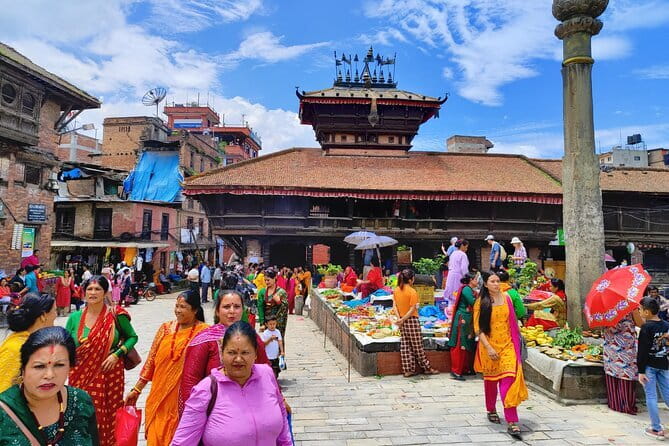
- Up-close Newar symbolism at Patan Gate, Pimbahal, and Nag Baha Galli
- Golden Temple pagoda (Hiranya Varna Mahavihar) with its Buddha dedication and gilded roof
- Lichhavi-era water engineering at Manga Hiti, a carved stone spout
- UNESCO Durbar Squares in both cities, with royal-palace layouts you can actually follow
- Bhaktapur crafts and temple views from Pottery Square to Taumadhi and Dattatraya’s Peacock Window
Getting started in Kathmandu: the morning rhythm that matters
The tour starts at 8:30 am with a meeting point at Filli Chai (Kathmandu Guest House Rd area). You’ll also get convenient pickup from Boudha and from the KGH Hotel area in central Thamel, so you’re not stuck figuring out transport on your own.
You’ll ride in an air-conditioned vehicle with WiFi on board. For Kathmandu, that’s a real comfort win, because the day can get warm, and the drive times add up when you’re moving between city centers and UNESCO zones.
Bring practical stuff: comfortable walking shoes, sun protection, and small cash for entrances. The tour includes time for a lunch and coffee stop, but those costs are on you.
Fitness-wise, the tour is fine if you can handle moderate walking on uneven stone and narrow lanes. The tour lists a moderate physical fitness level and a minimum age of 9 years—children under 9 aren’t accepted for insurance reasons (they can’t sit on your lap).
You can also read our reviews of more tours and experiences in Kathmandu.


Patan Gate: entering a city with painted goddesses
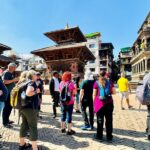
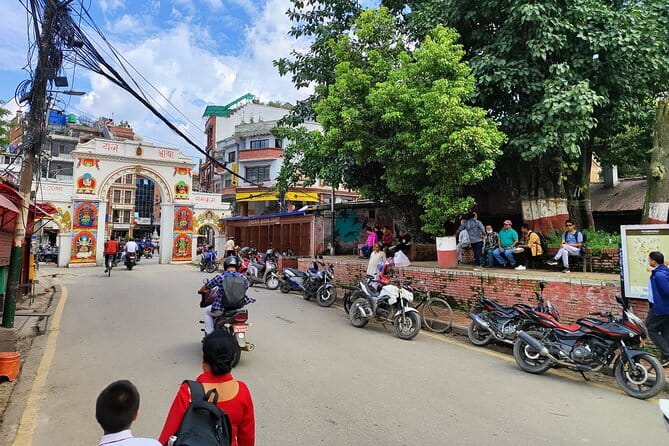
You begin at Patan Dhoka (Patan Gate), the historic entrance to Patan. This gate isn’t just a checkpoint; it’s decorated with paintings of the Asta Matrika, the eight mother goddesses—an early reminder that in this region, religion and daily life sit close together.
This stop is short (about 15 minutes) and admission is free. That makes it a good start: you get your bearings fast, and your guide can set the tone for what you’ll see inside the city walls.
Pimbahal and Nag Baha Galli: where local life shows up
Next you’ll visit Pimbahal, where the focus isn’t on a single temple façade. You’ll hear how ancient tourists, pilgrims, and traders cooked their food, fetched water, and rested—details that help you picture how the city functioned, not just how it looked.
You’ll also learn about Gaya Baje, a Hindu priest tied to the story of Pimbahal. It’s the kind of personal detail that makes a stop stick, because you’re not only looking at stone—you’re learning what people did there.
Then comes Nag Baha Galli, a courtyard dedicated to serpents. This is where you’ll connect a major religious tradition to a specific place: Samyak Mahadan, a celebration of giving that takes place every five years. Even though you likely won’t be there during the festival itself, understanding the purpose changes how you read the space.
Pimbahal and Nag Baha Galli are both admission-free on the day. Each is also timed to keep the flow moving, without turning the morning into a lecture.
Golden Temple (Hiranya Varna Mahavihar): a Buddha pagoda in Patan
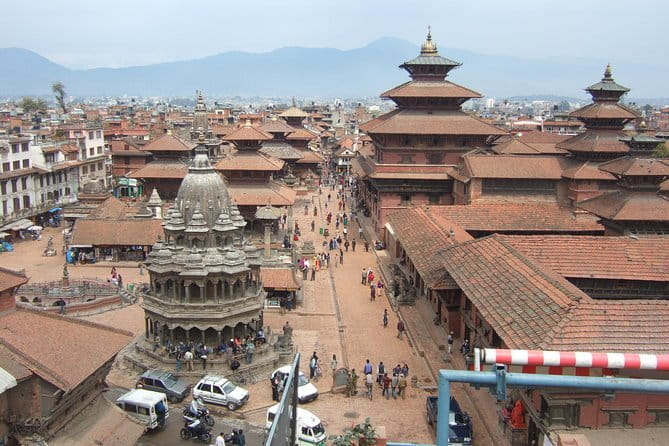
At Hiranya Varna Mahavihar, the highlight is the Golden Temple itself: a three-story pagoda with a gilded roof and intricate carvings. It’s dedicated to Gautam Buddha, which gives the stop a quieter feel than the surrounding bustle.
This is one of the places where your guide’s explanations matter most. The same carvings and levels you see in photos become easier to understand when you know what the temple is signaling and why the architecture is arranged this way.
Time here is about 30 minutes, and admission is not included. So if you’re budgeting, treat this as an extra ticket you should expect to pay on arrival.
Manga Hiti and Patan Museum: engineering, then art in a restored palace
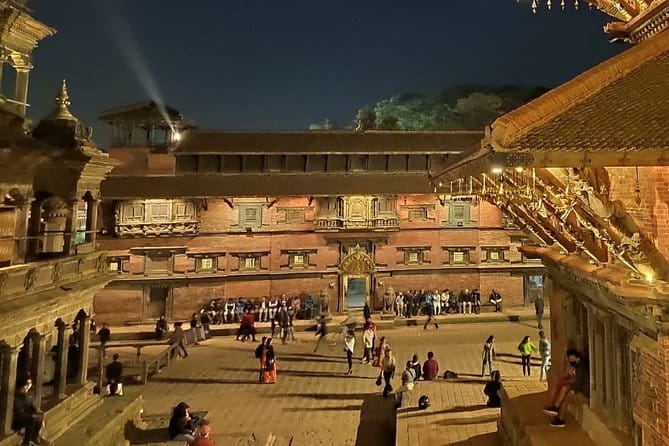
After the Golden Temple, you’ll head to Manga: Water Stone Spout (Manga Hiti). This is a historic water spout built during the Lichhavi period, and it’s decorated with carvings of gods and intricate design details.
What I like about this stop is how it reframes tourism. Instead of only chasing temples, you see how people built community infrastructure—water access that also doubled as public art.
Then you’ll visit Patan Museum, housed in a restored Malla-era palace. That matters because the building itself is part of the show: you’re not only learning about art and culture, you’re stepping into a traditional structure that survived and was carefully brought back.
Admission for the museum is not included, and the stop is about 30 minutes. If you enjoy museums, you’ll likely get a lot out of it. If you’re museum-light, just use it as a structured rest and a way to connect the architectural clues you’ve been collecting.


Patan Durbar Square: Newar carving, courtyards, and royal layouts
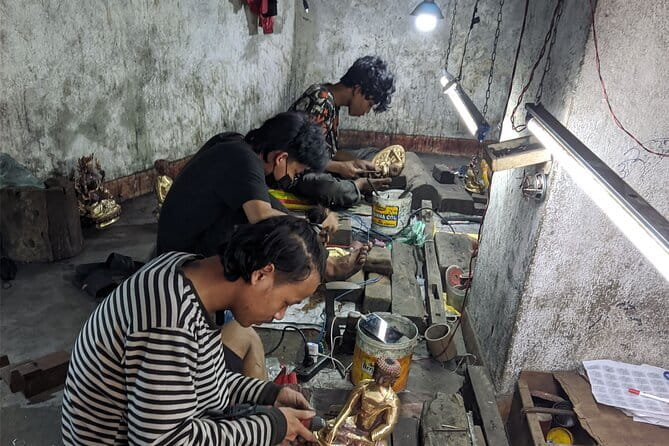
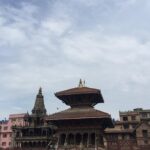
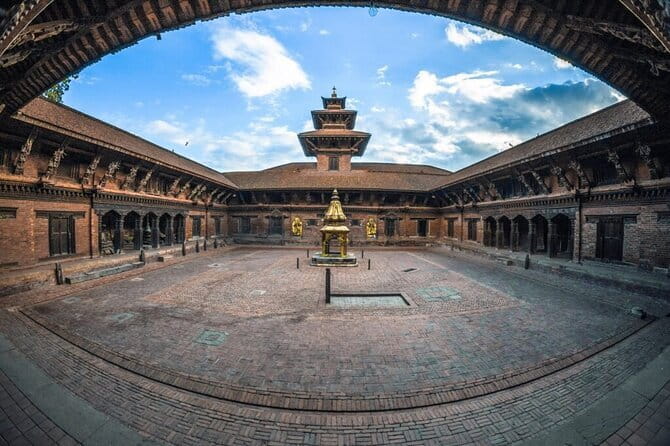
Patan Durbar Square is a UNESCO site and one of the big reasons the tour is worth it. The square reflects Newar art and culture, and it used to function as the royal palace complex of the Malla kings.
Plan for about 30 minutes here. The best way to use the time is to focus on the courtyards and carved temple corners, not just the main photo angles. This is where you start noticing patterns across the day: repeated motifs, consistent design rules, and the way space signals power and devotion.
Admission for Durbar Square is not included. The tour notes that the entrance fee to the Durbar Square is NRP 1000 (about US$ 9) and is paid in cash at the entrance. There’s also a recommendation to pay a minimum donation of NRP 100 for the Royal Kumari.
Because fees can feel annoying after you’ve already paid for the tour, I suggest getting your cash ready early, ideally before you reach the square.
Bhaktapur Durbar Square: 55-window palace and the city’s temple spine
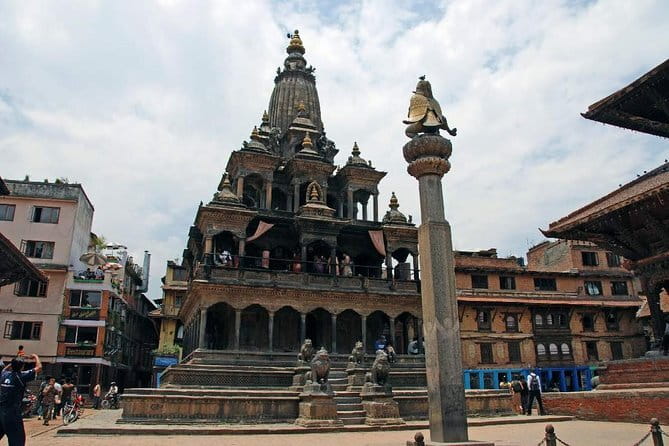
Once the day shifts to Bhaktapur, you’ll visit Bhaktapur Durbar Square, another UNESCO World Heritage Site. This area is known for traditional Newar architecture—temples, court-like spaces, and a sense of walking through a living, historical blueprint.
From the tour overview, you should also watch for the big landmarks tied to this district: the 55-Window Palace, the Nyatapola Temple, and the Golden Gate. Even if you don’t linger on every feature in detail, you’ll get the main connections that make Bhaktapur feel different from Patan.
Time is about 30 minutes. It’s long enough for orientation and the main sights, but short enough that you won’t lose your momentum—important in a 9.5-hour tour.
Taumadhi Square and Nyatapola Temple: the view from the five levels
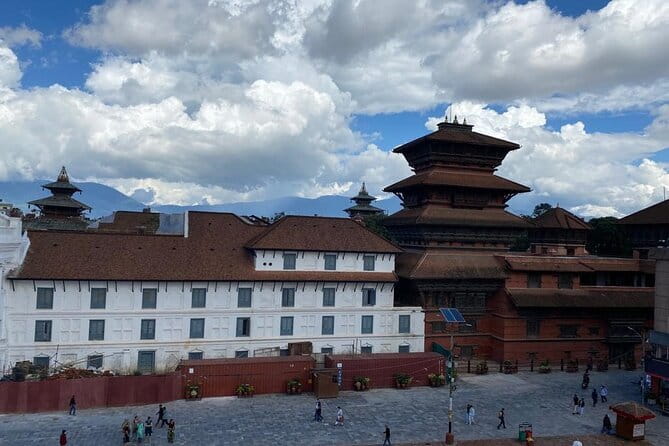
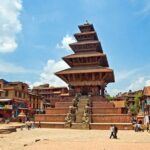
At Taumadhi Square, the anchor is the Nyatapola Temple, a five-story temple and one of Nepal’s best-known temple silhouettes. It’s dedicated to goddess Siddhi Lakshmi, and the “tall and steep” design is part of how it communicates status and belief.
You’ll spend around 30 minutes, and admission is not included per the tour notes. This stop is a great moment to pause and look around rather than only looking up—Bhaktapur’s temple streets read better when you take in how the buildings relate to each other.
Pottery Square: watching craft that still has a job
Bhaktapur’s Pottery Square is where the tour adds real texture. You’ll see local artisans working with clay and making handmade pottery, and you’ll have a chance to buy directly from the people shaping it.
This is not just a shopping stop. It’s a cultural checkpoint: it shows what still runs in these historic neighborhoods—skills passed down, craft with daily value, and a place designed for trade.
Time is about 30 minutes and admission is not included (the tour treats it like part of wandering the market streets). If you like souvenirs with meaning, this is usually the best place to spend a bit extra without feeling like you’re donating to a tourist machine.
Dattatraya Temple and the Peacock Window: symbols you can actually see
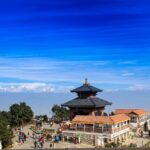
Next is Dattatraya Temple at Dattatraya Square, a Hindu temple dedicated to the idea of unity among Brahma, Vishnu, and Shiva. This square is also famous for the Peacock Window, a carved feature that’s visually striking even if you’re not a deep-architecture person.
This is a 30-minute stop with free admission. I like it as a calmer pace after the bigger squares—your brain gets to switch from “big monuments” mode to “details and symbolism” mode.
Finishing in Patan’s connected lanes: your last chance to wander
The final Patan segment is built around wandering through narrow connected pathways and open spaces where you can spot ancient palace features, stupas, and peaceful temples. It’s a flexible closer, designed so you can absorb what you learned earlier without being rushed out the door.
This final stop is about 30 minutes and is listed as free. If you feel like you didn’t get enough photos in the Durbar Square, this is your moment to slow down and do it your way.
Price and value: what $40 really buys you, plus the cash you should plan
The tour costs $40 per person, and the included value is clear: air-conditioned vehicle, WiFi on board, and a guide. Those inclusions matter because getting between Patan and Bhaktapur on your own can turn into a lot of time spent negotiating transport, while a guide helps you keep your bearings quickly.
The part to plan for is entrances. The tour notes:
- Durbar Square entrance fee: NRP 1000 (about US$ 9), paid in cash at the entrance, plus a recommended minimum NRP 100 donation for the Royal Kumari
- Golden Temple admission is not included
- Patan Museum admission is not included
- Bhaktapur Durbar Square admission is also not included per the tour pattern
So yes, you’ll likely spend more than $40 by the time you pay tickets and optional donations. Still, you’re paying for a guided loop through two UNESCO sites plus meaningful cultural stops like Pimbahal, Nag Baha Galli, and Manga Hiti—places many visitors skip when they go only for the main squares.
One more value tip: get small cash ready before the day starts. It saves time, stress, and that uncomfortable moment of hunting for an ATM while the group is waiting.
Guides: what past participants have praised
Your guide is part of the package, and the effect shows in how the stops connect. Past participants have called out Shreya Karki for knowing Nepal’s culture, history, and traditions, and they’ve also praised Santosh for an organized, full day of sightseeing.
Even if your guide isn’t the same person, you can expect a similar approach: explanations tied to what you’re standing in front of, not just general facts.
Who this tour fits best (and who should skip it)
This is a strong match if you:
- like architecture with purpose (temples, courtyards, gate symbolism)
- enjoy craft culture, especially pottery and daily-life details
- want a day that balances major sights with smaller stops that give you context
It might not be your best fit if you:
- want lots of free time to wander without timing
- plan to avoid any extra fees and museum tickets
- need a fully low-walking day, since old lanes and square areas add up
The age rule (minimum 9) also means you should plan around it if you’re traveling with younger kids.
Should you book this Patan and Bhaktapur Boutique Tour?
Book it if you want the cleanest one-day way to see Patan and Bhaktapur’s UNESCO core plus the small, meaningful stops that explain how these cities worked and how people celebrated life and faith. The up-to-10 group size, included guide, and air-conditioned transport are exactly what you want for a long day.
Skip it if you’d rather spend multiple days in each city and take your time at a slower rhythm, or if you strongly dislike paying additional entrance fees once you arrive.
FAQ
How long is the Patan and Bhaktapur Boutique Tour?
It runs about 9 hours 30 minutes (approx.), including transportation and time for a lunch and coffee stop.
What time does the tour start?
The start time is 8:30 am.
How much does it cost?
The price is $40.00 per person.
Where does the tour start and where do you return?
It starts at Filli Chai near Kathmandu Guest House Rd in Kathmandu, and it ends back at the same meeting point.
Is pickup included?
The tour offers convenient pickup from Boudha and from KGH Hotel in central Thamel.
What is included in the ticket price?
The included items are an air-conditioned vehicle, WiFi on board, and a guide.
Are lunch and coffee included?
Lunch is not included. The total tour time includes a lunch and coffee stop, but the costs are on you.
Do I need to pay entrance fees?
Yes. Entrance to Durbar Square requires payment in cash (NRP 1000 about US$ 9), and entrances for places like the Golden Temple and Patan Museum are not included.
Is there a group size limit?
Yes. The tour has a maximum of 10 travelers.
What are the age and fitness requirements?
You should have a moderate physical fitness level. The minimum age is 9 years, and children under 9 are not allowed for insurance reasons.
Should you book this tour if you want a guided experience?
If you like having a guide connect temples, courtyards, and traditions into one clear day plan, this tour is a good choice. The included guide and focused timing help you see both cities without getting lost in logistics.
Cancellation, at a glance
Free cancellation is available up to 24 hours in advance for a full refund.
Final decision: book or pass
If you’re scheduling only one day in the Kathmandu Valley and you want Patan plus Bhaktapur with both big UNESCO sights and culture-rich stops, I’d book it. Just budget for cash entrance fees and wear shoes that handle stone and steps.