REVIEW · KATHMANDU
Everest Base Camp trek with Helicopter return 9 days
Book on Viator →Operated by Adventure Master Trek · Bookable on Viator
Helicopter return changes the feel of Everest. This 9-day Everest Base Camp trek with helicopter return packages the classics—Namche Bazaar, Kala Patthar, and the Everest region views—into a shorter, more manageable time window. I especially like the practical twist: after the final viewpoints, you’re not committed to a long, slow descent; you’ll take a helicopter back from Gorakshep to Lukla. I also like the built-in health monitoring, including an oximeter check of pulse, oxygen saturation, and heart rate twice daily.
The big consideration is simple: the trek is still a real altitude challenge. Even on a “moderate” difficulty route, the trail above Dingboche becomes more remote and steeper, so your pace and how your body reacts matter more than the helicopter convenience.
In This Review
- Key highlights worth planning around
- Why this 9-day Everest plan feels smarter than the longer treks
- Getting from Kathmandu to Lukla (and why Day 1 matters)
- Phakding to Namche Bazaar: the “get your legs working” stretch
- The Namche pause (plus the airstrip jump): acclimatization with a view
- Kyangjuma to Tengboche: working your way toward the steeper edge
- Above Dingboche: where the route gets remote and the pace matters most
- Gorak Shep: the big “final approach” staging area
- Kala Patthar (5,644 m): the viewpoint day that justifies the whole trip
- Price and logistics: what your $3,888 covers (and what it doesn’t)
- What to expect day to day, in trekking terms
- Who this Everest helicopter-return trek is ideal for
- Should you book this 9-day Everest Base Camp trek with helicopter return?
- FAQ
- What is the duration of the Everest Base Camp trek with helicopter return?
- Where does the trek start and how do you get there?
- How does the helicopter part work?
- How difficult is the trek?
- Is there altitude or health monitoring during the trek?
- What meals are included?
- What’s not included in the price?
- Do I need to tip?
- Can I get a full refund if I cancel?
Key highlights worth planning around
- Helicopter return from Gorakshep to Lukla: you get a fast exit after the hardest-from-the-nose viewpoint day.
- Oximeter checks twice a day: pulse, oxygen saturation, and heart rate are monitored regularly for the group.
- Acclimatization in Namche Bazaar: a dedicated rest day helps your body adjust before higher climbing.
- Kala Patthar at 5,644 m: the payoff viewpoint day starts early and is a well-used route.
- One porter for two people: you share porter support, which can reduce the “pack pain” factor.
- Private Kathmandu ground travel plus Lukla flights: you avoid the usual scramble at the start and simplify logistics.
Why this 9-day Everest plan feels smarter than the longer treks
Everest Base Camp is famous for a reason, but it also has a catch: time. The classic routes take longer because your body needs slow acclimatization and you need time to move carefully. This format trims the calendar by focusing on a tight corridor of the Khumbu region—then it uses a helicopter return to compress the hardest travel days.
That helicopter piece isn’t just a convenience perk. It’s a real psychological shift. You still climb high—so you still get the altitude experience—but you don’t have to finish with days of trudging downhill with heavy legs and fading fuel. For many people, that changes how much energy is left for the final viewpoint day and the ride back.
I also like that the trek is guided by expert mountain guides and includes practical safety support like a first aid kit and twice-daily oximeter checks. That doesn’t remove altitude risk, but it does add structure. On Everest, structure beats guesswork.
You can also read our reviews of more hiking tours in Kathmandu
Getting from Kathmandu to Lukla (and why Day 1 matters)
Day 1 is all about landing and settling in Kathmandu. You’re met at the international airport and taken in a private car to the hotel. The team also helps with check-in and carries your bags. That sounds basic, but it matters when you’re about to fly to Lukla the next morning—less chaos before takeoff means more calm after jet lag.
On Day 2, you catch a flight from Kathmandu to Lukla (Tenzing Hillary Airport). This is a short flight, but it’s often the moment you really understand where you’re headed. From above, the Khumbu valley looks like a corridor built for trekking—narrow, steep, and very real.
Practical takeaways:
- Don’t plan anything intense after landing in Kathmandu if you can help it. You want a clean start.
- If you’re nervous about flights, tell your guide early. You’ll likely get pacing advice and a clearer idea of what to expect.
Phakding to Namche Bazaar: the “get your legs working” stretch
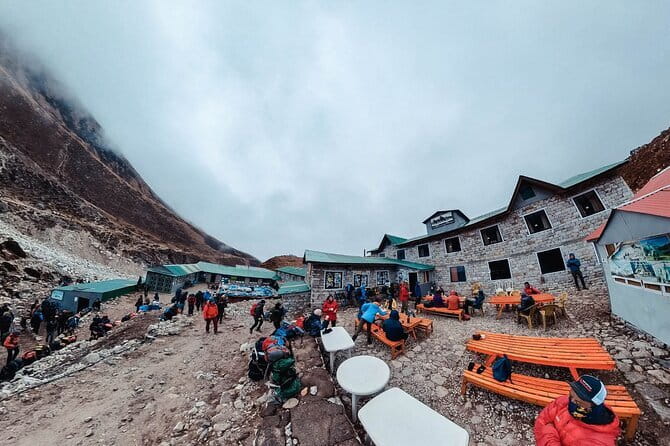
Day 3 moves you out of the river-and-forest zone toward the first major hub: Namche Bazaar. The route runs through rhododendron and magnolia forests, then pushes toward Toktok at 2,760 m. After that, you work toward Monjo, including crossing two bridges (including a crossing from the Bengkar area listed around 2,630 m).
This is a classic “start climbing gently, then keep going” day. You’re not at extreme altitude yet, but the walking rhythm is what prepares you for the higher days. I like that this route gives you a sense of progress without jumping straight into the steepest sections.
When you reach Namche, you’re also arriving at a place where altitude is felt more than you’d like. That leads directly into a rest day, which is the real strategy of the itinerary.
The Namche pause (plus the airstrip jump): acclimatization with a view
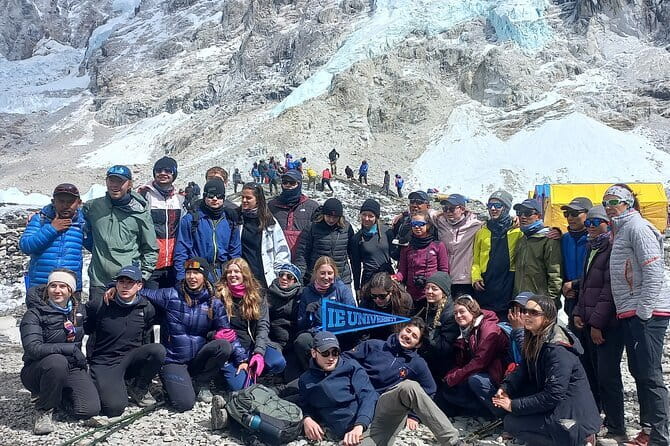
Day 4 is a rest day in Namche Bazaar so your body can adjust. Then you take a route up via the Syangboche Airstrip to reach the Everest View Hotel. That’s not just a scenic detour. It’s a controlled way to get higher without wrecking yourself with extra hours on foot.
You’re getting the benefit of altitude exposure while still keeping the day manageable. This is the moment where you’ll learn whether your body is adapting well. Even if you feel fine, you’ll want to keep your effort easy and your hydration steady.
If you’re the kind of person who gets restless on rest days, this plan still gives you something to do: a short, purposeful ride up for views, then back to recover.
Kyangjuma to Tengboche: working your way toward the steeper edge
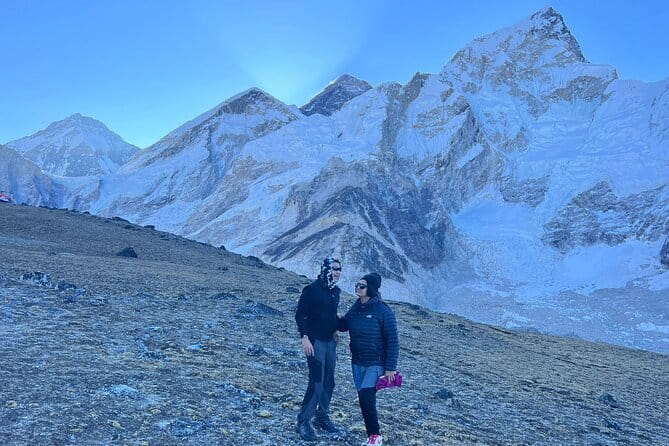
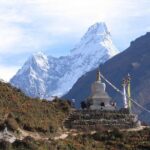
Day 5 takes you from Namche onward to Kyangjuma at 3,550 m. The description highlights green foothills and mountain views along the way, with the trail winding uphill before dropping again toward the next village stop. This is where the trekking starts to feel more like a “real climb,” because you’re now stacking altitude in a more direct way.
Day 6 then focuses on Tengboche and sunrise. You’ll set out early to see the morning sky over the peaks, then you descend through rhododendron forest to Deboche at 3,320 m. The itinerary also notes you might see musk deer and blue sheep along the route.
This is an important transition day. You’re still walking in forests and familiar valleys, but you’re moving closer to the higher, more remote sections where weather and visibility can change fast. The sunrise start also matters because it trains you to walk while you’re cold and oxygen-thin—early mornings are a big part of Everest.
You can also read our reviews of more tours and experiences in Kathmandu
Above Dingboche: where the route gets remote and the pace matters most
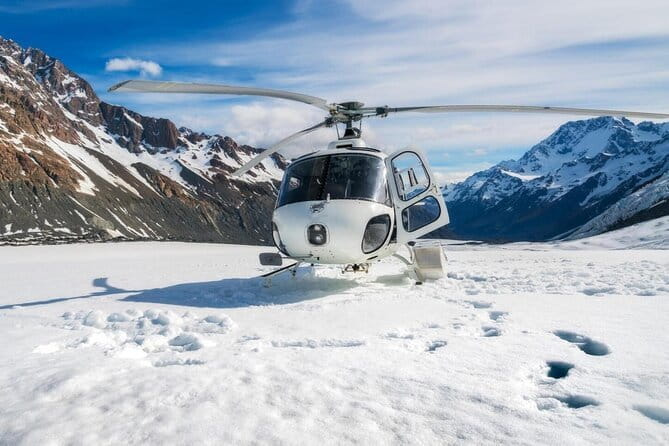
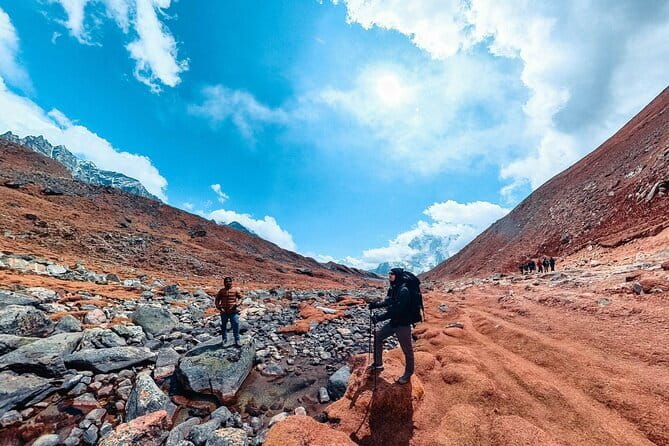
Day 7 is the day you shift into the “more rugged, more serious” part of the trek. The itinerary has you walking along the Khumbu Glacier for most of the day. After leaving Dingboche, you climb through a ridge, then the trail continues with gradual effort up.
The notes also call out views of Cholatse and Tawache, which helps break up the monotony of focusing on step rhythm. When you’re tired and altitude is doing its thing, it’s easy to stare at your boots. Having peak names in your head (and knowing what you’re looking at) can keep you mentally engaged.
This is the day where your guide’s pacing matters. If you go too fast here, you’ll feel it later. If you go steady, you’ll arrive with more margin.
Gorak Shep: the big “final approach” staging area
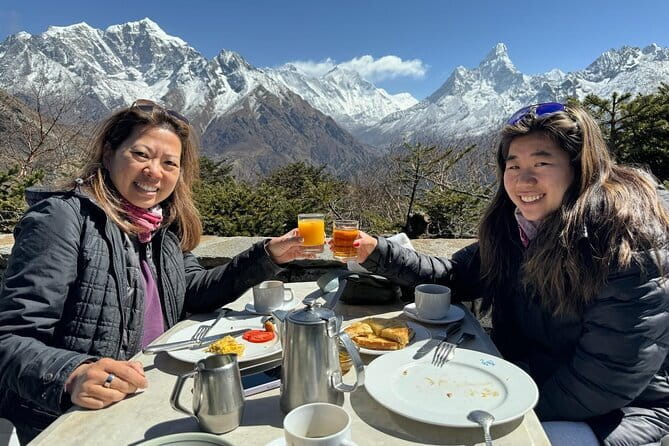
Day 8 is a long walking day. You leave Lobuche and follow a wide valley up to Gorak Shep. The path becomes steeper as elevation increases, and the itinerary notes rocky terrain and a more demanding grade.
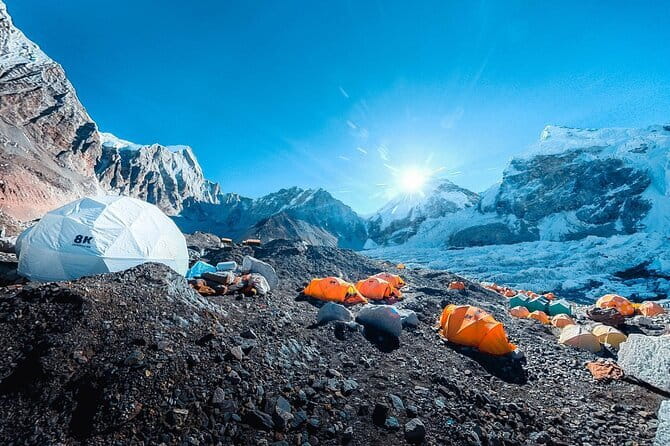
Gorak Shep is not the finish. It’s the base camp staging area for the peak viewpoint day. That means you’ll want to treat this day like preparation, not a victory lap. Eat well, hydrate, and plan your energy for early on Day 9.
I also like that this itinerary keeps you on the classic rhythm: reach the high staging area, then do the sunrise-style viewpoint the next morning.
Kala Patthar (5,644 m): the viewpoint day that justifies the whole trip
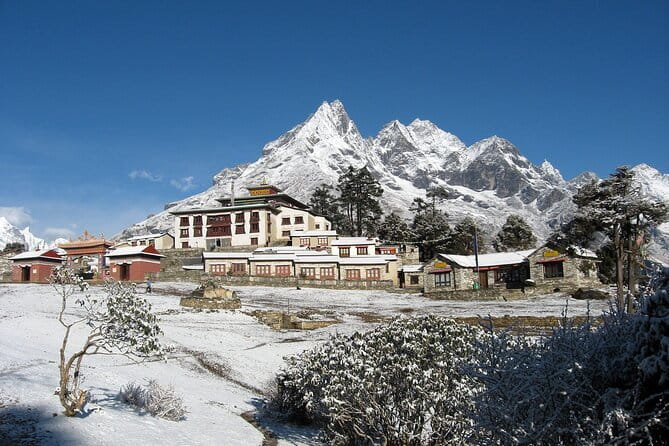
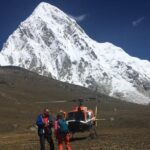
Day 9 starts with Kala Patthar. You can’t leave the Everest area until you’ve seen the view from this famous vantage point. The trail is described as well-used but easy to follow, starting above Gorakshep. Since the itinerary also mentions early sun golden rays, you can expect an early wake-up and a cold start.
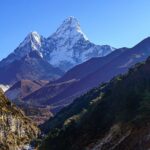
Kala Patthar is your payoff because it gives you a high-angle look at the Everest region. It’s the moment most people want: not just “seeing Everest,” but seeing Everest in a wider, more dramatic frame.
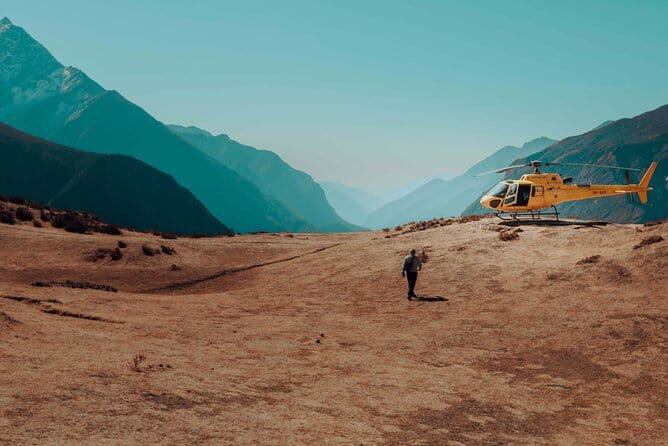
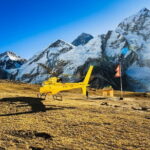
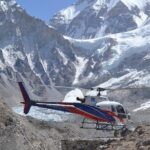
Then the plan shifts from walking to flying. The included helicopter flight is from Gorakshep to Lukla. So after you finish your viewpoint day, you transition quickly from high altitude to the return route.
The helicopter return is the signature of this trek. It’s also where the earlier days pay off: if you arrive to Day 9 with enough energy to hike Kala Patthar, you’ll feel like the helicopter is a reward instead of a distraction.
Price and logistics: what your $3,888 covers (and what it doesn’t)
At $3,888 per person, this isn’t a budget trek. You’re paying for altitude logistics that are hard to DIY safely: flights into Lukla, expert guiding, built-in health checks, and the helicopter segment that replaces multiple trekking days.
Here’s what’s included, in plain terms:
- Private car transfers in Kathmandu (airport to hotel and back)
- Flights Kathmandu to Lukla (and the overall Kathmandu-Lukla-Kathmandu flight arrangement is listed)
- Helicopter from Gorakshep to Lukla
- An experienced guide (with salary, food, drinks, lodging, transportation, and insurance covered)
- First aid kit and oximeter monitoring twice daily
- Permits and official fees handled for the trekking route
- Porter support: one porter for two people
- Meals included on the trek: 8 breakfasts, 8 lunches, 8 dinners
- Trip completion certificate
- Mobile ticket
What’s not included is also clear, and you should factor it into your real cost:
- Your visa and your travel/medical insurance
- International airfare
- Lunch and dinner in Kathmandu
- Tips for guide, porter, and driver (tipping is expected)
- Tea-house extras like desserts, plus drinks on the trek
- Hot showers and charging your phone in tea houses (listed at about $2 to $5)
Value check: you’re essentially buying time, safety structure, and reduced travel fatigue. If you want Everest, but your schedule is short, the helicopter return makes this trek more realistic than longer alternatives.
What to expect day to day, in trekking terms
This trek is built for steady movement with a few “reset” moments.
- Days 3 to 4 teach you altitude pacing: forests, bridges, and Namche, then a rest day plus a higher viewpoint ride.
- Days 5 to 7 increase effort: Kyangjuma and Tengboche bring you higher; the Khumbu Glacier day is where the trek feels more alpine and more exposed.
- Days 8 to 9 are about finish-line energy: Gorak Shep prepares you for Kala Patthar, and then the helicopter compresses the exit.
One note I think you should take seriously: the itinerary description says the trail becomes more remote and steep above Dingboche. That means it’s not just about height. It’s about exposure and sustained climbing on a route that doesn’t feel “busy.”
Who this Everest helicopter-return trek is ideal for
This is a good match if:
- You have limited time and still want the Everest Base Camp area experience
- You can handle a moderate trek with altitude exposure
- You prefer a guided plan that handles permits, flights, and day-to-day routing
- You want safety monitoring with oximeter checks twice daily
It may not be ideal if:
- You want lots of unplanned flexibility (extra nights to adjust your pace, long side detours, and slow wandering)
- You know you struggle at altitude even on shorter climbs
- You’re hoping the helicopter means the trek is easy. It’s still a real high-altitude walk for 7 full days in the mountains.
If you fall into the “unsure” category, talk with your medical provider before you go and be honest with your guide about how you feel each day.
Should you book this 9-day Everest Base Camp trek with helicopter return?
If your goal is a serious Everest experience with a tight schedule, I’d lean yes. The combination of guided pacing, permit handling, oximeter monitoring, and a helicopter exit from Gorakshep makes this one of the more practical ways to do Everest without turning the trip into a month-long project.
I’d hesitate only if you’re dealing with altitude limitations or you need a lot of extra time to recover between hiking days. In that case, a longer acclimatization-focused route might suit you better.
If you do book, pack smart, go slow above Dingboche, and treat Kala Patthar as a priority. Do that, and the helicopter return will feel like a well-earned shortcut instead of a compromise.
FAQ
What is the duration of the Everest Base Camp trek with helicopter return?
The trek is about 9 days, with 7 full days spent in the mountains and a helicopter return on the last day.
Where does the trek start and how do you get there?
You’re in Kathmandu at the start, with private car pickup from the airport. The next major transport step is a flight from Kathmandu to Lukla.
How does the helicopter part work?
The helicopter flight is included from Gorakshep to Lukla, after the Kala Patthar viewpoint day.
How difficult is the trek?
The itinerary describes the Everest Base Camp trek with helicopter return as having moderate difficulty, and it’s recommended for travelers with moderate physical fitness.
Is there altitude or health monitoring during the trek?
Yes. The package includes a first aid kit and an oximeter to check pulse, oxygen saturation, and heart rate twice a day.
What meals are included?
The trek includes 8 breakfasts, 8 lunches, and 8 dinners.
What’s not included in the price?
Not included are Kathmandu lunch and dinner, visa, your travel and medical insurance, international airfare, personal expenses, drinks/desserts, and tea-house extras like hot showers and phone charging (about $2–$5).
Do I need to tip?
Tipping is expected for the guide, porter, and driver.
Can I get a full refund if I cancel?
You can cancel up to 24 hours in advance for a full refund. If you cancel less than 24 hours before the start time, you won’t get a refund.