REVIEW · KATHMANDU
Everest Base Camp Helicopter Tour Stop at Hotel Everest View.
Book on Viator →Operated by Welcome Nepal Treks P.ltd · Bookable on Viator
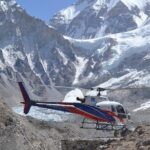
Everest Base Camp in a helicopter is a big gamble. The reward is a fast, high-altitude view of Everest country without trekking for weeks, plus a stop at Hotel Everest View if the weather cooperates. I like the way the operation builds in window-seat time for the key Base Camp portion, and I also like how smooth the early coordination feels when you’re picked up and taken straight to the airport. The main drawback to plan around is that this is a weather-dependent flight, so you may wait or shift dates.
You’re looking at a day that starts early and moves quickly. From the Kathmandu side, you get a flyover over the Base Camp area viewpoint, then the route continues via regional air connections that keep the whole trip in the 4 to 6 hour window. If you’re time-crunched, this is one of the clearest ways to “see Everest” without paying with your legs for weeks.
This tour uses a helicopter setup designed for group flying, usually around 5 to 6 passengers plus a pilot. And if your group size is bigger, they use a clever splitting approach at Pheriche to help protect your odds of getting the best seats for the Base Camp views.
In This Review
- Key things I think you’ll notice right away
- Why a helicopter to Everest Base Camp makes sense for a short Nepal trip
- 5:15am hotel pickup: what your morning schedule really looks like
- Group flying on a helicopter: the seat strategy that matters
- From Kathmandu: the Valley flyover that sets the tone
- Tenzing-Hillary Airport fuel stop: quick, expected, and part of the plan
- Pheriche splitting stop: why this is the “photo moment” logistics
- The Everest Base Camp flyover: what you can actually see
- Khumjung landing and Hotel Everest View: the hour that turns a flight into a stay
- The return to Kathmandu: Lukla or direct, based on fuel
- Price and value at $1,980 per person: what’s included, what’s extra
- Packing for cold cabin air and sub-zero viewpoints
- Who should book this helicopter day—and who should skip it
- Should you book? My practical recommendation
- FAQ
- What time does the tour start?
- How long is the Everest Base Camp helicopter tour?
- Do I get hotel pickup and drop-off?
- Is breakfast included at Hotel Everest View?
- What are the national park and municipality fees?
- Do I need to bring my passport?
- What happens if weather prevents the flight?
- How many people are on the helicopter?
Key things I think you’ll notice right away
- 5:15am start with hotel pickup by car: You’ll be out early, but the logistics are handled for you.
- Group helicopter flying (usually 5–6 passengers): Less hassle than private-only touring, but still focused on your view.
- Pheriche splitting for window seats: Two people fly first, then three, so the Base Camp portion can feel more personal.
- A real Hotel Everest View landing (weather permitting): About an hour at the hotel area, not just a pass-through.
- Fuel stop at Tenzing-Hillary Airport: Quick, but it’s part of why the flight can work reliably.
- Oxygen cylinder and in-flight life insurance: Reassuring safety add-ons for a helicopter day.
Why a helicopter to Everest Base Camp makes sense for a short Nepal trip
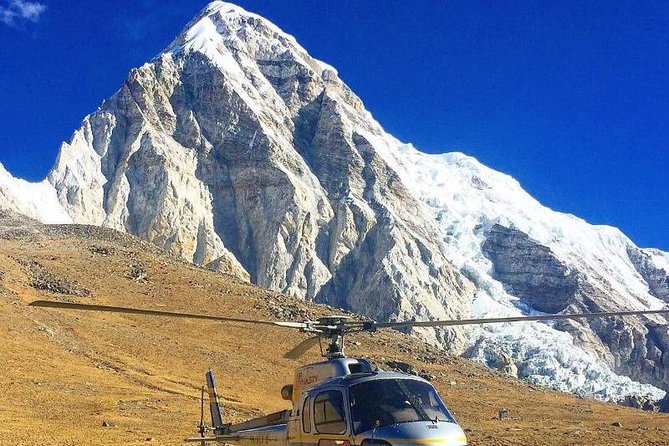
If you only have a few days in Nepal, an Everest Base Camp trek can feel like planning a marathon on a short calendar. This helicopter tour is the shortcut that still gives you the real “Everest Base Camp” idea: you’re looking at the region from the air, then getting a chance for close-up viewpoints and photos from the important angles.
The other big advantage is time. You’re not spending days walking from place to place, dealing with altitude progression, or rearranging your whole itinerary around weather delays. Instead, you’re spending a tight half-day with a defined flow, usually 4 to 6 hours total, with round-trip transfers taken care of.
That said, you’ll trade trekking-time for flight-time stress. Your biggest variable is weather, and there’s no way around the fact that mountain flying depends on visibility. If you want the highest chance of success, plan this near the start of your stay so you have backup days.
You can also read our reviews of more tours and experiences in Kathmandu
5:15am hotel pickup: what your morning schedule really looks like
The day starts early. The listed start time is 5:15am, and you’ll be collected from your hotel and driven to the airport area for the flight.
Because the tour runs on a tight schedule, you’ll feel it in your body even if you’re fit. This is not a “sleep in and stroll” kind of outing. Bring warm layers and make sure you can move quickly when the pickup arrives.
One practical note: you should share your hotel name the day before the flight. That matters because the pickup depends on your exact location, and you don’t want last-minute confusion before a 5am departure.
Group flying on a helicopter: the seat strategy that matters
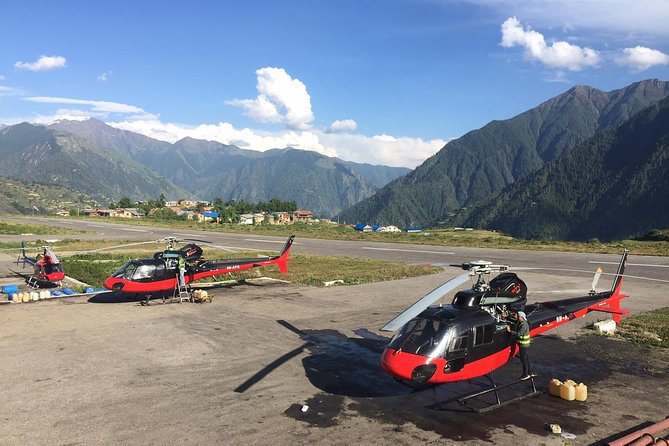
This is a shared operation. You’ll join a group flight, typically with 5–6 passengers and a pilot. There’s a firm maximum of 15 travelers for the overall experience, which helps keep the day from turning into total chaos.
The most useful detail for you—especially if photos matter—is the way they manage seats. If there are more than three passengers flying together, there’s a Pheriche splitting plan: two people fly first, then three. The goal is to help guarantee window seats for that Everest Base Camp portion only, which is when you actually want to film and shoot.
Also, be ready for the helicopter ride to be physical in a different way than trekking. You’ll be seated for long stretches, and you should plan around cold airflow and the vibrations that come with small aircraft.
From Kathmandu: the Valley flyover that sets the tone
The first part of the flight starts from Kathmandu airport and aims to get you quickly into the “Everest picture.” You’ll fly over the highest viewpoint of the Base Camp area, giving you a sense of scale before you even reach the core region.
You’re also going to feel Kathmandu’s geography drop away as the flight climbs into the Himalayan terrain. Even if you’ve seen photos online, the altitude and the geometry of ridgelines hit differently from the air—especially when visibility is clear.
A neat point in the routing: the flight continues toward Lukla airport by helicopter after that viewpoint flyover. This is one reason the tour works as a half-day rather than an open-ended adventure. The route uses known regional air points to manage the whole loop.
Tenzing-Hillary Airport fuel stop: quick, expected, and part of the plan
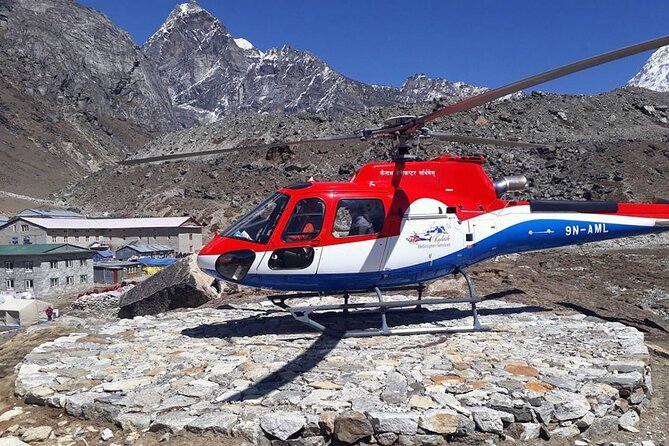
There’s a short stop at Tenzing-Hillary Airport for fuel. The timing is brief—about 10 minutes—but it’s not random. Fuel stops are part of how helicopters stay within operating limits while serving a multi-stop route.
Think of it as a reset for the crew and the aircraft, not a scenic detour. Your best move is to use the pause to get your camera ready and keep yourself warm, because even when you’re inside the cabin, you’ll still feel the cold as the aircraft cycles.
This is the kind of stop that separates well-run helicopter operations from the ones that feel sloppy. The value here is that the day keeps moving without turning into a long waiting game.
Pheriche splitting stop: why this is the “photo moment” logistics
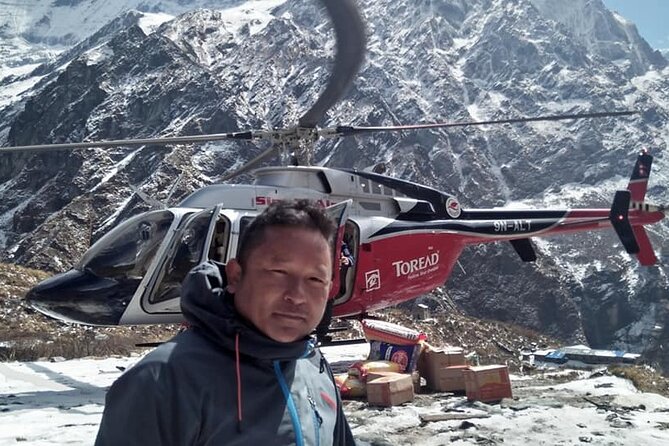
After the fuel stop, you’ll reach Pheriche for another brief stop, around 20 minutes. This is where the tour’s seat strategy kicks in.
If more than three passengers are flying together, the operator may split the group so that two passengers fly first and then three, with the aim of giving you better odds at window seats for the Everest Base Camp portion. If you care about filming through the whole run, this is one of the smartest details in the entire experience.
There’s also a practical reality: helicopter cabin time is valuable. A clean seating plan reduces frustration, so you spend less time negotiating where you’re sitting and more time watching for the exact ridges and valleys that line up with Everest.
The Everest Base Camp flyover: what you can actually see
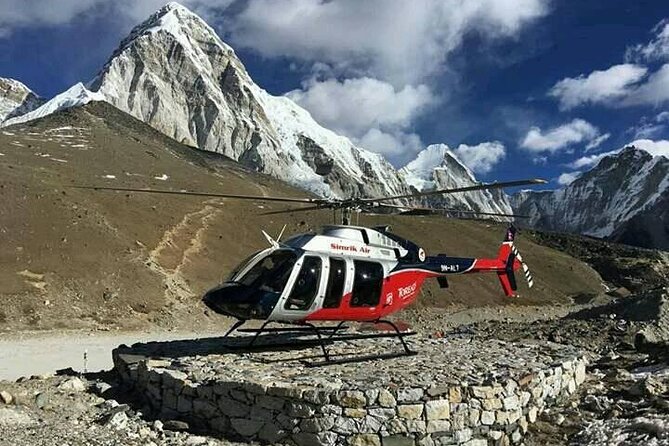
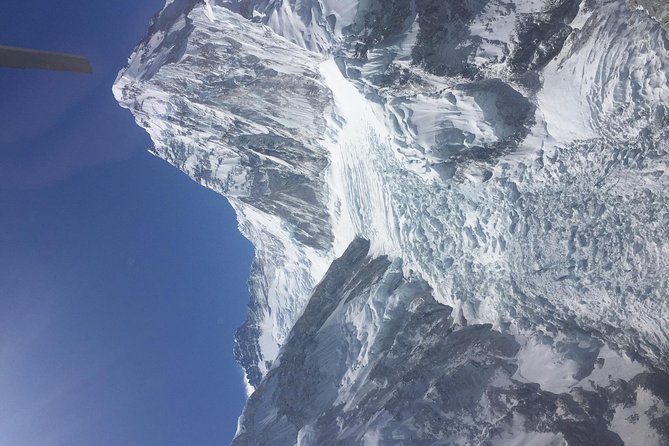
This is the part you came for: the flyover that gives you the best overall look at the Base Camp area and the big peaks around it.
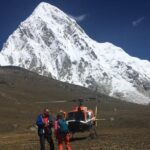
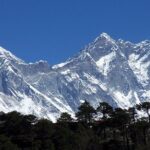
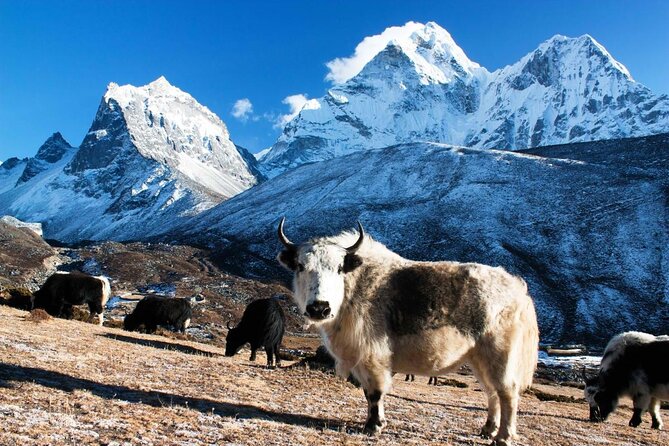
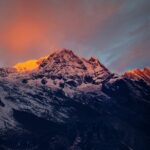
From the air, you’ll get views of Mount Everest along with other major surrounding giants. The route highlights Mount Pumori, Lhotse, Nuptse, and additional peaks in the area. In practice, you’re not just looking at one mountain—you’re seeing how the massif anchors the entire region.
They specifically recommend using the flight for videos and photos, and I agree. In this kind of cabin setup, the best shots often come from short bursts when visibility is clean. So have your phone or camera ready before you reach the key area, not halfway through.
One more reality check: if clouds roll in, you may not get the same visual intensity. The tour is clear that flying depends on a nice day, so your best “control” is choosing when to schedule it.
Khumjung landing and Hotel Everest View: the hour that turns a flight into a stay
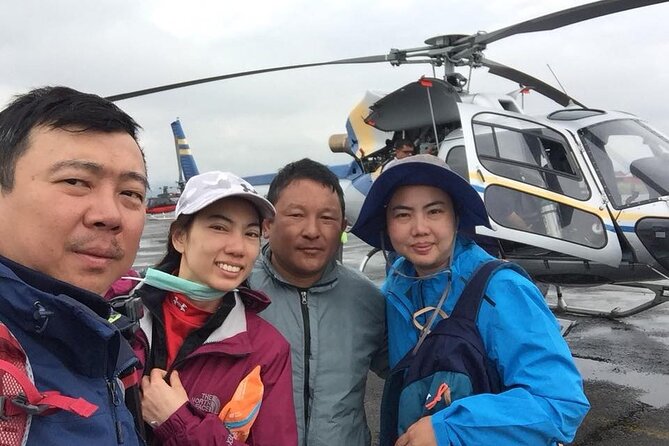
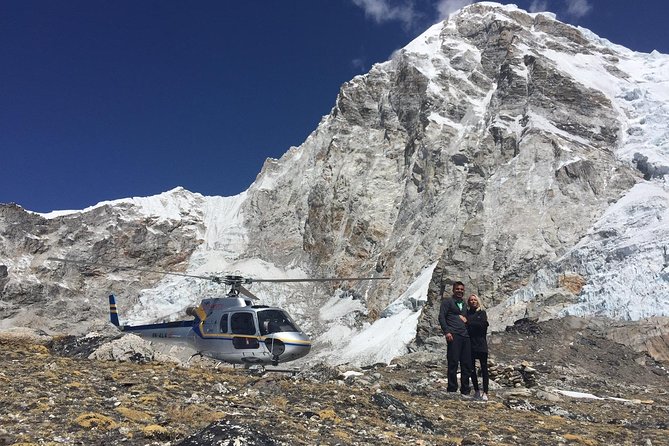
At the Khumjung landing area, there’s a chance for a true “on the ground” moment: Hotel Everest View, subject to weather. Typically you get about one hour here.
This is one of the best value-adds because it breaks up the ride. Helicopter tours can feel like a blink, but a hotel landing gives you time to regroup and look outward more slowly than from inside a cockpit.
There’s also a breakfast option. They mention a set breakfast at USD 31 per person, and it’s weather-dependent whether you can do this. If you’re the kind of traveler who hates missing meals on important days, it’s worth having the cash ready—at least mentally—for that optional add-on.
Even if you skip breakfast, the key is the change of pace. You’ll get a chance to enjoy the area around Hotel Everest View rather than only watching it through glass.
The return to Kathmandu: Lukla or direct, based on fuel
On the way back, you’ll fly from the Base Camp region to Kathmandu, with routing influenced by fuel and flight conditions. You’ll often land again at Hotel Everest View, then continue back toward Kathmandu.
The operator notes that the captain can choose to route via Lukla or go more directly, depending on the fuel situation. Either way, you’re looking at about one hour for the return flight portion.
This is another reason to keep your day flexible. You’re not on a fixed-schedule train; you’re on a mission flight where the captain adjusts for real-world conditions. If you have a tight dinner reservation right after this, build a buffer.
Price and value at $1,980 per person: what’s included, what’s extra
At $1,980 per person, this isn’t cheap. But the cost starts making more sense when you map it to what you’re buying: speed, access, and the logistics package.
Here’s what’s included:
- Round-trip transfer by car from your hotel and back after the flight
- The helicopter flyover trip in a shared group (with 5–6 passengers and a pilot)
- Multiple landing points and scenic viewpoints
- 13% government VAT and helicopter fuel surcharges
- Landing at Hotel Everest View for about one hour
- Oxygen cylinder for emergency use
- Life insurance during the helicopter flight
- Government taxes and office service charges
What’s not included:
- Food and drinks, with an optional set breakfast at Hotel Everest View for USD 31 depending on weather
- National park entrance fees and municipality entry fees: listed as USD 50 / NPR 6000 per person, paid locally
So the value story is mostly about how much the price covers: transport, taxes, fuel surcharges, and safety coverage, plus the landing time that makes it more than just a “fly past” experience. What you should watch is the local fees and the breakfast cost if you decide to do it.
Packing for cold cabin air and sub-zero viewpoints
You’ll need warm clothing even though this is a helicopter day. The operator calls out cold temperatures and recommends bringing warm dress for conditions that can reach around -5°C in summer and -10°C in winter for higher points, plus guidance to bring a warm jacket for around -8°C in winter, 0°C in summer, -2°C in spring.
In real life, that means: layers you can peel, a warm jacket, gloves, and something to cover your ears. You’ll be seated, moving less than you would on a trek, so your comfort depends on what you wear before you get on the aircraft.
Also check your luggage habits. Don’t plan on bringing big bulky items you can’t hold. The tour’s focus is the cabin and the short landings, not a day of wandering with a backpack.
One more practical constraint: there’s a total weight limit of 221 lbs per passenger.
Who should book this helicopter day—and who should skip it
This tour is a strong fit if:
- You have limited time in Nepal and can’t do a long trek
- You want a high-impact Everest region view without trekking logistics
- You’re okay with an early morning start and a weather-dependent schedule
- You care about getting window seats during the Base Camp portion (the Pheriche split helps)
It may not be the right fit if:
- You’re traveling with a stroller (not accessible)
- You’re planning to bring a pet (not suitable)
- You dislike contingency planning. If the flight can’t run due to poor conditions, the operator provides a different date or a full refund when cancellations happen for weather reasons.
The operator also flags a moderate physical fitness level as the expectation. You’re not hiking, but the day does involve getting up early, moving through the airport, and riding in a small cabin.
Should you book? My practical recommendation
If your goal is to see Everest without spending a couple of weeks hiking, I’d seriously consider this. The combination of a fast schedule, safety add-ons like oxygen and in-flight life insurance, and the chance for a Hotel Everest View landing makes it feel like a real experience, not just a quick sightseeing hop.
I’d book it earlier in your trip, not on your last full day. The flight runs only on a nice day, and you’ll want a backup option if visibility isn’t there.
One final check: this is priced high because it’s a helicopter operation, but much of that cost is wrapped into taxes, fuel surcharges, and the transport package. Before you confirm, mentally budget the local park/municipality fees and decide if you want the optional Hotel Everest View breakfast.
If you want the best shot at photos and zero stress, go with a clear-weather window, dress for cold immediately, and treat the day like a flight mission. Do that, and you’ll come away with real Everest country memories.
FAQ
What time does the tour start?
Start time is listed as 5:15am.
How long is the Everest Base Camp helicopter tour?
The duration is listed as 4 to 6 hours (approx.).
Do I get hotel pickup and drop-off?
Yes. The tour includes round-trip transfer from your hotel by car and return after the flight.
Is breakfast included at Hotel Everest View?
Breakfast is not included. A set breakfast for USD 31 per person is optional and depends on weather for the Hotel Everest View landing.
What are the national park and municipality fees?
You’ll pay locally: USD 50 / NPR 6000 per person for national park entrance fees and municipality entry fees.
Do I need to bring my passport?
You don’t need the original passport. A passport copy works, and a photo on your phone is acceptable.
What happens if weather prevents the flight?
If the flight is canceled due to poor weather, you’ll be offered a different date or a full refund.
How many people are on the helicopter?
This is a joining group trip, usually 5–6 passengers plus a pilot, and the maximum for the experience is 15 travelers.