REVIEW · KATHMANDU
Everest base camp flight over by Helicopter from Kathmandu
Book on Viator →Operated by Himalaya Holiday service Pvt. Ltd.(HHS) · Bookable on Viator
Everest looks huge from a plane window. This helicopter outing gives you time-saving access to the Everest region, with a quick hop that’s measured in minutes, not days. I really like the Kalapathar landing for photos, where you actually get out and look around instead of just flying past. One thing to weigh: it’s not a soft, cushy experience, and you’ll also have extra local costs (like the park fee) on top of the tour price.
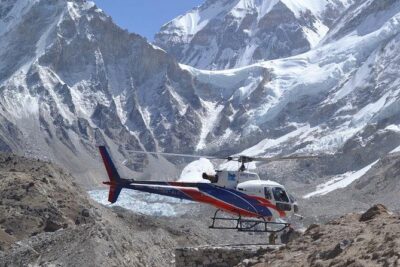
You start early in Kathmandu, get picked up by car/van, and ride in a group of about 5–6 people on an Eurocopter 350 B3. The flight is short—around 3 to 4 minutes—but it’s built around the best sightlines you can get without trekking.
In This Review
- Why this helicopter ride is worth your morning
- Key things to know before you go
- Kathmandu to Kalapathar: what you’re actually buying
- The early-morning rhythm (and why it matters)
- The helicopter ride: quick, shared, and focused on sightlines
- What the Kalapathar landing feels like (the photo payoff)
- Base Camp is a fly-over here—why that still works
- The Syangboche Marg stop and optional breakfast views
- Price and value: what $1,598 actually covers
- Safety, weather, and the day’s flexibility
- The human factor: dealing with Buddhi (and why I care)
- What to bring and how to dress (short flight, cold reality)
- Who this is for (and who should skip it)
- Should you book Everest Base Camp by helicopter?
Why this helicopter ride is worth your morning
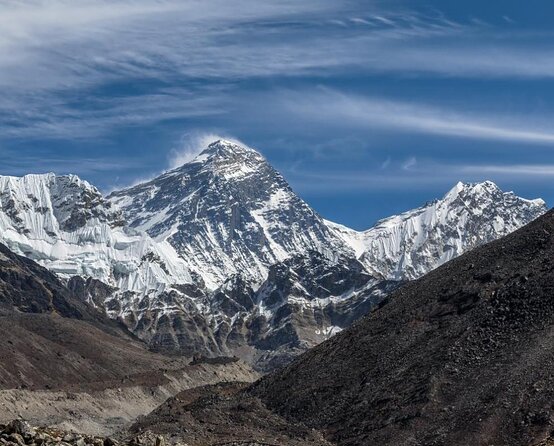
I love that this feels like a practical “yes, you can do Everest” option when your schedule doesn’t allow a long trek. You also get a bonus window at Syangboche Marg / Hotel Everest View if you add breakfast (it’s optional, and it’s a paid add-on). The main drawback is weather-driven variability: this experience requires good conditions, and your timing can change if winds or clouds move in.
Key things to know before you go
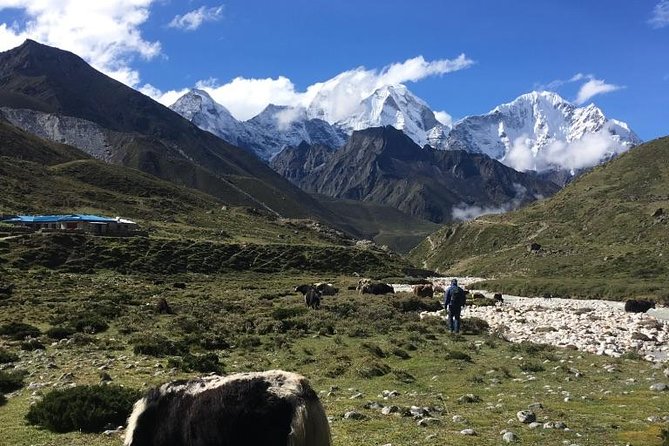
- Kalapathar landing is the big moment: you land briefly (about 10 minutes) to take photos and get a close look
- Base Camp is mostly a fly-over: there’s a section where you fly over Base Camp without landing
- You can add breakfast with mountain views for an extra $32 at the Everest View hotel stop
- Local park fees apply: you’ll pay NPR 7000 per person for the national park and municipality fees locally
- Weight limit matters: total passenger weight per person is listed as 276 lbs
- Group flight keeps it shared: expect 5–6 people per helicopter flight
You can also read our reviews of more tours and experiences in Kathmandu
Kathmandu to Kalapathar: what you’re actually buying
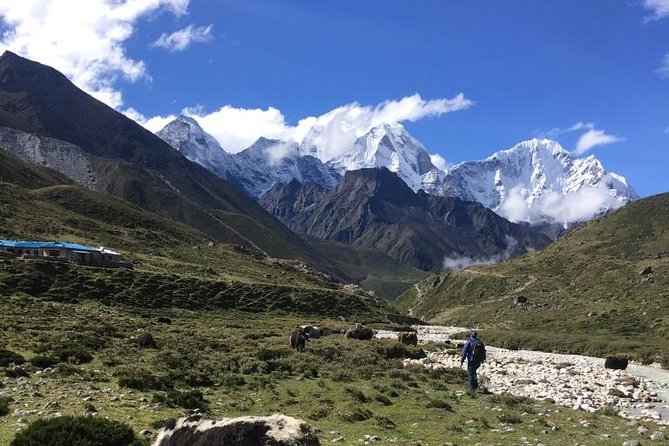
This is a helicopter experience designed for one goal: giving you an Everest-area view that feels close enough to be real, without the multi-week commitment of a trek. You’re paying for seat-time in a helicopter and for the operational time that makes it possible—airport transfer, coordination, and the landing window at Kalapathar.
At $1,598 per person, it’s not cheap. But the value logic is pretty clear: a long Everest trek can cost more once you add flights, guide/porter services, permits, and time off work. This is the opposite trade—pay more for speed. If your goal is to see Everest up close and you’re short on time, this is one of the most direct ways to do it.
Just don’t confuse “short flight” with “short experience.” The day is still structured around multiple stops—pick-up, transfers, fueling and flight routing, a photo landing, and a scenic hotel viewing stop.
The early-morning rhythm (and why it matters)
Your start time is 6:00 am, and you’ll get hotel pick-up in Kathmandu and a drive to the heli portion of the day. The morning timing matters because clear skies are more likely earlier, and the window for good visibility can be tight in the Himalaya.
In practical terms, you should plan for a day that starts fast. Be ready to move quickly: there’s transfer time, a fuel stop, and you’ll want to be prompt so you’re not stressed when the helicopter schedule tightens.
One of the reviews also pointed out that timing can shift due to flight delays and weather. That’s normal in mountain aviation—if winds or cloud layers change, operations adapt. The best mindset is to treat this as weather-smart, not clock-attached.
The helicopter ride: quick, shared, and focused on sightlines
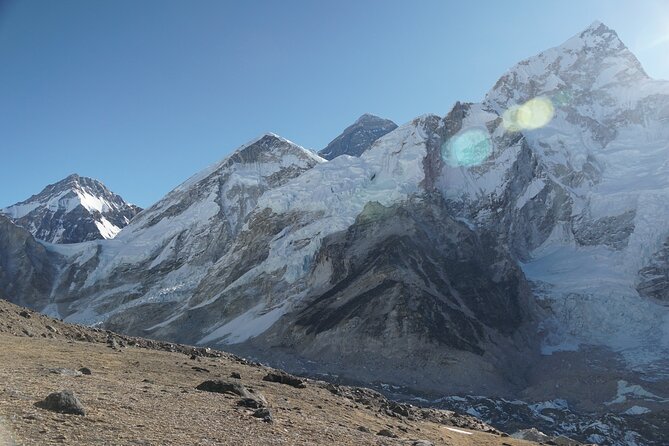
You’ll fly on a Eurocopter 350 B3. The flight is shared: 5–6 people per flight, which is part of how this stays priced in the “tour” category rather than a private charter.
The flight time is listed as 3 to 4 minutes, and the itinerary is built around what you can see in that brief window. There’s even a quick stop for fuel before the main flying segments. You’ll also have:
- a fly-over of Base Camp where you won’t land, and
- a landing at Kalapathar specifically for photos.
Think of it as a short aerial highlight reel, with one crucial difference: landing at Kalapathar means you get a moment on the ground, not just another view through glass.
Also note the weight limit: 276 lbs total per passenger. If you’re near the limit, it’s smart to confirm fit early so there are no surprises on the day.
What the Kalapathar landing feels like (the photo payoff)
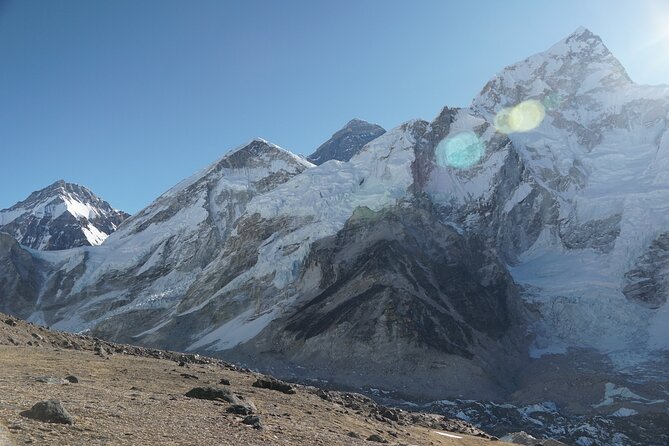
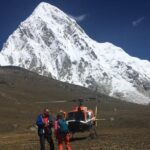
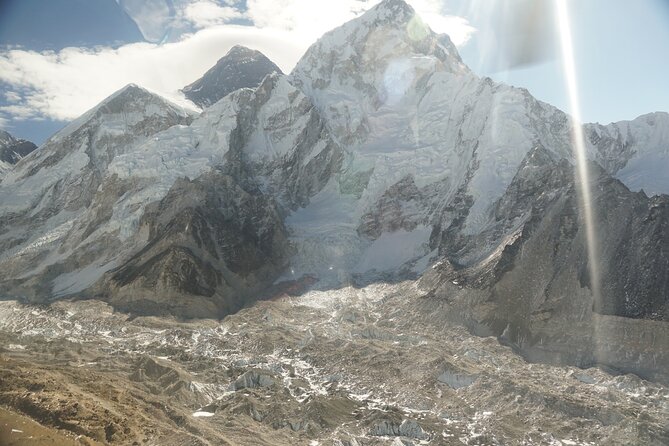
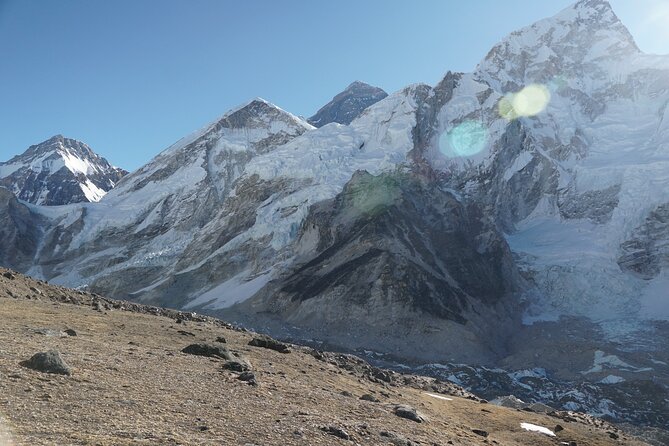
Kalapathar is where this experience earns its keep. You’ll land for about 10 minutes, disembark, and take photos. Ten minutes sounds short—because it is—but it’s the most valuable kind of short: you’re on the spot where the perspective is the point.
This landing also changes your “mental picture” of Everest. A fly-over is thrilling, but your brain still treats it like scenery. A brief step outside the aircraft tells your body, yes, we’re here. The mountain scale hits differently when you’re standing closer to the viewpoint.
One more thing: this is not described as wheelchair accessible, so you should plan accordingly if mobility is an issue.
Base Camp is a fly-over here—why that still works
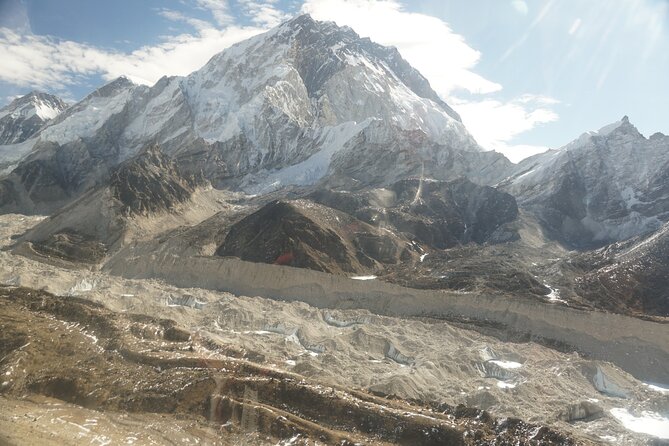
You will see Base Camp, but you don’t land there. The itinerary calls out a segment where you only fly over Base Camp. That might feel like a compromise if your fantasy is boots-on-Everest-Base-Camp.
Still, it can make sense operationally. The best compromise for a helicopter format is to use Base Camp visibility for the view, then save the landing opportunity for Kalapathar, where a short ground moment delivers the strongest “I was there” payoff.
So if your top priority is a dramatic photo and a step outside the helicopter, Kalapathar is the win. If your priority is standing exactly at Base Camp, this particular ride won’t match that expectation.
The Syangboche Marg stop and optional breakfast views
After the flight segments, there’s a stop in the Syangboche Marg area at Hotel Everest View for about 1 hour. This is where you can add breakfast with mountain views for $32 (paid separately on the ground).
Breakfast here isn’t included, but it’s a smart add-on if you want your morning to feel complete. You get a warmer, steadier experience between the helicopter moments—something less rushed and more “sit, look, and absorb.”
Even if you skip breakfast, this stop is still useful for cooling down and getting your bearings after the helicopter portion. It’s also a good time to compare what you saw from the air versus what you can see from a hotel viewpoint.
Price and value: what $1,598 actually covers
Let’s break down the value in plain terms.
Included:
- Hotel/Airport pickup and drop-off by car/van
- Helicopter ride on Air Bus / Eurocopter 350 B3
- Group sharing flight (5–6 per helicopter)
- Tickets are handled via mobile ticket style entry
- Basic admissions shown as free on the listed stops
Not included (and this matters for your budget):
- Breakfast is $32 if you choose it
- National park and municipality fees: NPR 7000 per person, paid locally
- “All fees and taxes” are listed as not included beyond what’s clearly covered
Is it worth it? For many people, yes—because you’re paying to collapse an Everest sight mission into a single morning. You’re not buying a long guided trek; you’re buying a high-cost, high-impact aerial and viewpoint experience.
But it’s also the kind of expense where expectation management is key. If you’re chasing “value” in the budget sense, this won’t be it. If you’re chasing an Everest milestone with minimal time, the price starts to make sense.
Safety, weather, and the day’s flexibility
Helicopters in the Everest region are weather-dependent, and the experience explicitly notes that it requires good conditions. If poor weather cancels the experience, you’ll be offered a different date or a full refund.
In practice, this means you should:
- keep your schedule flexible,
- be ready for adjustments, and
- treat clarity as part of the product.
One review highlighted that monsoon season still worked on their day, but conditions like high winds can change the plan. That’s exactly why these operators emphasize coordination: they’re aiming for the best possible outcome, not a guaranteed “identical flight every time.”
The pilot also matters here. Multiple reviews praised the quality of the flight team and singled out that safety and skill were taken seriously.
The human factor: dealing with Buddhi (and why I care)
This is the part that tends to separate smooth trips from stressful ones: communication and follow-through. In the reviews, the name Buddhi Bhatta came up repeatedly. One reviewer specifically noted that Buddhi helped with practical gear planning, including renting a down jacket, and another mentioned ongoing responsiveness via WhatsApp.
That matters because your questions won’t happen only at the booking stage. You’ll want clarity on what to wear, what to bring, what weather might do, and how to handle last-minute changes.
So when you book, make sure you have one clear point of contact and that you can message them easily the night before and early in the morning.
What to bring and how to dress (short flight, cold reality)
The data doesn’t list gear requirements, but you’re going high enough in a cold mountain environment to want proper layers. Even if the helicopter flight is only a few minutes, the landing and the view stops mean you’re outside long enough for temperatures to matter.
My simple packing approach for this type of Everest-area day:
- wear layers you can add/remove fast,
- bring warm outerwear,
- have gloves for photo time,
- and protect your phone/camera battery (cold drains it quickly).
One review noted that Buddhi helped arrange a down jacket rental, which is a strong hint that people often need serious warmth on these mornings.
Who this is for (and who should skip it)
Best fit:
- You want a true Everest-area view but your time is limited.
- You’re okay paying for speed and a tightly focused experience.
- You’re willing to accept weather-driven variability.
Not the best fit:
- You want a long on-foot exploration of Everest Base Camp itself. This is a fly-over plus Kalapathar landing, not a full ground hike.
- You’re looking for a budget activity.
- You need wheelchair accessibility, since it’s not listed as wheelchair accessible.
If you’re traveling as a couple, a small group, or solo, this can still feel personal—because you’re moving as a small shared helicopter group rather than a huge busload.
Should you book Everest Base Camp by helicopter?
If your dream is Everest in your lifetime and you only have a short window in Kathmandu, I’d book—with eyes open. The Kalapathar landing is the heart of it, and the fly-over gives you the Everest Base Camp context. You’ll spend a small slice of time in the air and come away with images that feel shockingly close.
But if you’re the type who needs exact timing, dislikes paying extra local fees, or assumes Everest Base Camp means landing there, then pause and adjust expectations. This is a view-first experience, not a trekking replacement.
My quick checklist before you commit:
- Confirm you’re within the 276 lbs passenger weight limit.
- Budget for the NPR 7000 local park/municipality fee plus optional $32 breakfast.
- Plan for early mornings and possible weather shifts.
- Arrange warm layers. Cold is the unglamorous part of Everest.
Book it when you want the milestone badly enough to pay for it—and when your schedule can handle a little mountain flexibility.