REVIEW · KATHMANDU
Evening Photography Tour of Kathmandu
Book on Viator →Operated by Third Rock Adventures · Bookable on Viator
Dusk in Kathmandu turns worship into art. This private evening photo tour pairs Boudhanath Stupa with Pashupatinath, and you get a licensed English-speaking guide who helps you find the right spots and moments for photos without wandering around lost. I like that it’s built around timing, not just sightseeing.
My favorite part is the contrast: butter lamps and Parikrama at Boudhanath, then the aarti fire ritual at Pashupatinath with chanting and song. Guides such as Mr Bikash and Deepa are called out for knowing the heritage sights and how to frame what’s happening, so the result feels intentional, not accidental.
One practical drawback: dinner and bottled water aren’t included, so plan your food before or after. Also, the tour depends on good weather, so have a backup date in mind.
In This Review
- Key things to know before you go
- Evening in Kathmandu: why your photos look better at this hour
- Boudhanath Stupa: Parikrama, butter lamps, and night lighting
- Pashupatinath Temple: chanting, dancing, and fire-ritual photos
- How the private format changes the quality of your time
- Photography etiquette at temples: what to do so you feel welcome
- What to bring (and what not to count on)
- Price and value: is $102 a good deal for a night shoot?
- Timing, weather, and the small details that matter
- Who this tour is best for
- Should you book this evening photography tour of Kathmandu?
- FAQ
- What does the tour focus on?
- How long is the tour?
- Are admission tickets included?
- Do I need to arrange transportation?
- Is this a group tour or private?
- What’s included in the price?
- What’s not included?
- What if the weather is bad?
- Is it refundable if I cancel?
Key things to know before you go
- Two major religious sites at night: Boudhanath for Buddhist devotion, then Pashupatinath for Hindu ritual.
- You don’t just watch, you shoot: your guide tells you where to position for scenes like Parikrama and fire offerings.
- Admission is included: both stops come with entry included in the price.
- Private transportation from central Kathmandu: you move efficiently between areas instead of juggling routes.
- Bring only your camera and patience: it’s straightforward and focused, about 3–4 hours total.
Evening in Kathmandu: why your photos look better at this hour
If you’re used to taking pictures in daylight, Kathmandu at evening can feel like a cheat code. The light is warmer. The religious spaces glow. People slow down a bit because they’re there for devotion, not sightseeing.
This tour is designed for that exact shift. You’re photographing active moments—monks and devotees moving around the stupa at Boudhanath, then priests and devotees gathered for a Hindu ritual at Pashupatinath—so your camera isn’t stuck on empty stone. The timing also matters for comfort: you’re out for a half-day, not stretched all day in the sun.
Also, having a guide with context helps your eye. Instead of only capturing faces or buildings, you learn what you’re actually seeing—Parikrama at Boudhanath, and the structure of evening arati at Pashupatinath—so your photos tell a clearer story.
You can also read our reviews of more evening experiences in Kathmandu
Boudhanath Stupa: Parikrama, butter lamps, and night lighting
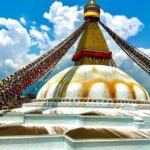
Boudhanath Stupa is one of Kathmandu’s most important Buddhist pilgrimage centers. At night, it looks extra dramatic because the stupa is lit up and decorated, and the mood turns slow and ceremonial.
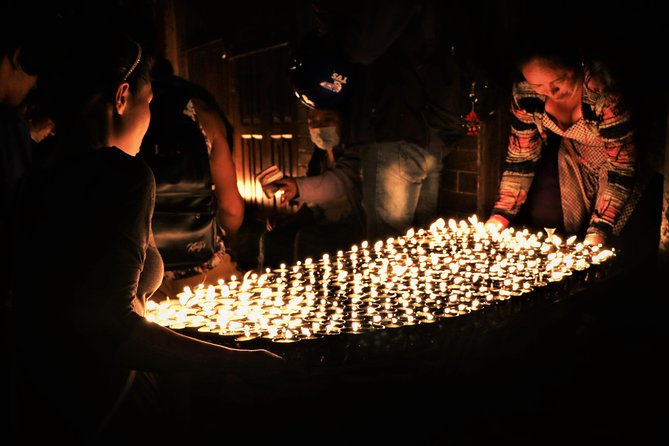
Your first stop centers on the Parikrama, the circumambulation around the stupa. This is where you’ll get motion in your photos without trying too hard. People walk with purpose. Monks and devotees pause. You’ll see offerings like butter lamps being lit, with prayers for well-being and world peace.
What I love here for photography is the layering:
- The stupa’s glowing white dome gives you a strong anchor in the frame.
- The procession gives you rhythm and movement.
- The lamps add small points of light that work nicely for both wide shots and tighter details.
One thing to consider: Boudhanath is a living place of worship. That means you’ll want to be respectful with where you stand and how you shoot. You don’t need to treat it like a photo studio. Think of it more like photographing a ceremony in progress—steady, patient, and quiet.
Pashupatinath Temple: chanting, dancing, and fire-ritual photos
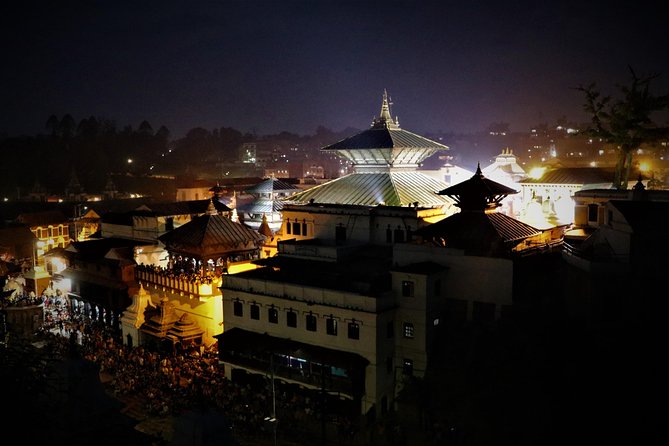
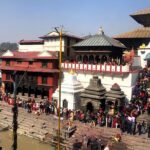
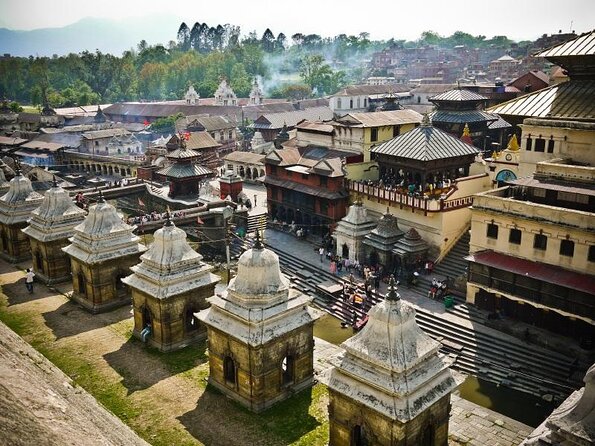
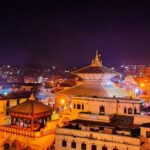
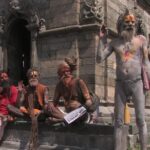
After Boudhanath, the setting changes fast. Pashupatinath is dedicated to Lord Shiva and is one of the most important Hindu shrines in Kathmandu. Evening here is when the ritual energy comes into full view.
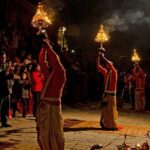
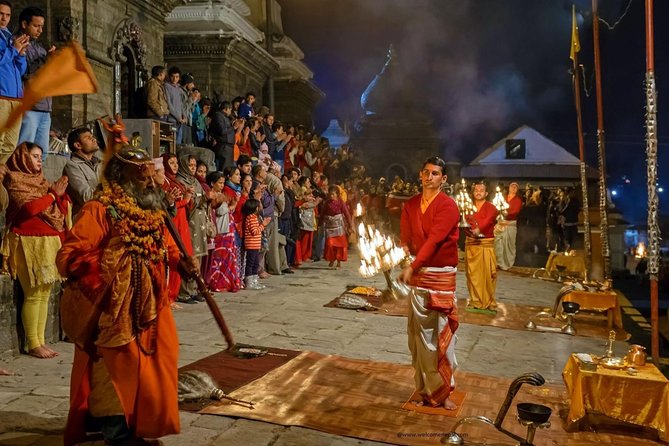
The main event is the evening arati: chanting sacred Vedic shlokas and hymns, with priests offering light from a flame to the gods. If you’re into photography, this is where low light becomes your friend. Fire rituals create a natural focal point—something bright and meaningful inside an otherwise dark scene.
The ritual atmosphere also includes song and movement, and you may see devotees dancing in trance during the arati. That matters for photos because it gives you more than a static altar moment. You can capture expressions, gestures, and the interplay between flame, faces, and temple space.
A small practical note: this is a fire ritual, so be mindful of camera settings and breathing space. Don’t block people with your gear. If the guide directs you to a specific spot, take it. That’s part of the value—knowing where the clean sightline is without turning the moment into a traffic jam.
How the private format changes the quality of your time
This is a private, half-day tour with private transportation included. That sounds like a perk, but for photography it changes everything.
With a private setup, your timing stays under your control. You’re not waiting for a big group to shuffle between viewpoints. If a scene is happening and you want one more minute for a better angle, the tour model makes that easier than in a crowded schedule where everyone has to match one pace.
It also helps you stay calm. Kathmandu has traffic. Finding your way between religious sites on your own can eat time and energy. Here, you get transport from central Kathmandu, so you spend more of the evening actually at the spots.
The tour is also built around a licensed English-speaking city guide. That matters because it’s not just directions—it’s context for what you’re photographing. When you understand what Parikrama or arati means, your photos stop being random. They become intentional.
Photography etiquette at temples: what to do so you feel welcome
You’ll get the best photos when you also behave like a guest, not a tourist with a camera attached.
Here are sensible rules that fit both stops:
- Be patient with your positioning. If people are walking in a circle at Boudhanath, don’t treat the centerline like your personal runway.
- Keep your gear close. Fewer steps, fewer distractions.
- Respect the flow of the ritual at Pashupatinath. Arati moments move fast, but they’re also sacred and concentrated—quiet attention works better than constant repositioning.
Also, remember that the goal isn’t only technical skill. It’s to capture real spiritual practice. When you’re thoughtful, you’ll often get better access to the moments themselves—because the ceremony stays intact, and you’re less likely to feel rushed.
What to bring (and what not to count on)
The tour is simple: all fees and taxes are included, and you just need your camera. Still, evening photography has a few practical needs.
Bring:
- A camera with a low-light mode or manual settings you’re comfortable with.
- Extra battery if you have one. Nights can drain power faster than expected.
- Something to keep you comfortable for 3–4 hours, since you’re outdoors between stops.
Don’t count on:
- Dinner. You’re not getting fed during the tour.
- Bottled water. That’s not included, so plan accordingly.
For timing, aim to eat earlier or be ready after. If you arrive hungry, you’ll rush your shooting, and that’s when you miss the best little details, like the flicker of a butter lamp or the exact instant the flame is offered.
Price and value: is $102 a good deal for a night shoot?
At $102 per person for about 3–4 hours, this tour can be good value if you care about photos and want to avoid logistics stress.
Here’s why the price can make sense:
- Private transportation from central Kathmandu means you’re not spending time figuring out routes or waiting around.
- Admission tickets are included for both major stops, so you’re not paying extra on the spot.
- A licensed English-speaking guide is included, plus the real value: knowing where to stand for specific photo moments.
If you tried to DIY it, you’d still pay for transit, entry, and a chunk of time trying to figure out the rhythm of rituals at night. This packages all of that into a focused half-day.
One thing to weigh: it’s not a full day of site-hopping. If you want a long, slow tour with multiple stops beyond Boudhanath and Pashupatinath, this won’t replace that. But if you want two high-impact religious photo experiences, efficiently, this is priced like a specialty shoot rather than a generic city tour.
Timing, weather, and the small details that matter
This experience depends on good weather. If conditions are poor, you’ll be offered a different date or a full refund. That’s important because evening light and ritual atmosphere can shift quickly with rain or heavy clouds.
The tour also requires a minimum number of travelers. If that minimum isn’t met, you’ll be offered a different experience or a full refund.
In terms of planning, it’s often booked around 12 days in advance on average. If your trip dates are fixed, book early enough that you’re not hunting for an evening slot that works.
Who this tour is best for
This one fits best if:
- You’re traveling for photography and want guided positioning, not just a ride and a checklist.
- You enjoy religious culture and want to see Buddhist and Hindu worship practices in evening form.
- You prefer private pacing over joining a larger group.
It’s also a good choice if you already did daytime sightseeing and want a different Kathmandu angle. Evening devotion changes the vibe instantly—same cities, different meaning.
Should you book this evening photography tour of Kathmandu?
If your main goal is to leave with photos that feel alive—lamps, procession motion, and fire ritual moments—then yes, I’d book it. The combination of two major sites, admission included, and private transport makes the evening feel structured, not chaotic.
I’d skip it only if you’re not comfortable planning around evening weather, or if you want lots of extra stops and long time inside each place. Also, budget for your own water and food since dinner isn’t included.
If you want Kathmandu by night with purpose—rather than just wandering—this is an efficient, photo-focused way to do it.
FAQ
What does the tour focus on?
It’s an evening photography tour in Kathmandu that takes you to Boudhanath Stupa and Pashupatinath Temple so you can photograph Buddhist and Hindu spiritual traditions during night ceremonies.
How long is the tour?
The tour runs about 3 to 4 hours total.
Are admission tickets included?
Yes. Admission tickets are included for both Boudhanath Stupa and Pashupatinath Temple.
Do I need to arrange transportation?
No. Private transportation is included, and transportation from central Kathmandu is part of the experience.
Is this a group tour or private?
It’s private. Only your group participates.
What’s included in the price?
The price includes private transportation, all fees and taxes, and an English speaking licensed city guide.
What’s not included?
Dinner and bottled water are not included. Alcoholic beverages are also not included.
What if the weather is bad?
The experience requires good weather. If it’s canceled due to poor weather, you’ll be offered a different date or a full refund.
Is it refundable if I cancel?
You can cancel for free up to 24 hours in advance for a full refund. If you cancel less than 24 hours before the start time, the amount paid isn’t refunded.