REVIEW · KATHMANDU
Kathmandu Full Day Exploration
Book on Viator →Operated by Treklanders Adventures · Bookable on Viator
Kathmandu can feel like sensory overload—so it helps when the day is planned. This full-day UNESCO-focused route strings together Kathmandu Durbar Square plus two of the valley’s most important pilgrimage stops, Swaymbhunath and Boudhanath, with a professional guide to connect the architecture and the religious life you’ll be watching. I especially like the straightforward pacing, with set time blocks at each site, and the fact that pickup and an A/C vehicle remove a lot of stress.
The one thing to budget for is that entrance fees are not included (listed as about USD 26 for the four attractions), and lunch is on you.
In This Review
- Key highlights to know before you go
- Why this UNESCO day loop makes sense
- Price and logistics: what your $80 covers (and what it doesn’t)
- Stop 1: Kathmandu Durbar Square at Hanuman Dhoka
- Stop 2: Swaymbhunath and the Hindu-Buddhist blend
- Stop 3: Boudhanath Stupa and shrine-time rhythm
- Stop 4: Pashupatinath Temple by the Bagmati River
- Your guide: the difference between seeing and understanding
- Timing and pacing: how not to feel rushed
- What to pack and how to be comfortable
- Who this tour is best for
- Should you book this Kathmandu full-day exploration?
- FAQ
- What time does the Kathmandu tour start?
- How long is the Kathmandu full-day exploration?
- How much does the tour cost?
- What’s included in the price?
- Are entrance fees included?
- Is lunch included?
- Is this a private tour?
- What kind of ticket do I get?
- What if the weather is bad?
- Can I cancel for a full refund?
Key highlights to know before you go
- A tight UNESCO loop in one day with four major Kathmandu Valley stops
- Hotel pickup and drop-off plus private, air-conditioned transport
- Guides who explain the why, not just the what, especially around Hindu and Buddhist practice
- Clear time at each site (2 hours, 1 hour, 2 hours, 2 hours) so you’re not rushed at everything
- Spiritual energy you can watch up close through everyday prayers and rituals
Why this UNESCO day loop makes sense
If you want Kathmandu’s religious and historical core without spending days hopping around, this itinerary is built for that. You’re looking at UNESCO World Heritage landmarks tied to temples, stupas, and key squares, and your guide helps translate what you’re seeing into something you can actually understand.
You’ll also notice how the tour design supports real travel needs. Instead of asking you to navigate transit and timing alone, you get private transportation and a professional tour guide for the full run. That matters in a city where traffic, walking routes, and meeting points can add friction fast.
The biggest value is that these stops are not random. They form a meaningful arc: a historic durbar square, then a hill pilgrimage site, then a massive stupa, and finally a major Hindu temple complex by a river. Even if you don’t know the traditions today, the day gives you enough context to see the differences in practice and symbolism.
You can also read our reviews of more tours and experiences in Kathmandu
Price and logistics: what your $80 covers (and what it doesn’t)
This tour is listed at $80 per person for about 7 hours. What you get for that price is practical: private transportation, a professional tour guide, an air-conditioned vehicle, and hotel pickup/drop-off. For a one-day plan with four separate UNESCO stops, this is usually where your money goes—into time-saving logistics and having someone handle the flow.
What’s not included:
- Lunch
- Entrance fees, listed as USD 26 for the four attractions
So in real-life terms, you should think of the trip as a base tour price plus roughly that entrance budget, with lunch added on top. If you prefer to travel light and not do any ticket math mid-day, the structure still works—just don’t assume admissions are already covered.
Two other planning notes matter:
- It requires good weather. If conditions are poor, you’ll be offered another date or a full refund.
- You’ll receive a mobile ticket, and confirmation comes at booking time.
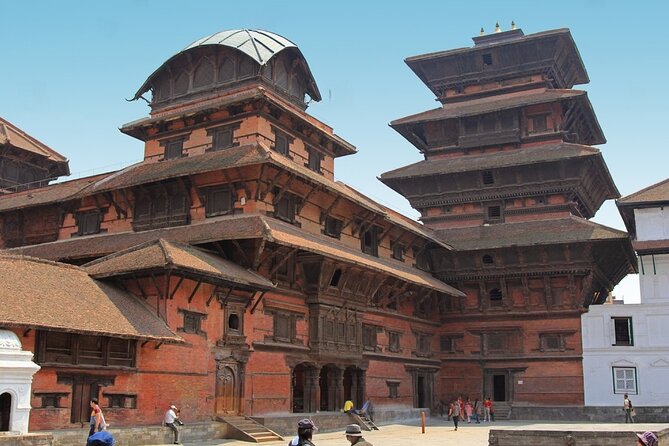
Stop 1: Kathmandu Durbar Square at Hanuman Dhoka
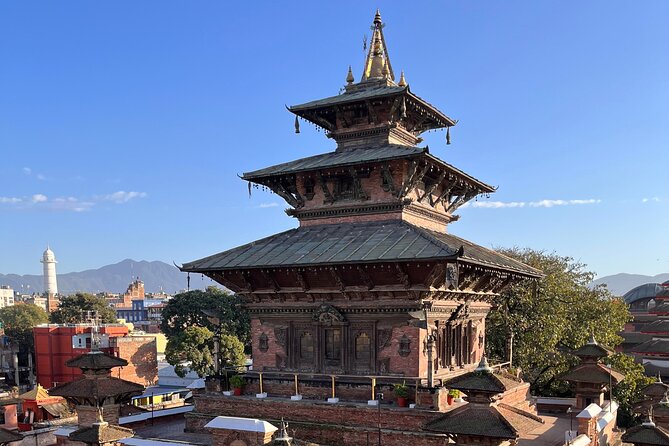
You start at Kathmandu Durbar Square (Hanuman Dhoka Durbar Square), set in the city center. The tour allocates about 2 hours, which is long enough to take in the key architecture without feeling like you’re sprinting from one photo to the next.
Durbar squares are about power, rule, and public life—then and now. In this case, the site is described as an architectural masterpiece and a historical treasure in the heart of Kathmandu. Even if you’re not a deep-archaeology person, you can still enjoy how the space feels: a central stage where important buildings meet everyday movement.
One practical drawback: since admission is not included, you’ll want to ensure you’ve budgeted for entry. Also, because this is a main central attraction, you should expect a classic “people-watch and look up” experience rather than quiet museum time.
Stop 2: Swaymbhunath and the Hindu-Buddhist blend
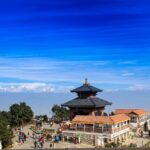
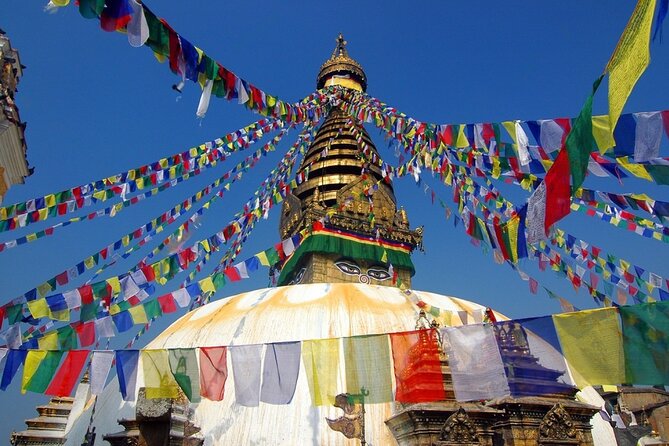
Next is Swaymbhunath (listed as 1 hour). This stop is special because it serves as a sacred pilgrimage site for both Buddhists and Hindus. The guide’s job here is huge: when traditions share a place, you can either miss the meaning or understand it.
From the description you’ll see why the site attracts worshippers from multiple communities. For Buddhists, it’s treated as one of the holiest stupas, believed to house relics of the Buddha himself. That’s the kind of detail that makes the prayers you’ll see feel less like random gestures and more like a continuation of belief.
Since your time is shorter here than at the other stops, the strategy is simple. Don’t try to see everything. Pick a couple of observation moments—watch what people do, watch how they move, and let your questions wait for your guide. One good “why do they do that” moment is worth ten extra photos.
Admission is also not included for this stop, so it ties back to the overall entrance fee budget.
Stop 3: Boudhanath Stupa and shrine-time rhythm
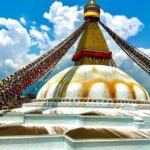
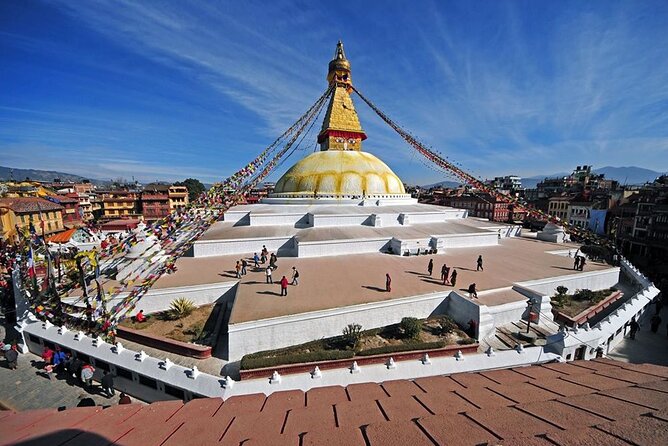
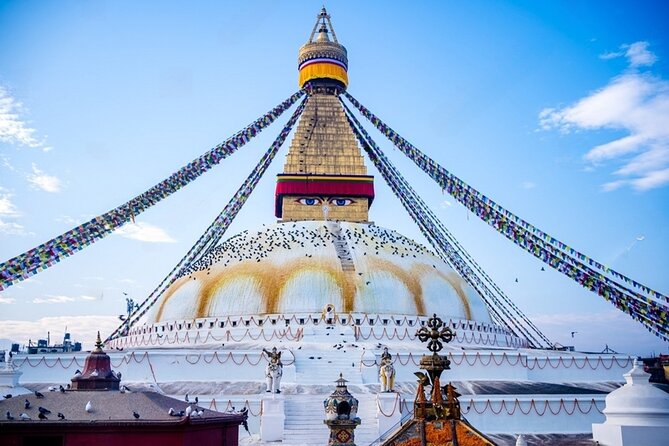
After the hilltop pilgrimage site, you’ll head to the Boudhanath Stupa (also known as Boudha/Bouddhanath). This one gets about 2 hours, which is exactly the right length for a major shrine. When you’re around a stupa this important, the experience isn’t just visual—it’s about staying long enough to notice the flow of devotion.
The description is clear: it’s an iconic religious and cultural site, and it’s not only a place of worship but also a symbol with meaning for people in the Kathmandu Valley. On a guided day, you’re able to connect that symbolism to what you’re seeing in real time—prayers, rituals, and the kind of repetitive motions that help people center themselves.
A small consideration: because this stop is spiritual and ceremonial, the atmosphere can be intense. That’s part of why it’s worth doing. Just go in with the mindset of “watch, observe, and ask,” not “check off a box.”
As with the other attractions, entrance fees are not included, so again, plan around the listed total for the four sites.

Stop 4: Pashupatinath Temple by the Bagmati River
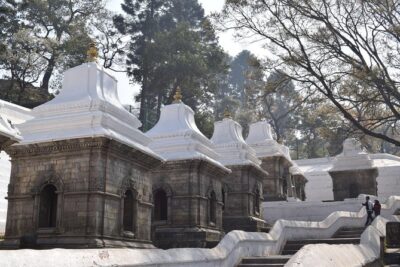
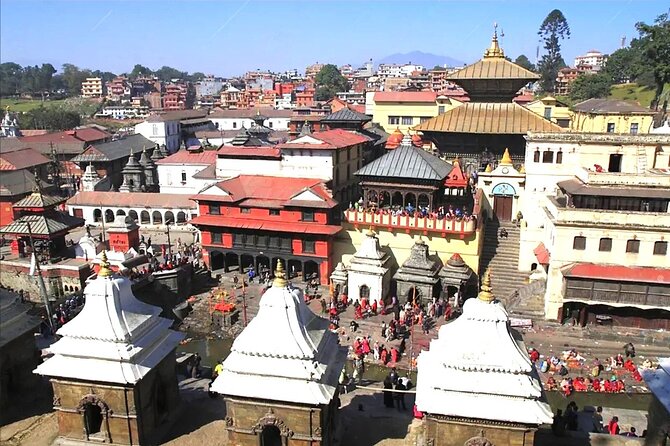
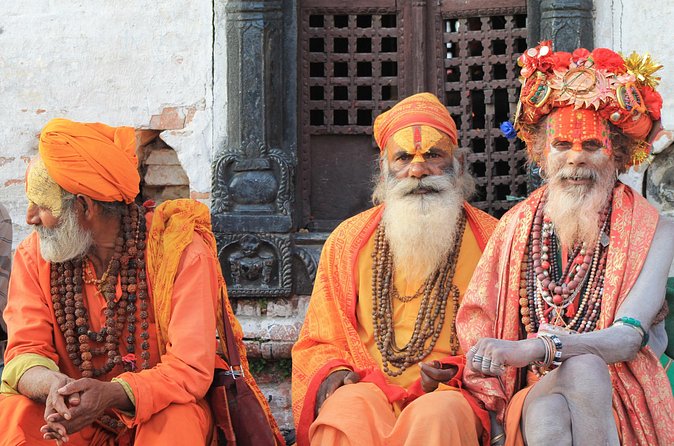
The final major stop is Pashupatinath Temple, located on the banks of the Bagmati River. It’s described as one of the most revered Hindu temples in the world and an ancient temple complex with major religious importance.
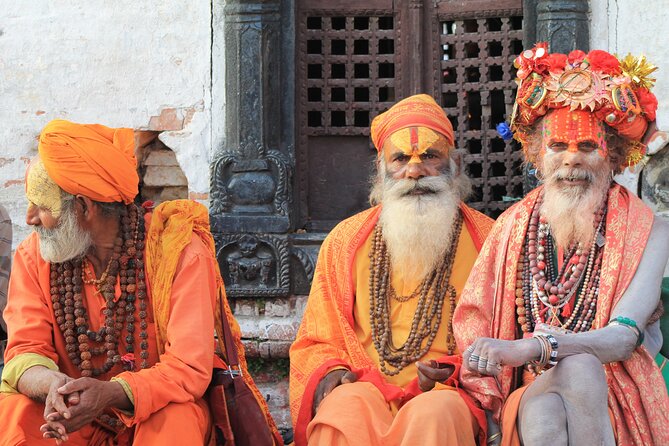
This is where your tour’s guide quality really affects your day. When you’re standing in front of a temple that matters deeply to local religious life, your experience changes based on whether you understand what you’re seeing. The tour description also signals that you’ll witness religious rituals, ceremonies, and prayers, especially at sites like Pashupatinath and Boudhanath.
Time-wise you have about 2 hours here. That’s enough to see multiple aspects of the complex without feeling like you’re being rushed. It also helps that this tour is not trying to overload you with extra destinations. You’re given space to absorb the atmosphere and learn what matters.
Again: admission is not included for this stop, so it stays consistent with the entrance-fee budget for the full set.
Your guide: the difference between seeing and understanding
One of the strongest parts of this day is the emphasis on explanation. In the provided guidance about the experience, the best feedback points to guides who take time to explain the difference between Hindu and Buddhist ideas and how they show up in daily practice.
Names you might hear associated with this kind of tour include Anshu and Pravin. Anshu is described as organized, information-forward, and willing to spend real time educating visitors on Buddhism and Hinduism. Pravin is described as friendly and energetic, turning an iconic day into something you’d remember for the long run.
That matters because Kathmandu’s spiritual architecture can look similar from a distance—until you understand the labels, the symbolism, and the rituals. On this itinerary, your guide helps you connect what you see at Durbar Square, how devotion shifts at Swaymbhunath, how communal prayer feels around Boudhanath, and how Hindu worship plays out at Pashupatinath.
If you want a simple test for whether the tour will work for you: ask one question at the first stop. If you get a thoughtful answer and you feel the day start to “click,” you’re in the right hands.
Timing and pacing: how not to feel rushed
The total duration is about 7 hours, with the core site times listed as:
- Durbar Square: 2 hours
- Swaymbhunath: 1 hour
- Boudhanath: 2 hours
- Pashupatinath: 2 hours
That’s a good mix. Two-hour blocks help at the big, complex sites. The one-hour block at Swaymbhunath acts like a focused burst rather than a half-day commitment. And between stops, the private A/C vehicle and pickup/drop-off reduce downtime that you’d otherwise spend figuring out transport.
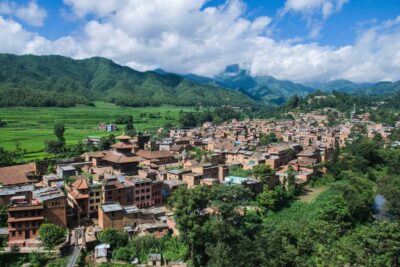
You also get the chance to see Kathmandu as a living city. The tour overview highlights that part of the value is watching local life, including markets, street scenes, and everyday routines. Even if you don’t stop to shop, the drive between sites gives you a sense of how people actually move through the city—temples and prayers sitting alongside normal work and errands.
What to pack and how to be comfortable
The day is built around walking through active religious spaces and looking closely at historic sites. Practical comfort tips are more important than fancy gear.
I’d plan on:
- Comfortable shoes for uneven surfaces and indoor/outdoor transitions
- A light layer if mornings feel cool, since you start at 8:00 am
- Something that respects temple settings (keep it simple and modest)
Also, since lunch is not included, plan your food timing. If you hate the thought of hunting for lunch late in the day, you might build a small snack plan before the tour or eat soon after your last stop.
If the weather turns, the experience provider notes that the tour depends on good conditions. That’s not something you can control, so keep some flexibility in your schedule.
Who this tour is best for
This is a good fit if you:
- Want a one-day plan covering major UNESCO World Heritage sites
- Prefer a guided explanation of Hindu and Buddhist practice
- Like structure: hotel pickup, set start time, set times at each stop
It’s also a nice option for travelers who don’t want to worry about transport between widely spaced landmarks. The private format means it’s only your group, so your guide can pace the day to your questions.
If you’re the type who wants long, slow visits, you may feel the time pressure at each stop. But the itinerary is clearly designed as a balance: enough time to learn and look, without turning the day into a 10-hour ordeal.
Should you book this Kathmandu full-day exploration?
I’d book this tour if you want the essentials of Kathmandu’s major sacred sites with less hassle. The best reason is the guide focus—your day isn’t just transportation to famous locations. It’s built to help you understand why these places matter to people.
It’s also good value for the structure you’re getting: private A/C transport, pickup/drop-off, and a guide for about 7 hours, plus a manageable entrance-fee add-on (about USD 26 total for the four attractions). The tradeoff is that lunch isn’t included and admissions cost extra, so budget for those and you’ll be fine.
If you’re visiting on a tight schedule and want a coherent UNESCO day instead of a random checklist, this is a smart way to spend your time in Kathmandu.
FAQ
What time does the Kathmandu tour start?
The start time is 8:00 am.
How long is the Kathmandu full-day exploration?
It runs for about 7 hours (approx.).
How much does the tour cost?
The price is listed at $80.00 per person.
What’s included in the price?
The tour includes private transportation, a professional tour guide, an air-conditioned vehicle, and hotel pickup and drop-off.
Are entrance fees included?
No. Entrance fees are listed as USD 26 for the four attractions.
Is lunch included?
No. Lunch is not included.
Is this a private tour?
Yes. Only your group participates.
What kind of ticket do I get?
You’ll receive a mobile ticket.
What if the weather is bad?
This experience requires good weather. If it’s canceled due to poor weather, you’ll be offered a different date or a full refund.
Can I cancel for a full refund?
Yes. You can cancel up to 24 hours in advance for a full refund.