REVIEW · KATHMANDU
Manaslu Trekking
Book on Viator →Operated by World Himalaya Treks & Expeditions · Bookable on Viator
A trek around Mount Manaslu is for people who want big views with less crowds. This Manaslu Circuit itinerary mixes scenic river valleys with culture-heavy Kathmandu days, then brings you up into the quieter, higher country where permits and steady hiking matter. You also get a full support setup, including an experienced guide and porters, plus meals from breakfast through dinner during the trek days.
I especially like two things about this trip: first, it’s designed as a more remote alternative to the busier Annapurna and Everest areas, so your hiking days feel less commercial. Second, the package is built to remove a lot of logistics stress, since permits (including TIMS and national park entry fees) and your trekking food are already handled. One consideration: this is described as challenging and aimed at travelers with at least moderate fitness, and the days on foot can be around 5–6 hours with long, sometimes steep stretches.
In This Review
- Key things to know
- Why the Manaslu Circuit Feels More Remote
- What You Get for $1,900: Permits, Porters, and Full-Board Comfort
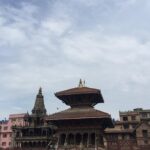
- Kathmandu Warm-Up: Pashupatinath, Boudhanath, and Swayambhunath
- Days 3–6: River Valleys, Suspension Bridges, and Tatopani Hot Springs
- Day 3 to Machha Khola: Sal forests and cliff-hugging trail
- Day 4 to Jagat: Suspension bridges and a hot spring stop
- Day 5 to Deng: Philim’s suspension bridge and bamboo forests
- Day 6 to Gamp area: Buddhist-influenced territory
- Days 7–10: Namrung, Manaslu Base Camp, Samagaun, and Samdo
- Day 7: To Manaslu Base Camp area through bamboo and rhododendron
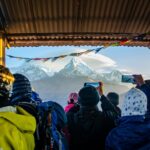
- Day 8: Samagaun and views of Manaslu and Peak 29
- Day 9: Explore the monastery in Samagaun
- Day 10: Following the Budhi Gandaki to Samdo
- Days 11–14: Tundra, the Pass Summit Day, and the Descent to Chamje
- Day 11: Larkya Bhanjyang and the pass ascent
- Day 12: Summit views, then a descent to Bimtang
- Day 13: Bhimtang Lake viewpoint and down to Tilje
- Day 14: Chamje through scrub forest
- Tea Houses, Lodges, and Meals: What Full Board Means for Your Energy
- Getting Back to Kathmandu: Rest Days in Thamel Mode
- Fitness and Altitude: The Moderate-Fit Reality Check
- Should You Book This Manaslu Circuit Trek?
- FAQ
- Where does the Manaslu trek start and end?
- How long is the trip?
- What trekking permits are included?
- What’s included in the Kathmandu portion?
- Are meals included during the trek?
- Is travel insurance included?
Key things to know
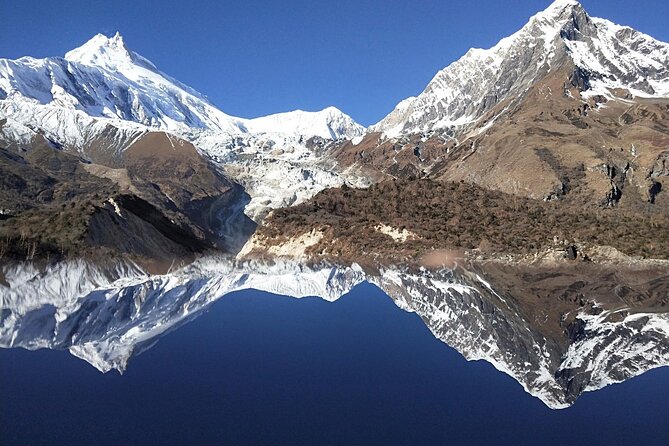
- Less-crowded trekking: Manaslu is typically quieter than Annapurna/Everest routes.
- Permits + TIMS included: national park entry fees, TIMS card, and the required special permit are covered.
- Full-board meals on trek: breakfast, lunch, and dinner during the trekking portion.
- Tea house or mountain lodge nights: comfortable, neat, and clean lodging is part of the plan.
- Porter support: 1 porter for 2 people, with insurance and porter expenses included.
- A real pass-style day: you start an ascent to the pass area at Larkya Bhanjyang and later reach a summit before descending.
Why the Manaslu Circuit Feels More Remote
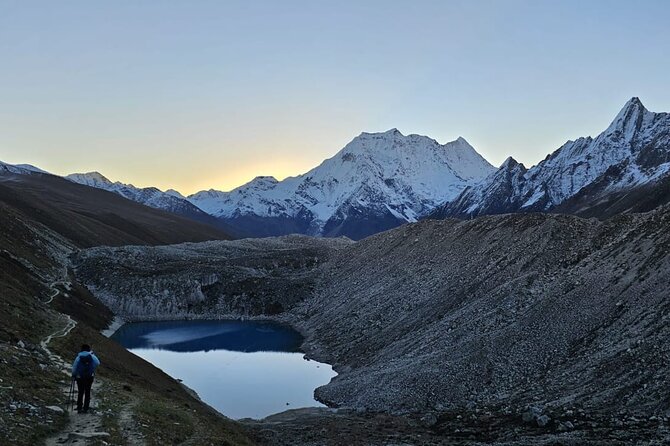
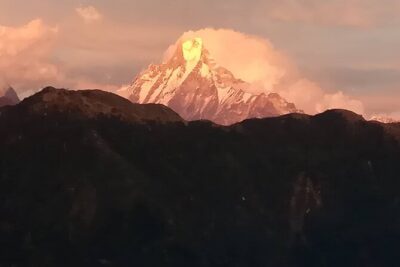
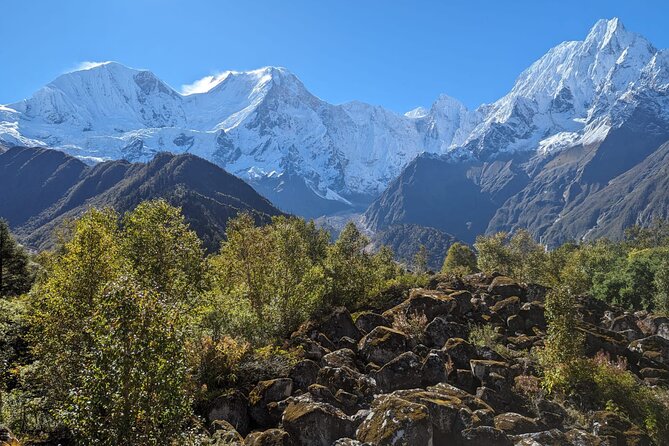
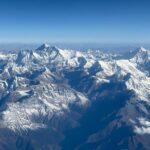
The Manaslu Circuit trek circles Mount Manaslu, the world’s eighth-highest peak at 8,163 meters. That alone tells you the hiking will be serious, but what makes this route extra appealing is the vibe: it’s generally less crowded than the famous Annapurna and Everest regions. If you’ve ever felt trekking became a traffic jam, this is one way to trade that for a quieter rhythm.
I also like how the route design balances “wow” moments with real trail time. You start in Kathmandu with major cultural stops, then gradually work into the river valleys, then into higher settlements, and finally into tundra-and-pass terrain. It’s not a trek where you only stand and look; you earn the views through steady effort.
And because it’s a circuit around Manaslu, you’re not just chasing one peak from one angle. You’ll get changing views as you move through different valleys and villages—plus chances to see how daily life fits into the mountains, from Gurung village areas to Buddhist-influenced regions.
You can also read our reviews of more hiking tours in Kathmandu
What You Get for $1,900: Permits, Porters, and Full-Board Comfort
At $1,900 per person (about 17 days), this package is priced like a proper organized trekking holiday, not a bare-bones DIY adventure. What helps the value is that it bundles the parts that can quietly cost money or create headaches: permits, meals, guides, and transportation.
Here’s what’s included that matters in real life:
- Airport pickup and drop in Kathmandu, which saves a lot of time after a long flight.
- Three-star deluxe twin-share accommodation in Kathmandu with breakfast, plus a guided sightseeing day around key valley sites.
- Full-board meals during the trek: breakfast, lunch, and dinner (with breakfast/lunch/dinner counted across the itinerary days).
- All necessary trekking paperwork: national park entry fees, TIMS card, and the special permit required for this region.
- An experienced guide and porters, with the porter ratio set at 1 porter for 2 people.
- First aid kit and government/local taxes.
- Porter equipment support such as a jacket and trekking boots as required, plus a duffel bag and T-shirt.
What’s not included is equally important. You’ll still pay for beverages, personal expenses, and tips for guides and porters. Travel insurance is also not included, so you’ll want to arrange that separately.
For me, the best value signal is the way meals and permits are handled. When those are locked in, you can focus on acclimatization, footing, and enjoying the day—rather than bargaining at tea houses for something that will cost more than expected.
Kathmandu Warm-Up: Pashupatinath, Boudhanath, and Swayambhunath
Your trip starts in Kathmandu with airport arrival help and a hotel transfer. After you settle in, you’ll go to a welcome dinner and receive a briefing about the trip.
Day 2 is a strong cultural primer before you even touch a trail:
- Pashupatinath Temple: You explore Kathmandu heritage sites with a professional guide after breakfast, and you also meet your trekking staff.
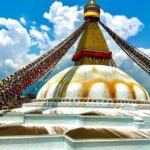
- Boudhanath Stupa: One of the largest stupas in the country and a UNESCO World Heritage Site, known as a pilgrimage stop for Buddhists.
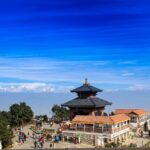
- Swayambhunath (Monkey Temple): A hilltop religious complex with UNESCO status, famous for its painted eyes on the stupa and the monkey population nearby.
I like this sequence because it does two useful things. It gives you context for the places you’ll see in Nepal beyond mountains, and it also helps you get your bearings on traffic, time, and costs in Kathmandu before the trekking portion begins.
You also get a full day feel—short enough not to exhaust you, but complete enough that you’re not spending your first hours lost in a new city.
Days 3–6: River Valleys, Suspension Bridges, and Tatopani Hot Springs
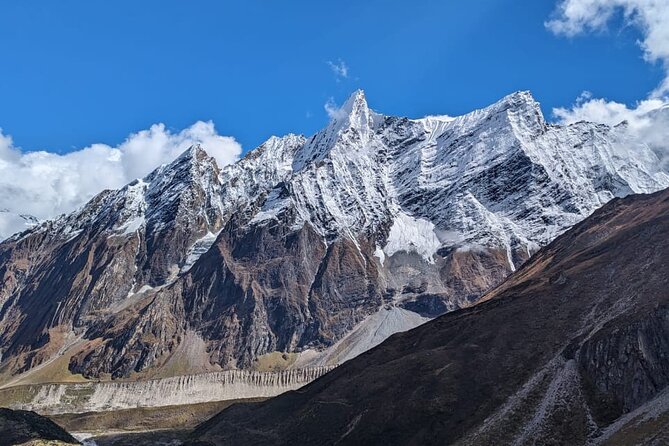
Once trekking starts, the itinerary keeps you moving through classic Manaslu-region trail scenery: river crossings, steep-ish climbs, and villages that change character as elevation increases.
Day 3 to Machha Khola: Sal forests and cliff-hugging trail
You begin trekking through Sal forests, climb onto a ridge above huge rapids, and pass areas like Khursane. The trail includes a steep, rocky section clinging to a cliff with waterfalls along the way. You’ll also pass rice terraces and reach Gurung village life around Labubesi, then follow the Budhi Gandaki’s wide gravel bars before crossing to Machha Khola by suspension bridge.
This is a good first trekking day range because it mixes views with variety. But it’s also a reminder that Day 1 of the trek isn’t “flat and easy.” You’re building stamina with constant footwork.
Day 4 to Jagat: Suspension bridges and a hot spring stop
Today includes narrow trail work, crossings like Tharo Khola and points such as Khorlabesi, then a stop at Tatopani, where there’s a small hot spring. After that, you cross the Budhi Gandaki via suspension bridge and move along stone stairs, then continue past a landslide area and over ridges toward villages like Dobhan and Tharo Bharyang before reaching Jagat.
The practical takeaway: hot springs are a nice recovery bonus, but don’t let that trick you into thinking the day becomes gentle. The stone stairs and repeated climbs keep the effort real.
Day 5 to Deng: Philim’s suspension bridge and bamboo forests
You climb to Salleri, descend to Sirdibas, and then head upstream through a widening valley. A long suspension bridge in Philim breaks up the day, followed by a fairly level section across millet fields. Then you enter a steep, uninhabited gorge area, cross the Budhi Gandaki multiple times, and pass into bamboo forests before reaching Deng Khola and the tiny village of Deng.
This day feels like a transition day: from more settled valley travel into tougher, wilder trail sections. If you like routes where you can tell the trail is changing, this is a good section.
Day 6 to Gamp area: Buddhist-influenced territory
On Day 6, you enter a Buddhist-influenced area and arrive at Ghap, with an overnight at Gamp. The itinerary keeps this day shorter in description, but it likely signals a shift in cultural tone as you rise.
Days 7–10: Namrung, Manaslu Base Camp, Samagaun, and Samdo
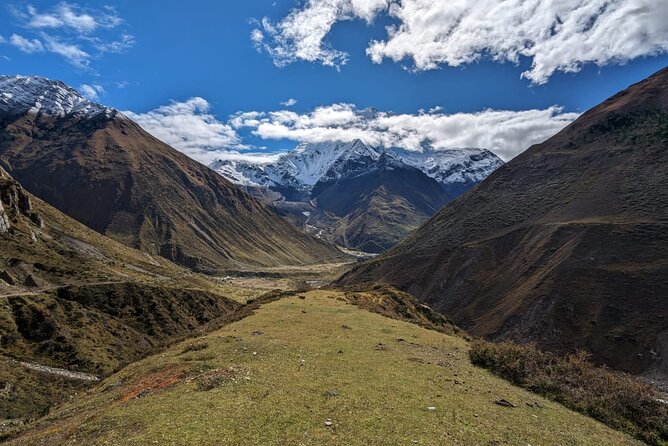
From here, the trek starts feeling more “high mountain journey” than “valley hike.” You’ll see more dramatic views and spend more time in places where the mountain presence is constant.
Day 7: To Manaslu Base Camp area through bamboo and rhododendron
You climb through bamboo and rhododendron forests toward Namrung and enter the Nupri region, then head to Manaslu Base Camp for a camp overnight. This is one of the trek’s headline days because it’s where the mountain-focused effort pays off.
Day 8: Samagaun and views of Manaslu and Peak 29
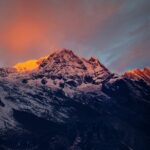
You follow the river with views of Peak 29, reaching Samagaon with views of Manaslu, then camp overnight. The combination of river walking and mountain sightlines is often the sweet spot for trekkers: you’re not stuck staring in one direction all day, but you’re never far from the big peak.
Day 9: Explore the monastery in Samagaun
You spend time exploring the monastery and village in Samagaun with great views, then camp again.
This day is valuable because it slows the pace. You get a cultural and spiritual stop without needing to chase elevation every hour.
Day 10: Following the Budhi Gandaki to Samdo
You follow the Budi Gandaki to Samdo, camping overnight.
The river guidance is a recurring theme on this trek, and that makes sense. In mountainous regions, trails often follow the path of least resistance—watercourses and valleys. You’ll feel that logic as you go.
Days 11–14: Tundra, the Pass Summit Day, and the Descent to Chamje
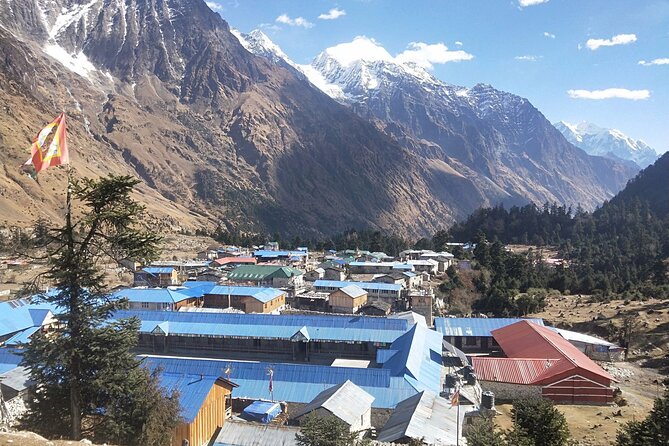
This is where the trek becomes physically serious, and where good pacing and careful footing matter most.
Day 11: Larkya Bhanjyang and the pass ascent
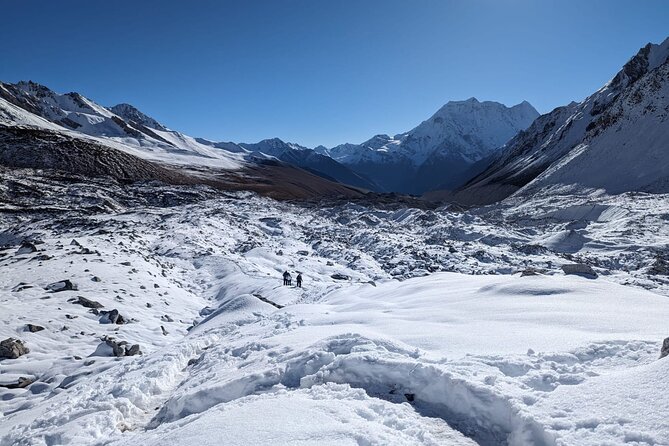
The day starts with the ascent toward the pass through tundra and juniper at Larkya Bhanjyang. Expect to work uphill, with changing vegetation as altitude rises.
Day 12: Summit views, then a descent to Bimtang
You reach a summit with panoramic views, then descend to Bimtang for an overnight camp.
This is the day you plan for mentally. Even if the “hours” look similar to other days, the effort tends to feel heavier because high-altitude hiking taxes your breathing. You’ll want to keep your pace steady and let your body adjust.
Day 13: Bhimtang Lake viewpoint and down to Tilje
You descend through forests and reach a Bhimtang Lake viewpoint, then continue to Tilje for an overnight camp.
This is a nice rhythm shift: after summit pressure, you get a more forgiving downhill. Still, downhill is tough on knees and thighs, so slow down and take your time.
Day 14: Chamje through scrub forest
You follow the trail through scrub forests and arrive at Chamje, then camp overnight.
Chamje feels like part of the trek’s closing sequence: you’re still hiking, but the body usually starts looking forward to Kathmandu again.
Tea Houses, Lodges, and Meals: What Full Board Means for Your Energy
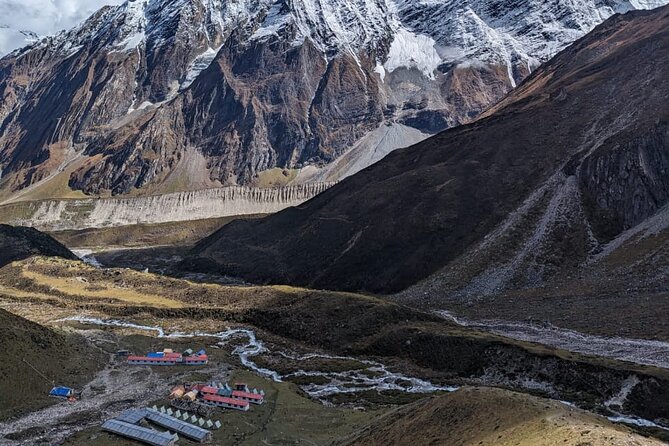
This trek includes comfortable, neat, and clean accommodation in tea houses or mountain lodges during trekking. That matters because altitude nights can feel rough even when lodging is basic. Knowing you’ve got a consistent standard helps you relax.
Food is a major part of why this itinerary works well. You get breakfast, lunch, and dinner during the trek, which means you’re not relying on guessing what will be available at each stop. The trek is long enough that energy management becomes more important than food variety.
Practical note: beverages are not included. If you enjoy tea, coffee, or bottled water, budget for it. Also remember that drinking enough helps, especially when the air is thinner.
Getting Back to Kathmandu: Rest Days in Thamel Mode
After your last trek day, you drive back to Kathmandu through the countryside for rest at a hotel. Then you get more time in the city:
- A full leisure day to relax or explore Thamel
- Final time for last-minute shopping or activities before heading to the airport
I like this pace. The itinerary gives you enough room to recover before you fly. Thamel is a practical choice for last-minute gear checks and simple meals, but the key is that you’re not rushing immediately after your lowest-altitude day.
Fitness and Altitude: The Moderate-Fit Reality Check
The trip is described as requiring moderate physical fitness. “Moderate” on a trek like this still means you’ll want hiking endurance, strong legs for stairs and rocky trail work, and patience for days that feel longer than you expect.
Your itinerary includes multiple 5–6 hour trekking days, frequent river crossings via suspension bridges, and at least one big pass-style day. Even when the daily time window looks similar, the terrain changes—forests, gorges, tundra, and scrub can all feel different in your lungs and legs.
If you’re the type who stops frequently to catch your breath, that’s normal in the mountains. What matters is steady movement and not going too fast on summit-day energy.
Should You Book This Manaslu Circuit Trek?
Book it if you want:
- A less crowded Manaslu route around Mount Manaslu rather than the most famous mega-routes
- A package that handles the hard-to-organize parts, especially permits, meals, and porter support
- A trekking style that includes culture (Kathmandu temples and a monastery day) as well as mountain walking
Skip it or compare options if:
- You’re not comfortable with a challenging trek and long hiking days in varied terrain
- You prefer completely independent travel where you choose every meal and permit detail yourself
If you value structure and want your energy to go into hiking and enjoying the mountains, this one is built for that. And with a strong overall rating of 4.8 out of 5, the odds are you’ll like how smoothly the trip runs once you’re in Nepal and out on the trail.
FAQ
Where does the Manaslu trek start and end?
The Manaslu Circuit trek typically starts in Arughat and ends in Besisahar.
How long is the trip?
The itinerary is listed as 17 days (approx.), and the trek itself typically takes 14 to 16 days to complete.
What trekking permits are included?
The package includes the special permit, TIMS card, and national park entry fees.
What’s included in the Kathmandu portion?
You get airport pickup and drop, three-star deluxe twin-share accommodation with breakfast, and guided sightseeing around Kathmandu valley sites plus a visit to a local market.
Are meals included during the trek?
Yes. During the trekking portion, you get breakfast, lunch, and dinner as a full-board meal plan. Beverages are not included.
Is travel insurance included?
No. Your travel insurance is not included in the package.