REVIEW · KATHMANDU
Annapurna Base Camp Trek – 11 Days
Book on Viator →Operated by Base Camp Adventure Pvt. Ltd. · Bookable on Viator
Eleven days, one huge Himalayan payoff. This classic trek centers on Annapurna Base Camp, with big sunrise moments, forest walks, and cultural stops that feel grounded in daily Nepali life. You’ll also start with a scenic overland hop from Kathmandu to Pokhara, then transition into a trail rhythm that’s surprisingly doable for the amount you’ll see.
Two parts I really like: the early climb to Poon Hill sunrise and the warm break at Jhinu Danda hot spring. It’s a nice contrast—cold, sharp mountain light in the morning, then simple, human comfort when your legs need it.
The main drawback to plan for is that this is real trekking work. You’ll want moderate physical fitness, and you should understand weather windows matter here.
In This Review
- Key things to know before you go
- Why Annapurna Base Camp is the Nepal Trek Classic
- Price and what you truly get for $986
- Getting there: Kathmandu, Pokhara, and the 6:15 AM start
- Fitness reality check for an 11-day trek
- Your 11 days on the Annapurna Base Camp route, day by day
- Day 1: Kathmandu to Pokhara via Prithvi Highway
- Day 2: Nayapul start, suspension bridge to Birethanti, then to Birethanti-area villages and Ghorepani
- Day 3: Rhododendron forest to Ghorepani
- Day 4: Poon Hill sunrise over Annapurna and Dhaulagiri ranges
- Day 5: Kimrong Khola suspension bridge to Jhinu Danda hot spring
- Day 6: Easy rhododendron walk toward Sinuwa
- Day 7: Deurali ascent to Machhapuchhre Base Camp area (3700m)
- Day 8: Back through Machhapuchhre Base Camp area and along Modi Khola trail
- Day 9: Sinuwa to upper Chhomrong, then down to Jhinu Danda hot spring
- Day 10: Trek down to Nayapul, then back to Pokhara
- Day 11: Pokhara to Kathmandu by tourist bus
- Accommodation and meals: how the included food shapes your day
- The guide and support team, and why names matter
- Gear: what’s included vs what you still need
- Weather, altitude, and safety that you can feel day to day
- Who should book this trek, and who should think twice
- Should you book this Annapurna Base Camp trek?
- FAQ
- How long is the Annapurna Base Camp Trek?
- Where does the trek start and end?
- What is the meeting point and start time?
- What is the price per person?
- Are trekking permits included?
- What meals are included?
- Is accommodation included?
- What equipment is provided?
- Do you get any health monitoring during the trek?
- What’s included in the tour and what’s not?
Key things to know before you go
- Included cold-weather gear: down jacket, sleeping bag, and a duffel bag are part of the package.
- Oxygen monitoring on the trail: you get an oxymeter to check pulse and oxygen saturation/heart rate.
- Sunrise is part of the schedule: Poon Hill means an early start and cold steps.
- Hot spring time is built in: Jhinu Danda gives you a warm recovery break.
- Private tour format: it’s private, so only your group participates.
- Meals are mostly covered: 10 breakfasts, 9 lunches, and 8 dinners are included.
Why Annapurna Base Camp is the Nepal Trek Classic
If you’re picking one Annapurna trek to try first, this is an easy choice. The route is famous for a reason: you get a long arc of views, forest walking, and village life—without needing technical climbing skills. And because it’s a well-known trail, the daily logistics are set up to keep things moving.
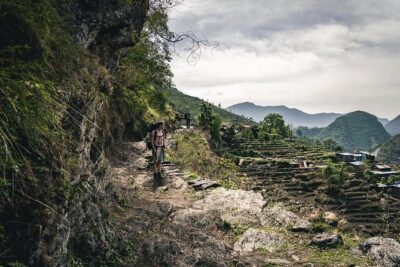
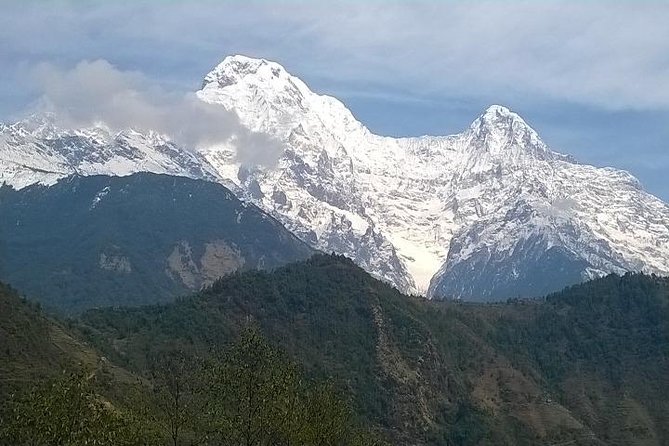
What makes this trek feel special is the way the scenery changes day to day. You’ll start near rivers and farmland, then gradually shift into thicker rhododendron forest, stone stairs, and higher passes and viewpoints. By the time you’re deep in the route, the mountains aren’t just in the distance—they’re part of your daily horizon.
Also, the itinerary includes two of the most memorable “non-trek” moments people remember: sunrise at Poon Hill and the Jhinu Danda hot spring dip. Those breaks do a lot for morale.
You can also read our reviews of more hiking tours in Kathmandu
Price and what you truly get for $986
At $986 per person, this trek is priced like a full service package, not a bare-bones DIY plan. The big value is in what’s included that you’d otherwise spend money and effort on.
Here’s what’s covered:
- Down jacket, sleeping bag, and duffel bag (huge savings if you don’t already own cold-weather kit)
- Surface transfers between Kathmandu and the trek start/end areas
- All trekking permits and entry fees
- Guest house accommodation during the trek (mainly twin sharing)
- A licensed English-speaking trekking guide
- Staff support (food, accommodation, salaries, insurance, equipment, medicine, transportation)
- Oxygen checks via an oxymeter
- First aid medical kits
- Meals: 10 breakfasts, 9 lunches, 8 dinners
What’s not included is just as important:
- Alcohol and drinks, plus laundry
- Your travel insurance
- Personal trekking equipment
- International airfare and airport departure tax
- Tips for trekking staff
So the “value math” comes down to this: if you’re starting from scratch on gear and you want someone licensed to handle permits, safety basics, and daily pacing, $986 can be a fair deal. If you already own top-notch gear and want to arrange everything yourself, it might feel pricier. But for most people—especially first-time trekkers—the package helps you focus on walking and views, not paperwork.
Getting there: Kathmandu, Pokhara, and the 6:15 AM start
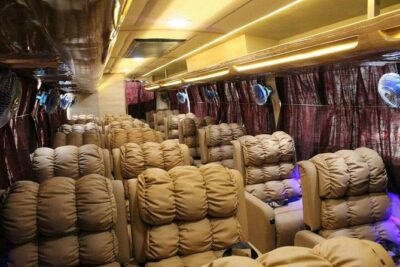
The experience starts and ends in Kathmandu (44600). The start time is 6:15 am, so you should plan an early morning rhythm. You’ll then travel by tourist bus to Pokhara, including a long scenic drive along the Prithvi Highway.
That road day matters more than it sounds. You’re warming up for trekking altitude and cold weather by shifting from city pace into mountain pace. It also sets up the trek start on Day 2 without rushing you into the trail on the very first morning.
Tip: if you’re the type who hates feeling rushed, use the bus time to get your trekking routine in place—snacks, water bottle setup, and a simple plan for layers.
Fitness reality check for an 11-day trek
This route is listed for travelers with moderate physical fitness. In practice, that usually means you can handle long days on uneven ground, with repeated uphill/downhill and stone steps.
The itinerary hints at the workload:
- Day 4 includes an early ascent to Poon Hill for sunrise, described as on snowy trails.
- Multiple days include stone stairs—often steep, often repetitive.
- Several days combine ascents with forest walking and then a downhill section.
The good news? The trek isn’t structured as one endless grind. You’ll get days described as easy walking and you’ll also have built-in “recover” moments like the hot spring at Jhinu Danda.
And you’re not left totally on your own for health monitoring: the package includes an oxymeter so the guide/staff can check oxygen saturation and heart rate during the trek.
Still, be honest with yourself. If stone steps are a deal-breaker for your knees or if you haven’t done sustained walking in months, you may want to reconsider the timing—or at least train a bit before you go.
Your 11 days on the Annapurna Base Camp route, day by day
Below is what your days look like, using the stops described in the plan. Expect a mix of travel, trail, viewpoints, and recovery.
Day 1: Kathmandu to Pokhara via Prithvi Highway
After breakfast, you drive to Pokhara on a tourist bus along the Prithvi Highway. This part is about scenery and pacing: rivers, terraced farms, and village life roll by as you reposition yourself for the trek.
Consideration: it’s a long sitting day. If you’re prone to tight hips or back discomfort, pack a small solution—light stretching, water discipline, and comfortable layers.
Day 2: Nayapul start, suspension bridge to Birethanti, then to Birethanti-area villages and Ghorepani
You drive from Pokhara to Nayapul (about a two-hour drive), then begin trekking by crossing a suspension bridge over the Modi River. From there you head toward Birethanti, working your way into a trail day that starts easy and settles into a steady walking pattern.
You also pass through villages including Banthanti and Nangethanti later on the multi-day arc toward Ghorepani. This is a very “Nepal trek” day: local paths, farm plots, and rhododendron-lined sections.
Drawback: bridge crossings and village sections can be busy and uneven. Keep your pace calm early; save your energy for the cold sunrise day ahead.
Day 3: Rhododendron forest to Ghorepani
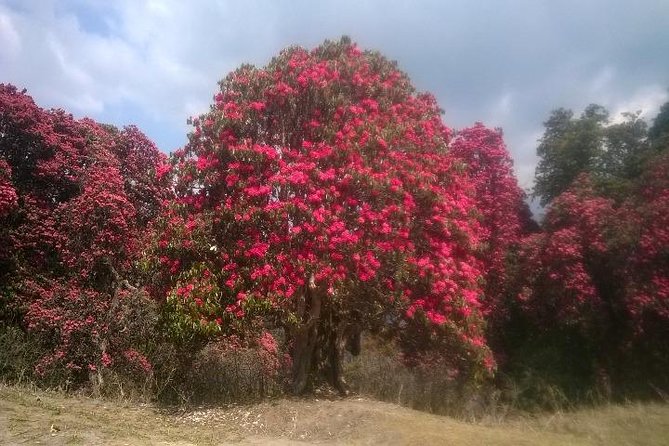
Today’s described route focuses on forests of rhododendron and stone stair ascents into the Ghorepani area. You’ll cross villages on the way, which helps break up the effort with short human-scale scenery.
Why this day matters: forests like this slow you down in a good way. Your mind rests while your legs work.
Day 4: Poon Hill sunrise over Annapurna and Dhaulagiri ranges
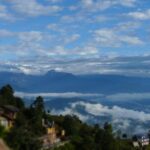
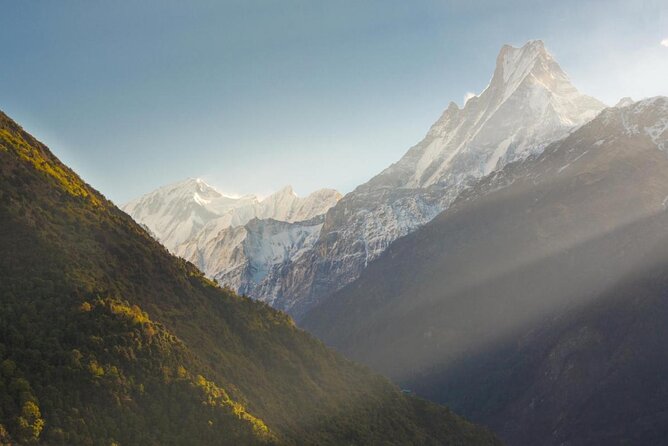
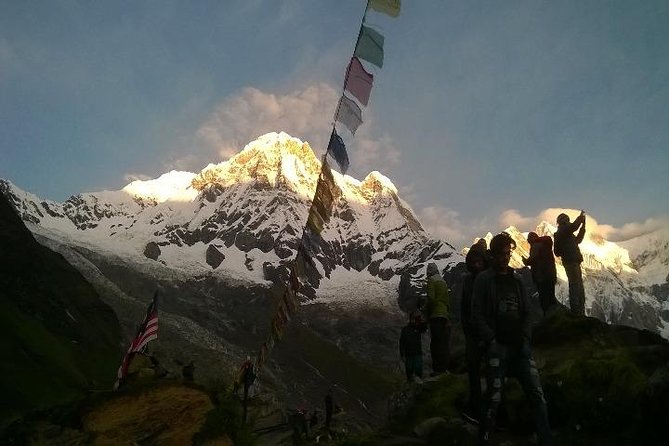
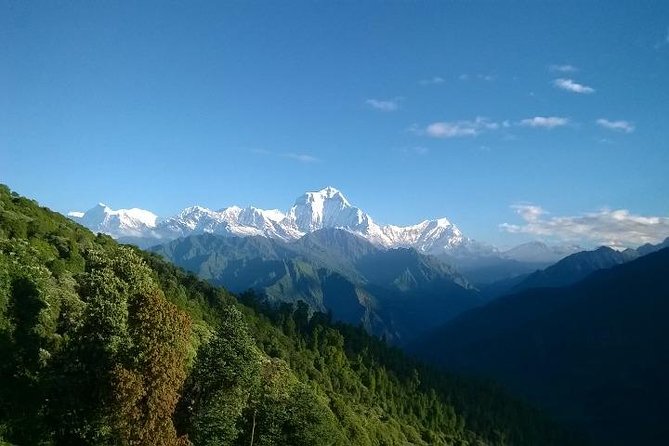
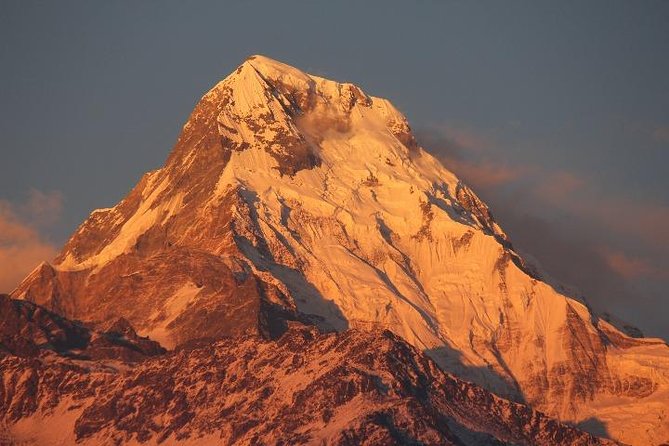
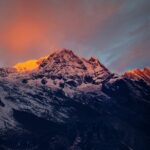
This is your big early-morning moment. You start with an ascent to Poon Hill for sunrise. The route includes snowy trails, and you’re there to watch morning light over the Annapurna and Dhaulagiri ranges, including peaks noted as Nilgiri (7061m) and Lamjung Himal (6983m).
I love how sunrise shifts the feeling of the mountains. You’re not just looking up—you’re watching the world brighten, which makes the cold feel worth it.
Consideration: this is cold and early. Bring gloves, keep your layers easy to manage, and don’t burn out climbing too fast.
Day 5: Kimrong Khola suspension bridge to Jhinu Danda hot spring
You’ll ascend and descend on a forested trail, then cross a suspension bridge over the Kimrong Khola. From there you reach Jhinu Danda, where the itinerary includes a stop at the hot spring. You can rest and warm up before continuing.
This day is strategically smart. After multiple hours of walking (and likely cold mornings), a hot spring break helps your body and your mood.
Day 6: Easy rhododendron walk toward Sinuwa
Day 6 is described as an easy walk through rhododendron forest with orchids and ferns. You descend stone stairs, cross Chhomrong Khola, then ascend to Sinuwa, followed by additional downhill sections.
This is the kind of day you’ll appreciate if you’re learning your trekking rhythm. It’s not a “rush to victory” schedule. It’s steady work with room to breathe.
Tip: easy days are when you should practice your water and snack routine. If you do it right, the later climbing feels less stressful.
Day 7: Deurali ascent to Machhapuchhre Base Camp area (3700m)
You ascend to Deurali, then walk stone stairs toward a view area, reaching Machhapuchhre Base Camp (3700m). The route also mentions following moraines as part of the approach.
This is where the trek starts to feel more high-alpine. The ground can get more exposed, the air can feel thinner, and your sense of distance changes. It’s a good day to keep a consistent pace rather than chasing speed.
Day 8: Back through Machhapuchhre Base Camp area and along Modi Khola trail
Today starts with a descent to Machhapuchhre Base Camp through the moraine route. You’ll then follow Modi Khola trails through forests of rhododendron and fir.
Why I like this structure: you get views earlier, then you transition into more forgiving forest walking. It’s a psychological win after a heavier ascent day.
Day 9: Sinuwa to upper Chhomrong, then down to Jhinu Danda hot spring
You first ascend through forest to Sinuwa, then go down to Chhomrong Khola and climb stone stairs to upper Chhomrong. After that you descend toward Jhinu Danda, including time for a warm dip in the natural hot spring again.
If your body is adjusting slowly, days like this can feel like two treks in one: short punchy climbs, then longer recovery descents. The hot spring stop is your built-in reward.
Day 10: Trek down to Nayapul, then back to Pokhara
After the trek portion, you descend to Nayapul via trails following Modi Khola, enjoying scenery along the way. Then you drive back to Pokhara.
This is one of those days where your legs are tired but your mind feels lighter. You’ve done the hardest parts; now it’s about finishing strong.
Day 11: Pokhara to Kathmandu by tourist bus
Early you leave Pokhara and drive back to Kathmandu by tourist bus. You’ll arrive and can take it easy in the city afterward.
Consideration: after 11 days, even a short day feels long. Plan for a slow end—good food, laundry if needed, and early sleep.
Accommodation and meals: how the included food shapes your day
The package covers guest house accommodation during the trek, mainly twin sharing. Guest houses on trekking routes are simple by design. What matters is cleanliness, a warm place to sleep, and easy access to meals.
For meals, the numbers are built in:
- Breakfast: 10
- Lunch: 9
- Dinner: 8
That pattern typically means you’re never guessing where your next meal is. For me, that’s huge value on a trek like this—less decision fatigue, more steady energy.
What’s not included is alcohol and other drinks (hot or cold), plus laundry. So bring a little cash for personal drink preferences if that’s part of your trekking comfort.
The guide and support team, and why names matter
You’ll travel with a local government licensed English-speaking trekking guide and trekking staff who are supported through the package (meals, accommodation, salary, insurance, transportation, and basic medical supplies).
In the feedback connected to this trek experience, a few guide names show up more than once—Prakash, Shiva, Naba, and Dhakal Saroj. Porters Kul and Nishan also get named.
Practical advice: when you book, ask who your assigned guide will be and confirm your expectations—pace, breaks, and how you handle altitude concerns. One small mismatch can change the feeling of an entire trek day, especially on cold mornings.
Gear: what’s included vs what you still need
This is one of the best parts of the offer. You get:
- Down jacket
- Sleeping bag
- Duffel bag
That reduces two common trek problems:
1) buying the wrong gear, and
2) arriving under-packed and cold.
Still, you’ll need personal trekking equipment that’s not listed as included. Based on the trek style described (stone stairs, cold sunrise trails, snowy conditions on Day 4), make sure your kit covers the basics: good footwear, gloves, headwear, and a reliable daypack setup. If you want, I can help you build a checklist from your current gear.
Weather, altitude, and safety that you can feel day to day
The experience requires good weather. If conditions are poor, you’ll be offered a different date or a full refund. That’s not just legal wording—it affects visibility for sunrise and comfort on higher sections.
Safety support here is more hands-on than some basic packages:
- An oxymeter checks oxygen saturation, pulse, and heart rate
- First aid medical kits are part of the plan
This doesn’t mean you can ignore altitude. It does mean you’re not flying blind. On a trek with snowy trail segments and high points like the Machhapuchhre Base Camp area (3700m), pacing and listening to your body are the real superpowers.
Who should book this trek, and who should think twice
This trek fits you best if:
- you have moderate physical fitness
- you want a classic, structured route with permits, guides, and lodging handled
- you value the mix of mountain walking plus human comforts like Jhinu Danda hot springs
- you like the idea of guided sunrise viewing at Poon Hill
You might think twice if:
- you know you struggle with cold early mornings and snowy trail conditions
- you dislike repetitive stone stair climbing
- you need a lot of medical guidance beyond what’s described (even with oxygen checks, trekking is still trekking)
Should you book this Annapurna Base Camp trek?
I’d book this if you want a well-managed first (or second) Annapurna experience and you’d rather pay for the structure than spend time figuring out gear and permits. The included down jacket and sleeping bag alone remove a big headache, and the oxymeter plus licensed guide are real comfort for anyone concerned about altitude.
Before you say yes, do two simple checks:
- Confirm what personal equipment you must bring and whether you already own the essentials.
- Ask for your assigned guide’s name in advance, and make sure your pace expectations match.
If those boxes line up, this is a strong choice for a memorable Himalayan trek without unnecessary stress.
FAQ
How long is the Annapurna Base Camp Trek?
It runs for 11 days (approx.).
Where does the trek start and end?
It starts in Kathmandu, Nepal and ends back at the same meeting point.
What is the meeting point and start time?
The meeting point is Kathmandu (44600), Nepal, and the start time is 6:15 am.
What is the price per person?
The price is $986.00 per person.
Are trekking permits included?
Yes. All necessary trekking permits and entry fees are included.
What meals are included?
You get breakfast (10), lunch (9), and dinner (8) included during the trek.
Is accommodation included?
Yes. You’ll stay in best available guest houses during the trek, mainly twin sharing.
What equipment is provided?
The package includes a down jacket, sleeping bag, and a duffel bag. Personal trekking equipment is not included.
Do you get any health monitoring during the trek?
Yes. An oxymeter is included to check your pulse and oxygen saturation and heart rate.
What’s included in the tour and what’s not?
Included: transfers, permits, accommodation, guide and staff support, oxygen checks, first aid kits, and most meals. Not included: alcohol and drinks, laundry, travel insurance, personal equipment, international airfare and airport departure tax, and tips for trekking staff.