REVIEW · KATHMANDU
4 UNESCO City Sightseeing in Kathmandu
Book on Viator →Operated by Epic Adventures Pvt. Ltd. · Bookable on Viator
Four UNESCO stops, one smooth Kathmandu day. This tour strings together Kathmandu’s top heritage sites into a single, organized loop—so you spend less time planning routes and more time understanding what you’re actually looking at. I like that it combines guided context with comfortable hotel pickup and a private vehicle, which matters in the Kathmandu Valley.
My favorite part is the guiding style: you get cultural background in plain language from a professional guide, and the group stays small (max 15). One thing to plan for: admission tickets and lunch aren’t included, so you’ll want a little extra budget and time to handle site entry.
In This Review
- Key highlights worth your attention
- Why four UNESCO sites feel doable in a single day
- Kathmandu Durbar Square: where power becomes stone and craft
- Swayambhunath hilltop stupa: views plus deep religious meaning
- Pashupatinath Temple: the sacred center of Shiva devotion
- Boudhanath Stupa: one of the world’s biggest sacred landmarks
- Comfort and timing: how the private vehicle changes your day
- Price and value: what you really get for $50.50
- A note on the guide: why Saru’s style matters
- Who this Kathmandu UNESCO tour is best for
- Should you book this tour?
- FAQ
- What UNESCO sites are included on the tour?
- How long does the tour take?
- Is hotel pickup and drop-off included?
- Is the tour ticket a mobile ticket?
- Is admission to the sites included?
- What’s included in the price?
- Is lunch included?
- How large is the group?
- What is the cancellation policy?
- Who runs the tour?
Key highlights worth your attention
- Small-group size (max 15): easier questions and calmer pacing than big buses
- Four major UNESCO stops in one day: a fast way to get your bearings
- Hotel pickup and drop-off: you don’t waste half a day figuring out logistics
- Professional guide with cultural context: you’ll know what each site meant, not just where it is
- Air-conditioned private vehicle: a real comfort upgrade between sites
- Mobile ticket: simpler check-in during a busy day
Why four UNESCO sites feel doable in a single day
Kathmandu Valley has a reputation for being “close on a map, far in real life.” Distances add up fast once you factor in traffic, turns, and the time it takes to cross neighborhoods and climb up to hilltop viewpoints. This tour solves that by putting the driving in someone else’s hands and keeping the day structured.
Instead of bouncing around on your own, you get one full day that’s essentially a guided tour of the places most first-timers come to see. The result is practical: you leave with a mental map of where everything sits, how the sites relate to different traditions, and which corners of the city you might want to revisit later.
The small-group setup is more than a nice-to-have. When your group is under 15 people, you’re more likely to hear the guide’s explanations clearly and get answers to the questions that come up while you’re standing there, not after.
There’s a trade-off, though. You’re looking at 6–7 hours total, so it’s not a leisurely wander. You’ll be on the move through multiple major sites, and you’ll want to treat it like a “heritage sprint with context,” not a slow stroll.
You can also read our reviews of more city tours in Kathmandu
Kathmandu Durbar Square: where power becomes stone and craft
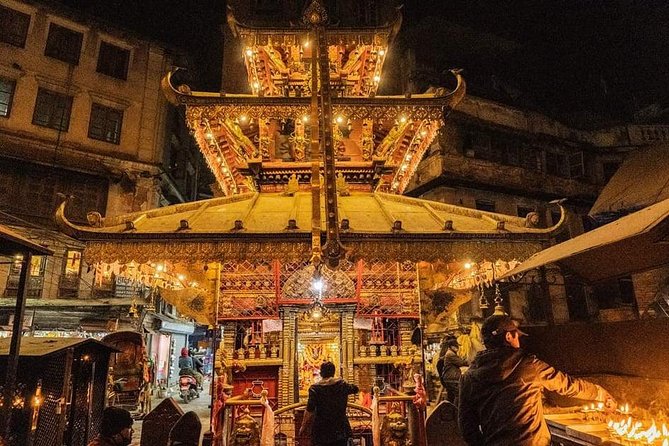
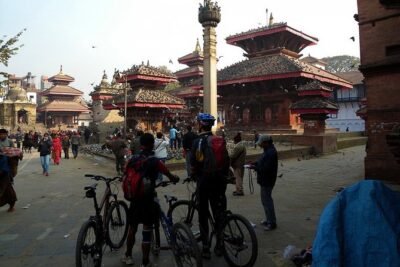
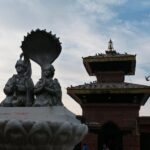
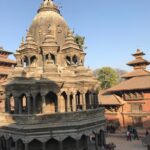
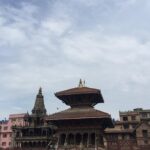
Your first stop is Kathmandu Durbar Square, a historic complex tied to royal power. It was the seat of the Malla kings and later associated with the Shah dynasty. That matters because when you walk through places like this, you’re not just seeing temples and courtyards—you’re seeing the physical record of how rulers displayed authority.
You’ll spend around 2 hours here, and this is one of the best places to start because it sets the theme for the day: Kathmandu isn’t just scenic; it’s political and spiritual layered on top of each other over centuries.
A couple practical things to keep in mind as you visit:
- Expect to spend time looking closely at how buildings and spaces are arranged rather than treating it like a single monument.
- Plan for some form of entry process since admission tickets are not included.
If Durbar Square is where the story begins, it also gives you the vocabulary for later stops. After you see how royal Kathmandu shaped public religious space, Pashupatinath and the stupas feel less random. They start to read like different chapters of the same city-wide conversation.
Swayambhunath hilltop stupa: views plus deep religious meaning
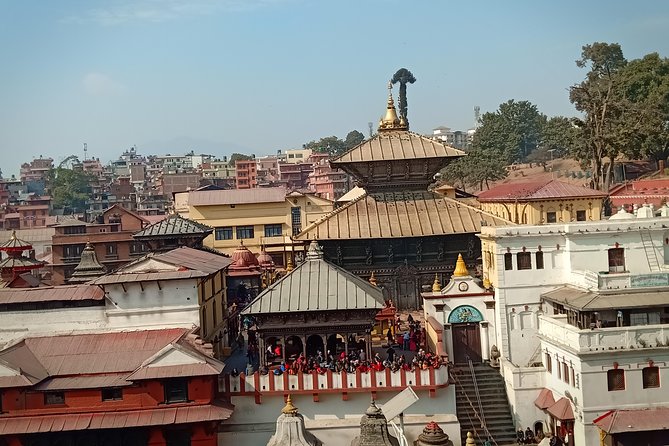
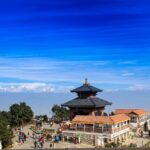
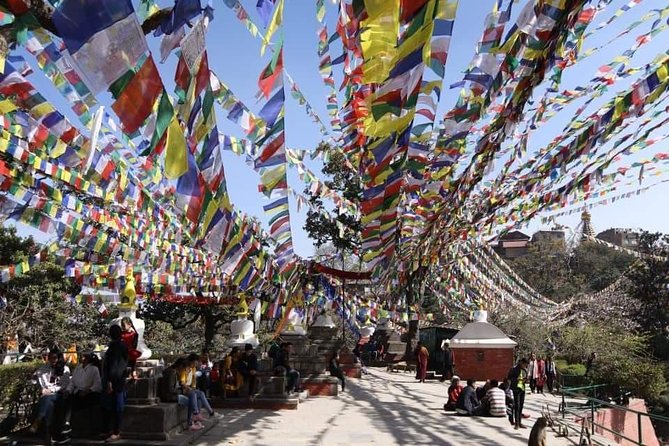
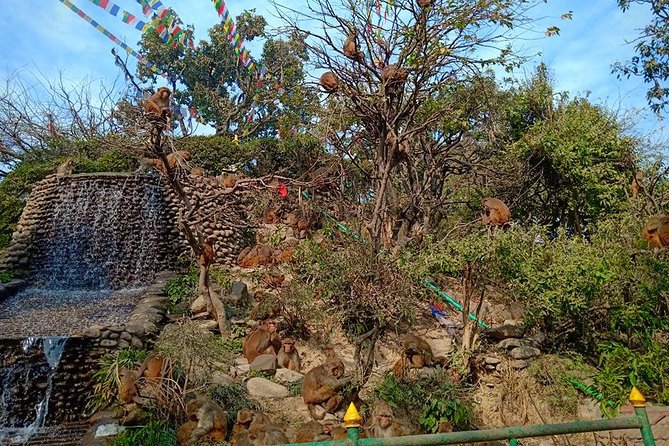
Next up is Swayambhunath Stupa, a hilltop site believed to be over 2,000 years old. The legend of its origin—coming forth like a lotus—gives the place its symbolic weight, but what you’ll feel on-site is the sense that this is a long-lived spiritual landmark.
You’ll have about 1 hour here. That hour is tight enough that the guide’s context helps: you’re more likely to understand why the stupa is revered and how the site fits within the broader religious landscape than if you simply wander without direction.
Hilltop sites also change the way you see the city. Even if you’re not chasing the view like a photographer, being up on a rise helps you connect the dots between neighborhoods and heritage zones. It’s a natural “orientation moment” that makes the rest of the day sink in.
Again, admission isn’t included, so you’ll want to budget for site entry. The good news is that with a guide and scheduled time, you’re less likely to lose momentum fumbling through logistics.
Pashupatinath Temple: the sacred center of Shiva devotion
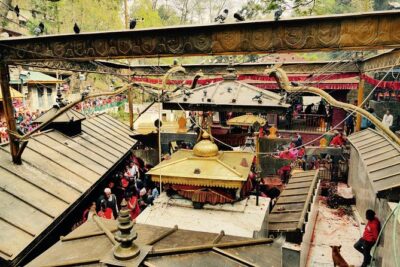
Pashupatinath Temple is dedicated to Lord Shiva and dates back to 400 A.D., with rebuilding in the 17th century under King Bhupatindra Malla after earlier damage. That timeline gives you a strong reminder: you’re not visiting a single era. You’re visiting a living sacred site that’s been repaired, maintained, and reinterpreted through generations.
You’ll have about 1 hour here, which is enough time to understand the layout and to absorb the meaning behind what makes it so important. The guide’s cultural background is especially valuable at Pashupatinath because this is a place where ritual and architecture work together. With someone explaining the “why,” it’s easier to notice details you might otherwise overlook.
A respectful visit matters here. You’ll be in a major religious setting, so plan to move carefully and follow the lead of your guide. If you’re coming from a place where temple visits are mostly about sightseeing, this stop will likely feel more like watching a spiritual system at work.
As with the other major sites, admission tickets are not included. Build in mental flexibility for the entry process so the day doesn’t feel rushed in the wrong moments.
Boudhanath Stupa: one of the world’s biggest sacred landmarks
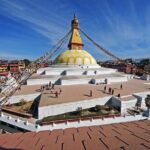
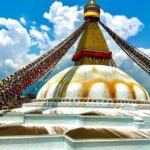
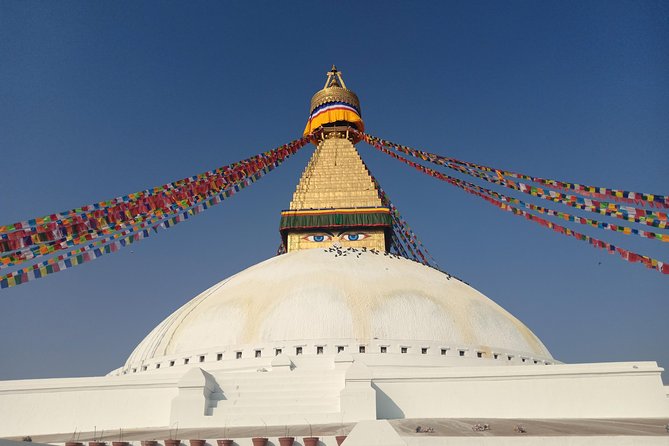
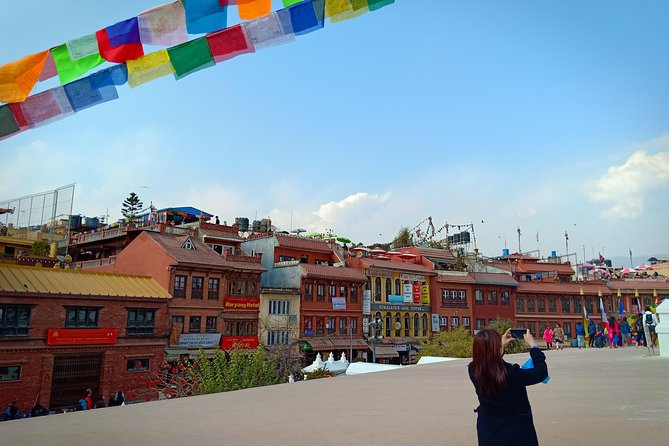
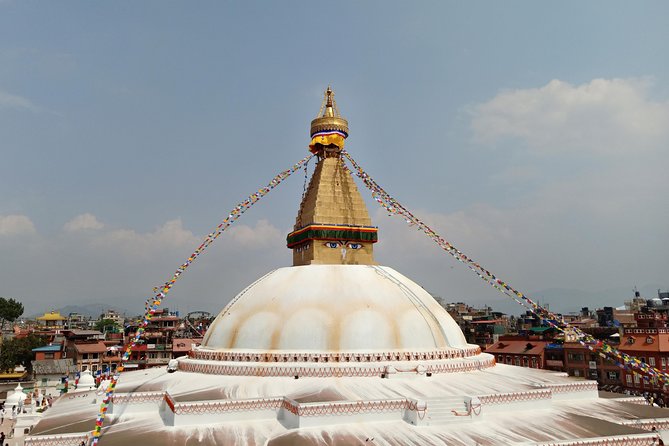
The final heritage stop is Boudhanath Stupa, built in the 5th century and later becoming a center for Tibetan Buddhism after refugees arrived in Nepal. That shift is part of what makes Boudhanath more than an impressive monument. It’s a sacred space tied to migration, refuge, and the continuity of faith.
You’ll spend about 1 hour at Boudhanath. One hour at a large stupa can feel like a lot—or like not enough—depending on what you notice. The guide’s explanations help you read the site in layers: the architecture, the religious significance, and the historical reason it became such a powerful gathering place.
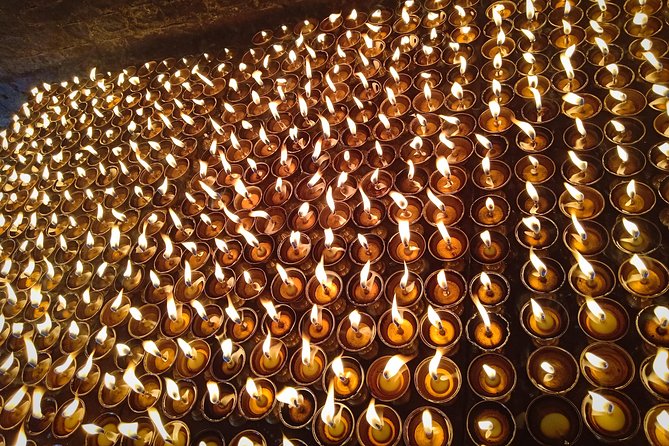
This is also one of the best stops for atmosphere. Stupas pull people in, and you’ll likely see ongoing devotional activity even while your group is moving through the site. If you like places where history is still visibly part of daily life, Boudhanath is where you’ll feel it most.
Admission isn’t included here either, so it’s worth keeping a little reserve for entry fees and any small on-the-spot expenses that come up.


Comfort and timing: how the private vehicle changes your day
Between Kathmandu Durbar Square, Swayambhunath, Pashupatinath, and Boudhanath, you’re dealing with big changes in elevation, traffic patterns, and neighborhood rhythm. This tour uses a private vehicle with air conditioning, plus hotel pickup and drop-off.
That combo is a real value driver. In Kathmandu, getting between attractions independently can turn into a logistics puzzle: figuring out which direction to go, negotiating transport, and building in extra time for things that slow down. Here, the driving plan is handled, which keeps your day on track.
The day runs about 6–7 hours. That’s long enough to see four UNESCO sites, but not so long that it eats your entire vacation. If you’re trying to do culture in the time you’ve got, this is the kind of format that helps you avoid regret later.
Also, group discounts and a mobile ticket are included. In practical terms, that means you’re not stuck with complicated paper tickets or last-minute scrambling.
The only “consideration” is pacing. With four major stops, you won’t have hours at each one. If you’re the type who likes to linger for deep detail at every corner, you might want to mark one or two sites to revisit after your tour.
Price and value: what you really get for $50.50
At $50.50 per person, this isn’t priced like a premium luxury experience—it’s priced like a smart way to hit the biggest heritage sites without turning your trip into a scheduling project.
Here’s what’s doing the heavy lifting for your money:
- Guide (professional, with in-depth cultural background)
- Private transportation in an air-conditioned vehicle
- Round-trip hotel transfer (pickup and drop-off)
- A format that covers four UNESCO sites in a single day
- Small-group size (max 15), which tends to improve the quality of your time there
The biggest thing you’ll add on your own is obvious: lunch and admission tickets. Since admission is explicitly not included for key stops, it’s wise to treat the headline price as the cost of the guide and transport, then add your entry and meal budget on top.
If you were to piece this together alone—booking a vehicle, arranging timing between distant sites, and paying a guide separately—you’d usually spend more time and often more money. This tour bundles the work for you, and that’s where the value shows.
To be clear: this is not a bargain if you’re someone who wants lots of free time and no structure. But if you want efficient, guided UNESCO touring that reduces decision fatigue, the price-to-output ratio is strong.
A note on the guide: why Saru’s style matters
One detail that stood out is the quality and warmth of the guide. In past feedback, a guide named Saru is described as excellent, friendly, and compassionate, with solid knowledge of the city. That kind of guiding matters more in Kathmandu than many places, because many visitors don’t arrive already fluent in what they’re seeing.
A good guide doesn’t just point out what’s where. They help you understand connections—how a royal square relates to today’s cultural identity, how a hilltop stupa fits into regional devotion, and how Tibetan Buddhism found a spiritual home at Boudhanath. When your guide brings that to life, the sites start to feel less like checklist items and more like parts of one big story.
Who this Kathmandu UNESCO tour is best for
This tour fits best if you:
- Are visiting Kathmandu for the first time and want a quick “get your bearings fast” day
- Have limited time and want to see key heritage sites in a logical order
- Prefer small-group interaction over big-bus chaos
- Like understanding context, not just taking photos
- Want hotel pickup and drop-off to reduce stress
It may be less ideal if you:
- Want lots of unstructured time at one site
- Have a very flexible schedule and would rather travel slowly by yourself
- Are on a strict budget that can’t handle separate entrance fees and lunch
Should you book this tour?
If you want a straightforward, organized day that covers four UNESCO highlights without turning your schedule into a headache, I think this is a solid booking. The combination of small-group pacing, guided explanations, and comfortable private transport is exactly what helps Kathmandu feel manageable.
Book it if you’re the kind of traveler who wants to learn while you go, and you’d rather pay for a plan than build one. Skip it if you want slow, deep time at just one or two places. In Kathmandu, that slower approach can be great too—but it needs more days.
FAQ
What UNESCO sites are included on the tour?
The tour covers Kathmandu Durbar Square, Swayambhunath Stupa, Pashupatinath Temple, and Boudhanath Stupa.
How long does the tour take?
It runs about 6 to 7 hours.
Is hotel pickup and drop-off included?
Yes. The tour includes round-trip transfer from your hotel, plus drop-off afterward.
Is the tour ticket a mobile ticket?
Yes, the tour uses a mobile ticket.
Is admission to the sites included?
No. Admission tickets are not included for the stops.
What’s included in the price?
Included items are a professional guide, private transportation, an air-conditioned vehicle, and round-trip hotel transfer.
Is lunch included?
No. Lunch is not included.
How large is the group?
The tour has a maximum of 15 travelers.
What is the cancellation policy?
Free cancellation is available up to 24 hours in advance for a full refund.
Who runs the tour?
The experience provider is Epic Adventures Pvt. Ltd.