REVIEW · KATHMANDU
Annapurna Base Camp Trek 12 Days
Book on Viator →Operated by Nepal Nirvana Trails · Bookable on Viator
One step in the Himalaya and you feel it fast. This 12-day Annapurna Base Camp trek keeps things structured—airport pickup, mountain guiding, permits handled, and meals queued up—so you can focus on walking smart and enjoying the views. You’ll also get that classic early start routine with Poon Hill sunrise and a shot at Annapurna Base Camp dawn, if the weather plays along.
What I like most is the “prepared on purpose” feel. Permits and fees (ACAP, TIMS, local permits) are included, and the trekking includes a map plus water purification drop/tablets, which saves you from last-minute headaches. The other big plus is the human side: guides such as Bhairas Tamang, Prajil, and Somnath Tripathi are repeatedly described as attentive to pace and safety, and that really matters when the trail gets steep and cold.
The main consideration is effort and timing. You’ll be waking early for sunrises and hiking daily through cold mornings and downhill/ascents, and the trek assumes moderate physical fitness—not couch-to-altitude comfort.
In This Review
- Quick Hits: What Makes This ABC Trek Work
- Annapurna Base Camp Trek, 12 Days: What You’re Really Paying For
- The Altitude Reality: How to Prep for Cold Mornings and Big Days
- Day-by-Day: Kathmandu to Pokhara, Then Up Toward ABC
- Day 1: Kathmandu arrival and trek prep
- Day 2: Kathmandu to the Pokhara route (early by bus)
- Day 3: Pokhara breakfast, then to Nayapul for trekking start
- Day 4: First mountain sunrise vibes
- Day 5: Poon Hill sunrise, then onward in cooler air
- Day 6: Downhill to Sinuwa/Chhomrong area
- Day 7: Ascent toward Deurali via Bamboo
- Day 8: The big moment—trek to Annapurna Base Camp
- Day 9: Dawn at ABC, then the long return to Sinuwa
- Day 10: Toward Siwai, with Chhomrong views on the way
- Day 11: Pokhara to Kathmandu and a proper rest day
- Day 12: Final day in Kathmandu
- Guides, Safety, and the Small Support You’ll Feel Every Day
- Meals, Permits, and Water Treatment: Real Value on ABC
- Price and Logistics: Is $800 Good Value?
- Packing Smarter for This Route (Without Guessing Too Much)
- Who This Trek Suits Best
- Should You Book Nepal Nirvana Trails for Annapurna Base Camp?
- FAQ
- How long is the Annapurna Base Camp trek in this package?
- Where does the tour start, and what time does it begin?
- Are airport transfers included?
- How do you get between Kathmandu and Pokhara?
- Are meals included during the trekking days?
- What about permits for the trek?
- Is water purification provided?
- Is a porter included?
- FAQ
- Do I need to buy travel insurance?
- Is free cancellation available?
Quick Hits: What Makes This ABC Trek Work
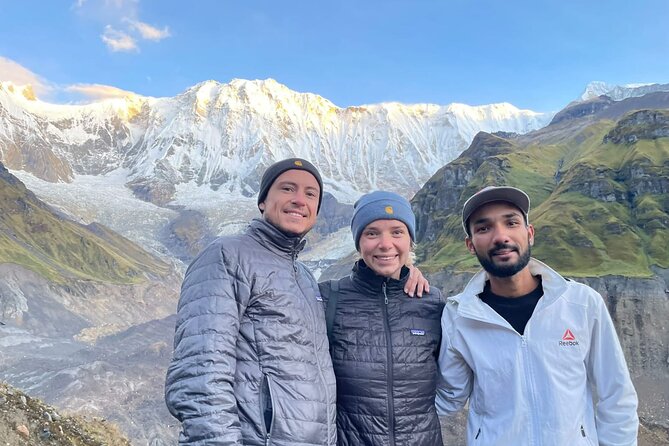
- Poon Hill sunrise in the early hours, with a short hike to a big payoff
- Annapurna Base Camp at dawn, only if the sky is clean, but the plan is there
- Permits handled with ACAP, TIMS, and local permits included
- Meals on the trek (breakfast/lunch/dinner) plus tea/coffee, so you’re not hunting food daily
- Water purification tablets/drop provided, a practical upgrade for safety
- Guides you might meet include Bhairas Tamang, Prajil, and Somnath Tripathi, known for pacing and support
Annapurna Base Camp Trek, 12 Days: What You’re Really Paying For
At $800 per person, you’re not just paying for a mountain view. You’re paying for a whole chain of logistics that can otherwise eat your time and energy: airport transfers, Kathmandu–Pokhara transport, trekking support, accommodations for 11 nights, and a schedule that lines up with sunrise viewing.
This matters on ABC because the trek isn’t one “big hike day.” It’s a string of shorter days with early starts, cold mornings, and repeated changes in altitude and weather. When you remove the admin work—permits, routing knowledge, and food planning—you can spend your brainpower where it belongs: pacing, hydration, and staying warm.
Just remember what’s not included: your international flights and Nepal entry visa, plus travel/health insurance that covers emergency rescue or evacuation. Also, plan on paying for personal extras like snacks/drinks and anything beyond the trek meals.
You can also read our reviews of more hiking tours in Kathmandu
The Altitude Reality: How to Prep for Cold Mornings and Big Days
ABC is famous for scenery, but it’s also famous for teaching humility. Even without specific elevation numbers listed here, you should treat this like a real altitude trek. Your provided fitness guidance is moderate physical fitness, which is a good sign: this is built for people who can hike uphill for several hours, not for casual sightseeing walkers.
Pack for mornings that start chilly. Day 5 explicitly calls out a chilly wake-up for Poon Hill sunrise, and ABC dawn plans usually involve cold air and wind. Bring layers you can adjust quickly: a warm top for sunrise, a breathable layer for hiking, and something wind-resistant for when you’re standing still waiting for the horizon to brighten.
And pace like a professional. The route includes both downhills and ascents—your legs will get worked in a very “Himalaya” way. In the support you might get, guides like Bhairas Tamang are described as watching the group closely and adjusting pace when someone needs a breather. That’s exactly what you want from your guide: not just knowledge, but real pacing attention.
Day-by-Day: Kathmandu to Pokhara, Then Up Toward ABC
Below is what your days look like in real life—what you’ll likely feel, what each stop is good for, and where you should watch your step.
Day 1: Kathmandu arrival and trek prep
You meet the team on arrival at Tribhuvan International Airport. The plan is to escort you to your hotel and give you time to rest and prep—this is smart. ABC starts early, so you want half a day to get your bearings, organize gear, and sleep like a responsible adult.
If you’re the type who likes to wander on day one, this is your only “easy day.” Use it for rest, short local walks, and charging devices.
Day 2: Kathmandu to the Pokhara route (early by bus)
The guide meets you at your hotel at 6:30 am. You’ll walk to a tourist bus station area (Sorakhutte) and catch a bus at 7:00 am, then drive onward to Malekhu.
This day is less about scenery and more about momentum. You’re moving toward Pokhara so you can start the trek with fewer long road transfers later.
Practical tip: sleep early tonight. If you arrive in Kathmandu jet-lagged, you’ll feel this morning.
Day 3: Pokhara breakfast, then to Nayapul for trekking start
You’ll have breakfast in Pokhara, then catch a car/taxi to the bus park. From there, you ride a sharing local bus/jeep to Nayapul, with about 1.5 hours of travel.
Why this matters: the sooner you’re walking, the less time your body spends “warming up” in a cramped vehicle. Once you’re on foot, you can set your pace.
Day 4: First mountain sunrise vibes
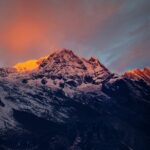
You’ll wake to local sounds (donkey, goat, hen, dog) and then step into a sunrise experience. The day includes an early morning vibe with “beautiful sunrise views,” plus breakfast with views of the Annapurna area (the details are cut off here, but the intention is clear: start with sky and mountain light).
This is also the psychological day: it helps you accept that the trek isn’t only about conquering. It’s also about patience and timing.
Day 5: Poon Hill sunrise, then onward in cooler air
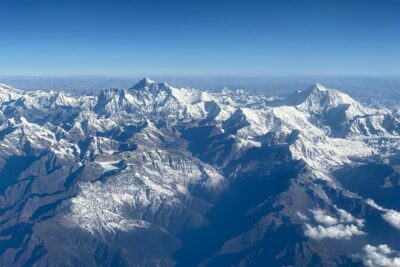
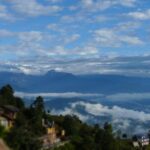
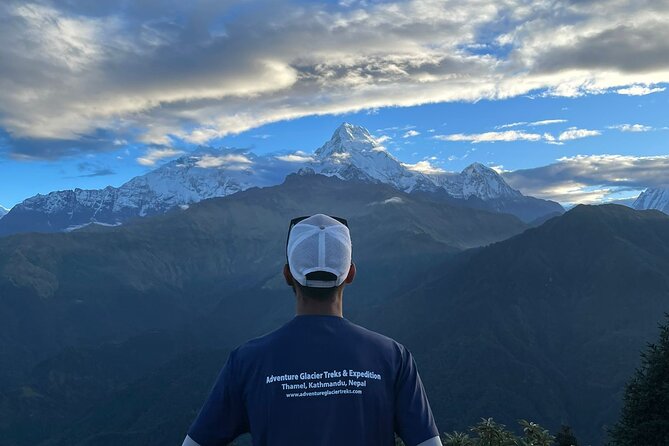
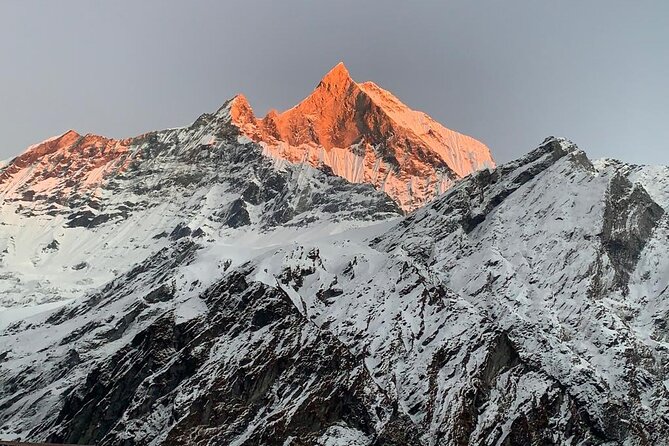
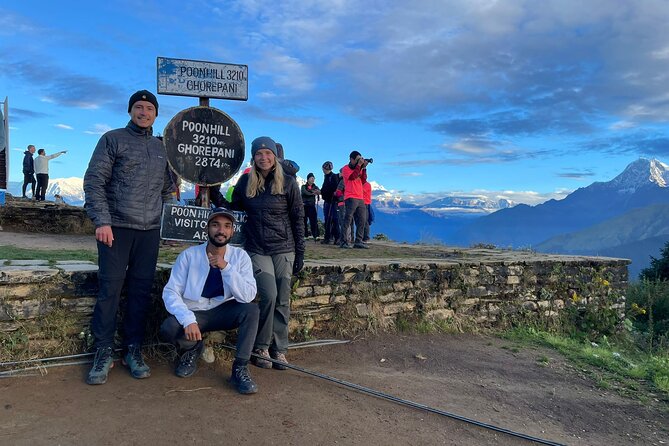
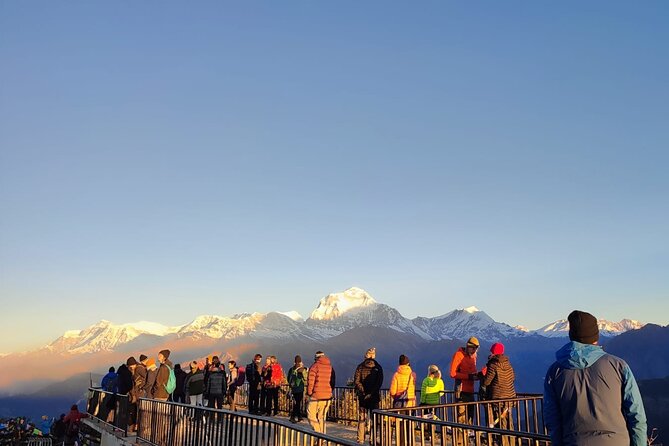
This is your early morning test of commitment. You hike 45 minutes to 1 hour to Poon Hill Viewpoint for sunrise from the Ghorepani/Poon Hill base area. The payoff is huge: the plan references the ability to count many peaks (it says 18 countable peaks).
After sunrise, you continue onward. The route then flows toward Tadapani (since Day 6 says goodbye to Tadapani).
Bring warm socks and something for wind. Standing still for sunrise can feel colder than hiking.
Day 6: Downhill to Sinuwa/Chhomrong area
Day 6 is described as an enjoyable downhill toward Sinuwa, with views over the Modi & Chhomrong Khola. The plan also points you toward the Chhomrong area as part of the day’s movement.
This day is where trekking poles can help some people (not provided, but useful if you use them). Downhill days can be knee-heavy, and it’s easier to manage if you’re not rushing.
Day 7: Ascent toward Deurali via Bamboo
After breakfast in Sinuwa, you ascend toward Deurali. The climb is estimated at about 1.5 hours to reach Bamboo, then you continue coming closer to Deurali.
This is a “work day.” It’s not just scenic hiking—it’s building altitude and breath capacity. If you feel behind, this is the moment to slow down early rather than fight it later.
Support counts here too. Guides like Prajil are described as helping with practical needs and keeping the group comfortable, including during tea time at guesthouses.
Day 8: The big moment—trek to Annapurna Base Camp
Day 8 is the destination day: you trek to Annapurna Base Camp, surrounded by mountains, and pass through Machhapuchhre Base Camp along the way.
This is where you’ll likely get why people do the trek in the first place. It’s also where the air can feel thin, and the wind can do its own thing. Stay hydrated, keep moving steadily, and don’t wait until exhaustion to slow down.
Day 9: Dawn at ABC, then the long return to Sinuwa
You wake for dawn from Annapurna Base Camp if the weather is clean and clear. That clause matters. Your best-case scenario is stunning light across the peaks, but cloud cover happens, and you should be ready for it emotionally and practically.
After breakfast, you trek back toward Sinuwa via rugged trails and sparsely forested areas. This is a common pattern on ABC: the return can feel faster in distance but heavy in legs.
Day 10: Toward Siwai, with Chhomrong views on the way
The trek time here is described as about two hours to get to Siwai from Sinuwa. Then you ascend to Chhomrong, taking in views of mountains, cascades, and farmlands.
You’re basically transitioning out of the “deep trek” mindset and back toward the civilization rhythm. This day is still physical, but it usually feels like progress.
Day 11: Pokhara to Kathmandu and a proper rest day
After breakfast, you head from the mountain back toward Pokhara, and then onward to Kathmandu. You’ll have free time after arrival—relax, shopping, whatever suits you.
There’s also a goodbye dinner in the evening. It’s a nice way to close the loop without rushing straight to the airport the next morning.
Day 12: Final day in Kathmandu
Your trek ends, and you’ll be dropped at the airport so you can fly to your next destination. This is the day to plan your flight timing with the real world in mind: you’ve been on a schedule for days, so don’t book an ultra-tight connection.
Guides, Safety, and the Small Support You’ll Feel Every Day
The strongest theme from guide experiences shared for this program is simple: people feel cared for. That shows up in pacing, flexibility, and how quickly issues get handled.
If you happen to trek with Bhairas Tamang, the descriptions emphasize he’s funny, attentive, and checks in if someone gets tired. That is not a luxury on ABC. It can be the difference between finishing comfortably and spending the rest of the day nursing your legs.
Guides like Prajil are noted for being ready with snacks during tea time and helping you get through the day smoothly in guesthouses. Another named guide, Somnath Tripathi, is described as well-prepared and able to deal with problems. Pre-trek support also matters, and Kul is named as a responsive point of contact for questions before departure.
None of this guarantees zero challenges (the Himalayas always keeps its own agenda). But it does mean you’re less likely to feel lost, rushed, or unsupported.
Meals, Permits, and Water Treatment: Real Value on ABC
This trek includes meals while trekking: breakfast (11), lunch (8), dinner (8), plus tea/coffee. That’s a big deal because buying food every day from scratch adds both money and mental load—especially on days when energy is low.
On top of that, you get ACAP, TIMS, and local permits included. Permits matter on ABC not only for legality, but also because they connect you to the protected and managed trekking routes. In practical terms: you spend less time chasing paperwork and more time walking.
You’re also provided a trekking map and water purification drop/tablets. That’s exactly the kind of “boring but important” item you’ll thank yourself for later. You still need to carry water, but you’re not starting from zero.
Price and Logistics: Is $800 Good Value?
Let’s break down what’s covered and what isn’t.
Included at $800 per person:
- Airport transfer for arrival/departure
- Ground transport Kathmandu–Pokhara–Kathmandu by tourist bus
- 11-night accommodations
- Experienced guide
- Trek meals and tea/coffee
- Transport to/from trekking start and end points (private vehicle for those segments)
- Trekking map and water purification items
- Permits and fees (ACAP, TIMS, local)
- Taxes/VAT and official expenses
Not included:
- International flights and Nepal entry visa
- Travel/health insurance for emergency rescues/evacuations
- Lunch/dinner in Kathmandu and Pokhara
- Personal expenses during trekking (snacks, drinks like beer/coke/juice, Wi‑Fi)
- Trekker porter (optional if you need one)
- Tips for the guide (it’s expected)
For many people, the best “value signal” is not the $800 sticker. It’s that the trek meals, key logistics, permits, and water treatment are bundled. Those add up quickly if you plan them solo.
Two things to consider before you commit:
- If you want a porter included automatically, this package doesn’t list that—so you’ll likely have to arrange it based on your needs.
- You’ll still pay for personal snacks/drinks and your insurance. Those are normal in trekking, but they should be in your budget.
Packing Smarter for This Route (Without Guessing Too Much)
Because the itinerary includes early mornings and at least one explicit “chilly morning” day, you should pack for cold hands, wind, and sunrise time.
Bring:
- Warm layers for sunrise (a jacket you can keep on)
- Gloves and a hat for standing outside early
- A reliable daypack for water and layers
- Trekking shoes/boots with good grip (downhill days will test you)
- A water bottle you’re comfortable carrying
- Any personal medications you rely on
You’ll get water purification drop/tablets, but you still need your own bottles. Also, meals and tea/coffee are included, so pack mostly for comfort, not for survival rations.
Who This Trek Suits Best
This ABC trek fits you if:
- You have moderate physical fitness and can hike daily with early starts
- You want a guided trek where permits and meals are handled
- You care about sunrise moments like Poon Hill and ABC dawn plans
- You like the idea of structured logistics: bus transfers, accommodations, and day-to-day routing
It might not fit as well if:
- You need a porter included by default
- You want lots of free time on the trail itself (this trek is designed around daily movement)
- You don’t like cold morning routines and wake-ups
Should You Book Nepal Nirvana Trails for Annapurna Base Camp?
I’d book this itinerary if you want an organized ABC trek where the heavy admin work is already handled—permits, trekking meals, guides, and water purification—and you value sunrise experiences with a team that keeps you on schedule.
I wouldn’t book if your top priority is maximum independence or if you expect everything to be fully covered in terms of personal costs. You’ll still spend on extras, and you must plan insurance and visas/flights yourself.
If you’re the kind of trekker who likes feeling safe, paced, and supported—especially on tired days—this program has a strong track record through guides such as Bhairas Tamang and Prajil.
FAQ
How long is the Annapurna Base Camp trek in this package?
The duration is listed as 12 days (approx.).
Where does the tour start, and what time does it begin?
The start point is Tribhuvan Airport, Kathmandu, Nepal, with a start time listed as 6:15 am.
Are airport transfers included?
Yes. Airport transfer services for arrival and departure are included.
How do you get between Kathmandu and Pokhara?
The package includes ground transportation from Kathmandu to Pokhara and back by tourist bus.
Are meals included during the trekking days?
Yes. Meals while on the trek include breakfast/lunch/dinner, plus tea/coffee. The package lists Breakfast (11), Lunch (8), Dinner (8).
What about permits for the trek?
Permits are included, including ACAP, TIMS, and local permits, plus official expenses and government tax/VAT.
Is water purification provided?
Yes. You get water purification drop/tablets included.
Is a porter included?
No. A trekking porter is not included (it says it’s available if you need one).
FAQ
Do I need to buy travel insurance?
Yes. Travel and health insurance that covers emergency rescues and evacuations is listed as not included.
Is free cancellation available?
Yes. The policy states free cancellation if you cancel up to 24 hours in advance for a full refund.