REVIEW · KATHMANDU
Half Day Boudhanath Stupa Tour in Kathmandu
Book on Viator →Operated by Himalayan Advisor Pvt. Ltd. · Bookable on Viator
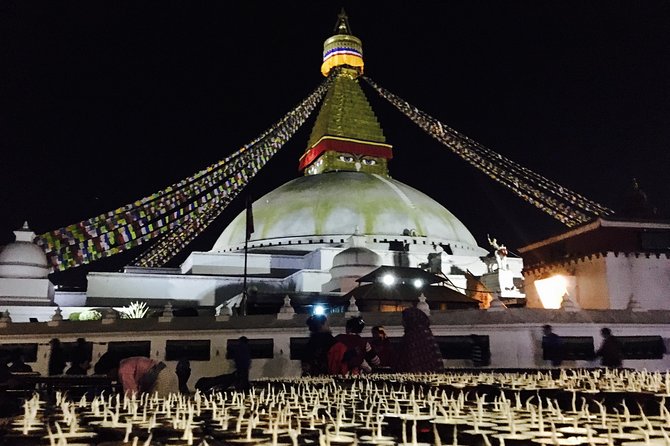
Prayer wheels spin for everyone.
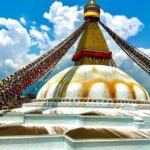
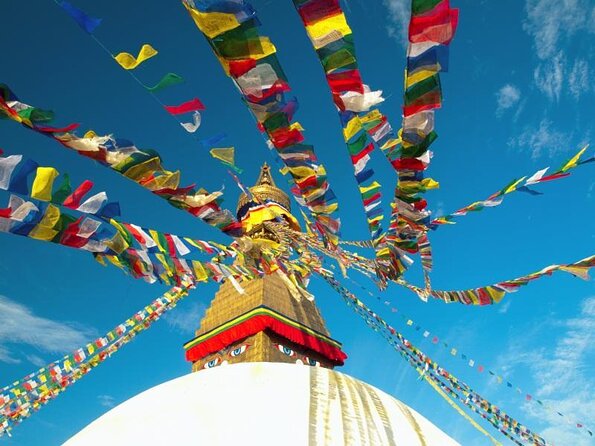
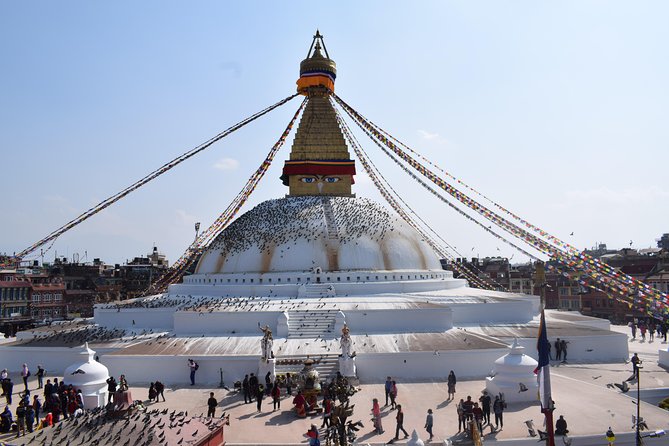
This half-day private tour is built around Boudhanath Stupa, a massive 36-meter (118-foot) UNESCO site that you see up close without wasting time. I like how the tour keeps things practical: you get round-trip pickup so you’re not stuck negotiating taxis, and your guide points out what to notice as you walk the stupa’s ring.
You’ll also like the human side of it. With a guide who tailors the commentary to your interests, you get context for what people are doing as they whirl prayer wheels 108 times and chant Om Mani Padme Hum, plus help spotting nearby monasteries and the Tibetan connections that make Boudhanath feel distinct inside Kathmandu. The one drawback: it’s only about three hours, so if you want a longer, slower explore or extra stops beyond the basics, this won’t feel like a full day.
In This Review
- Key Highlights You’ll Actually Feel
- Why Boudhanath Makes Sense in Just Three Hours
- Pickup, Timing, and How the Tour Stays Low-Stress
- Walking the Prayer-Circle Around a 36-Meter Stupa
- Prayer Wheels, Om Mani Padme Hum, and What to Watch For
- The Thanka Center Stop: Art You Can Actually Understand
- Price Check: Is $55 Good Value for What You Get?
- What to Expect From the Guide (and Why It Matters)
- Respectful Visit Tips for Boudhanath (So You Don’t Feel Out of Place)
- Who This Tour Suits Best
- Should You Book This Boudhanath Half-Day Tour?
- FAQ
- How long is the Boudhanath Stupa half-day tour?
- Is this tour private?
- Does the tour include hotel pickup and drop-off?
- Are entrance fees included?
- Is food included during the tour?
- What is the cancellation policy?
Key Highlights You’ll Actually Feel
- Private by design: It’s only your group, so questions don’t get swallowed by a big crowd.
- Easy walking route: A simple circumnavigation is the core plan, built for a short visit.
- Prayer-meets-history explanations: You’ll get guided meaning for what you’re seeing and hearing.
- Entrance fees included: You avoid surprise costs at the sites you stop at.
- Quick Thanka center stop: Admission is free there, so you can look without feeling rushed.
- Hotel pickup and drop-off: Saves time and hassle in Kathmandu traffic.
Why Boudhanath Makes Sense in Just Three Hours
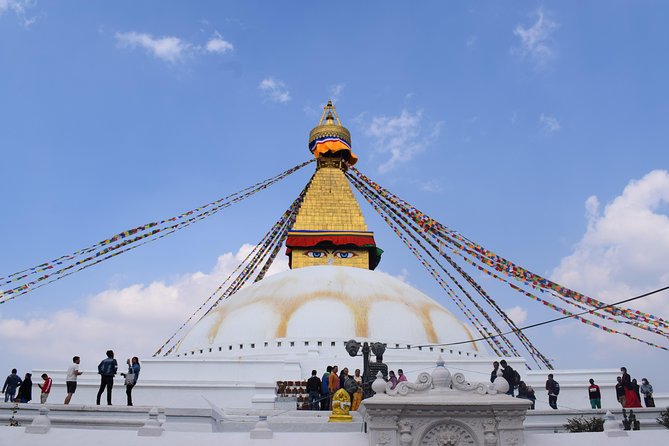
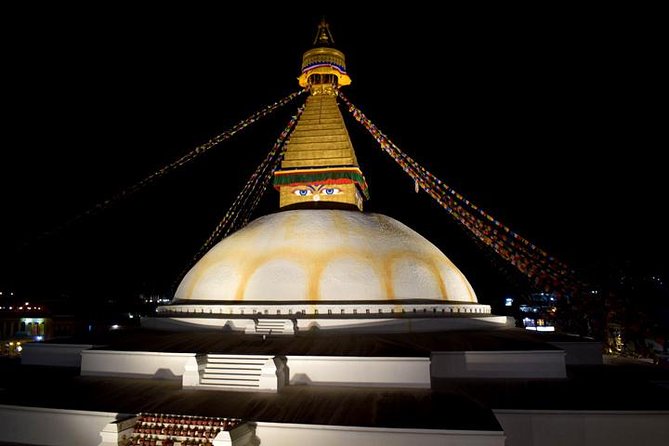
Boudhanath is one of those places where the setting does half the work for you. The stupa rises to about 36 meters (118 feet), but what really hits is the way daily religious life wraps around it. You don’t just look at a monument. You watch practice happen: people move in a steady loop, prayer wheels turn, and chants drift through the air.
That’s why the half-day format works. In a short time, you can get oriented fast and still leave with a clear sense of what the site means. It’s also a smart choice if Kathmandu is your base and you don’t want to burn a whole day on logistics and travel time.
And because this tour includes guided context, it’s not just sightseeing-by-photo. A guide helps you see patterns you might otherwise miss, especially around the prayer circle and the surrounding religious activity.
You can also read our reviews of more tours and experiences in Kathmandu.


Pickup, Timing, and How the Tour Stays Low-Stress
The biggest practical win is the transportation setup. You get hotel pickup and drop-off as part of the package, which matters in Kathmandu where things can get confusing quickly. You also don’t have to haggle for a taxi for the return trip. That alone can make the whole experience feel smoother.
The tour runs about 3 hours, which is a sweet spot. Long enough to take in Boudhanath properly, short enough that you’re not stuck feeling tired and rushed. If you’re trying to balance multiple sights in a tight itinerary, this fits without knocking your day off course.
This is also described as a private tour/activity, meaning only your group participates. I find that’s a big deal at holy sites. You can pause when you want, ask direct questions, and move at a pace that feels right for your comfort level.
One more note: the tour is near public transportation, which can be helpful if you need a backup plan or you’re exploring on your own at other times.
Walking the Prayer-Circle Around a 36-Meter Stupa
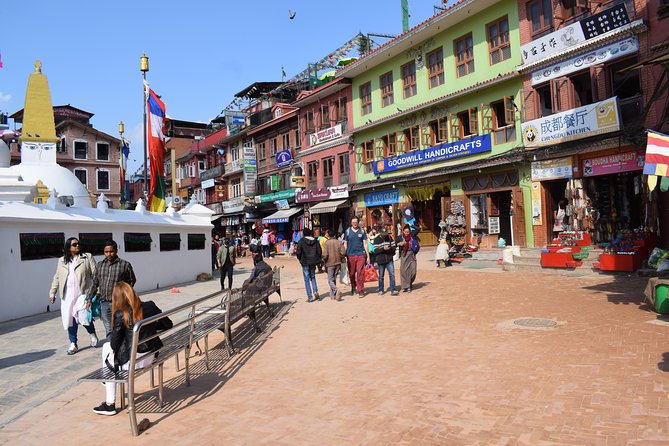
Your main focus is the stupa itself. It’s hidden behind tall buildings that ring the area, which is exactly why a guide helps. Without knowing where the entrance is, you can easily miss the right approach. Once you find it, the scale hits immediately. That 36-meter height makes it hard not to stare.
Then comes the best part for a short tour: you circumnavigate. The experience is designed around an easy half-day walk around Boudhanath, keeping you close to the action instead of treating the stupa like a distant viewpoint. You’ll be moving with the flow of visitors and devotees, which gives you a more real sense of the site’s rhythm.
Along the route, you’ll see large, colorful monasteries around the complex. Even in a quick loop, those details help you understand that Boudhanath isn’t isolated. It’s part of a wider religious environment—one that feels culturally different from the rest of Kathmandu.
What you’ll likely feel: the stupa becomes a kind of center-line for the neighborhood. The buildings and people aren’t just nearby. They’re connected to the practice happening around the stupa.
Prayer Wheels, Om Mani Padme Hum, and What to Watch For
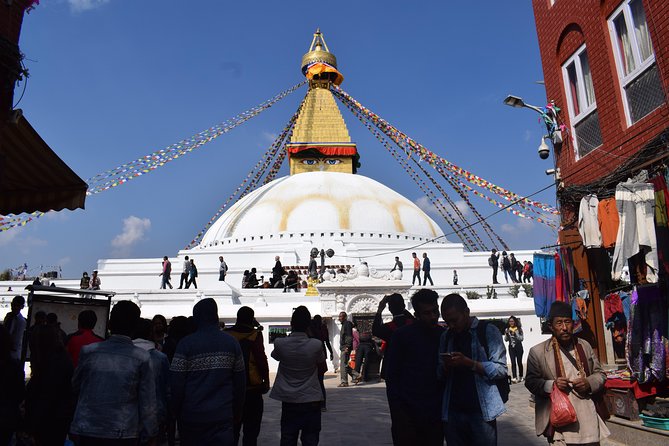
This tour includes guided commentary about Buddhist practice and the meaning behind what you’re seeing. A big moment is the prayer activity around the stupa: devotees whirl prayer wheels 108 times while chanting Om Mani Padme Hum.
Even if you’ve heard the phrase before, watching it in action changes how it lands. The key is to slow down just a bit and notice how the behavior is structured. The repeated motion, the focus, and the chant all create a pattern. It’s less like a performance and more like a routine of devotion.
Your guide’s job is to help you make sense of it. You’re not only looking at symbols. You’re understanding why people move the way they do, and what the prayers mean in a practical, day-to-day religious setting.
Also keep an eye on the prayer flags. They flutter in the breeze around the area, and they’re a visual reminder that this is meant to be shared with the environment. You’ll see the flags as part of the overall atmosphere, not as a separate “photo stop.”
If you want a simple tip: when you pause, don’t aim your camera at everything at once. Pick one thing—prayer wheels, chant rhythm, or flags—and watch that one element for a minute. Your brain catches the meaning faster that way.
The Thanka Center Stop: Art You Can Actually Understand
Near Boudhanath, you’ll make a short stop at a Thanka center. It’s brief—about 10 minutes—but it has a purpose: it translates the religious world you’re seeing outside into the visual language of Tibetan art.
Thanka paintings are serious objects in Tibetan Buddhist culture. Here, the shop is described like a gallery of ancient art, with paintings made by professional painters using authentic materials. If you’ve ever seen Thanka art in stores and wondered whether it’s real or just decorative, this stop is useful because it’s presented as a place where the art is made by practitioners and sold with an emphasis on authenticity.
Admission ticket is free for this stop, so it doesn’t feel like an added cost. And because it’s short, you don’t have to worry about losing time from the stupa, which is the main event.
How to get value from this part: ask your guide what details to look for in the paintings. Even a few pointed comments can turn a quick look into something memorable.


Price Check: Is $55 Good Value for What You Get?
At $55 per person, the price may look like a “tour price,” but what matters is what’s included. This isn’t just a guide walking next to you. You also get:
- Private transportation with hotel pickup and drop-off
- A professional tour guide
- Entrance fees included
- A short, structured visit focused on the core experience at Boudhanath
Food and drinks are not included, so you’ll want to plan for that on your own. But compared to many half-day tours that charge separately for entrance tickets or struggle with transport, this package keeps the budget simple.
Another value point: the tour tends to be booked about 45 days in advance on average. That’s often a sign it’s a popular slot, especially for visitors who want predictable logistics in Kathmandu. If you’re traveling during peak periods, booking ahead is a smart move.
Finally, group discounts are listed. That can help if you’re traveling with friends or family and want to keep the per-person cost down while staying in a private group.
What to Expect From the Guide (and Why It Matters)
The tour includes guided commentary that you can tailor to your interests. In practice, that means the guide isn’t just reciting facts. They help you connect the scene to what people are doing and why the site matters to devotees.
One review highlighted Kabita as knowledgeable and kind, and that kind of feedback matters. At sacred sites, a good guide doesn’t just talk about history; they help you interpret what you’re seeing without turning it into a lecture. If you care about respectful viewing and cultural context, that’s exactly what you want from this kind of short tour.
If you’re the type who likes to ask questions, a private group format makes it easier. You’re not stuck waiting your turn.
Respectful Visit Tips for Boudhanath (So You Don’t Feel Out of Place)
Boudhanath is active with religious practice. That means your behavior affects the mood of your visit, even if you’re just a visitor.
Here are practical ways to keep things respectful:
- Move with the flow when people are circulating and chanting.
- Keep your voice low near prayer activity.
- Be mindful where you stand so you don’t block others trying to pass.
- If you’re photographing, pause and scan first so you don’t shove your camera into someone’s space.
Also, dress matters at sacred sites. Aim for modest comfort so you can focus on the spiritual atmosphere without worrying about what you’re wearing. Kathmandu weather can vary, so pack for layers if you run warm or cold easily.
If you want your photos to look better and feel more respectful, use longer pauses to catch prayer wheels turning and prayer flags fluttering rather than trying to shoot everything at once.
Who This Tour Suits Best
This tour fits best if you’re:
- Short on time but want a guided, meaningful introduction to Boudhanath
- Traveling with friends or family and want a private group experience
- Interested in Buddhist practice, prayer rituals, and cultural context
- Looking for simple logistics with pickup, drop-off, and entrance fees handled
It’s also a good match if you’re someone who likes to learn while you walk. The tour is built around watching the loop and taking in surrounding monasteries and Tibetan religious life in Kathmandu.
If you want a deep, multi-stop day with lots of wandering beyond the main sights, this might feel a bit tight. It’s designed to deliver the core experience quickly and clearly.
Should You Book This Boudhanath Half-Day Tour?
Yes, if your goal is a focused, low-stress introduction to Boudhanath with guided context and transport handled for you. At $55, it’s a value-minded option because you’re not paying extra for entrance fees and you’re not arranging your own ride through busy streets.
I’d skip it only if you already know exactly what you want to do, you’re comfortable navigating on your own, and you want a longer visit than a three-hour loop. In that case, you might prefer a self-guided morning and extra time for wandering.
For most people, though, this is a clean, practical plan: get picked up, get oriented at Boudhanath, watch the prayer activity with explanations, and end with a quick Thanka art stop.
FAQ
How long is the Boudhanath Stupa half-day tour?
It takes about 3 hours.
Is this tour private?
Yes. It’s listed as a private tour/activity, so only your group participates.
Does the tour include hotel pickup and drop-off?
Yes, pickup and drop-off from your hotel are included.
Are entrance fees included?
Yes, entrance fees are included.
Is food included during the tour?
No. Foods and drinks are not included.
What is the cancellation policy?
Free cancellation is available up to 24 hours in advance for a full refund. If you cancel less than 24 hours before the start time, the amount paid is not refunded.