REVIEW · KATHMANDU
Buddhist Pilgrimage Tour In Nepal
Book on Viator →Operated by Third Rock Adventures · Bookable on Viator
Three temples, one peaceful itinerary. This one-day Buddhist pilgrimage tour in Kathmandu Valley strings together major sites—Boudhanath Stupa, Kopan Monastery, and Swayambhunath—while encouraging you to chant mantras with holy monks and learn how Buddhism shows up across Nepal’s everyday culture. It’s a compact way to connect the dots between religion, art, and community in Kathmandu Valley.
I love how much context you get from a fully trained, English-speaking guide; the tour is built for Q&A, not just sightseeing. I also like the practical pacing: private comfortable vehicles handle the driving between sites, and admission tickets are included for the stops, so you spend less time figuring out logistics.
One thing to consider: the schedule is tight, and Swayambhunath is given far less time than the other two major stops. If you want long, slow exploration at each site, you may feel a little rushed here.
In This Review
- Key highlights you should know before you go
- One-day rhythm in Kathmandu: what the 9:15 start is like
- Boudhanath Stupa: a world-scale icon you can’t ignore
- Kopan Monastery in the Gelug tradition: calm after the traffic
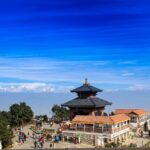
- Swayambhunath (Monkey Temple): a fast hit with big meaning
- Lunch in Thamel: useful break, check what’s included
- Price and value: does $150 make sense for a one-day pilgrimage?
- What the guide role really does for you
- Logistics that matter: group size, transport, and comfort
- Who should book this one-day Buddhist pilgrimage tour?
- Should you book it?
- FAQ
- What time does the tour start?
- How long is the tour?
- How many people are in the group?
- Where does the tour start and end?
- Which Buddhist sites are included?
- Are admission tickets included?
- Is transportation included?
- Is lunch included?
- Do I need to pay for a Nepal visa?
- What’s the cancellation policy?
Key highlights you should know before you go
- Mantra-chanting with monks as part of the pilgrimage experience, not just a photo stop
- Three headline Buddhist sites in one day: Boudhanath Stupa, Kopan Monastery, Swayambhunath
- Small group size (max 10), which makes questions easier to ask and hear
- Hotel pickup and private vehicles to reduce transit stress in Kathmandu traffic
- Admission tickets included for the main stops, so your budget stays cleaner
- Q&A-focused, English-speaking guide who can explain Buddhism in Nepalese context
One-day rhythm in Kathmandu: what the 9:15 start is like
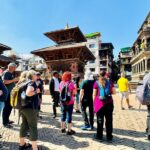
This is a true short-hop day in Kathmandu, starting at 9:15 am. You get pickup from your hotel area and then you head out in a private, comfortable vehicle with an English-speaking professional guide. That matters here because Kathmandu traffic can be unpredictable, and the itinerary actually plans around it—at one point you cut across daytime traffic on the way to Kopan Monastery.
The day is designed around three major pilgrimage points in the Kathmandu Valley. With a group capped at 10 people, you’re not swallowed by a busload. You’ll likely feel like you have room to ask questions during site time, especially when the guide is steering attention to spiritual and cultural meaning rather than quick snapshots.
One more practical note: the tour uses a mobile ticket, so you’re not hunting paper confirmations before you meet up. If you like knowing you’ll be ready to go in the morning, that’s a small but real win.
You can also read our reviews of more tours and experiences in Kathmandu.
Boudhanath Stupa: a world-scale icon you can’t ignore
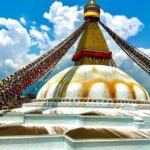
Your first stop is Boudhanath Stupa, about 4 miles from the center of Kathmandu city. The tour positions this as one of the largest stupas in the world and a major center of Buddhist pilgrimage. If you’ve ever seen Boudhanath in photos, you’ll recognize the overall presence right away—but being there in person hits differently because your attention gets pulled toward the space and the devotion happening around it.
Admission is included for this stop, and the tour time at Boudhanath is about 1 hour. That gives you enough minutes to settle, look carefully, and understand what you’re seeing before you move on. The guide’s explanations can help you connect the visual details to Buddhist practice and Nepal’s religious mix, which is a big theme of this itinerary.
Is it perfect for everyone? For first-timers, yes. For people who want hours of quiet wandering, it’s still a solid start, but you’re moving on before the day goes too long. Think of Boudhanath here as your spiritual anchor—your “main reference point” for the rest of the pilgrimage day.
Kopan Monastery in the Gelug tradition: calm after the traffic
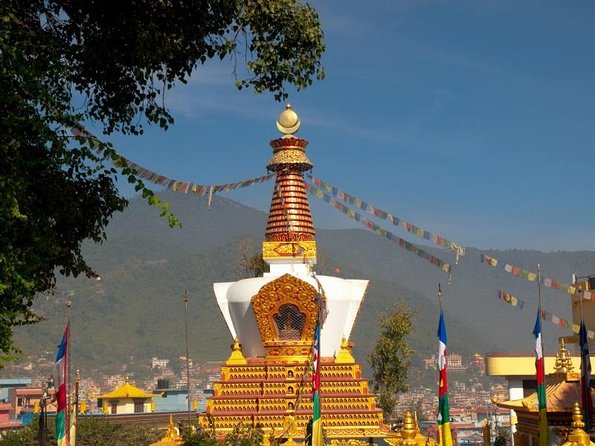
Next up is Kopan Monastery, one of the major Buddhist pilgrimage destinations in the Kathmandu Valley. The route heads out after cutting across daytime traffic, which is smart. It helps the visit feel more intentional, because you’re not arriving after a slow, stressed ride.
The tour highlights Kopan Monastery as part of the Gelug tradition of Tibetan Buddhism. That detail matters because “Buddhism” isn’t one single style. The Gelug tradition has its own teachings and monastic culture, and this kind of guided stop helps you notice the differences rather than treating everything as the same.
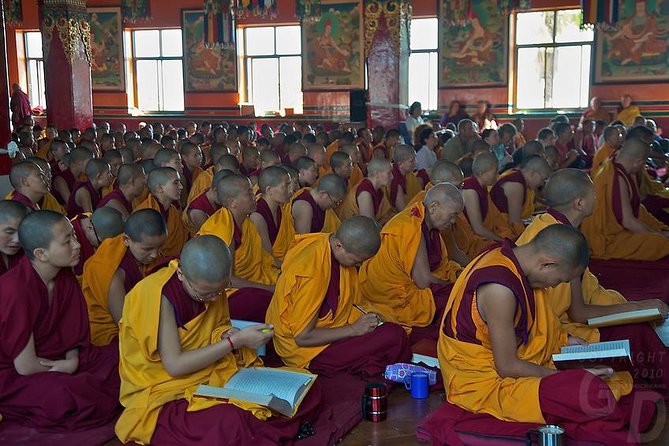
You’ll spend about 1 hour here, and admission is included. This is also where the experience leans most clearly into the “practice” side of the day: you’re there to find peace and chant the mantra along with holy monks. If you’re trying to experience Buddhism through participation instead of observation only, this stop is the heart of the tour.
A practical consideration: monastic settings can be quieter and more structured than a public temple. You’ll get the most from the visit if you keep your focus on the guide’s cues and stay open to a slower, more reflective pace than you’d choose on your own.
Swayambhunath (Monkey Temple): a fast hit with big meaning
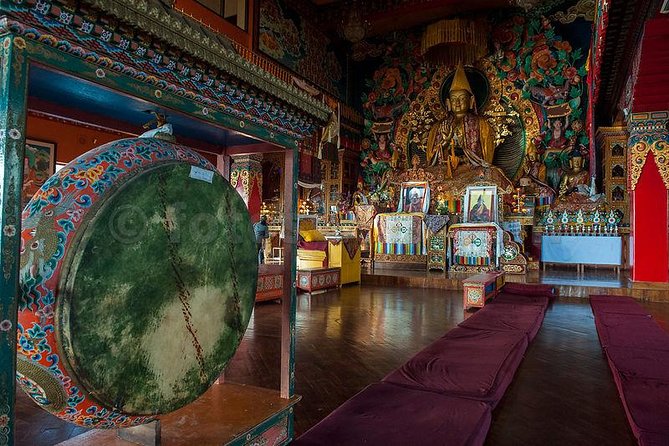
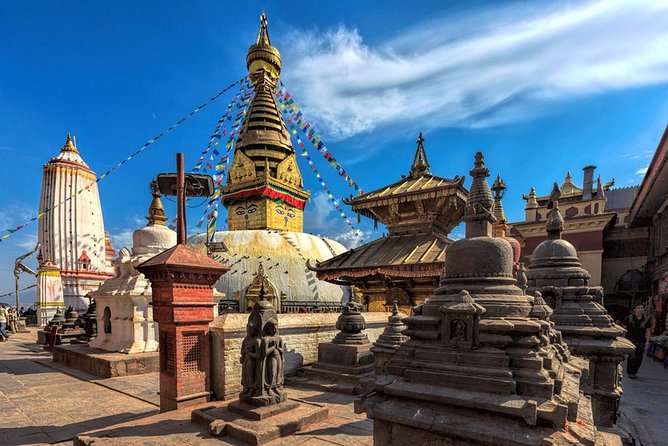
The final stop is Swayambhunath, popularly known as the Monkey Temple. From Kopan Monastery, you head toward Thamel for lunch, and then you continue with the day’s last major site.
Here’s the key thing: Swayambhunath time is listed as very short (the stop shows as about 1 minute). That doesn’t mean the place is small—it means the itinerary gives you a brief window at the end of a packed morning and early afternoon. If you’re expecting an hour-long deep explore, plan differently.
Even with limited time, Swayambhunath is worth it because it’s instantly recognizable and strongly linked to Buddhist symbolism in the Kathmandu Valley. And by the time you get there, you’ve already seen Boudhanath and spent time at Kopan, so you’ll likely understand what you’re looking at more quickly. The guide’s context can help you turn a short stop into something you remember.
If you want more out of Swayambhunath, this is where independent time helps. The tour ends back at the meeting point after the scheduled stops, so if you still have energy, you can build on what you started here.
Lunch in Thamel: useful break, check what’s included
Between the monastery and the final site, the itinerary includes a lunch stop in Thamel at The Ship Restaurant and bar, with a reservation planned. The plan centers on traditional Nepalese Dal-Bhat (lentil soup and rice).
Here’s the only catch I’d flag: the package details say meals aren’t included, even though the day schedule clearly builds in a lunch experience. That means you should confirm what your specific booking covers for lunch (especially whether the Dal-Bhat meal is included in your tour price or paid separately on arrival). It’s a small question to ask that can prevent a surprise mid-day.
Still, as a logistics move, this works well. Thamel is convenient for a break, and it’s a practical way to keep the day moving without sending you off hunting for food alone.
Price and value: does $150 make sense for a one-day pilgrimage?
At $150 per person, this tour is priced as a guided, curated one-day itinerary focused on three major pilgrimage stops. What makes the value easier to judge is what’s included.
Included items:
- Private ground transportation in comfortable vehicles
- A fully trained English-speaking guide
- Staff salary and insurance
- Government and local taxes
- Admission tickets for the main stops
Excluded items:
- Nepal visa fee
- Meals and accommodations in Kathmandu
- Tips
- Anything not specified in the included section
For many visitors, the strongest value comes from the combination: you get transportation + a knowledgeable guide + admission tickets, all wrapped in a short day. If you tried to recreate this on your own, you’d spend time lining up drivers, figuring out entry logistics, and losing the cultural explanations that help make the visits meaningful. Here, the guide does that job for you.
Also, the tour typically gets booked about 18 days in advance, so if you have your heart set on this exact day, it’s smart to arrange sooner rather than later.
What the guide role really does for you
This is one of those tours where the guide is not background noise. The experience is designed around explanation and Q&A. If you’re the type who likes to understand why a stupa looks the way it does, what a monastic tradition means, or how Buddhism fits into Nepal’s wider religious landscape, you’ll get a lot out of the guided approach.
The tour also frames Nepal as a place where religion and culture blend in real life. Yes, Nepal has a large Hindu population, but Buddhism is still pervasive, and the guide’s storytelling is meant to help you see that connection after visiting major sites across the valley.
And because the guide is English-speaking and professional, you should feel comfortable asking questions instead of nodding along. That’s the difference between seeing temples and understanding pilgrimage.
Logistics that matter: group size, transport, and comfort
This experience keeps the moving parts manageable:
- Group size is capped at 10 travelers, which helps the day feel organized rather than chaotic
- Pickup happens from your hotel, so you don’t need to coordinate separate meeting points
- The day relies on private vehicles, which is a big help when you’re trying to get from place to place without losing time
The tour is also marked as near public transportation, but since pickup is part of the plan, you likely won’t need to use it much. The mobile ticket is there to keep things simple on the day.
If you’re someone who hates rushing between sites without context, this setup is a good compromise. You’ll still move around, but you’ll do it with less guesswork.
Who should book this one-day Buddhist pilgrimage tour?
I’d suggest this tour if you want:
- A short, structured way to see three major Buddhist sites in Kathmandu Valley
- A guide who can answer questions about Buddhism and Nepalese culture
- A calm introduction to pilgrimage practice, including mantra chanting with monks
- A day that’s busy but not exhausting thanks to private transport and a small group
It may not be ideal if:
- You want long, independent time at each site with lots of downtime
- You’re hoping the schedule ends with a very leisurely Swayambhunath visit (because that stop is scheduled very briefly)
If you’re visiting Kathmandu for a limited window and want your faith-and-culture experience to feel coherent instead of scattered, this itinerary is a sensible match.
Should you book it?
Yes, I think you should book this tour if your priority is guided pilgrimage in Kathmandu Valley without the stress of planning routes, entry logistics, and explanations. The value is strongest for a first trip when you want the big sites—Boudhanath, Kopan, and Swayambhunath—connected by meaning, not just geography.
Just go in with one expectation set: it’s a one-day experience with limited time at the final stop, and lunch inclusion may depend on your specific package details. If you’re good with that, you’ll come away with a clearer sense of Buddhism in Nepal and a day that feels spiritually focused, not checklist-driven.
FAQ
What time does the tour start?
The tour starts at 9:15 am.
How long is the tour?
The duration is listed as 1 day (approx.).
How many people are in the group?
The tour has a maximum of 10 travelers.
Where does the tour start and end?
It starts in Kathmandu, Kathmandu Valley area, and ends back at the meeting point.
Which Buddhist sites are included?
The tour includes Boudhanath Stupa, Kopan Monastery, and Swayambhunath (Monkey Temple).
Are admission tickets included?
Yes, admission tickets are included for the stops.
Is transportation included?
Yes. All ground transportation is provided in private comfortable vehicles.
Is lunch included?
The itinerary includes a lunch stop in Thamel at The Ship Restaurant and bar, centered on dal-bhat. The package details also state that meals aren’t included, so it’s best to confirm what your booking covers.
Do I need to pay for a Nepal visa?
Yes. The Nepal visa fee is not included, and you should bring accurate USD cash and two passport photographs.
What’s the cancellation policy?
You can cancel for a full refund if you cancel at least 24 hours before the start time.