REVIEW · LALITPUR NEPAL
Kathmandu: Private Patan and Bhaktapur Sightseeing Tour
Book on GetYourGuide →Operated by Himalayan Social Journey · Bookable on GetYourGuide
Patan and Bhaktapur in one focused circuit. I like how this private 6-hour plan pairs hotel pickup with a professional English-speaking guide, so you’re not just looking at stonework—you know what you’re seeing. I also love the stop choices: Patan’s iconic Durbar Square plus Bhaktapur’s best-known palace-and-temple sights, with time to wander and shop in the lanes.
One possible drawback: entrance fees aren’t included, and you’ll need Nepalese currency on hand. You’ll also be walking around heritage sites, so plan on comfortable shoes and sun protection, even in shorter daylight hours.
If you want a practical culture day without the stress of buses, this tour is built for you. It’s compact, guided, and designed to get the major highlights of the Kathmandu Valley into a single smooth morning-to-afternoon window.
In This Review
- Key points worth knowing before you go
- Patan and Bhaktapur in 6 hours: what that timing really means
- Private pickup and English guidance: the real value of this tour
- Patan Durbar Square: where the day starts (and why you should pay attention)
- Patan Museum: a short stop that helps you “read” the city
- Krishna Mandir and Kumbheshwor Temple: small time, solid payoff
- Hiranya Varna Mahavihar (Golden Temple): why metalwork matters
- Driving to Bhaktapur: lunch break and resetting your pace
- Bhaktapur Durbar Square: the 55-Window Palace area in context
- Taumadhi Square and Pottery Square: craft you can actually watch
- Dattatraya Temple: finishing the day with a calmer, focused stop
- Price and value: is $39 per person a smart deal
- What to bring so the day doesn’t get annoying
- Who this Patan and Bhaktapur tour fits best
- Should you book it?
- FAQ
- How long is the Kathmandu: Private Patan and Bhaktapur Sightseeing Tour?
- Is this tour private or shared?
- What does the tour include?
- Are entrance fees included?
- Is lunch or food included?
- Will there be an English-speaking guide?
- How much walking is involved?
- What should I bring?
- What is the cancellation and booking flexibility?
Key points worth knowing before you go
Private vehicle + hotel pickup means less time figuring out logistics and more time with the sites.
English guide storytelling helps explain dynasties, temple purpose, and why specific details matter.
UNESCO-level stops in both cities so you’re not choosing between Patan’s craftsmanship and Bhaktapur’s palace squares.
Artisan-focused walking time in traditional areas where crafts like pottery are part of daily life.
A lunch break between cities keeps the day from feeling like a nonstop sprint.
Entrance fees and currency are on you, so come prepared.
Patan and Bhaktapur in 6 hours: what that timing really means
This is a “big hitters” day. You’ll start in Patan (Lalitpur), then cross to Bhaktapur for the afternoon. Six hours sounds short, but the itinerary is structured to keep you moving through major highlights while still giving you short walks in each cluster of sights.
Here’s the trade-off: you get a tight, guided sampling of two UNESCO-listed city centers, but you won’t linger for long climbs, extended museum time, or slow neighborhood drifting. If your travel style is more slow-and-steady than see-everything, you might wish you had an extra half day.
The upside is clarity. You’ll know what to prioritize before you arrive, and the guide can point out the differences between Newari architecture in Patan versus the medieval-feeling layout in Bhaktapur.
You can also read our reviews of more tours and experiences in Lalitpur Nepal.
Private pickup and English guidance: the real value of this tour
The included hotel pickup and drop-off plus private transportation matters more than it sounds. In the Kathmandu Valley, traffic and distance between city centers can eat up sightseeing energy fast. With this tour, you’re not squeezing in sightseeing around transport delays—you’re on a schedule.
A big part of the value is the professional English-speaking guide. The best moments on a heritage walk usually come from explanations: what a specific temple is for, what a courtyard layout suggests about historic life, and why the details are worth your attention beyond photos.
I’ve also seen praise for guides who can connect architecture to story. Names like Rameshwar ji (and also Rajeshwar ji) come up in guide feedback, particularly for how clearly they narrate history and royal intrigue. That kind of interpretation turns stone and carvings into something you can actually picture.
Patan Durbar Square: where the day starts (and why you should pay attention)
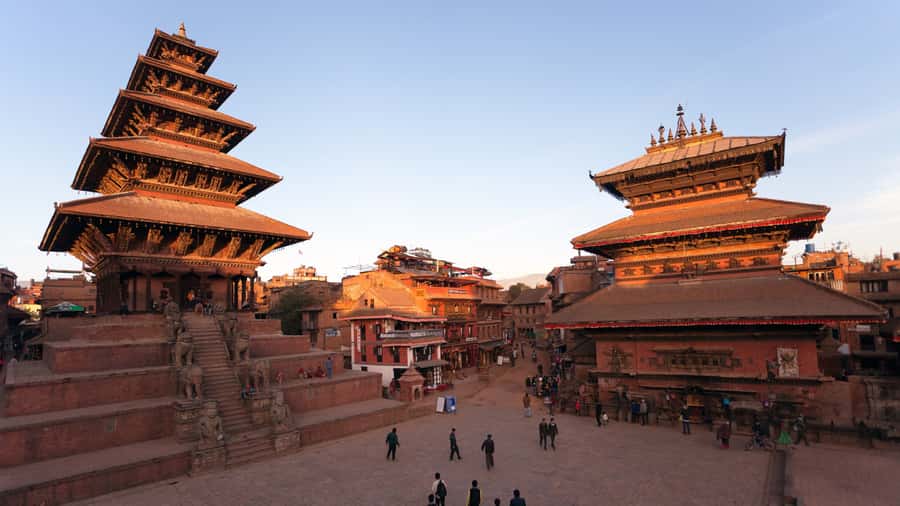
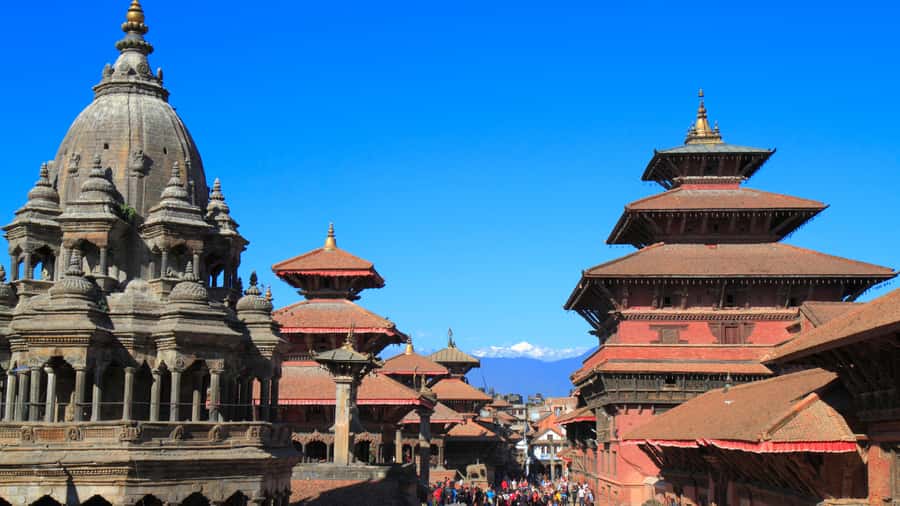
Your morning focus begins at Patan Durbar Square. This is the kind of place where the “main square” label doesn’t fully explain what you’ll feel. It’s a compact zone of courtyards, temples, and palace remnants, all layered with Newari craftsmanship.
In your 30-minute guided stop, the guide helps you orient fast—what’s sacred, what’s decorative, and what’s significant. You’ll also have time for shopping and sightseeing right there, which is handy because Patan’s lanes are where you’ll spot traditional handiwork.
What I like here is the mix of architecture and street life. You’re not just touring a museum-like site. You’re walking where people have long lived with these buildings as part of their everyday environment.
Practical note: 30 minutes is enough for highlights and quick understanding, but it’s not long enough to slow-walk every carved corner. If you love photographing details, go wide first—get the composition—then circle back mentally for the fine textures.
Patan Museum: a short stop that helps you “read” the city
After the square, you’ll visit the Patan Museum for about 45 minutes. A museum visit can feel optional on days like this, but it often makes the outdoor carvings easier to understand.
If you take even a portion of that museum time seriously, you’ll come back to the streets with better context—especially around craft traditions and the broader cultural story behind what you’ve been seeing.
The risk is time pressure: 45 minutes can go quickly if you’re focused on every display. My advice is to skim purposefully. Look for themes that match what you saw outside, then let the museum reinforce your mental map rather than trying to absorb everything.
Krishna Mandir and Kumbheshwor Temple: small time, solid payoff
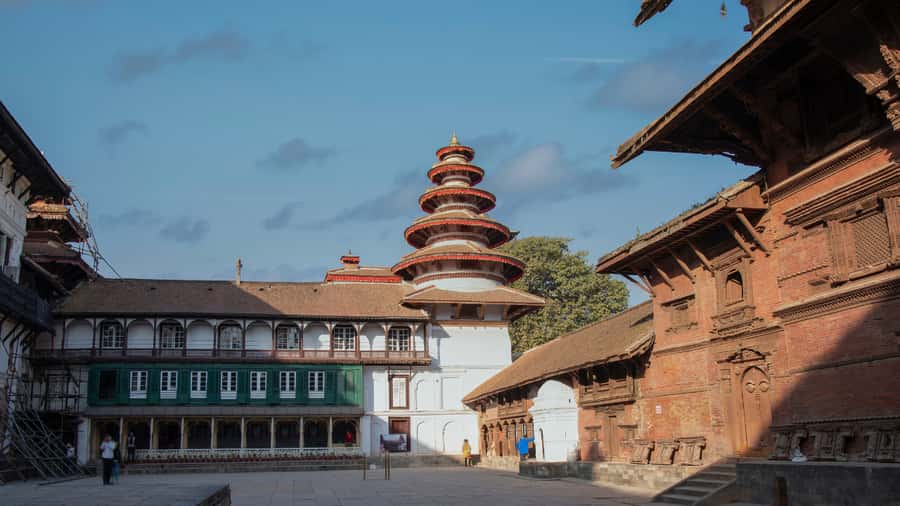
Next you’ll visit two shorter guided stops: Krishna Temple (around 10 minutes) and Kumbheshwor Temple (around 15 minutes). These aren’t long stops, but the point is smart. They add variety and show you different facets of temple design without dragging the schedule.
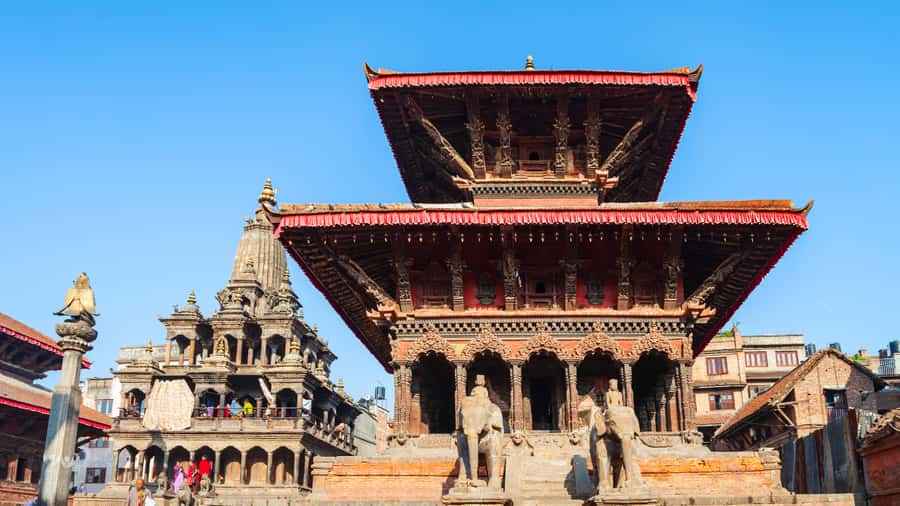
For Krishna Mandir, the standout is stone architecture tied to devotion to Lord Krishna. Even if you only spend a short window inside or at the key viewing area, it helps you understand how Patan’s religious spaces sit within the broader durbar square world.
Kumbheshwor Temple adds another layer. It’s the kind of stop that’s easy to underestimate until you’re there and your guide points out what to notice in carvings, layout, and symbolic details.
If you prefer “one big stop” days, these two may feel brief. But if you like variety—temples with different design languages—this pacing works well.
Hiranya Varna Mahavihar (Golden Temple): why metalwork matters
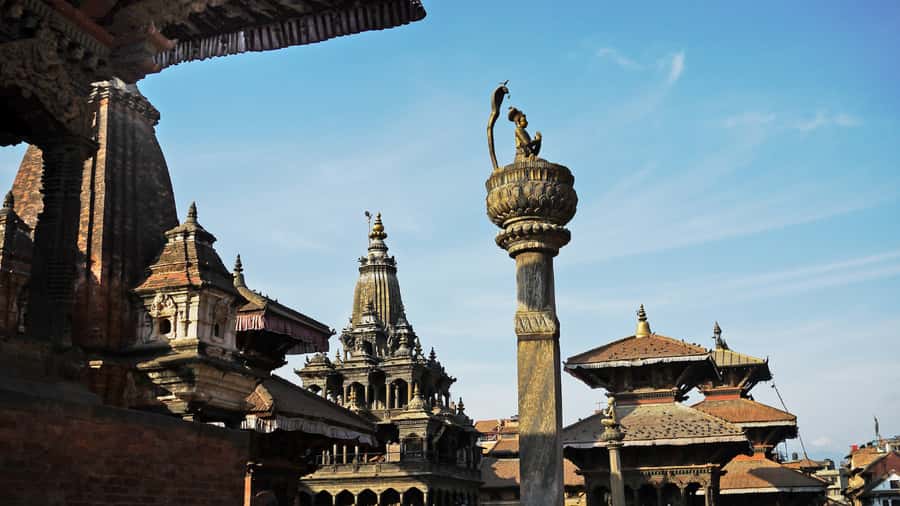
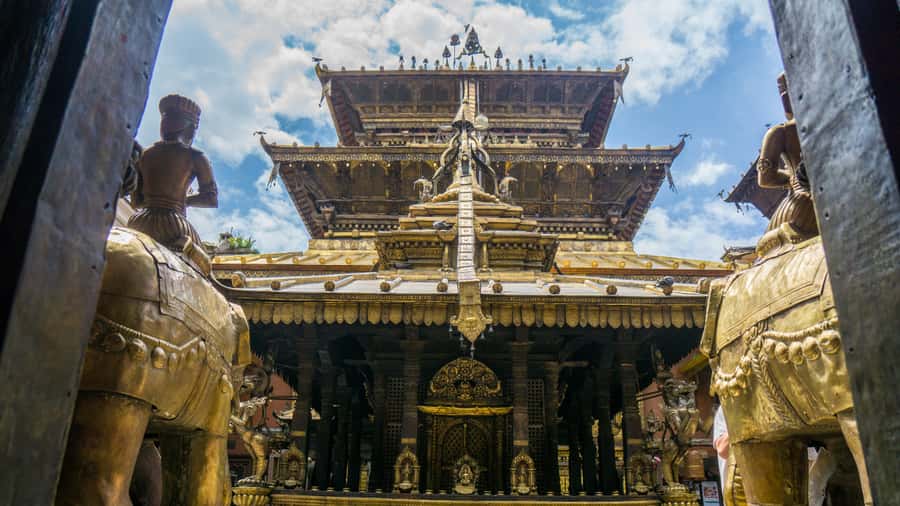
The next highlight is Hiranya Varna Mahavihar, often called the Golden Temple, with about 30 minutes for visit and guided tour. The big draw is the craftsmanship: exquisite metalwork and the way religious art is expressed through materials that catch the eye.
This is a stop where your camera will want to linger. And that’s exactly why the guide matters. With context, you notice details beyond the shine: where ornamenting serves meaning, how surfaces are treated, and how devotion expresses itself through artistry.
One consideration: this section of the itinerary still moves with the clock. If you’re a hands-on craft fan, you may want more time here. Still, as a “top sights” day, it’s a strong inclusion because it balances Patan’s wood-and-stone reputation with something visually different.
Driving to Bhaktapur: lunch break and resetting your pace
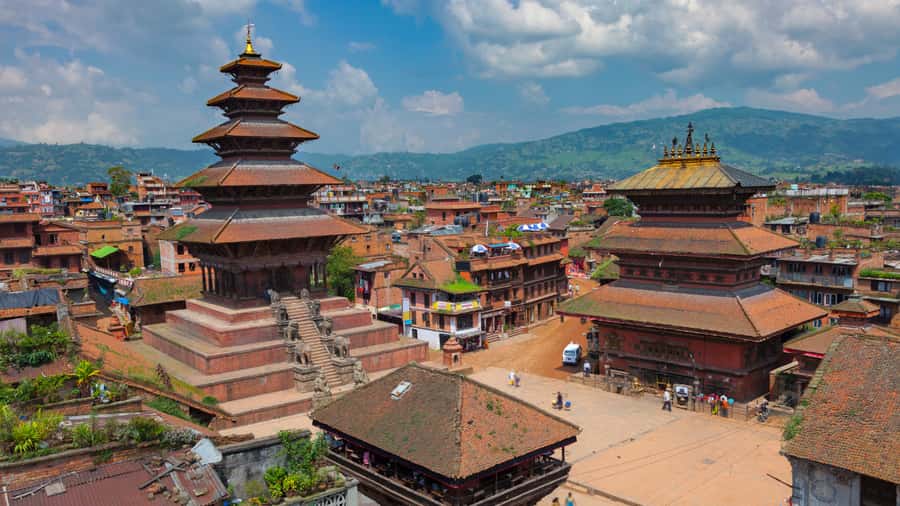
Between Patan and Bhaktapur, you get a lunch break. That matters on a tour like this, because city-center walking inside heritage zones can stack up faster than you expect.
Use the break strategically. If you’re heat-sensitive, take it as your hydration and shade moment. If you’re photo-focused, use it to regroup your priorities for Bhaktapur so you don’t spend that energy later when you’re tired.
Once you head to Bhaktapur, the character changes. Patan often feels like refined palace-craft culture concentrated in and around squares. Bhaktapur feels more like a medieval layout you can still walk through, where daily life continues right beside heritage walls.
Bhaktapur Durbar Square: the 55-Window Palace area in context
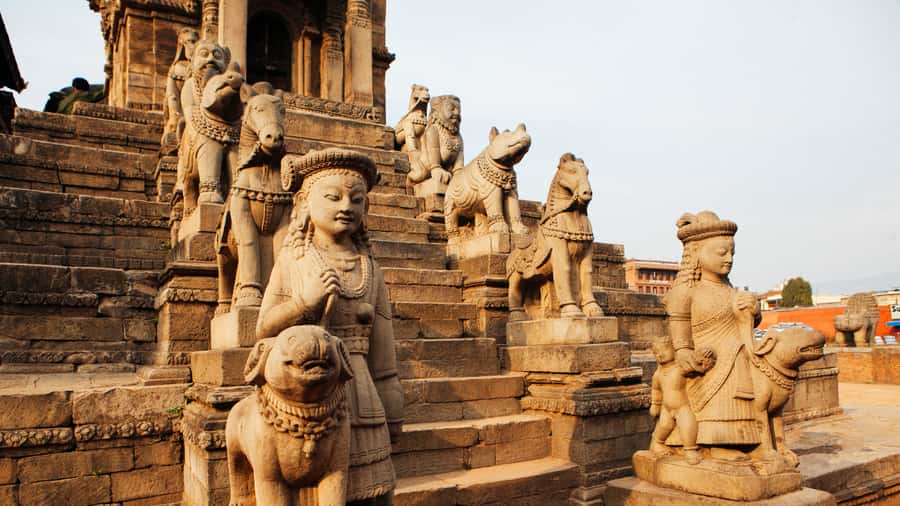
Your second city anchor is Bhaktapur Durbar Square. You’ll get about 45 minutes with guided tour and walking, plus time for sightseeing and shopping.
This is where the tour’s “highlight density” really shows. In this area, you’ll see major palace features including the 55-Window Palace (mentioned as an iconic sight) plus key temple landmarks such as the Nyatapola Temple and the carved Peacock Window area. Even if you’re not stopping at every single viewpoint for a long time, your guide helps you understand how these monuments relate to one another across the square.
What I like: the pacing gives you both structured sighting and the chance to slow down in the lanes. That’s the moment when Newari culture becomes more than names on a signboard.
The main drawback is the time split in the day. If your priority is Bhaktapur specifically, you’ll likely want extra hours beyond this tour’s window for deeper exploration outside the core square.
Taumadhi Square and Pottery Square: craft you can actually watch
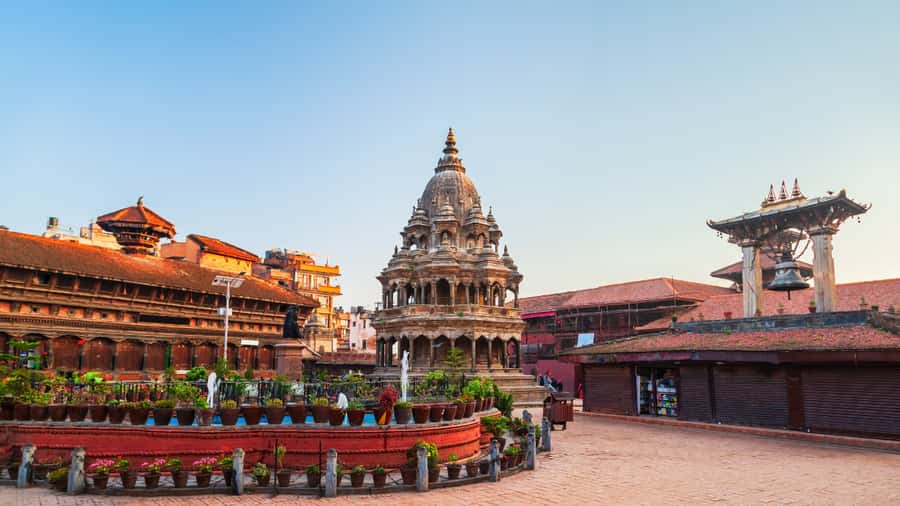
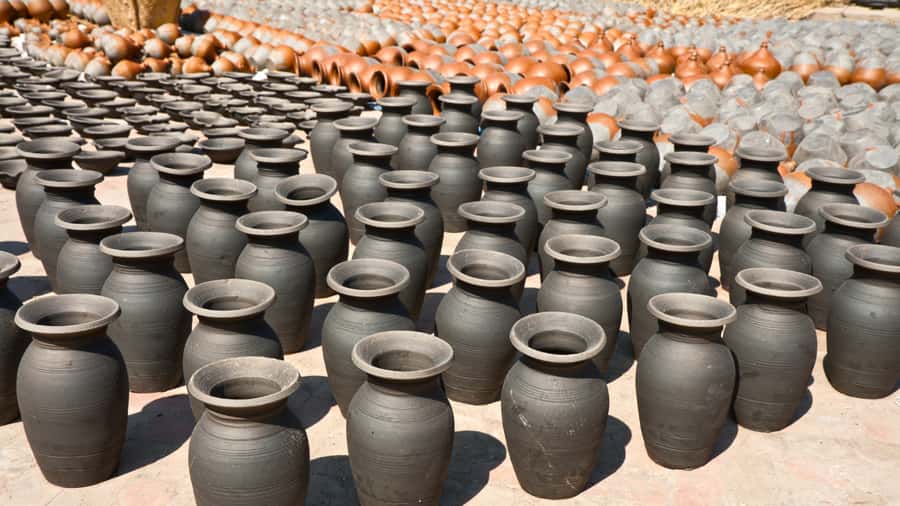
After Bhaktapur Durbar Square, you continue with Taumadhi Square (about 30 minutes) and then the Pottery Square (about 30 minutes), guided with time to walk.
This is one of the most satisfying sections for people who care about how things are made. The whole point isn’t just to buy souvenirs; it’s to see work in motion. In these areas, you can connect the Newari reputation for craftsmanship to something tangible—shapes, textures, and the daily rhythm of artisan trade.
In the pottery stop, you get guided context plus walking time. That’s helpful because pottery areas can look like “just shops” if you arrive without clues. With a guide, you’ll know what to look for and why certain styles matter.
If you’re traveling with someone who isn’t into architecture, this section can keep them interested. Crafts are easier to appreciate in person than in photos, and the guide can point out the practical, real-world side of tradition.
Dattatraya Temple: finishing the day with a calmer, focused stop
The final major stop is Dattatraya Temple, with about 30 minutes for visit and guided tour. Temples can feel more intense when you’re rushed, but this is a good closing length because it gives you time to re-center after the busier square-and-craft zones.
A calm end matters. By the time you reach the last stop, your eyes have learned the visual language of the day—carving patterns, doorway shapes, and the way sacred spaces frame everyday movement.
When you’re done, you’re escorted to your drop-off point in the late afternoon. The plan includes hotel drop-off, and a listed stop at Himalayan Social Journey, Kathmandu, so you’ll end the day near a practical point in town rather than leaving you stranded.
Price and value: is $39 per person a smart deal
At $39 per person for a 6-hour private sightseeing tour with hotel pickup, transportation, and an English-speaking guide, the value can be quite good—especially if you compare it to the cost and hassle of doing two UNESCO city centers on your own.
Here’s the math that matters:
- Entrance fees are not included, so you’ll pay that on top.
- Food and drinks are not included, so your lunch break needs your budget plan.
- You’re paying for time saved on local transport and for guided interpretation.
For many people, that’s worth it. You get an efficient route through Patan and Bhaktapur, plus guided explanations that make the monuments less confusing. If you’re traveling with someone who wants the story as much as the photos, that guide time is often where you feel the “deal” the most.
When it might not be a bargain: if you already know exactly what you want and prefer self-guided wandering, you could spend less by going independently and using entry fees only when you choose. But you’ll lose the built-in route logic and the quick context that saves mental energy.
What to bring so the day doesn’t get annoying
This tour is comfortable if you prep for walking. You’ll be moving through heritage sites and nearby lanes, so come ready.
Bring:
- Passport or ID card
- Comfortable shoes for uneven stone and cobblestones
- Sunglasses and a sunhat for sun protection
- Nepalese currency for entrance fees
Also, pack a light layer if you’re sensitive to temperature changes in the afternoon. The itinerary is short, but Kathmandu Valley sun can still feel strong.
Who this Patan and Bhaktapur tour fits best
I’d book this if you want:
- A first-timer Kathmandu Valley day with two major city centers
- Guided explanations in English
- A private setup with hotel pickup and a route that doesn’t require planning
You might want something else if you:
- Have limited mobility and don’t want heritage-site walking
- Want long, slow time at each monument (this plan is intentionally compact)
- Expect entrance fees and meals to be included in the price
Should you book it?
Yes, if your goal is to see Patan and Bhaktapur in one organized day with real guidance, not just random sightseeing. The mix of Patan Durbar Square, the Golden Temple’s metalwork focus, and Bhaktapur’s palace square plus pottery-craft walking is a strong set of highlights for a 6-hour window.
No, if you hate walking, dislike short museum blocks, or you’re the type who needs extra time to sit with one site. In those cases, you’ll feel rushed and will keep wishing you had more hours.
FAQ
How long is the Kathmandu: Private Patan and Bhaktapur Sightseeing Tour?
It runs for about 6 hours.
Is this tour private or shared?
It is a private tour with a private vehicle.
What does the tour include?
It includes hotel pick-up and drop-off, transportation in a private vehicle, and a professional English-speaking tour guide.
Are entrance fees included?
No. Entrance fees are not included, and you’ll need Nepalese currency to pay them.
Is lunch or food included?
No. Food and drinks are not included. The itinerary includes a lunch break between the two city tours.
Will there be an English-speaking guide?
Yes, the tour has a live guide who speaks English.
How much walking is involved?
You’ll walk inside heritage sites during the visits, so comfortable shoes are important.
What should I bring?
You should bring your passport or ID card, plus comfortable shoes, sunglasses, and a sunhat. You should also carry Nepalese currency for entrance fees.
What is the cancellation and booking flexibility?
Free cancellation is available up to 24 hours in advance for a full refund. You can also reserve now and pay later.