REVIEW · KATHMANDU
Annapurna Base Camp Trek 10 Days
Book on Viator →Operated by The Great Adventure Treks & Expedition - Private Day Tours · Bookable on Viator
Annapurna Base Camp changes your breathing. This 10-day trek mixes big-mountain views of Annapurna Base Camp and daily village life in the Annapurna region, ending at 4,130m with a serious sense of payoff. You’ll also get the structure that makes a tough route feel doable: licensed guiding, planned transport, and meals along the way.
Two things I really like: first, the government-licensed guide plus a porter so you’re not fighting your load on steep days. Second, the trek includes key extras that reduce stress and hassle, like ACAP and TIMS paperwork and cold-weather gear (sleeping bag and down jacket).
One consideration: this is still high-altitude trekking with long hiking days and steep stretches, so you’ll want solid moderate fitness and patience on the uphills.
In This Review
- Quick Hits: What Makes This ABC Trek Work
- Annapurna Base Camp and Why This Route Feels Worth It
- Price and Logistics: What You’re Actually Paying For
- Kathmandu to Pokhara: The Travel Day That Sets Your Pace
- Pokhara: More Than a Stopover
- Ghandruk: Village Views at 1,940m
- Chhomrong Day: The Uphill-to-Views Moment
- Himalayan Hotel to Khuldighar: Steps, a Bridge, and a Big Rhythm Change
- Deurali to the Base Camp Push: When Forests Fade
- Annapurna Base Camp at 4,130m: Sunrise and the Real Payoff
- The Return Loop: Jhinu Danda, Stone Steps, and Modi Khola Views
- Pokhara Again: A Real Day to Breathe
- Guides, Porter Care, and the Small Details That Make It Easier
- Who Should Book This Annapurna Base Camp Trek?
- Should You Book It? My Bottom-Line Take
- FAQ
- How long is the Annapurna Base Camp trek?
- Where does the tour start, and what time?
- What key permits or cards are included?
- Is a porter included, and how much can they carry?
- How do you travel between Kathmandu and Pokhara?
- What cold-weather equipment is included?
- What’s the cancellation rule for a full refund?
Quick Hits: What Makes This ABC Trek Work
- Sunrise at Annapurna Base Camp, then a controlled descent back the same way
- Ghandruk and Chhomrong villages with real local scenery and stone-step sections
- ACAP permit and TIMS card included, so you’re not scrambling last minute
- Porter support (2 guest : 1 porter, 25 kg max) to keep the climb manageable
- Pokhara built in for a buffer day with Phewa and Begnas Lakes
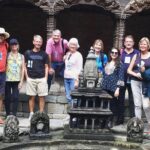
- Small group size (max 16) with guide attention
Annapurna Base Camp and Why This Route Feels Worth It
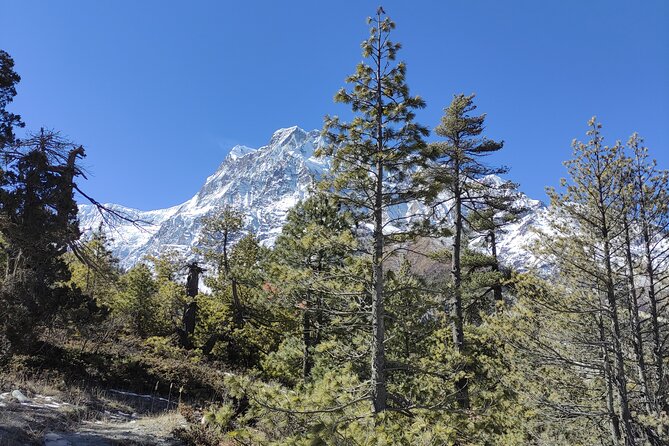
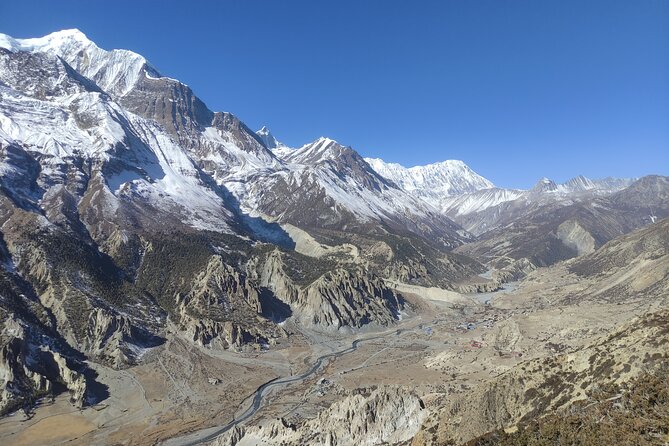
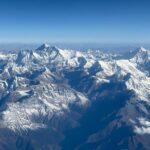
Annapurna Base Camp is famous for a reason: you’re not just walking toward a view, you’re walking through changing terrain until the mountains finally feel close enough to touch. Along the way, you pass from greener lower areas into more rugged terrain, and the route gradually turns from village rhythm to high-mountain focus. The trek also connects you to local culture, with Gurung and Magar villages showing up along the route.
What makes ABC special is the final contrast. You start with travel days and village sections, then you work up to the base camp at 4,130 meters, where the air feels sharper and the mountain panorama is the whole story. The mental shift is part of the experience. Even the physical effort tends to feel more meaningful when you can see the payoff getting closer each day.
This particular 10-day plan is also practical in a big way: it’s paced with driving segments between key trailheads, and it builds in Pokhara time so you’re not starting and finishing while exhausted. That matters because ABC isn’t just a walk. It’s a multi-day commitment.
You can also read our reviews of more hiking tours in Kathmandu
Price and Logistics: What You’re Actually Paying For
At $996 per person for 10 days, the real value is what’s included, not just the trekking. This package covers several things that can easily add up when you DIY it:
- pickup from the airport and transfers to your hotel
- Kathmandu sightseeing by private vehicle
- Kathmandu to Pokhara by tourist bus
- Pokhara to Nayapul by private vehicle, plus the return leg back to Pokhara
- a professional guide with a government license
- a porter for baggage (with the 25 kg max cap, and a 2 guests to 1 porter setup)
- ACAP permit and TIMS card
- meals (breakfast 8, lunch 8, dinner 8)
- cold-weather gear: sleeping bag and down jacket
- first aid kit support and emergency rescue help covered by your travel insurance
So you’re paying for fewer moving parts. You still do the work on the trail, but the logistics that usually create headaches—permits, guide/porter organization, key transport legs, and cold-weather basics—are handled for you.
The downside of paying for a package is you’re following a set rhythm. If you’re the type who wants total spontaneity, a fixed plan can feel limiting. But for most first-timers, that “managed” feeling is exactly what makes a trek like this successful.
Kathmandu to Pokhara: The Travel Day That Sets Your Pace
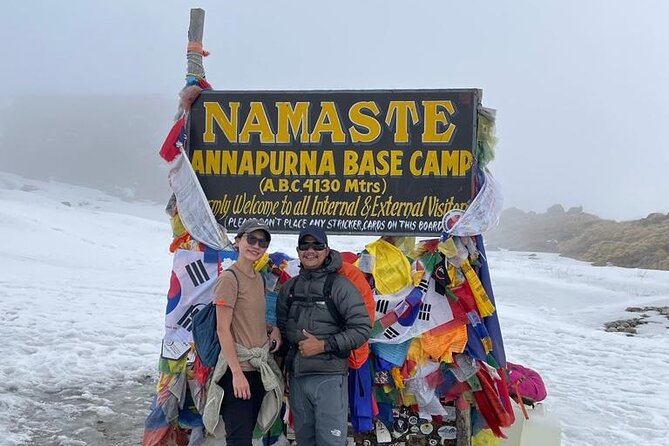
Your trek starts in Kathmandu with an 8:15am start time at The Great Adventure Treks & Expedition Pvt. Ltd, Chhusya Galli, Kathmandu 44600. From there, you head to Pokhara by tourist bus—about 6–7 hours.
This matters more than people think. The route by road is long, so you’ll want to treat this day like a warm-up, not a sightseeing marathon. You arrive in Pokhara after that ride, then you’re positioned near the trail’s cultural gateway. It’s a smart sequence: do a travel day, sleep in a more comfortable setting, then start hiking the next morning.
When you finish, you return toward Kathmandu either by scenic flight or bus from Pokhara. The itinerary also indicates a tourist-bus return option, so ask your operator what your final transfer will look like on the day. Either way, you get one last chance to see Annapurna region mountain views.
Pokhara: More Than a Stopover
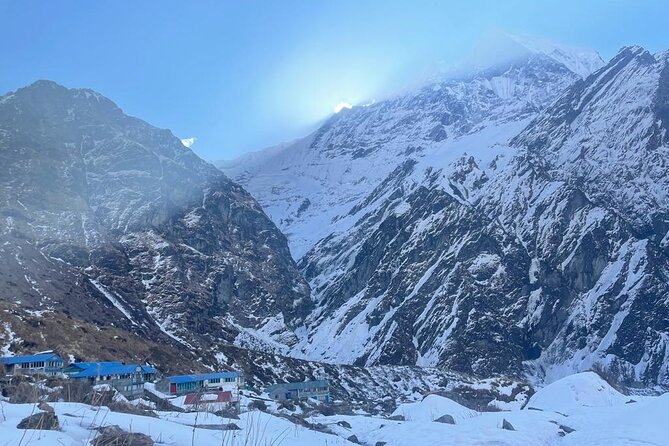
Pokhara isn’t just a transportation hub here—it’s part of the plan. The route is designed so you can recover after the trek and also build in a decompression day.
On the leisure day, you can explore on your own, with ideas like Phewa Lake and Begnas Lake. That’s not just “free time.” It’s where your body catches up: you’re walking fewer hours than on trek days, and you can do gentle sightseeing without rushing.
If this is your first big trek, that Pokhara buffer can make the difference between feeling like you survived and feeling like you fully enjoyed it.
Ghandruk: Village Views at 1,940m
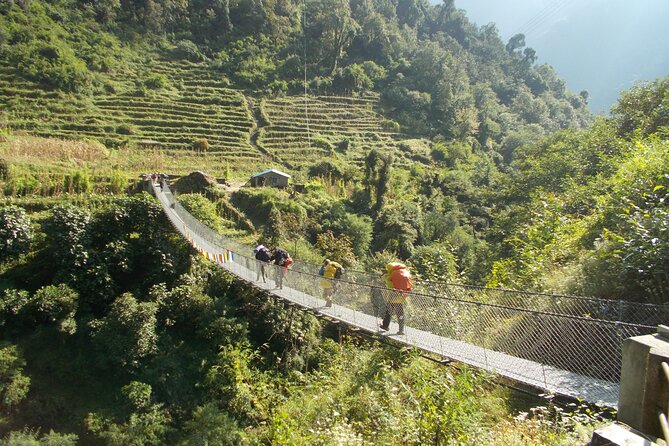
After arriving in Pokhara, you drive to Ghandruk. The drive is about 3–3.5 hours, and Ghandruk sits at around 1,940 meters.
This stop is valuable because it gives you a taste of the Annapurna region before you commit to steeper sections. Ghandruk is also the kind of village where the scenery feels close—mountain views show up around you instead of being a final reward at the end of a long day. You’ll likely feel the altitude shift here, but it’s not the hardest day of the trek. That makes it a good onboarding day.
If you like cultural travel as much as hiking, this village is one of the best places to slow down. You can take in the local feel without needing to be in peak athletic mode.
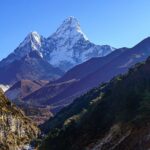
Chhomrong Day: The Uphill-to-Views Moment
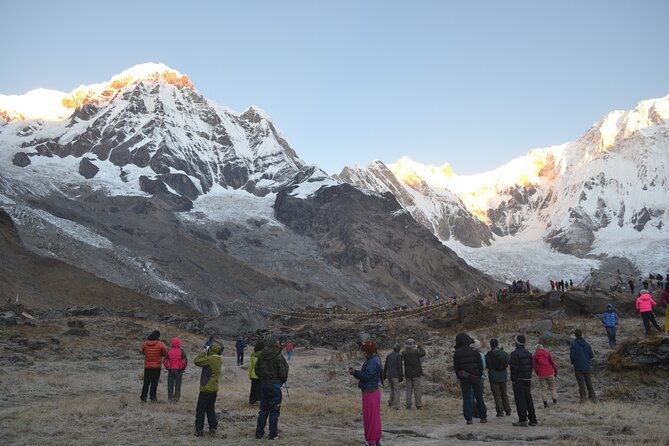
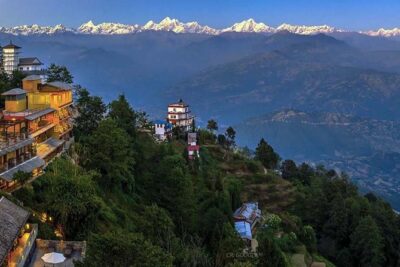
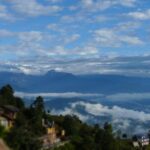
From Ghandruk you trek uphill for about an hour up to Kimrungdanda and you get major sightlines. The route specifically mentions views of Annapurna South, Hiunchuli, Fishtail Mountain (Machhapuchhre), and Gangapurna.
Then you continue onward to Chhomrong. The practical takeaway: this is where the trek starts rewarding you with serious panoramas while you’re still within a rhythm you can manage. You’ll feel tired, but it’s the good kind of tired—because the views arrive before you’re totally cooked.
Chhomrong is also where the trail narrative becomes more vertical. The next stretch includes steep step sections and stream crossings, so it helps that this day builds gradually instead of jumping straight into the toughest climbing.
Himalayan Hotel to Khuldighar: Steps, a Bridge, and a Big Rhythm Change
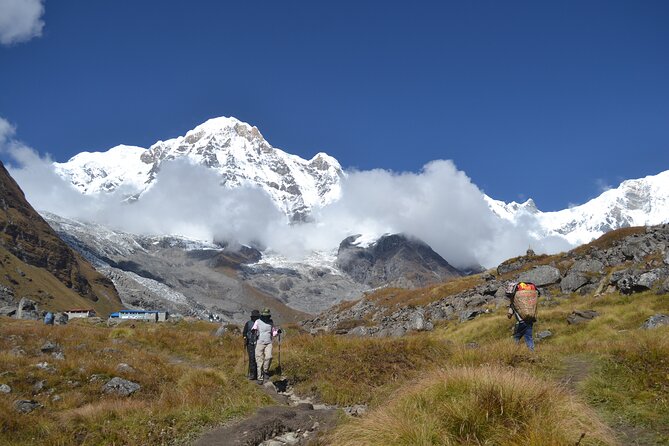
From Chhomrong, the trail drops down through thousands of steps toward the Chomrong Khola. You cross a suspension bridge, then keep going uphill to Khuldighar at 2,380m.
This day is a reminder that ABC trekking isn’t one steady climb. It’s a sequence of down-up work. The descent can feel heavy on your knees, and the uphill after the bridge tests your legs again. It’s doable, but you’ll want to keep your pace controlled and consistent.
Khuldighar is a meaningful marker because it signals you’re getting higher and more fully in the mountain zone. The trail’s feel changes too—less village, more trail focus—so psychologically it helps to know you’re moving toward the base camp push.
Deurali to the Base Camp Push: When Forests Fade
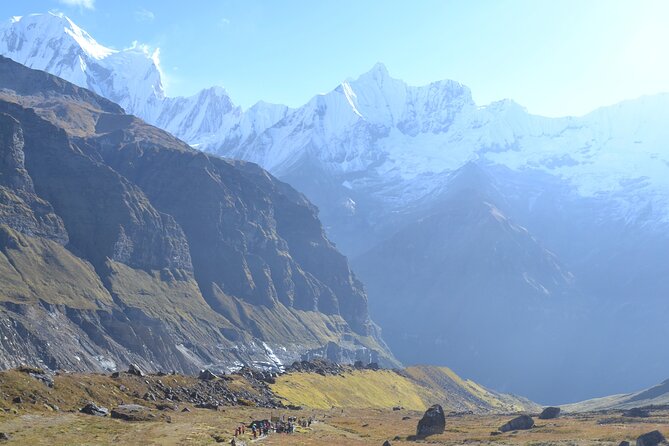
After Khuldighar, the route heads toward Deurali. You walk about an hour to Deurali, then climb gently through a river bed before a steeper ascent on a mountainside near Bagar.
Then the plan continues toward Annapurna Base Camp from the base camp area side—at this stage, the route notes that forested vegetation disappears as you approach ABC from the higher-area approach. Translation: the trail starts feeling more exposed and less sheltered, and your attention shifts to the mountain scale in front of you.
This is also where layering matters. When the scenery opens up and vegetation thins, temperature and wind can feel sharper even if you’re not thinking about it yet.
Annapurna Base Camp at 4,130m: Sunrise and the Real Payoff
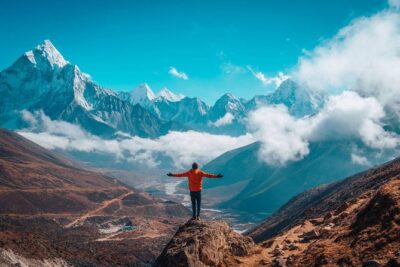
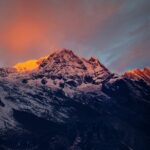
You reach Annapurna Base Camp, and the plan includes a morning moment there—watching the sunrise from camp, then beginning the descent. That sunrise piece is important because it changes how the whole trek lands in your memory. Instead of finishing at base camp like a stamp, you experience it like a place.
At 4,130 meters, you’re in the altitude zone where your body feels the difference. You might not be thinking about altitude theory, but your breathing will tell you the truth. The best approach is simple: don’t race. Let the guide’s pacing do the work.
After morning at ABC, you trek back down. The itinerary notes you descend back on the same trail, with a long day—about 8 hours. The point of this mirror descent is consistency: fewer surprises, clearer trail navigation, and less mental load when you’re tired. It’s still a long day, but it’s a straightforward one.
The Return Loop: Jhinu Danda, Stone Steps, and Modi Khola Views
After the base camp day and descent, the route works you back through Kuldighar, then toward Chhomrong Khola, with uphill sections and stone steps returning you to Chhomrong. The plan includes about 6 hours for this stretch and highlights the step rhythm you’ve seen before.
Then you move toward Jhinu Danda, initially trekking uphill again to Kuldighar, then down through Chhomrong Khola, followed by about an hour of stone steps to Chhomrong. Jhinu Danda is part of the mid-trek emotional reset because the valley sections feel less like the open-high zone and more like a descent into livable travel space.
From Jhinu Danda to Naya Pul, the route runs along the side of Modi Khola for 4–5 hours, reaching Birethanti. The next step is a private vehicle drive about 1 hour back to Pokhara. This is a classic closing chapter: you’re still hiking, but the scenery tends to feel smoother and less punishing as you move toward the end of the trek.
Pokhara Again: A Real Day to Breathe
You’ll spend an overnight in Pokhara after reaching Naya Pul/Birethanti. Then you get a full leisure day back in Pokhara.
Use it to recover your legs and reset your head. With choices like Phewa and Begnas Lakes, you can stay active without the pressure of “must-see everything.” This day also helps if the weather shifted during your trek days—you have time to enjoy what you missed without rushing.
Guides, Porter Care, and the Small Details That Make It Easier
One reason this trek has a strong reputation is people-focused guiding. The reviews you shared highlight that guides like Sudam and Ganesh are attentive and supportive, and they help keep the trip running smoothly. A porter team member is also mentioned as Dinesh, praised for being considerate and reducing luggage strain.
Practically, this matters most on tough days. When someone is helping with baggage and you have clear guidance, you can focus on trail effort and not on logistics. Also, the porter limit is explicit: 25 kg max per porter, and the ratio is 2 guest 1 porter. That structure is what keeps the trek feeling organized instead of chaotic.
You’ll also have a licensed trekking guide and a first aid kit on hand, plus emergency rescue help covered by your travel insurance. The inclusion of a sleeping bag and down jacket also shows the operator is thinking about comfort at night, not just daytime hiking.
Who Should Book This Annapurna Base Camp Trek?
This plan is built for people with moderate physical fitness who want a guided trek with support and fewer unknowns. You’ll also like it if you want a mix of culture and mountains—villages like Ghandruk and Chhomrong, plus the Annapurna region’s cultural feel along the route.
It’s especially suitable if you’re:
- new to multi-day trekking and want structure
- concerned about permits and trek paperwork and want ACAP + TIMS handled
- okay with long days and a high-altitude endpoint at 4,130m
- happy to use Pokhara to recover and enjoy lakes on a leisure day
Should You Book It? My Bottom-Line Take
I’d lean toward booking this trek if you want a well-run, guided Annapurna Base Camp experience with the big-ticket items handled: transport legs, licensed guiding, ACAP/TIMS, porter support, meals, and cold-weather gear. At $996, it’s not cheap, but it’s also not just “a guide and a prayer.” The included pieces reduce hassle and keep your energy for the trail.
I would pause if you know you struggle with steep, long hiking days or if altitude challenges worry you. This route includes steep step sections, long descents, and a base camp at 4,130m—and the plan assumes you can handle that with a steady pace.
If that all sounds like your kind of challenge, this is a solid way to do ABC without turning the trip into a logistics project.
FAQ
How long is the Annapurna Base Camp trek?
It’s listed as 10 days (approx.).
Where does the tour start, and what time?
It starts at The Great Adventure Treks & Expedition Pvt. Ltd, Chhusya Galli, Kathmandu 44600, Nepal, with a start time of 8:15 am.
What key permits or cards are included?
The package includes the Annapurna Conservation Area Project (ACAP) permit and the TIMS (Trekkers Information Management system) card.
Is a porter included, and how much can they carry?
Yes. A porter is included with a setup of 2 guest : 1 porter, and the porter carries up to 25 kg max.
How do you travel between Kathmandu and Pokhara?
You travel by tourist bus from Kathmandu to Pokhara (about 6–7 hours). You then travel between Pokhara and Nayapul by private vehicle, and return from Pokhara to Kathmandu by scenic flight or bus.
What cold-weather equipment is included?
The trek includes necessary equipment such as a sleeping bag and a down jacket.
What’s the cancellation rule for a full refund?
You can cancel up to 6 days in advance for a full refund. For a full refund, you must cancel at least 6 full days before the experience start time.