REVIEW · KATHMANDU
Annapurna Base Camp, Nepal 10 days
Book on Viator →Operated by Third Eye Adventure P. Ltd · Bookable on Viator
Cold air, big mountains, real trekking days.
This private Annapurna Base Camp trek is interesting because you’re not stuck in a rigid group rhythm, and your guide can explain the Annapurna Sanctuary in plain, human terms as you go. I also like that the trip mixes hotels with teahouses so you get comfort without losing the authentic mountain rhythm. One drawback to flag early: you won’t have hot shower, WiFi, or battery charging during the trek, so you need to plan for cold water and limited power.
I value that the guide team shows up in the details, not just on paper. Names like Sandip and Resham GC come up repeatedly in ABC trekkers’ feedback, and that matches what you want in a long, high-altitude walk: someone calm, caring, and steady when conditions get tough. And because this is a high-altitude trek, it’s best when you have moderate fitness and you’re comfortable walking 3 to 8 hours most days.
In This Review
- Key things that make this Annapurna Base Camp trek worth your attention
- Private Annapurna Base Camp walking, without the rush
- Price and value: what $848 covers (and what it doesn’t)
- Day 1: Kathmandu to Pokhara transfer, then you’re in motion
- Day 2: Siwai to Ghandruk, a Gurung village start
- Days 3–4: Chhomrong and the step-heavy reality check
- Day 5: Bamboo to Deurali at 3,230 meters
- Day 6: The Machhapuchhre base camp stretch and the Annapurna Base Camp moment
- Day 7: Retrace to Bamboo, downhill that still takes time
- Day 8: Bamboo to Jhinu Danda via Kuldighar, Chhomrong, and stone steps
- Day 9: Finish the trek at Siwai and ride toward the next chapter
- Day 10: Drive back to Kathmandu, plus an optional flight
- What you’ll really want to bring for teahouses and cold mornings
- Who should book this Annapurna Base Camp trek
- Should you book?
- FAQ
- What is the price for this Annapurna Base Camp experience?
- How long is the trek?
- Where does the tour start, and is pickup offered?
- What time does the experience start?
- Are meals included?
- Are hot showers and WiFi included?
- Is there an option to fly back to Kathmandu?
Key things that make this Annapurna Base Camp trek worth your attention
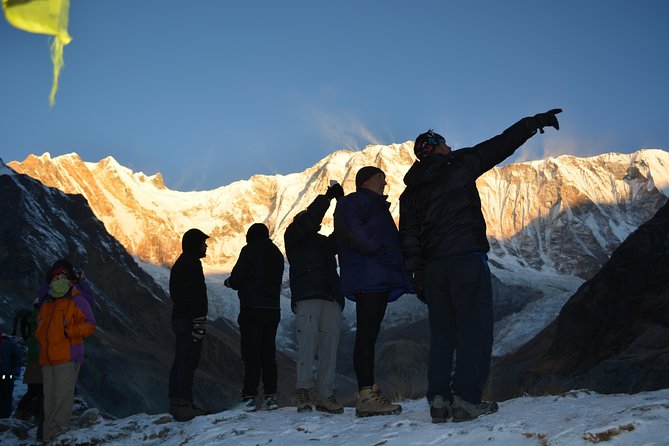
- Private pacing with a guide: you can go at your own speed and still learn the meaning of the sanctuary zone.
- Hotels + teahouses: you get basic comfort at the start and finish, then the classic mountain lodges for the trek.
- Most meals included: 10 breakfasts, 8 lunches, and 7 dinners handled for you.
- Iconic villages and viewpoints: Ghandruk, Chhomrong, and the approach moments toward Machhapuchhre and the Annapurna Base Camp area.
- Simple but honest trekking support: pickup is offered, mobile ticket is used, and you’re not left guessing day to day.
- Limited power and hot water: no WiFi, no hot shower, and no battery charging during trekking.
Private Annapurna Base Camp walking, without the rush
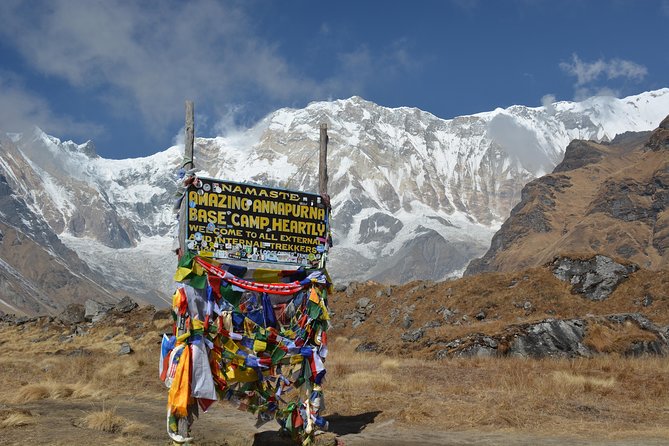
The biggest “feel” difference on a private trek is that you’re not constantly negotiating pace. Instead of everyone stretching and catching their breath at random, you can keep your own rhythm. That matters on a mountain walk where progress is rarely linear, especially on days with big steps or a longer uphill stretch.
Your days are built around steady hiking time—often in that 3 to 8 hour range. In practice, that means you’re out long enough to earn the views and the sense of distance, but not so long that you’re wrecked every single evening. And since this is a private trek, you can usually adapt timing when you’re tired, slow, or just trying to photograph something before the light disappears.
A guide isn’t just there for directions. The trip is set up so you can learn about the spiritual and environmental significance of the Annapurna Sanctuary while you’re actually inside the landscape. When it’s explained during the walk, it turns the place from a goal on a map into something you understand as you arrive.
The route also has the right mix of uphill effort and downhill consequence. You’ll climb to key viewpoints and passes, then later descend through villages and stone stair sections. That change-of-motion pattern helps you balance out the hardest hours rather than getting stuck in one style of walking every day.
You can also read our reviews of more tours and experiences in Kathmandu.
Price and value: what $848 covers (and what it doesn’t)
At $848 per person for about 10 days, this is priced like a full-service trek, not a bare-bones DIY plan. You’re paying for a package that includes accommodation—hotels at the start and end portion, teahouses during the trekking days—plus a lot of meals.
Here’s what’s included:
- Meals: 10 breakfasts, 8 lunches, 7 dinners
- Accommodation: hotels and teahouses
- Transport: an air-conditioned vehicle, and pickup is offered
- Tickets: mobile ticket
- Crew: private format with your group only
Here’s what’s specifically not included:
- Hot water / hot shower, WiFi, and battery charging during trekking
- Tipping for the crew member
So is $848 a good deal? It’s competitive if you like having food and lodging handled and you don’t want to micromanage logistics. The “value” shows up most in the long middle stretch: trekking days often burn budget in real life because you still have to find places to sleep and eat. Here, most meals are already planned, which keeps your spending predictable.
If you’re the type who wants to rely on your own snacks and power gear, the non-included items may be less of a problem. But if you expect warm showers and WiFi like city life, this trek will correct that expectation fast.
Day 1: Kathmandu to Pokhara transfer, then you’re in motion
The first day is basically a launch into Nepal’s trekking world. You drive from Kathmandu to Pokhara by tourist bus for about 7 hours. Pokhara sits much lower than the trekking zone, around 820 meters, so it’s a useful reset after Kathmandu’s bustle.
This transfer day matters because it sets up your body and your schedule. You’ll arrive ready to focus, not scrambling for the next connection. It also helps you avoid starting the trek exhausted, because you’re not jumping straight into uphill climbs from day one.
A practical note: the meeting time is listed as 6:15 am, and the meeting point is near public transportation. So plan on being ready early, not just “morning-ish.”
Day 2: Siwai to Ghandruk, a Gurung village start
On day two, you start with a drive from Pokhara toward Siwai (about 2.5 hours). Then the walking begins: you trek from Siwai to Ghandruk, taking about 4 hours.
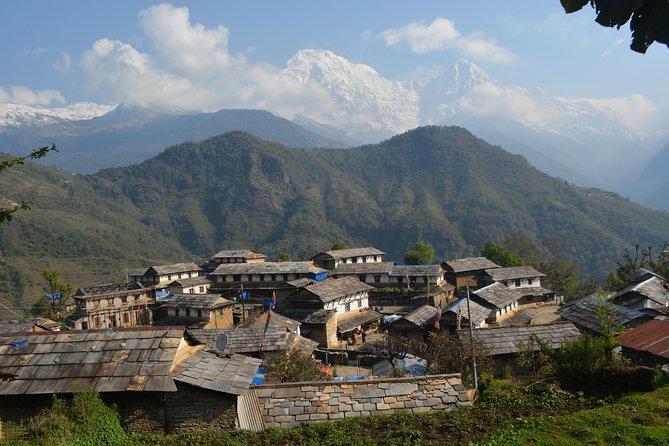
Ghandruk is a classic Annapurna-region village, and this route passes through an area mostly inhabited by the Gurung community. For me, that’s not just cultural window dressing. Village stops break up altitude changes and give you a place to steady your pace before the bigger climbing days.
Also, this is where you usually get your first serious feel for the trekking rhythm: purposeful walking, short pauses for breath, then longer rest moments when you reach a lodge. If you’re the kind of person who gets impatient, this day will train you in mountain patience.
Days 3–4: Chhomrong and the step-heavy reality check
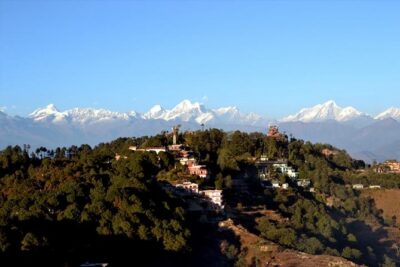
Day three pushes toward Chhomrong through a sequence that includes a climb up toward Kimrungdanda. Along the way, you get sweeping views of big-name peaks like Annapurna South, Hiunchuli, Machhapuchhre (Fishtail), and Ganggapurna.
That day tends to feel like a turning point: you’re not just walking in hills anymore. You’re walking with proper mountain scale around you, and the sanctuary story starts making more sense because the scenery matches the words.
Day four shifts the tone. You descend via about 2,500 stone steps and cross the Chhomrong Khola on a suspension bridge. Then there’s an uphill climb to Sinuwa, plus a stretch through forest toward Kuldih.
Why does this matter for your enjoyment? Steps plus bridge crossings can make your legs feel “worked” even if the total time isn’t extreme. This is one of those days where good pacing beats hero mode. Keep your steps short. Don’t bounce. Let your trekking poles do the boring job of saving your knees.
Also, the mix of descent, bridge, and re-climb is a good training day for what comes later. You learn quickly that trekking isn’t just about distance; it’s about managing effort in sections.
Day 5: Bamboo to Deurali at 3,230 meters
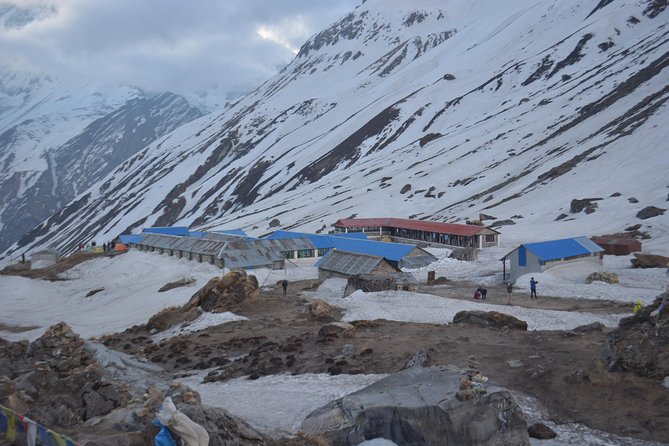
Day five goes from Bamboo to Deurali at about 3,230 meters, with a hiking time around 4 to 5 hours. The route goes through a damp, cold bamboo forest, then climbs steadily with fewer steep sections.
This is a day where layering pays off. Bamboo forest mornings can be chilly and wet-feeling, and once you start ascending, you’ll likely warm up and then cool down again during breaks. You’re basically learning the altitude temperature swing in one day.
Deurali is also where you start feeling like you’re living more “near the sky” than in a regular trekking valley. It’s not just about the number on the map. It’s about how your body breathes when you stop walking and how every uphill feels a bit more deliberate.
Day 6: The Machhapuchhre base camp stretch and the Annapurna Base Camp moment
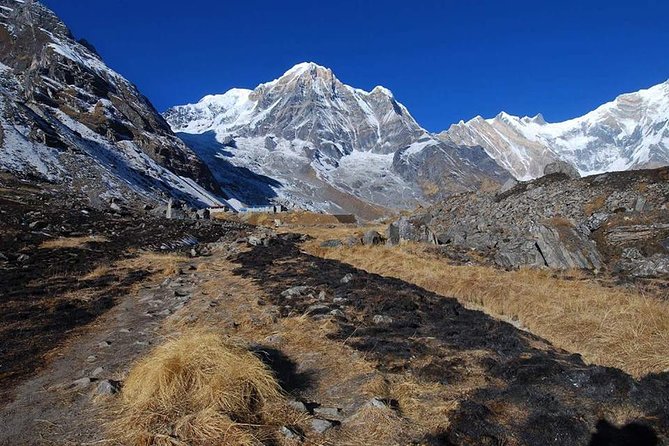
Day six is described as a gentle climb through a river bed, then a steeper trail toward the mountain side. The hike from Bagar to Machhapuchhre Base Camp is noted as somewhat strenuous.
From there, you get an excursion related to the Annapurna Base Camp area and sanctuary significance, guided so you understand what you’re seeing rather than just ticking a destination box.
This is the day you should treat like the main event. Even if your schedule says it’s “just” one more trekking day, the effort usually concentrates here. If you go out too fast early, the altitude can punish you later. If you pace well, you’ll arrive with enough energy to actually enjoy the experience.
This is also where you’ll likely start noticing how much your guide’s explanation changes the feel of the trek. The Annapurna Sanctuary significance becomes more than a line on a brochure when you’re standing near it.
Day 7: Retrace to Bamboo, downhill that still takes time
Day seven goes back the way you came, retracing steps from the Annapurna Base Camp area to Bamboo. It’s downhill overall, and that’s why it shouldn’t be too difficult.
But don’t confuse “downhill” with “easy.” Downhill hiking can be rough because you’re constantly controlling your weight and posture. It can still feel long, especially when the total walking time reaches around 8 hours.
The upside is that you get time to enjoy the extraordinary scenery again without the same uphill strain. It can feel like watching a film in reverse: familiar terrain, fresh eyes, and a growing sense of completion.
Day 8: Bamboo to Jhinu Danda via Kuldighar, Chhomrong, and stone steps
Day eight is a longer day with a sequence of climbs and descents. You move from Bamboo up to Kuldighar, then down toward Chhomrong Khola. There’s a climb back up to Chhomrong via stone steps, then you descend to Jhinu Danda for rest.
This day’s mix is the point. You’re not just doing one kind of walking; you’re getting a full sampling of the region’s trekking texture—uphill effort, step work, river valley movement, then village-lodge recovery.
Jhinu Danda is usually a welcome place to settle because it gives you that “we’re nearly there” feeling. Your body will appreciate an evening where the main job is to eat, sleep, and let your legs reset.
Day 9: Finish the trek at Siwai and ride toward the next chapter
On day nine, the trek ends at Siwai. On the way from Jhinu Danda to Siwai, you enjoy western Nepal hill scenery and a lunch stop along the route. Then you board your vehicle from Siwai for the next transfer portion.
This is the day where your trekking gear finally starts to feel lighter. Not because you’re done hiking already—your legs still remember the work—but because you can feel the end of the trekking routine. You’re shifting from “find the next step” to “find the next comfort.”
Also, it’s a good time to think about what you want for your final day: souvenir browsing, a relaxed Kathmandu evening, and a solid rest.
Day 10: Drive back to Kathmandu, plus an optional flight
Day ten drives from Pokhara back to Kathmandu for about 7 hours. The plan is to look around shops and pick up souvenirs, then rest.
If you want to reduce travel time, there’s an optional flight back to Kathmandu at an extra $100.
This last day is less physical but still meaningful. It gives you a soft landing. After days of focused trekking, the city can feel both fun and a little loud, so keep your expectations flexible and plan for rest rather than racing around.
What you’ll really want to bring for teahouses and cold mornings
This trek includes teahouse nights, and the experience is built around basic mountain comforts. Reviews associated with ABC treks mention that teahouse sleep and food can be good, with amazing views to wake up to. The key word for you is “basic.”
Since hot shower, WiFi, and battery charging are not included, pack like this is a normal mountain life situation. Bring:
- Layers for cold mornings and windy breaks
- A plan for charging (for example, using a power bank you can manage yourself)
- Quick-dry essentials, because wet gear is no fun at altitude
- A small daypack so you’re not constantly re-packing
Also, because you’ll walk multiple hours per day, think about footwear that you trust. Blisters ruin the mood faster than altitude does.
Finally, keep a realistic attitude toward weather. This experience requires good weather, and the trek is sensitive to conditions. If weather turns, flexibility helps you protect the experience you came for.
Who should book this Annapurna Base Camp trek
This one fits best if you want a private Annapurna Base Camp experience with guiding that’s part storytelling and part practical support. You’ll likely enjoy it if:
- You like walking 3 to 8 hours a day and can handle altitude challenges
- You prefer a slower, more adjustable pace over a packed-group schedule
- You want both hotel comfort (at the start and end portion) and classic teahouse trekking life
- You care about understanding the sanctuary’s significance while you’re there
It may be less ideal if you strongly need reliable WiFi, frequent hot showers, or easy charging. Also, if you don’t feel comfortable with a moderate fitness level, you’ll spend more energy wrestling your body than enjoying the scenery.
Should you book?
If your goal is a well-paced, private Annapurna Base Camp trek that handles your lodging and most meals, this is a solid choice at $848. The value is strongest when you’re happy with teahouse basics and you’re okay going without hot showers and charging during the climb.
Before you book, ask yourself two questions: Are you ready for cold, limited amenities at altitude? And do you want a guide-centered experience where the Annapurna Sanctuary gets explained while you walk? If you say yes, you’ll get a trek that feels personal, not rushed, and built for the kind of mountain day you remember later.
FAQ
What is the price for this Annapurna Base Camp experience?
The price is $848.00 per person.
How long is the trek?
It’s listed as 10 days approximately.
Where does the tour start, and is pickup offered?
The tour is in Kathmandu, Nepal, and pickup is offered.
What time does the experience start?
The listed start time is 6:15 am.
Are meals included?
Yes. The package includes 10 breakfasts, 8 lunches, and 7 dinners.
Are hot showers and WiFi included?
No. Hot water, hot shower, WiFi, and battery charge during trekking are not included.
Is there an option to fly back to Kathmandu?
Yes. You can take a flight for an extra $100.