REVIEW · KATHMANDU
10 Days Annapurna Circuit Trek
Book on Viator →Operated by Himalayan Trekking · Bookable on Viator
Annapurna goes full epic in 10 days. You get big mountain moments plus real cultural stops, from Manakamana Temple out of Kathmandu to Thorung La 5416m and down into the Kali Gandaki corridor. I especially like the way this trip is run with tight logistics: pickup around 7:15am, private transportation, and a small-group cap of up to 15.
My second favorite part is how the days are paced around variety. You’re not just walking from A to B. You spend meaningful time around Manang village and visit Gangapurna Lake, then you hit the long-view day over the pass, and finish with a rewarding flight back to Pokhara.
One consideration: this route climbs high and includes tough sections near the Thorung area, so altitude and steep, narrow trail are real factors. The good news is you’ll have guidance and porter support along the way, but you should still show up with solid physical fitness and a flexible mindset.
In This Review
- Key highlights I think you’ll care about
- Getting Oriented: Manakamana Temple and the Start Outside Kathmandu
- Forest to Manang: Chame, Narrow Valleys, and Peak Views That Feel Close
- Manang Village and Gangapurna Lake: A Day That Feels Like More Than Hiking
- Gunsang, Yak-Kharka, and Thorung Phedi: The Build-Up Phase
- Thorung La 5416m and Muktinath Temple: One Big Day, Two Major Rewards
- Down the Kali Gandaki to Pokhara: Arid Views, Tibetan Villages, and a Flight Home
- Food, Guides, and Porter Support: What You’re Paying For
- Fitness and Altitude Reality Check (No Guesswork Needed)
- Who Should Book This Annapurna Circuit, and Who Should Rethink It
- Should You Book This Annapurna Circuit Trek?
- FAQ
- Where does this trek start?
- What is the total duration and distance?
- What is the highest point on the route?
- Is a domestic flight included?
- What meals are included?
- Are meals and lodging covered during the trek?
- Who supports you during the trek?
- What are some key stops along the way?
- What is not included in the price?
Key highlights I think you’ll care about
- Small group (max 15) for a calmer trek experience and easier guide attention
- Manakamana Temple visit as your first memorable cultural stop
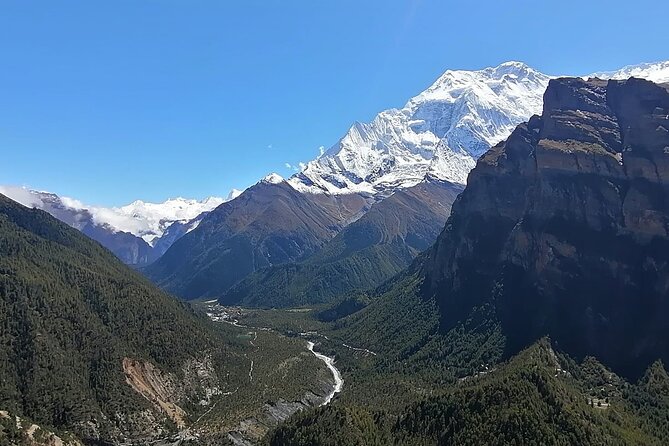
- Close-up mountain days near Manang, with big views of several peaks from the trail
- Gangapurna Lake time plus village interaction in Manang
- Thorung La 5416m as the trek’s top moment, with Dhaulagiri-range views
- Included flight to Pokhara, with scenery over the Kali Gandaki Gorge
Getting Oriented: Manakamana Temple and the Start Outside Kathmandu
Your Annapurna Circuit experience begins in Kathmandu with an early pickup. The stated start time is 7:15am, and your team meets you at Himalayan Trekking and Tours on Yapikhya Marg 17. From there, you ride out toward Besisahar, with a roughly 185 km / about 7-hour drive listed for Day 1.
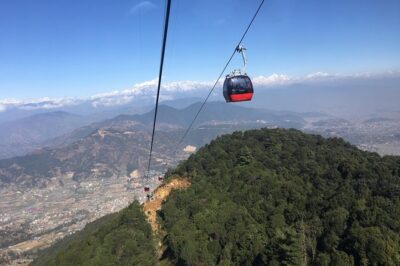
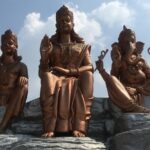
That first day matters more than it sounds. Trekking fatigue is cumulative, and starting with a clear plan means you’re not scrambling for transport or guessing timing after a long travel day. Once you arrive, you take in the early mountain energy around Besisahar and then head to the Manakamana Temple stop. It’s a good contrast piece: before you’re dealing with altitude and footwork, you get a spiritual pause with a local Nepal vibe.
Two practical notes to keep in your head for Day 1:
- You’re effectively transitioning from city life to trail life on the same day, so keep your pack light and your plans simple.
- The itinerary indicates Manakamana Temple admission ticket is free in this day block, which is one less thing to budget for immediately.
You can also read our reviews of more hiking tours in Kathmandu
Forest to Manang: Chame, Narrow Valleys, and Peak Views That Feel Close
After the drive day, the trek shifts into classic Annapurna Circuit rhythm: you climb, you descend, and you keep earning views in small bites.
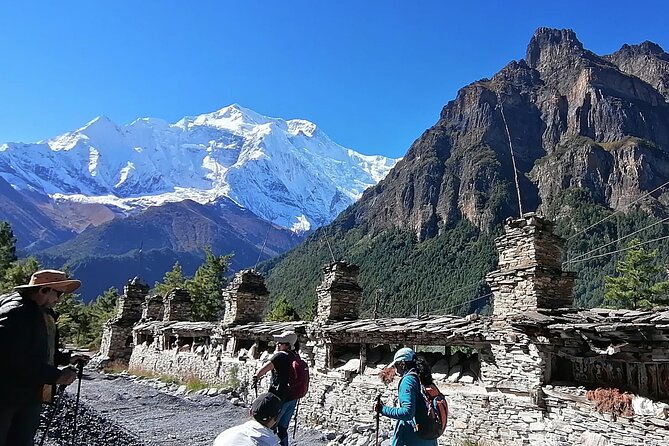
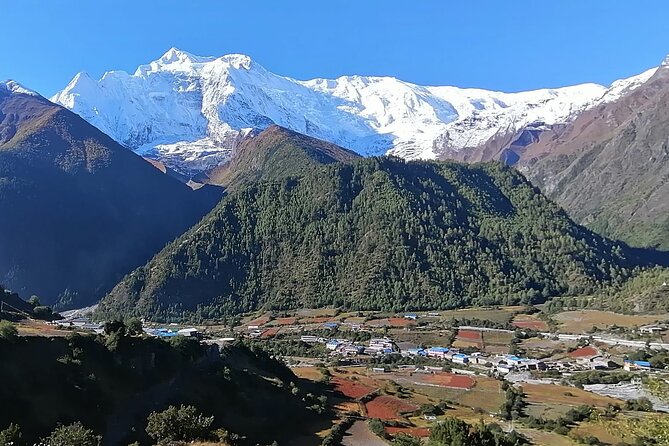
Day 2 begins with a climb up to Tyanja (2,360m) and then continues through forest, reaching Kopar (2,590m). When you reach Chame, the Manang district headquarters, you’re rewarded with fine views of Annapurna II. This is the kind of day where you can tell you’re “in it” now. The trail moves through wooded terrain, but the skyline starts getting more dramatic as you gain elevation.
Day 3 has a tighter feel. The route goes through a deep forest in a steep, narrow valley, and you cross rivers on long bridges at around 2,910m and again around 3,040m. Those crossings sound simple, but on foot they become built-in pauses. You slow down, you look ahead, and you get your breath back. The path also sets you up for one of the trek’s big themes: ridges and rock faces that show their character as you get higher. Near 3,040m, the views of Paungda Danda start to really register.
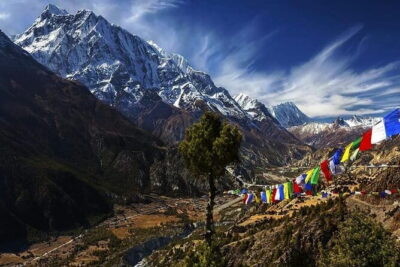
Day 4 is where the scenery starts stacking. You pass pine forests, then once you’re about to reach Manang, the itinerary calls out a cluster of close-up sightlines: Gangapurna, Annapurna II and III, Tilicho, Chulu east, and Pisang peak. That list is not random. It’s basically the moment when you stop thinking of the Himalaya as a single silhouette and start reading it as a set of named peaks you can actually track from the trail.
If you like a trek with frequent “how is that so close?” moments, this part is your payoff. If you hate hiking in near-constant uphill effort, this is the section you’ll want to take slow on, even if the trail feels steady.
Manang Village and Gangapurna Lake: A Day That Feels Like More Than Hiking
Day 5 brings a welcome change from “just walk and sleep.” You explore Manang village, interact with locals, and visit Gangapurna Lake. This is one of the most culturally grounded days on the circuit and a good reminder that Annapurna isn’t only about altitude numbers.
A few reasons this day is valuable:
- Village time gives you context for what you’re seeing on the trail.
- A lake stop offers a different kind of scenery reward than big pass views.
- It breaks up the more strenuous walking blocks so your body can recover a little.
The itinerary lists a free admission ticket for this lake stop. That’s a small detail, but it helps you budget without guessing.
If you’ve only done shorter treks before, this is also the day that helps your brain learn a new pace: you’re not rushing to the next viewpoint. You’re spending time where the mountain meets daily life.
Gunsang, Yak-Kharka, and Thorung Phedi: The Build-Up Phase
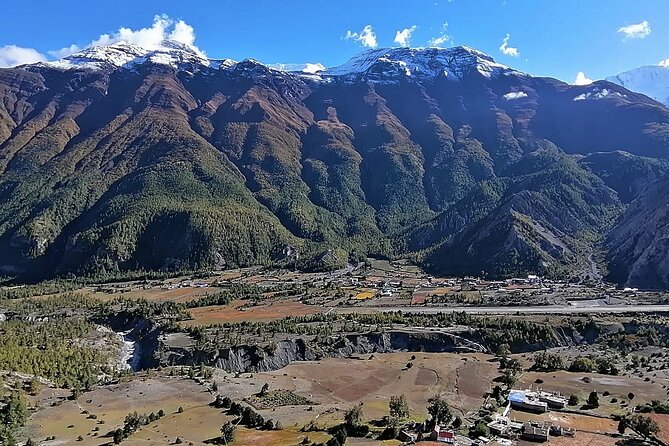
Day 6 shifts back into climbing, leaving Manang behind and heading toward the Marshyangdi valley. The route includes strenuous ascends and then reaches Gunsang village, followed by Yak-Kharka. The day ends at Ledar before sunset, according to the itinerary snippet.
Day 7 is all about approach. You walk along the east bank of the Jorsang Khola and hike toward Thorung Phedi. The itinerary is blunt about the reality of this route: the trail is tough, with narrow paths and unstable slopes. Then you overnight at Thorung Phedi.
This section is where the trip’s support system really matters. You’ll have a guide and porters, and the tour notes a porter arrangement of 1 porter assigned for 2 people. That ratio matters because it can reduce the amount you’re carrying on the steep, tiring days when your legs are already spent. Even when you feel strong, the last thing you want is to waste energy dragging heavy gear uphill.
Also, take the Thorung Phedi night seriously. It’s positioned as the stepping stone to the pass day, so your goal is rest, good hydration habits, and not planning anything complicated. Think of it as your staging night, not just another sleep.
Thorung La 5416m and Muktinath Temple: One Big Day, Two Major Rewards
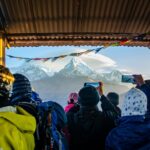
Day 8 is the trek’s headline: the hike toward Thorung La (5416m), described as the highest point on the trek. You move across rocky ridges, and the itinerary notes you can spot the Dhaulagiri range from the elevated venue.
This is the kind of day where the mountain can feel both close and intimidating. High altitude turns every step into work, and narrow ridges can demand concentration. The good part is that the view payoff is built in. If you came for one day that feels like the Annapurna Circuit in full, this is it.
Then there’s an additional cultural stop: Muktinath Temple. It’s described as one of the holy and powerful temples in the Mustang region of Nepal. The itinerary lists admission as not included for these specific time blocks, so it’s smart to budget a little for any required entry fees once you’re there.
What I like about placing Muktinath on the pass day is simple: it helps you land the experience. You go from physical challenge to spiritual and cultural meaning, then you keep moving rather than collapsing after the pass.
Down the Kali Gandaki to Pokhara: Arid Views, Tibetan Villages, and a Flight Home
Day 9 drops into the Kali Gandaki Valley. The itinerary says you descend through dramatic terrain and arid landscapes, then cross Jharkot and Khingar, described as Tibetan villages. You follow the valley floor until reaching the day’s endpoint.
This day has a different texture than the lush forest segments earlier. The trail environment becomes more about wide sightlines, dry terrain, and that classic Kali Gandaki feel where the valley pulls your gaze forward. It’s also often the emotional shift day: you’ve already done the hard altitude moment, so the big question becomes how smoothly you can handle walking down.
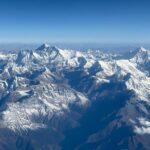
Day 10 is where the trek turns into a travel win. After breakfast, you take the included morning flight to Pokhara. The flight is described as spectacular, flying above the Kali Gandaki Gorge, with views of the Dhaulagiri and Annapurna ranges. Then you get free time in Pokhara, including boating at Fewa Lake.
This finish is a big part of the value. You’re not spending a full extra day grinding back over long roads. Instead, the trek ends with a scenic reset, and Pokhara gives you a place to eat well and decompress.
Food, Guides, and Porter Support: What You’re Paying For
The price is $1,430 per person, and the real question is what’s covered. This tour includes:
- Guide and porters, with 1 porter for 2 people
- Private transportation
- Domestic flight (Jomsom to Pokhara)
- Sleeping bag
- Coffee and/or tea
- Meals: breakfast (11), lunch (10), dinner (10)
- All fees and taxes
What’s not included is also clearly listed: bottled water, alcoholic beverages, and air-conditioned vehicle.
To evaluate value, look at the combination. A trek like this usually costs more once you factor in a guide, porter labor, and the logistics of flights. Here, the structure is built around removing uncertainty from your planning. You don’t have to line up every transfer on your own, and you’re not left wondering where the next meal comes from.
This is also where the guide/porter side earns trust. The trip feedback you provided highlights guides like Babu and Resham, praised for warmth, flexibility, and attention during real moments on the trail. Porters like Rojit are singled out as friendly, helpful, and part of the comfort you get through long days.
And yes, the food and accommodation got praise too: people call out delicious food throughout and good accommodations. That may sound like a generic compliment, but on a trek, it’s a real comfort factor. Better meals and decent stays can make a bigger difference than shaving 20 minutes off a hike.
Fitness and Altitude Reality Check (No Guesswork Needed)
This is a high-altitude trek, and the tour data makes that plain through the elevation markers you’ll face. You start at lower elevations and climb to Thorung La at 5,416m, with multiple overnight elevations along the way including Thorung Phedi.
The trip is also aimed at people with moderate physical fitness, which is a helpful baseline because it signals the trek isn’t marketed as easy. It’s still demanding, especially once the trail narrows and the route becomes more technical near Thorung Phedi.
One important note from the feedback you shared: altitude trouble is taken seriously. In at least one case, when altitude hit, the guide and team were there at the first signs of problems. That matters because it’s not just about reaching a summit. It’s about how your guide responds when your body stops cooperating.
My practical advice for your planning:
- Don’t treat the pass day as the only important day. The build-up days set you up, for good or bad.
- If you’re coming straight from sea level, build time for acclimatization and keep expectations modest on early hikes.
- Pack smart and keep your day-to-day gear simple. Your goal is consistency, not hero moments.
Who Should Book This Annapurna Circuit, and Who Should Rethink It
This trek is a strong match if you want:
- A guided Annapurna Circuit with small-group feel
- A clear arc: forest climbs, Manang village time, big pass day, Kali Gandaki descent, and a flight to Pokhara
- The comfort of knowing meals, guide, and porter support are part of the plan
It’s also a good fit if you value meaningful cultural stops. Manakamana Temple at the start and Muktinath Temple on the way back to lower elevations give you more than scenery. The Manang day with village interaction and Gangapurna Lake helps the trek feel like Nepal, not only a hiking route.
Who might rethink it? If you want a very gentle trek, or if high altitude is a big concern for you and you’re not ready to deal with steep climbs and exposed feeling ridges, you’ll want to talk with the operator before committing. The itinerary and structure are built around a real pass crossing.
Should You Book This Annapurna Circuit Trek?
I’d book it if your priorities are guided support, structured pacing, and an itinerary that hits both the famous views and the human side of the Annapurna region. The pricing makes sense for what’s included, especially the guide/porter team, sleeping bag, meals, and the flight to Pokhara that saves you from extra overland fatigue.
I’d hesitate only if you’re not comfortable with altitude and rougher trail segments near the Thorung approach. This route is rewarding, but it asks your legs and lungs to do work.
If you want a trek that feels like a complete Annapurna Circuit story—starting with Manakamana, leveling up through Manang, cresting Thorung La, and ending with a scenic flight—this is a strong choice.
FAQ
Where does this trek start?
It starts in Kathmandu at the Himalayan Trekking and Tours office (Yapikhya Marg 17). The stated start time is 7:15am, and pickup is arranged through the trekking staff.
What is the total duration and distance?
The duration is about 10 days. The trek is described as covering around 160–230 km (100–145 miles).
What is the highest point on the route?
The highest point is Thorung La at 5,416m.
Is a domestic flight included?
Yes. The tour includes a domestic flight from Jomsom to Pokhara, and Day 10 is described as taking the morning flight to Pokhara.
What meals are included?
The package includes coffee and/or tea, plus breakfast (11), lunch (10), and dinner (10).
Are meals and lodging covered during the trek?
Food is included as listed in the package. Accommodation isn’t explicitly detailed in the provided data, but the inclusions do cover the sleeping bag and the trek’s guided logistics.
Who supports you during the trek?
You’ll have a guide and porters. The porter allocation is listed as 1 porter assigned for 2 people.
What are some key stops along the way?
Key stops include Manakamana Temple (early on), Gangapurna Lake and Manang village, Thorung La (5416m), and Muktinath Temple.
What is not included in the price?
Bottled water, alcoholic beverages, and an air-conditioned vehicle are listed as not included.