REVIEW · KATHMANDU
Kathmandu Spiritual Sites: Bodhnath & Pashupatinath Tour
Book on Viator →Operated by Intrepid Urban Adventures - India · Bookable on Viator
Two temples, one unforgettable evening. This small-group tour strings together two UNESCO sites in Kathmandu with the kind of street-level spirituality you feel in your legs and your eyes. I like the max 12 people setup, and I love that you actually use public transport instead of being sealed in a vehicle all the way.
What I also really liked is the way the evening timing lands you at Pashupatinath for the aarti lights offering while the Bagmati River crowds build. Your English-speaking Nepali guide helps connect Hindu and Tibetan Buddhist practices, so it’s not just sightseeing.
One possible drawback: the Bagmati area can get crowded fast, and you’ll be asked to respect cremation ceremonies by not taking photos or watching from close range.
In This Review
- Key takeaways before you go
- Why Boudhanath and Pashupatinath belong on the same half-day
- Meeting in Thamel at 3:00 pm and using public transport for real Kathmandu
- Stop 1: Boudhanath Stupa prayer wheels, butter lamps, and the long look
- The short Thamel pit-stop before you head out
- The walk toward Pashupatinath: why the 15 minutes matters
- Stop 2: Pashupatinath Temple, sadhu stories, and palm reading optional
- Bagmati River cremations: how to witness respectfully
- Evening aarti at Pashupatinath: the crowd strategy that makes it work
- Small group size and pacing: up to 12 people, about 4 hours total
- Price and value: what $60.56 gets you in Kathmandu
- Earthquake damage and what “renovated” means for your visit
- Practical tips so your evening goes smoothly
- Who should book this Kathmandu spiritual sites tour?
- Should you book it?
- FAQ
- What sites does this tour cover?
- How long is the Kathmandu Spiritual Sites: Bodhnath & Pashupatinath Tour?
- What time does the tour start?
- Are entrance fees included?
- Is palm reading included?
- Is public transport used?
- Can I get a full refund if I cancel?
Key takeaways before you go
- Prayer wheels at Boudhanath Stupa as you circumnavigate with local Buddhists at one of the world’s largest stupas
- Evening aarti at Pashupatinath Temple when lamps are offered and the riverbank energy turns intense
- Bagmati River cremations with clear photo etiquette so you don’t accidentally disrespect mourning families
- Small-group pacing (up to 12) that helps you stay together near busy entrances and crowds
- Public transport between stops for a more local Kathmandu feel than a private driver-only route
- Optional palm reading and butter-lamp offers you can add at your own expense
Why Boudhanath and Pashupatinath belong on the same half-day
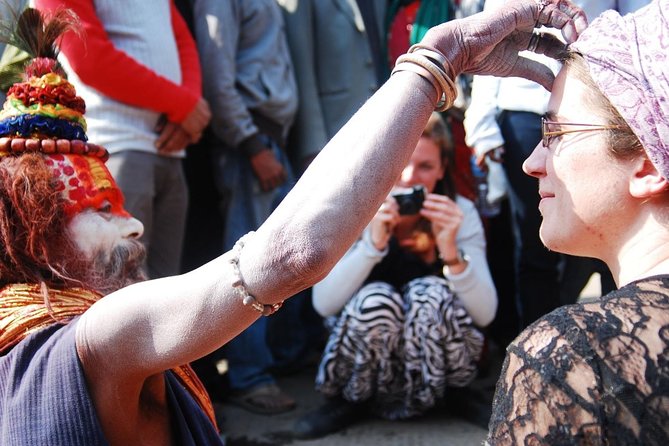
Kathmandu does religion in layers. This tour pairs two places that feel like they belong to different worlds—Tibetan Buddhist practice at Boudhanath, then Hindu devotion at Pashupatinath—yet both are UNESCO-listed and deeply tied to daily life. The timing is the trick: start in the afternoon, then hit the Pashupatinath ritual as daylight fades.
I also like the structure because it gives you context without asking you to plan a full day. In roughly four hours, you get both architecture and human rhythm: people praying, people working, and people moving through sacred spaces with practiced confidence.
You should know one reality upfront: this is an active evening experience. You’ll watch ceremonies, see sadhus (Hindu holy men), and witness cremation activity along the Bagmati River area. It’s meaningful, but it’s also not a quiet museum stop.
You can also read our reviews of more tours and experiences in Kathmandu.


Meeting in Thamel at 3:00 pm and using public transport for real Kathmandu
Your tour starts at 3:00 pm at Hotel Marshyangdi near Thamel (Chaksibari Marg, Kathmandu). The half-day format works well if you’re sightseeing fast or your schedule is tight. You’ll also end back at the meeting point, so you don’t have to figure out how to get across town after the most intense part of the evening.
One of the best value touches here is the choice to travel by public transport. Instead of seeing Kathmandu as a driver’s window view, you get to experience street movement in a normal way. It’s also practical: public transport keeps you integrated with the area’s flow, which matters when you’re heading to places where crowds gather.
This is also a good day to be “logistics-smart” rather than “wander-free.” The crowd near Pashupatinath is described as overwhelming as the sun goes down. Staying near your guide and your group isn’t a suggestion—it’s how you avoid getting lost.
Stop 1: Boudhanath Stupa prayer wheels, butter lamps, and the long look
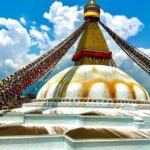
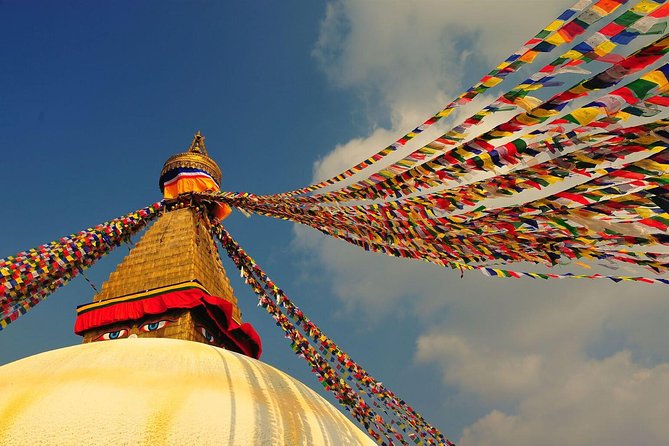
Boudhanath Stupa is the first major stop and the one where you slow down. You’ll spend about 1 hour 25 minutes here, and admission is included. This is one of the largest stupas in the world and a major center for Tibetan Buddhism in Nepal.
Here’s what makes the experience feel special: you’re not just looking at the stupa. You rotate prayer wheels with local Buddhists as you walk the circumnavigation path. That motion matters. It turns “watching religion” into something more like understanding the rhythm people follow every day.
You’ll also learn about offerings by lighting a traditional butter lamp. The tour notes this as part of the experience, and there’s also an optional angle: if you choose to offer butter lamps at Boudhanath, it’s at your own cost and supports local communities.
A practical note: this is a white spherical dome and prayer-wheel area with lots of people moving around. Wear shoes you’re comfortable walking in. You’ll likely be on your feet, and you’ll want to keep your camera ready without blocking foot traffic.
The short Thamel pit-stop before you head out
Thamel is your meeting zone. You’ll have about 15 minutes here as part of the flow, and admission is free. It’s a useful “get your bearings” moment because you can spot signs, find your breath, and settle into the idea that this tour moves at evening pace, not museum pace.
Thamel itself is a tourist-heavy neighborhood, but that’s part of the contrast. You start in a familiar hub, then shift into places where people are living their faith, not just selling it. The transition is smooth on purpose.
The walk toward Pashupatinath: why the 15 minutes matters
After Boudhanath, you head toward Pashupatinath. The route includes a walk of around 15 minutes. This isn’t just “getting there.” It’s where Kathmandu changes texture from stupa area energy to the Hindu shrine zone energy.
The guide’s role is important here. The tour emphasizes that you learn what Hindu beliefs emphasize—especially the cycle of birth and death—so when you arrive at the temple area, you’ll understand why the riverbank rituals aren’t incidental.
Also, expect the walking to add up. The tour gives an approximate total walking distance of about 2 km. That doesn’t sound huge, but it can feel longer in evening heat, on uneven ground, and with the emotional weight of what you’re about to witness.


Stop 2: Pashupatinath Temple, sadhu stories, and palm reading optional
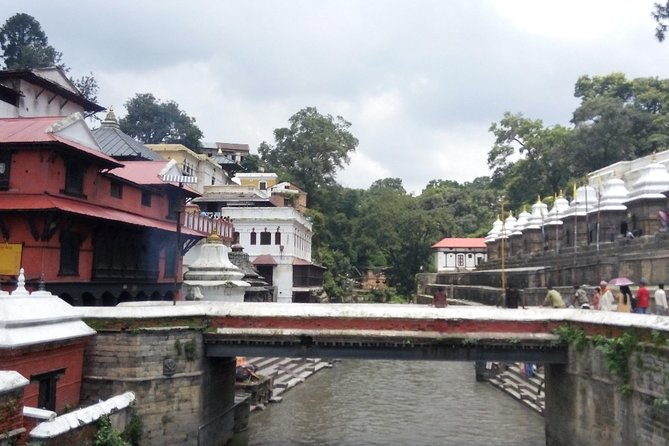
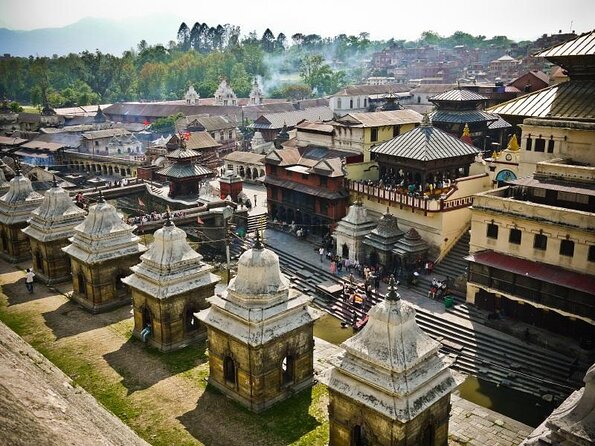
Pashupatinath is the other UNESCO site, and it’s where the tour gets intense in the best way. You’ll spend about 2 hours 20 minutes here, with admission included.
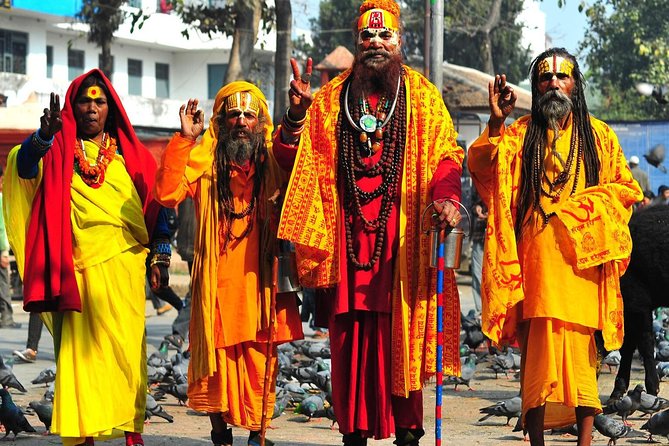
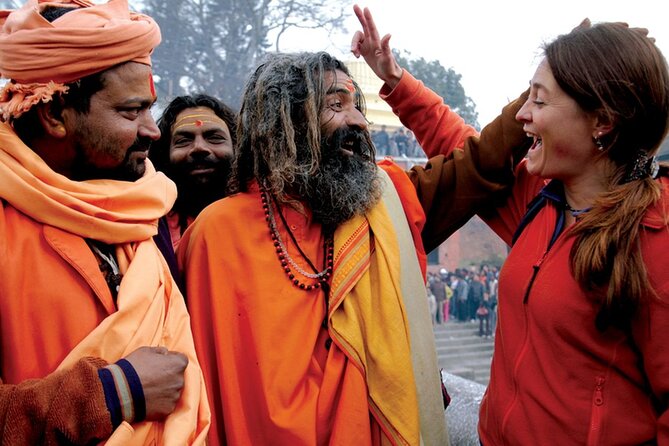
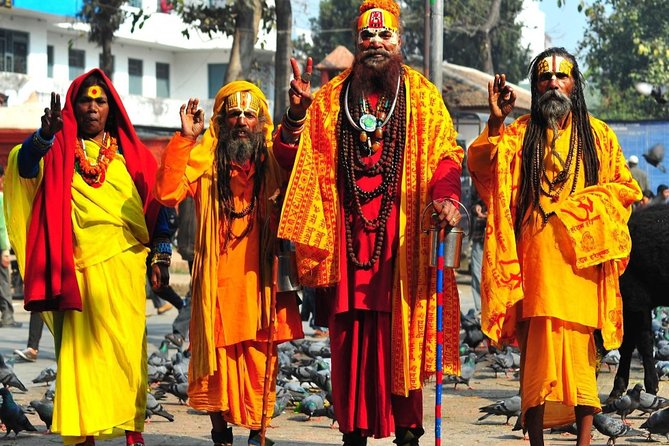
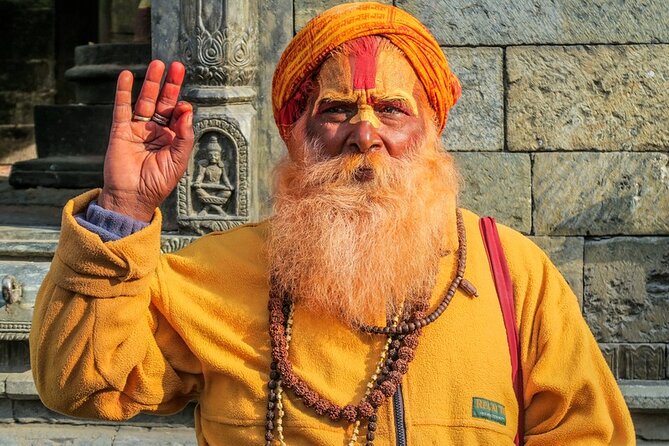
Pashupatinath is dedicated to Lord Shiva and is known as one of the holiest Hindu shrines in the country. You’ll visit with your guide who explains Hindu beliefs with a focus on the cycle of birth and death, and you’ll see the colorful garb worn by sadhu monks.
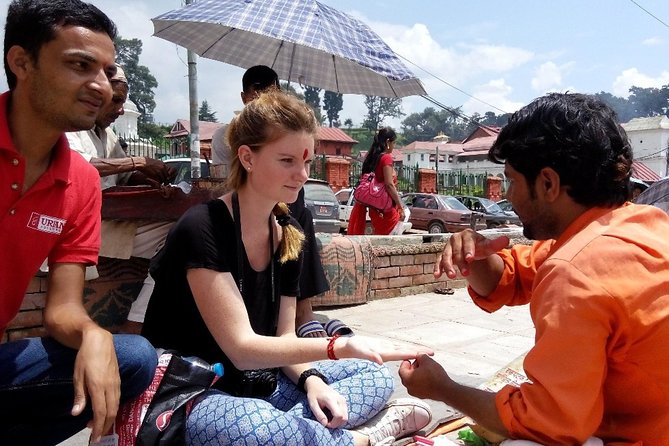
This is also where palm reading can enter the picture. The tour includes a visit with a local palm reader, but the palm reader’s fees are not included. If you choose to do it, that’s an add-on at your own expense. The local impact notes mention a typical range of fees (about $7.5 to $9 per person), so you can budget without guessing.
If you’re choosing whether to do palm reading, here’s the practical way to think about it: it’s part of the local spiritual theater. Even if you treat it lightly, it can help you understand how people interpret fate and devotion in everyday life. Just don’t let it pull you away from the group during busy moments.
Bagmati River cremations: how to witness respectfully
Just outside the entrance to Pashupatinath, cremation ceremonies happen along the Bagmati River. The tour specifically asks you to refrain from taking photos or watching the rituals out of respect for mourning families.
That instruction isn’t just etiquette; it changes your experience. You won’t be able to “capture the moment” the way you might at other sights. Instead, you’ll witness more with your awareness than with your camera.
Emotionally, this can be the hardest part. It can also be the most real. These ceremonies are part of how Hinduism frames life, death, and release. If you’re the type who gets overwhelmed easily, come with calm expectations. You can still learn a lot even if you choose to watch from a distance.
Also keep this in mind: the crowd is described as building heavily in the evening. So your guide’s job is crowd-management as much as explanation. Stay close.
Evening aarti at Pashupatinath: the crowd strategy that makes it work
As the sun goes down, you’ll watch the aarti ritual at Pashupatinath. The tour frames it as an offering of lights to Lord Pashupatinath, and it’s one of the biggest reasons people book this Kathmandu spiritual sites tour.
This is where timing matters. If you arrive too early, the crowd won’t have built to that full, riverbank feeling. If you arrive too late, you may miss the momentum. This tour is structured so you’re there as the evening ritual happens.
Crowd strategy tip: don’t try to reinvent the route yourself. The tour notes that you should keep near your guide and group because the crowd can make it easy to get separated. That’s not dramatic. It’s just reality at an active shrine area.
You’ll likely see people praying, moving around entrances, and creating a wall of bodies near the river edge. The guide can help you find workable sightlines so you’re not constantly craning and accidentally obstructing others.
Small group size and pacing: up to 12 people, about 4 hours total
The tour caps at 12 travelers, and it’s designed for a small-group or private experience. In practice, that’s what you want for two reasons.
First, it keeps instructions clear during chaotic moments—like when the evening crowd grows. Second, it makes the guide’s explanations feel more direct. If you have questions about Hinduism and Buddhism, this format makes it easier for the guide to answer instead of shouting over a large bus.
The total duration is listed as about 4 hours. That’s genuinely short, which helps if you only have a limited window in Kathmandu. It also means there’s no time to wander off to side temples or cafés. You’ll get a lot of intensity packed into one block.
Price and value: what $60.56 gets you in Kathmandu
At $60.56 per person, this tour is positioned as a mid-value evening experience. The big reason it can feel worth it is what’s included versus what you’d pay separately if you tried to DIY.
Included highlights:
- Entry fees for Boudhanath Stupa and Pashupatinath Temple
- Participation in the evening aarti
- Transportation between the main points (from the meeting area to Boudhanath, then from Pashupatinath back to the endpoint)
- A local English-speaking Nepali guide
- An optional-style visit to a local palm reader (fees not included)
- Tips on what else to see, do, and eat
What’s not included:
- Lunch/dinner
- Palm reader fees
- Alms to sadhus / extra purchases related to sadhus or offerings (as described as not included)
For context, Kathmandu entry costs can add up if you’re bouncing between sites in a short time. Add a guide and transport, and the price stops looking like a luxury add-on and starts looking like time-savings.
Also, this tour includes “local impact” elements. That matters when you’re spending your money in places where the living religious community is part of what you’re experiencing. Entrance fees support maintenance, and optional offerings are described as helping sustain local readers and the lives of sadhus who otherwise may not have access to tourist money.
Earthquake damage and what “renovated” means for your visit
The tour notes that some sites visited had damage from the earthquakes in April and May 2015, and that the sights you see have been renovated. For you, that’s reassuring: you’re not going to a wrecked, closed-off zone. You’re visiting restored UNESCO heritage spaces, still active and still in daily use.
In plain terms: you get to focus on the experience rather than wondering what parts are permanently damaged or unsafe.
Practical tips so your evening goes smoothly
Here are the details that help most people enjoy the tour rather than just survive it.
- Keep your phone charged. You’ll use a mobile ticket, and you don’t want battery anxiety during transfers.
- Plan for cameras, but follow the rules. At cremation ceremonies, don’t take photos and don’t linger to watch closely.
- Expect walking. Roughly 2 km total across temple paths and transfers means comfortable shoes beat fashion.
- Go light on extra add-ons. Palm reading and optional offerings are meaningful, but they cost extra, and this tour is short.
- Be ready for crowd noise. The Pashupatinath riverbank area can get overwhelming at sunset, so keep close to your guide.
If you’re the kind of person who likes to stand back and observe, this tour gives you plenty to observe—just remember the etiquette around cremations.
Who should book this Kathmandu spiritual sites tour?
This is a strong fit if you want:
- One evening that covers two UNESCO spiritual powerhouses: Boudhanath Stupa and Pashupatinath Temple
- A guide-led explanation of Hinduism and Buddhism, not just photos of temples
- A small group (up to 12) so you don’t lose your bearings in crowds
- A local transport experience instead of a car-only ride
It’s also a good choice if you’re comfortable with the emotional tone of death-related rituals. If you’re sensitive to that subject, you can still go, but you should mentally prepare for the Bagmati River cremation area and the no-photo expectations.
Kids are allowed. The tour notes children under age 6 join free, and it’s described as child-friendly. That said, with ceremonies nearby and crowds building, families should judge what their child can handle.
Should you book it?
I’d book this tour if you want a focused evening that mixes real religious practice with clear guidance, and you’re okay with respectful boundaries around cremations. The value is strong for a half-day: temple entry, aarti participation, and transport are included, which is exactly what you want when time is short.
I would think twice if you hate crowds or you know you get stressed by intense cultural scenes. This is not a casual stroll. It’s a meaningful, sometimes solemn, sometimes loud Kathmandu experience.
If you do book, do one thing that pays off: arrive at the meeting point on time and stay close to your guide during the busiest moments. That turns a potentially overwhelming evening into a memorable one.
FAQ
What sites does this tour cover?
You’ll visit two UNESCO World Heritage sites: Boudhanath Stupa and Pashupatinath Temple.
How long is the Kathmandu Spiritual Sites: Bodhnath & Pashupatinath Tour?
The tour runs for about 4 hours.
What time does the tour start?
The start time is 3:00 pm.
Are entrance fees included?
Yes. Admission tickets for Boudhanath Stupa and Pashupatinath Temple are listed as included.
Is palm reading included?
The tour includes a visit to a local palm reader, but palm reader fees are not included.
Is public transport used?
Yes. The tour is described as traveling by public transport for a more local experience.
Can I get a full refund if I cancel?
Yes. You can cancel up to 24 hours in advance for a full refund.