REVIEW · KATHMANDU
Gurkha Knife Making
Book on Viator →Operated by Queermandu | Gay Tours Nepal · Bookable on Viator
Making a Gurkha knife feels like time travel. This half-day workshop in Kathmandu puts you at a working forge where you create a real Gurkha knife and even stamp your initials on the blade. I love that it is hands-on rather than watching from the sidelines, but the morning schedule is tight since it runs 7:15 AM to 10:15 AM.
The other thing I really like is the people factor: you work with local knife makers in a small setting, and guides such as Aayam, Indra, and Aachal help keep everything friendly and understandable. One consideration: since it is a craft class with a max of 4 people, you’ll want to plan for a focused, structured 4-hour session rather than a casual stroll.
In This Review
- Key highlights worth booking for
- Why the Gurkha Knife Workshop Works in Kathmandu
- The 4-Hour Flow: Garden of Dreams to Your Finished Kukri
- What you might like (and why)
- One small tradeoff
- Aayam, Indra, and Aachal: How the guides shape the day
- Why this matters for value
- Materials and details that make the knife feel real
- The 100-year guarantee
- Price and value: is $66 for 4 hours a fair deal?
- Who gets the best value
- Logistics that actually matter (without the fluff)
- Who should book this, and who should skip it?
- Tips to get the most out of your knife-making morning
- Should you book Gurkha Knife Making in Kathmandu?
- FAQ
- How long is the Gurkha knife making experience?
- Where does the workshop meet in Kathmandu?
- What time does the class run?
- Does the price include refreshments or materials?
- Can I personalize the knife?
- Is there any guarantee on the finished knife?
Key highlights worth booking for
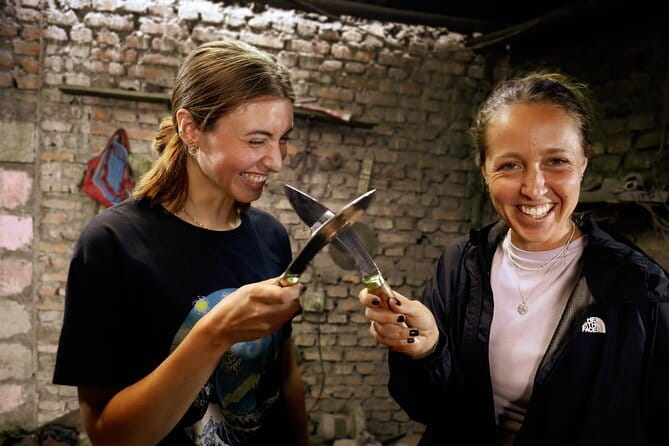
- You stamp your initials on the blade, so your knife feels personal, not generic.
- Small group size (max 4) means more time with the smith and less waiting around.
- Tea and cookies are included while you work, so you are not burning through the morning hungry.
- Indian rosewood handle is part of the build, giving the knife a quality feel from day one.
- 100-year guarantee backs the knife, which is unusual for souvenirs.
- Pickup offered and the session starts at the Garden of Dreams.
Why the Gurkha Knife Workshop Works in Kathmandu
If you want Kathmandu beyond temples and traffic, this kind of class delivers. You are working metal, learning the story behind the Gurkha knife, and watching how the craft connects to strength and resistance in Nepal’s warrior history. The workshop is designed for people who want to do something with their hands, not just collect photos.
I also like that the experience is framed as both culture and craftsmanship. You are not only making an object; you are learning the why behind the knife and the tales that swirl around Gurkhas. That context matters because it turns a souvenir into something you actually understand.
One more practical note: it is set up as a half-day session. You will still have plenty of time after your knife class for other Kathmandu stops, and the morning timing makes it easier to avoid the hottest part of the day.
You can also read our reviews of more tours and experiences in Kathmandu.



The 4-Hour Flow: Garden of Dreams to Your Finished Kukri
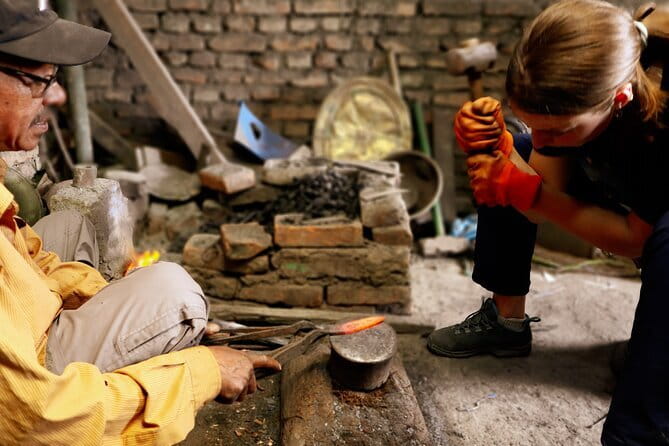
The workshop starts at Garden of Dreams (Tridevi Sadak, Kathmandu 44600). If pickup is offered on your booking, you can start from a nearby location rather than having to navigate to the meeting point on your own. Either way, plan to arrive a bit early so you have time to check in and settle before you step into the forge.
The scheduled window is 7:15 AM to 10:15 AM, and the duration is about 4 hours. In other words, you should treat this as a structured morning plan, not an open-ended activity you can drift into late.
Here is what the session centers on, in plain terms:
- You meet the team and get oriented to the process.
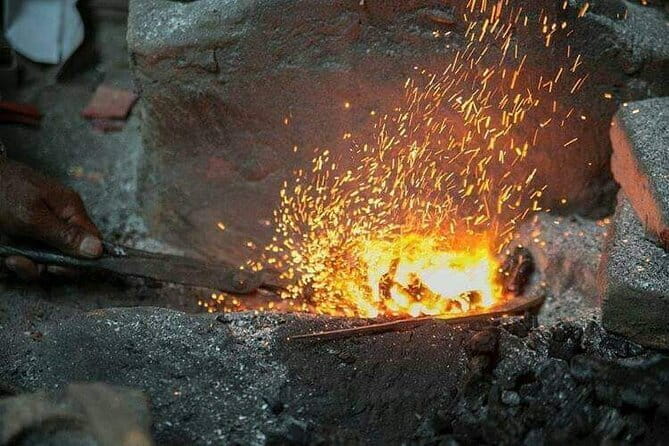
- You spend time working at the forge as the smith guides you through the key steps of making the knife.
- You use Indian rosewood for the handle and participate in the building process.
- You finish with your own personal touch: stamping your initials on the blade.
- You get refreshments along the way: tea and cookies.
It ends back at the meeting point. That is useful because you are not stuck planning a new route after you are done and carrying your finished knife.
What you might like (and why)
This format is strong because you actually participate. Most craft tours are watch-and-hope. Here, the point is that you do the work with skilled help, so you leave with a piece you can explain.
One small tradeoff
Because it is a forge and a build, you should expect a more hands-on, concentrated rhythm. If you are hoping for a long, leisurely wander around a workshop, you may find the time feels too structured. But if you want to make something real, the schedule is a plus.
Aayam, Indra, and Aachal: How the guides shape the day
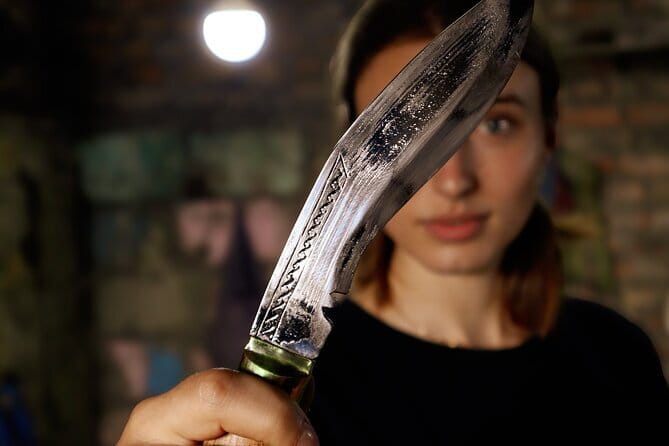
A knife-making class lives or dies by instruction. The good news is that the team behind this experience leans into a friendly, supportive vibe while keeping things practical. In particular, people have mentioned Aayam as a guide who helped them with the flow and made the class feel fun, plus Indra as a knowledgeable craftsman at the center of the work. One booking also highlighted Aachal as a host who was warm and made the morning feel special.
If you are not fluent in Nepali, you will likely appreciate having someone who can help with translations and explanations during the process. Even when the metalwork is straightforward to watch, the story and the steps become more meaningful when they are explained well.


Why this matters for value
Craftwork can be intimidating at first glance. With a guide who can translate and a smith who can teach, you get the real payoff: understanding what you are doing and why. That is how a workshop turns into a story you still care about weeks later.
Materials and details that make the knife feel real
Some souvenirs are pretty, but they are basically décor. This one is different because the experience is built around the actual components of a Gurkha knife.
You are working with:
- Quality Indian rosewood for the handle
- A blade that you personalize by stamping your initials
- A finished knife you take home as part of the experience
That rosewood detail is not just a fancy name. Wood handles can feel great in the hand, and it adds to the sense that this is a crafted tool, not a mass-produced item.
The 100-year guarantee
Another big value marker is the 100-year guarantee backing each knife. You should still read any written terms if they provide them, but just the presence of a long guarantee says the maker expects longevity. It also helps justify the price for people who want their purchase to last.
Price and value: is $66 for 4 hours a fair deal?
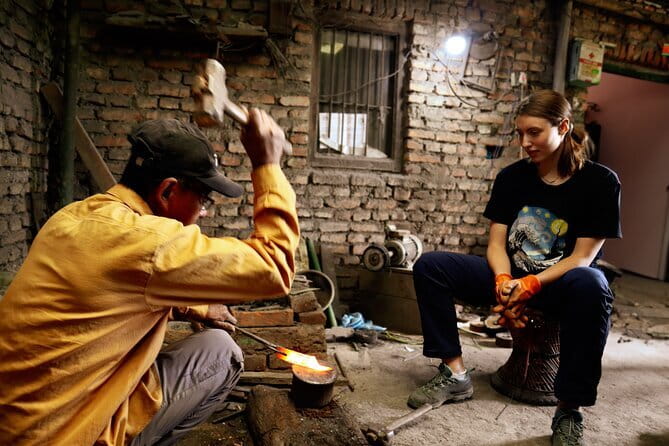
At $66 per person for about 4 hours, this is not a cheap activity. But it also is not priced like a quick museum stop. You are paying for access to a working forge, skilled instruction, included refreshments, and a take-home knife with a 100-year guarantee.
It helps that the group is capped at 4 travelers. Smaller groups usually mean less time watching and more time doing, which matters a lot in hands-on work like this.
It also averages bookings around 9 days in advance, which suggests it is popular enough that you should not wait until the last minute if your schedule is tight.
Who gets the best value
You will feel the value most if you:
- Enjoy learning by doing
- Want a crafted souvenir with real personalization
- Prefer small-group experiences over large tours
- Care about quality details like the handle material
If you mostly want a casual morning with photos, you might decide to spend your time elsewhere. But for the right traveler, this is a practical way to buy something with meaning.
Logistics that actually matter (without the fluff)
This is built for mornings. The stated opening hours run Monday through Sunday, 7:15 AM to 10:15 AM, with the overall availability running from 03/22/2024 to 12/15/2026. That means your planning window is limited, especially if you like slow mornings or have early tours elsewhere.
You get a mobile ticket, and confirmation happens at booking time. Pickup is offered, so if you do not want to think about directions to Garden of Dreams, look for that option on your reservation.
The activity says most travelers can participate. That is reassuring, especially if you are not confident about joining workshops in general. Still, if you have mobility issues or health constraints, you will want to contact the operator before booking since this is described as a blacksmithing experience in a forge setting.
Who should book this, and who should skip it?
Book this if you want a Kathmandu experience with a clear payoff. This is ideal for:
- People who like hands-on crafts
- Gift shoppers who want something personal (initial-stamped blade)
- Travelers who want a skill-based memory, not only a photo
- Anyone who enjoys small groups and personal attention
Skip it if you dislike structured activities. Since it is a 4-hour guided class with a small group, it is not the right fit if you want flexible free time.
Also, consider your priorities. Kathmandu has many cultural stops, and this is not a temple tour. It is a workshop tour, built around metalwork and craft teaching.
Tips to get the most out of your knife-making morning
Here are a few practical ways to show up ready and leave happier:
- Plan your day around the morning hours. If you miss the start, you can lose the flow fast.
- Come in with a clear idea of what you want on the knife. Since you will stamp your initials, think about letter order ahead of time.
- Ask questions while the smith explains the steps. The story side is part of the value.
- Wear practical clothing. Forge work can be messy and warm, even when the team tries to keep things comfortable.
- If pickup is available, confirm your pick-up details early so you do not waste time after meeting point check-in.
Should you book Gurkha Knife Making in Kathmandu?
I think you should book this if you want an authentic, working craft experience and you like the idea of going home with a genuinely made item. The small group (max 4), the hands-on participation, the Indian rosewood handle, the initial stamping, and the 100-year guarantee are a strong set of value signals for a $66 workshop.
I would pass only if you are scheduling-light in the morning or you prefer passive sightseeing. This is not built for lounging. It is built for doing.
If you are deciding last minute, note that cancellation is free up to 24 hours in advance for a full refund, so you have some breathing room to adjust if plans shift.
FAQ
How long is the Gurkha knife making experience?
It runs for about 4 hours.
Where does the workshop meet in Kathmandu?
The meeting point is Garden of Dreams, Tridevi Sadak, Kathmandu 44600, Nepal. The activity ends back at the meeting point.
What time does the class run?
The opening hours listed are 7:15 AM to 10:15 AM, Monday through Sunday.
Does the price include refreshments or materials?
The experience includes tea and cookies during the session, and you work with Indian rosewood for the handle. Your knife is included as part of the experience.
Can I personalize the knife?
Yes. You can stamp your initials on the blade.
Is there any guarantee on the finished knife?
Yes. Each knife is backed by a 100-year guarantee.