REVIEW · KATHMANDU
Ghorepani Poon Hill Trek
Book on Viator →Operated by Nepal High Trek & Expedition Pvt. Ltd · Bookable on Viator
This trek sells itself at sunrise. You hike up to Poon Hill (above 3,210 m) for big-mountain views and then spend the days moving through villages like Ulleri and Ghandruk, plus rhododendron forest trail. I also love that you get a government licensed mountain guide and a plan that handles the day-to-day basics like meals and tea.
The main thing to consider is the early start for the Poon Hill sunrise hike, which can feel cold and steep before you’re fully awake.
In This Review
- Key things I think are most worth your attention
- Poon Hill sunrise: the view math you’ll actually care about
- Kathmandu base and the transfer plan you should prep for
- Day 1: Nayapul to Ulleri—views early, climbing later
- Day 2: Ulleri up, Bhanthati through forests—this is where the trail rhythm hits
- Day 3: Poon Hill at 3,210 m—how to survive the sunrise hike mindset
- Day 4: Ghandruk downhill—Gurung village time you’ll actually want
- Meals, tea, and teahouse comfort (including that attached-bath detail)
- Guides: the real multiplier on a trek this short
- Price and value: what $399.67 includes, and what costs extra
- Who should choose the Ghorepani Poon Hill trek
- Should you book this trek
- FAQ
- How long is the Ghorepani Poon Hill Trek?
- Where does the trek operate from?
- Is pickup included?
- What time does the experience start?
- Is this a private tour?
- Are meals included?
- What permits and guiding are included?
- What kind of accommodation do you get?
- Is ground transportation included?
- Are porter fees included?
- Can I cancel for a full refund?
Key things I think are most worth your attention
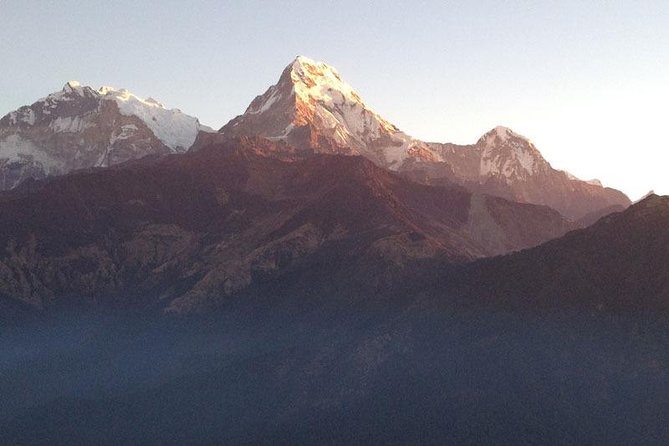
- Poon Hill, above 3,210 m: sunrise with views spanning Dhaulagiri, Manaslu, Annapurna peaks, and Machhapuchare
- Licensed guide and private group: only your group participates, with a guide who holds a government license
- Meals and tea included daily: breakfast, lunch, dinner, plus tea (3 cups per day)
- 3 nights with private attached bathrooms: more comfort than you usually expect on a beginner trekking route
- Stops that mix effort and scenery: Ulleri, Bhanthati, then the famous sunrise segment, ending in Ghandruk
- Porter costs are extra: porter fees are listed as $20 per day if you want one
Poon Hill sunrise: the view math you’ll actually care about
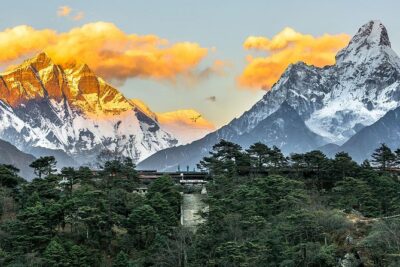
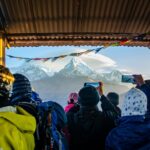
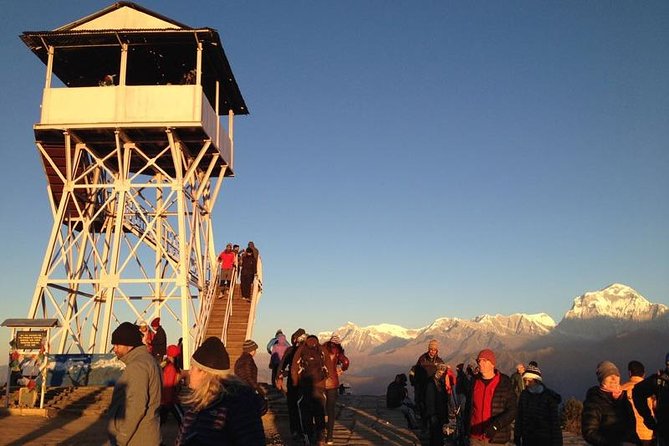
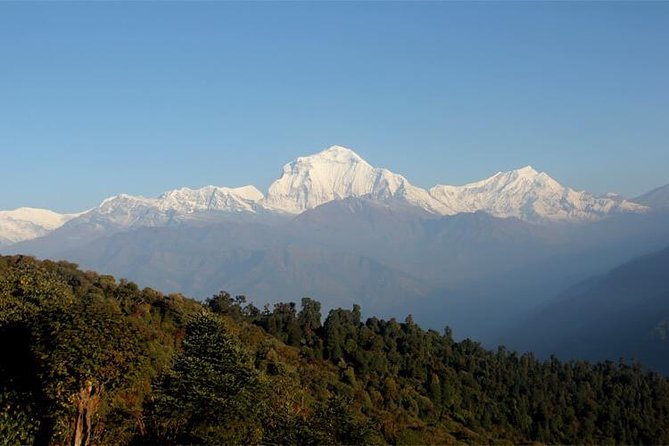
Poon Hill is the reason this trek is so popular. You’re headed up to a high viewpoint just over 3,200 m where the morning sky can crack open on a wide set of Himalayan peaks.
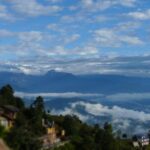
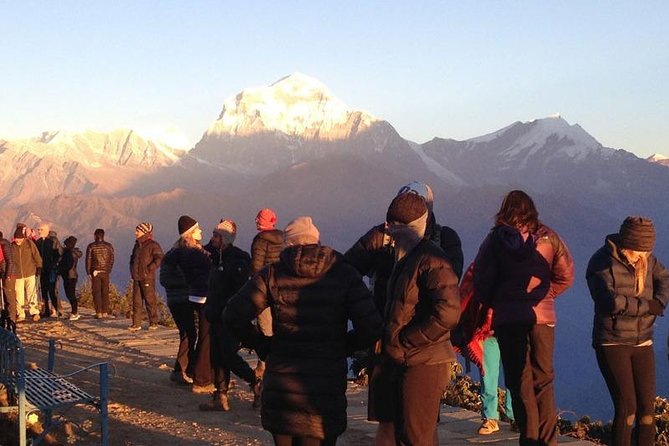
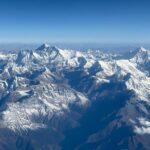
What makes this sunrise payoff especially memorable is the range of mountains you can see on a clear morning. The horizon includes Mt. Annapurna I and Annapurna South, plus Gangapurna and Annapurna III. You can also catch Mt. Dhaulagiri and Mt. Manaslu in the bigger-picture view, and Mt. Machhapuchare (the Fish-tail) shows up in the mix too—often as the most instantly recognizable silhouette.
If you want a trek where the hard part is concentrated (not scattered across a whole week), this is one of the best formats. You do a lot of walking, but the “big moment” is focused into one early-morning hike.
You can also read our reviews of more hiking tours in Kathmandu
Kathmandu base and the transfer plan you should prep for
This trek is sold from Kathmandu and typically includes pickup. The trail itself connects with transportation around Pokhara and the trek entry point at Nayapul, plus the return route from Ghandruk back through those same checkpoints.
In practical terms, that means your day starts with movement before you even lace up boots. The first day includes a drive of about two hours to reach the foothills and the Nayapul area, with views of the Annapurna range and Machhapuchare along the way. After that, you’re walking upward toward Ulleri.
So even though the trek is only about four days, you should treat it like a half-journey, half-trek combo. Build in patience. You’ll be happier if you plan to eat well, drink water when you can, and keep your pace steady instead of trying to “win” the altitude.
Day 1: Nayapul to Ulleri—views early, climbing later
Day 1 starts with that short “transition walk” energy: a couple hours by road, then hiking that brings you to Ulleri. You’ll pass towns and villages on the way and get mountain views as you move toward the foothills. Machhapuchare’s Fish-tail is called out as a key view from this early section, which makes the day feel like more than just getting started.
Ulleri is also a useful first stop because it gives you time to settle before the bigger altitude pressure arrives. You’re not trying to sprint to the top. Instead, you’re easing into the rhythm: walk, rest, repeat.
One drawback to watch for is that the first day often sets the tone for how you’ll feel on the rest of the trek. If you go too fast here, the rest of the itinerary will feel harder than it needs to. Aim for steady effort and let your breathing find its pace.
Day 2: Ulleri up, Bhanthati through forests—this is where the trail rhythm hits
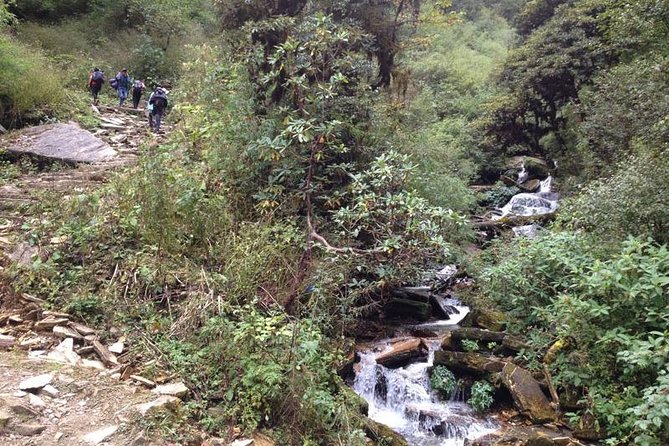
Day 2 shifts from “arrival day” to “real trekking day.” The plan includes about a two-hour uphill walk toward Ulleri village, with views of Annapurna South and Machhapuchare along the way. Then the trail keeps going past Bhanthati, and the hiking becomes more pleasant as you move into forested sections.
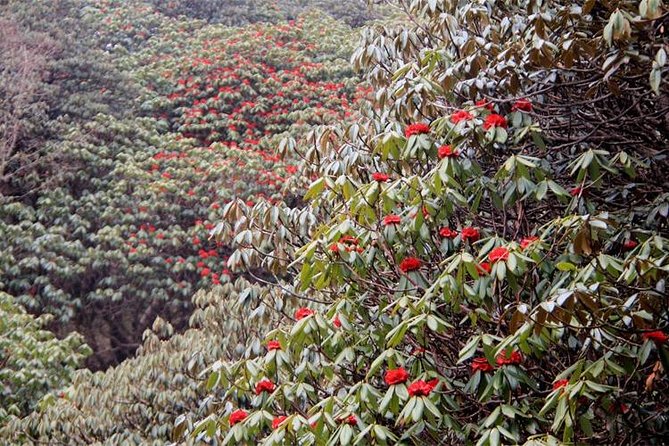
This is the day where many people start to enjoy the trek for what it is: not a test, but a steady walk through lived-in countryside. You’re moving through terraced farmlands and village life, and the trekking route includes rhododendron forest scenery. Even if you’re not photographing constantly, the change in vegetation and the shifting angles on the peaks keep your brain engaged.
What I like about this setup for your enjoyment is that it doesn’t try to cram the sunrise climax and the longest climb into the same day. Day 2 builds stamina and gets you acclimatizing. Day 3 is the big payoff, and you’ll be in a better mood for it if Day 2 felt manageable.
Day 3: Poon Hill at 3,210 m—how to survive the sunrise hike mindset
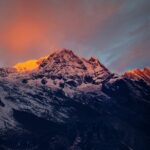
On Day 3, you go early to reach Poon Hill at about 3,210 m for sunrise. The purpose is clear: catch the light as it moves across the Himalayan range.
From the viewpoint area, the peak list is the kind that makes you stop talking and just stare. Expect the view to include Mt. Dhaulagiri and Mt. Manaslu, plus Annapurna I, Annapurna South, and other Annapurna-region peaks. Ganesh Himal is also mentioned, and Machhapuchare (Fish-tail) is part of the wider scene.
To make this day feel good instead of miserable, you need the right mindset for the early start. You’ll likely feel chilly before sunrise, and cold can make every step feel heavier. Pack warm layers you can actually layer up fast, and keep breakfast simple and solid when you’re offered it.
Also, plan on enjoying the “after” part of the morning too. Sunrise is the headline, but once you’ve seen it, you’ll still have daytime walking to keep the day balanced instead of ending it all at dawn.
Day 4: Ghandruk downhill—Gurung village time you’ll actually want
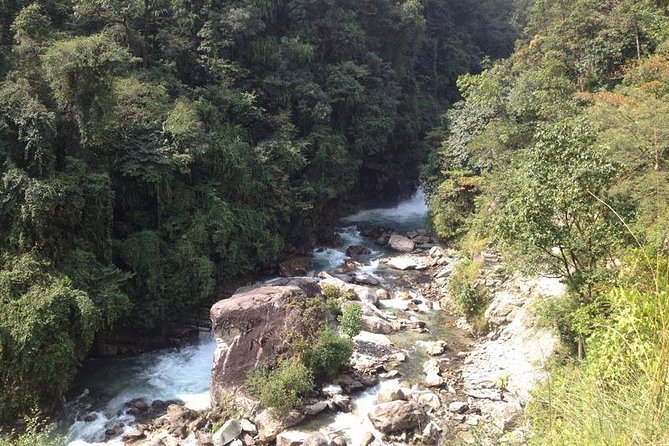
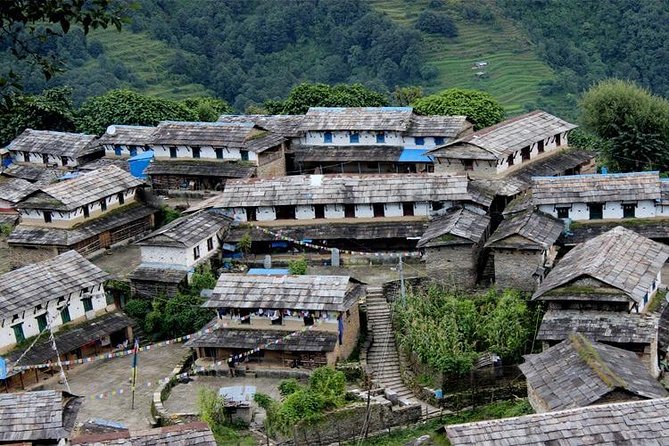
Day 4 starts with a downhill walk into forest to reach Ghandruk, a larger village populated by Gurung people. This is a good ending because it slows the whole experience down after the intensity of Day 3.
Reaching Ghandruk also changes the vibe. Instead of just moving through trail, you land in a place where you can look around, talk to locals, and do more than “pass through.” Lunch and overnight are part of the plan here, and you’ll have afternoon free time to explore the village.
If you care about cultural context, the Gurung connection matters. It adds a reason to pay attention to the village scenes beyond scenery alone. The afternoon free time is what turns the trek from just a checklist hike into a real trip with a local rhythm.
Meals, tea, and teahouse comfort (including that attached-bath detail)
The trek includes three meals during the walking days: breakfast, lunch, and dinner. Tea is also included—listed as 3 cups per day during the trek.
On the comfort side, one of the best practical inclusions is that you’ll have 3 night private attached bathroom accommodation throughout the trek. That’s a big quality-of-life boost. On many treks, you share space or deal with less private washroom setups. Here, the plan is set up to keep your day-to-day more comfortable so you can focus on walking and views.
Food quality isn’t guaranteed everywhere, but the teahouse setup is generally cozy, with warm dining-room time that makes nightfall feel less like “roughing it.” You’ll still want to bring the basics you need for cold mornings, but the lodge rhythm helps.
If you’re someone who doesn’t want the logistics headache, this package is built for you. The meals, tea, and the guide-led plan reduce the “figuring out” you’d otherwise do on your own.
Guides: the real multiplier on a trek this short
Because this trek is only about four days, your guide’s role is bigger than you might expect. You don’t have weeks to recover from mistakes, so good guidance becomes safety, comfort, and pacing all at once.
The guide team associated with this trek has names you’ll hear in the wild, like Anos, Surya Tamang, Indako Tamang, and Arbind. Across those accounts, the common thread is care: guides who check in, adjust to your group needs, and keep the experience safe. Several also emphasize professionalism—staying on top of timing for key moments like sunrise and making sure your trekking pace works for your body.
One subtle win: some guides are described as flexible with routing and accommodating preferences. In a short itinerary, that flexibility can make the difference between feeling rushed and feeling looked after.
If you’re traveling with kids or you’re newer to trekking, pay extra attention to who’s guiding you. This trek is often described as approachable for beginners and families, but “approachable” only works when pacing and support are solid. A caring guide makes the same trail feel fair.
Price and value: what $399.67 includes, and what costs extra
At $399.67 per person, you’re paying for a tidy package rather than just access to a trail. Included items are the big-ticket stuff: meals, the Annapurna Conservation Area Project permit, a government license holder mountain guide, and ground transportation around the trek route. You’re also getting private accommodation with attached bathrooms for 3 nights, plus tea daily.
That means you’re not budgeting for every little piece separately. The trade-off is what’s not included. Porter fees are listed as $20 per day, and tips for your guide are not included. Travel insurance is also not included.
So here’s the straightforward way to judge value:
- If you want planning handled and you don’t want to arrange permits, transport, and meals on your own, this price can feel fair.
- If you already know how to self-organize every logistics piece and you only need a guide, the package might feel more than you need.
For most people, the attached-bath detail plus included meals and transportation are what tip the value in your favor.
Who should choose the Ghorepani Poon Hill trek
This trek fits best if you want a short, high-reward Himalayan experience. It’s also aimed at “most travelers,” which tells me the pacing and daily distances are designed for broad appeal.
You’ll likely enjoy it most if:
- You want a classic Annapurna sunrise without committing to a long multi-week trek
- You care about village life, especially the Gurung community in Ghandruk
- You want a guided trek with meals and permits handled
- You’re a beginner or intermediate hiker who likes a structured plan
If you hate early mornings or cold starts, this trek might feel like a tough sell—because Day 3 is built around getting up for sunrise.
Should you book this trek
Yes—if you want a short trek that delivers real mountain views and village culture with fewer logistics headaches. The package is strong on practical inclusions: meals, tea, the permit, transportation, and that private attached bathroom setup for 3 nights.
Before you book, do two quick checks:
- Can you handle the early wake-up on Day 3 without resentment?
- Are you comfortable trekking without a porter, or do you want to budget the listed $20 per day porter fee?
If those answers are fine, you’re set up for a very satisfying first Himalayan trek.
FAQ
How long is the Ghorepani Poon Hill Trek?
It’s listed as 4 days (approx.).
Where does the trek operate from?
The location is Kathmandu, Nepal.
Is pickup included?
Pickup is offered.
What time does the experience start?
The start time is 1:15 pm.
Is this a private tour?
Yes. It’s a private tour/activity, and only your group participates.
Are meals included?
Yes. Breakfast, lunch, and dinner are included, along with tea (3 cups per day) during the trek.
What permits and guiding are included?
You get the Annapurna Conservation Area Project Permit and a government license holder mountain guide.
What kind of accommodation do you get?
You get 3 nights of private accommodation with an attached bathroom throughout the trek.
Is ground transportation included?
Yes. Ground transportation is included for Pokhara – Nayapul – Ghandrunk – Pokhara.
Are porter fees included?
No. Porter fees are listed as $20 per day.
Can I cancel for a full refund?
You can cancel up to 24 hours in advance of the experience for a full refund. Cancellation within 24 hours does not refund the amount paid.