REVIEW · KATHMANDU
Annapurna Base Camp Trek
Book on Viator →Operated by Touch The Himalaya Treks & Expedition · Bookable on Viator
Altitude, villages, and a clean plan. This Annapurna Base Camp trek is built around local experts from the region, with day-by-day support that focuses on safety and acclimatization rather than just “walking until you arrive.” You start from Thamel in Kathmandu (pickup included) and move through classic hill stations and viewpoints before reaching the base camp area.
What I like most is how much the big stuff is handled for you: permits and trekking fees are included, and you get a guide who’s government-licensed and first-aid trained, plus a basic first-aid kit carried on trek. I also appreciate that meals are covered during the trek (breakfast, lunch, dinner), which makes it easier to budget and keeps you moving.
One drawback to consider: this is still a mountain trek, with a moderate physical fitness requirement and early starts. If you’re fragile with altitude or long uphill days, you’ll want to be realistic about effort, and you should also plan for tips for guide and porter since they aren’t included.
In This Review
- Key things to know before you go
- Kathmandu to Pokhara: a long ride that pays off
- Ulleri and Ghorepani: walking through villages and forested edges
- Poon Hill sunrise and the move toward Tadapani
- Tadapani to Sinuwa, then Deurali: where comfort starts to matter
- Deurali to Annapurna Base Camp via Machapuchare Base Camp
- Coming down to Sinuwa and Jhinu hot springs
- What you get for $700: real value, not just a price tag
- Pace, packing, and that early start from Thamel
- Solo comfort and guide support that can make or break the trip
- Should you book this Annapurna Base Camp trek?
- FAQ
- Where is the meeting point and what time does the trek start?
- Is airport pickup and drop-off included?
- How long is the Annapurna Base Camp trek?
- What’s included in the trek price?
- Is this trek private?
- What fitness level is expected?
Key things to know before you go
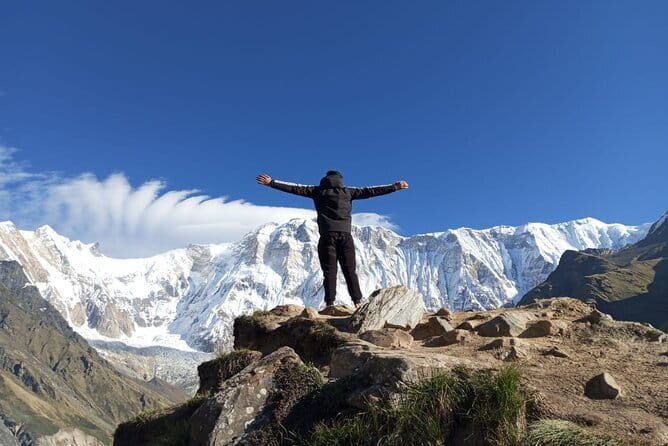
- Local guides with Annapurna know-how: they manage route details, permits, and high-altitude conditions.
- Meals are part of the package: breakfast, lunch, and dinner are included during the trekking days.
- Private group feel: it’s a private activity, so your schedule stays in your hands.
- Pokhara as your reset point: you’ll spend meaningful time there before and after trek.
- Base camp day includes Machapuchare Base Camp passing: you don’t just go straight up and down.
Kathmandu to Pokhara: a long ride that pays off
Your trip starts in Kathmandu, with a pickup from the airport and drop-off built into the plan. You also get two nights of accommodation in Kathmandu before and after the trek, which is a smart buffer. It means you’re not trying to stack travel stress on top of mountain fatigue.
From Kathmandu to Pokhara, you travel about 200 km west. The tour mentions tourist bus, car, or flight as options, and the road journey is around 7 hours, usually following the Trishuli River side. I like this setup because it lets you ease into the trip in real time—mountain views from the road are a gentle warm-up, and Pokhara is the kind of place where you can actually catch your breath.
If you’re someone who hates rushed transfers, this day helps. If you’re sensitive to long rides, consider planning to sleep well the night before and bring a comfortable distraction for the journey.
You can also read our reviews of more hiking tours in Kathmandu
Ulleri and Ghorepani: walking through villages and forested edges
After reaching Nayapul area (about an hour drive from Kathmandu’s region that day), your trekking begins with a hike to Ulleri. The route follows the Modi Khola River, and that detail matters: river valleys usually mean steadier footing and a trail that feels more human-scale than steep “from nowhere” climbs. This is where you get that classic Annapurna rhythm—small villages, local life, and short chances to catch your breath.
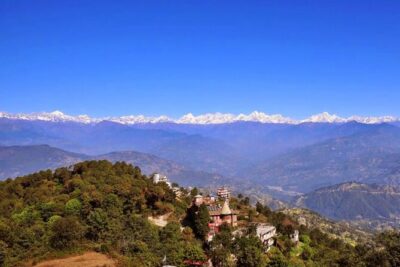
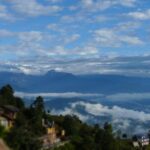
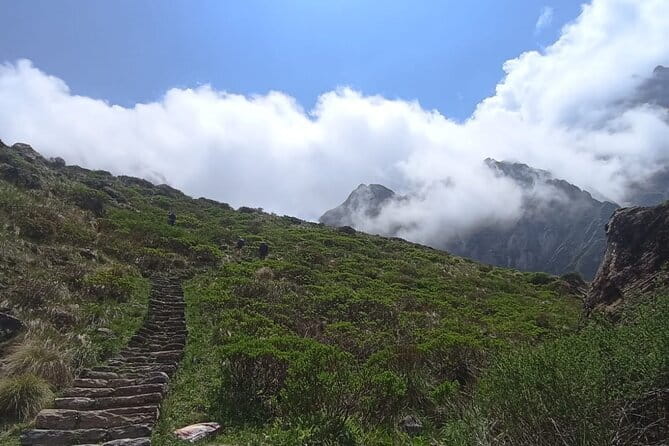
From Ulleri, you continue to Ghorepani. The time on trail is listed around 6–7 hours, and the trek moves through lush forests while you climb. As you ascend, you’ll start getting strong views of the Annapurna range. I find this stage valuable because it’s a gradual transition: you’re not only gaining elevation, you’re also adjusting to long, continuous walking.
A small reality check: forest sections can mean humid air and warmer breathing. Pace matters more than speed here. Go steady, and let your legs do the work instead of trying to “win the day.”
Poon Hill sunrise and the move toward Tadapani
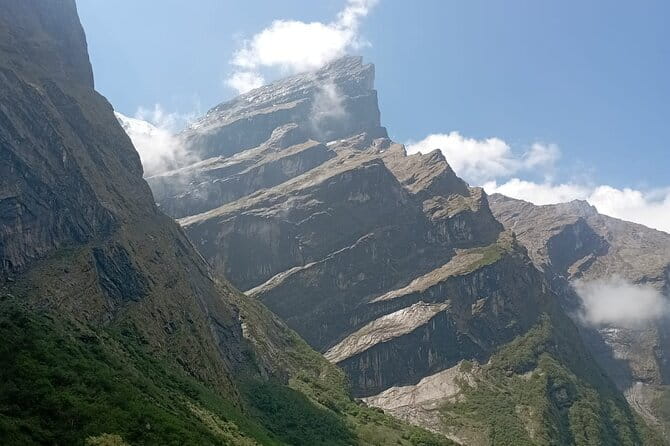
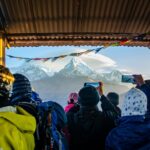
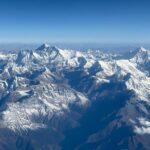
Early in the trek, you’ll hike to Poon Hill for sunrise over the Annapurna and Dhaulagiri mountains. The tour describes this as a spectacular morning view, and the structure is simple: hike early, enjoy sunrise, then return to Ghorepani for breakfast before heading toward Tadapani.
This part is classic for a reason. Sunrise viewpoints are one of the best ways to feel the scale of the Himalaya without needing technical climbing. It also gives you a clear goal for the morning, which helps on days when your body is still waking up.
Then you move onward to Tadapani, keeping the hiking loop moving. The listed walking time is shorter than some earlier days (around 4 hours), which I see as smart pacing. It gives you time to absorb the view factor without burning all your energy in one shot.
Tadapani to Sinuwa, then Deurali: where comfort starts to matter
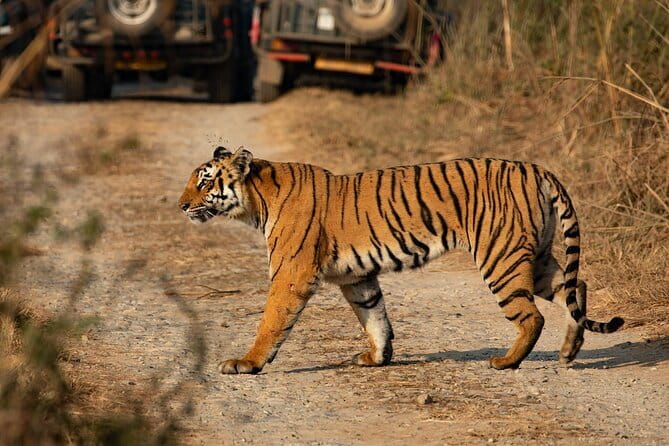
Day-wise, you’ll trek from Tadapani to Sinuwa (about 6–7 hours). The route includes descending through lush forests and passing several small villages. This is one of those segments where your motivation can swing: descending can feel easier on paper, but it often taxes your knees. The village stops help break the monotony, and the Annapurna views still keep showing up.
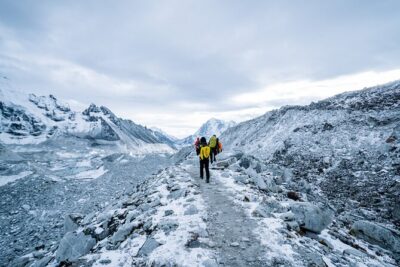
Next comes the move to Deurali (about 5–6 hours). Here, the trail ascends steadily through forests and you’ll cross what the tour description calls the Khumbu Glacier. As you approach Deurali, conditions become more rugged and the walking gets more demanding.
This is where your guides’ job becomes more than logistics. The tour emphasizes managing high-altitude conditions and supporting proper acclimatization. I’d treat Deurali as a turning point: from here on, your pacing and hydration habits matter more because the terrain and breathing are less forgiving.
Deurali to Annapurna Base Camp via Machapuchare Base Camp
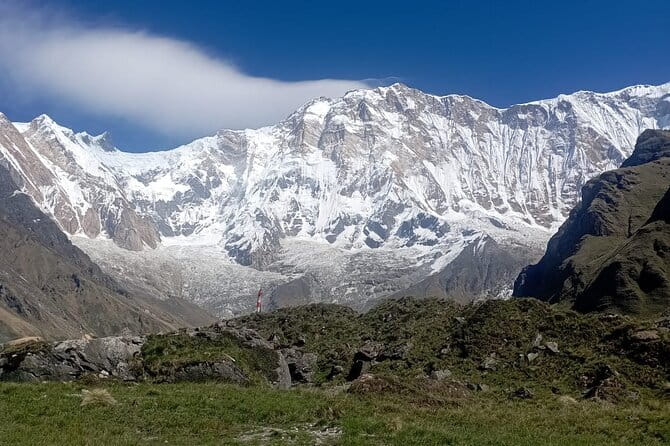
The big summit-like push is the trek from Deurali to Annapurna Base Camp, listed at around 6–7 hours. Along the way, you pass through Machapuchare Base Camp, and the tour notes stunning views as you ascend.
Base camp itself is often less about one single moment and more about what your body feels once you’re there. The air, the stillness, and the sense of having followed a corridor of ridges and valleys for days hits differently than a day hike. This is the moment where all your earlier “smaller” climbs and viewpoint mornings start to make sense.
One practical note: after days of walking, your feet can feel beat up even when you’re proud of yourself. Plan to take it slow at camp. If your guide suggests a pace adjustment or rest break, trust that. Reaching the base camp area is the goal, but finishing the whole trek without injuries is the real win.
Coming down to Sinuwa and Jhinu hot springs
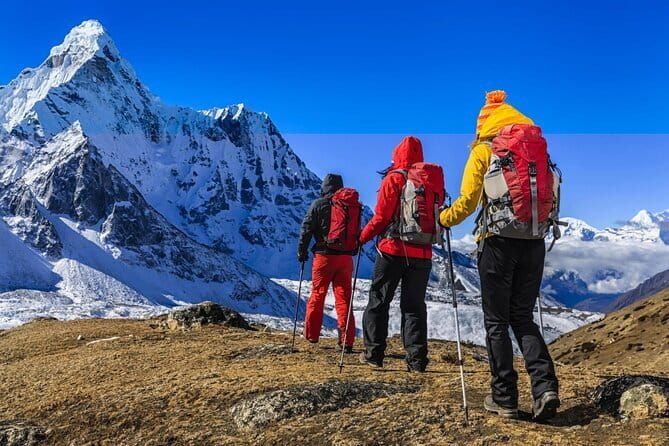
After Annapurna Base Camp, you descend back to Sinuwa (about 6–7 hours). This is not the same experience as going up. Downhills can feel endless, and your balance matters. The tour frames this as a chance to reflect as you traverse familiar trails, which is true—once you’ve seen the destination, the mountain seems to move at a different speed.
Then you trek from Sinuwa to Jhinu (about 5–6 hours). The key payoff is that Jhinu has natural hot springs nearby, giving you a built-in recovery option after a hard day of walking. I like that this plan doesn’t leave your “reward” as an abstract idea. You actually get a place to soak, relax, and work out the stiffness.
From Jhinu you drive back to Pokhara (about 1–2 hours). You also get open time in Pokhara on the way out, which is helpful if you want to eat well, buy a few last items, or just sit somewhere quiet without worrying about the next departure.
What you get for $700: real value, not just a price tag
At $700 for roughly 10 days, this is not a “cheap and cheerful” trek. The value comes from what’s included and what that removes from your mental load.
Here’s what the price covers:
- Airport pickup and drop, plus two nights accommodation in Kathmandu before and after the trek
- Breakfast, lunch, dinner during the trekking days
- All necessary trekking permits and fees
- A guide who is English, Hindi, and Chinese government-licensed and first-aid trained
- Duffel bag (held by the operator during the trek and returned at completion) and complementary trekking maps
- Guide and porter costs, including insurance, equipment, transport, food, and accommodation
- A basic first-aid kit carried by the trekking guide
For me, this kind of package is about control. You’re paying to reduce uncertainty: permits, fees, staffing, and meal coverage are handled. That can make a big difference in a place where logistics often get messy fast when you’re traveling on your own.
What’s not included is the one item that’s easy to overlook: tips for guide and porter. If you don’t like thinking about money mid-trek, budget for this upfront.
And yes, it’s a private tour/activity, meaning it’s just your group rather than a mixed crowd. That tends to translate to fewer scheduling headaches and more flexibility with pacing.
Pace, packing, and that early start from Thamel
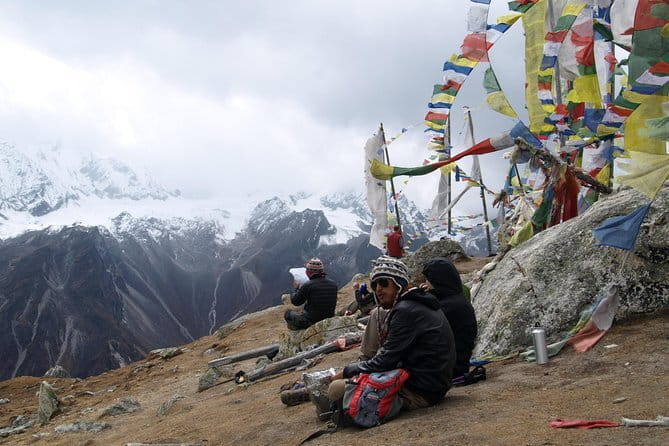
Your meeting point is Thamel, Kathmandu 44600, with a start time of 6:15 am. That early start matters because it affects sleep, breakfast timing, and how you feel on your first walking day.
The tour also gives practical packing guidance:
- carry lite snacks and chocolate for energy on long days
- bring water bottles
- bring sun glass (sunglasses)
- bring your charger
I’d treat those as minimums, not as a complete kit. Still, it’s a helpful list when you’re planning quickly.
Also note the “tea house” reality: the plan says you can buy meals in tea houses during the trek. Since the package already includes breakfast, lunch, and dinner, I interpret this as flexibility for extra items—snacks, drinks, or small extras—rather than a requirement to self-cater every meal.
Finally, you’ll get a duffel bag and trekking maps. That’s not just convenience—it helps with organization. When you’re moving through multiple towns and lodging spots, knowing where your essentials live saves energy.
Solo comfort and guide support that can make or break the trip
One theme that shows up strongly with this operator is personal care, especially for people trekking alone. In past experiences shared for this company, a woman trekking solo mentioned feeling safe because Mr. Madan was available with answers and guidance through the process. Her guide, Rishi, was described as taking good care during the days on trek.
The team also gets mentioned for practical help with baggage. Arjun and Ganesh were referenced for assisting with transferring baggage between camps—exactly the kind of behind-the-scenes work that lets you focus on walking instead of hauling and worrying.
There’s also support around planning the challenge of a tough ABC trek. Roshan Pandey was praised in one account as making completion possible in a 10-day schedule. Names like Madan Neupane and guides such as Roshan and Rishi are part of the picture here, based on shared experiences, and it’s a useful sign that the company relies on local staff rather than rotating strangers.
I can’t promise you’ll get the exact same guide or porter team, but the pattern is clear: you’re not just buying a route—you’re buying on-the-ground support.
Should you book this Annapurna Base Camp trek?
Book it if you want a structured ABC trek with local Annapurna-based guides, permits handled, and meals and logistics taken care of. The private setup, Kathmandu accommodation buffer, and the Pokhara stops make it feel like a complete trip rather than a scramble.
Hold off or ask more questions if you’re unsure about fitness for multiple long walking days, especially with early starts and higher terrain. Also plan your budget for tips, since that’s the one missing cost.
If you’re the type who likes clear pacing, support when altitude gets real, and a team that thinks about logistics before you get to camp, this $700 plan looks like a fair deal for the level of inclusion.
FAQ
Where is the meeting point and what time does the trek start?
You meet in Thamel, Kathmandu 44600, Nepal. The start time is 6:15 am.
Is airport pickup and drop-off included?
Yes. Airport pickup and drop-off are included, along with two nights accommodation in Kathmandu before and after the trek.
How long is the Annapurna Base Camp trek?
The duration is listed as 10 days (approx.).
What’s included in the trek price?
The package includes breakfast, lunch, and dinner during the trek, all necessary trekking permits and fees, a government-licensed first-aid trained guide (English/Hindi/Chinese), duffel bag service, trekking maps, and guide/porter costs (including insurance, equipment, transport, food, and accommodation), plus a basic first-aid kit carried by the guide.
Is this trek private?
Yes. It’s a private tour/activity, meaning only your group participates.
What fitness level is expected?
You should have moderate physical fitness level.