REVIEW · KATHMANDU
Annapurna Base Camp Trek
Book on Viator →Operated by Green Valley Nepal Treks & Research Hub Pvt Ltd · Bookable on Viator
Fourteen days, big mountains, and fewer decisions. This Annapurna Base Camp trek is built for people who want guided hiking with a small-group feel, plus meals and stays handled for you. You’ll still work for the views, but you won’t be scrambling for logistics while you’re breathing harder at altitude.
I particularly like that the itinerary is active—expect 4 to 7 hours of hiking daily—yet it’s set up to avoid guesswork (route, food, and where you sleep). I also love the mix of iconic moments: Poon Hill at 3210m for early viewpoints, then the drama of reaching the Annapurna region and turning around with sunrise on your side.
One consideration: this trip is moderate high-altitude, and it depends on good weather. If clouds roll in, the mountain magic can dim, and there’s also a fair bit of driving and sitting between trail days.
In This Review
- Key things to know before you go
- Kathmandu starts: Thamel arrival without the stress headache
- The road to Pokhara: a long drive that sets your pace
- Nayapul to village days: Modi River walk and teahouse rhythm
- Ulleri, rhododendron, oak forest, and Ghorepani positioning
- Poon Hill at 3210m: the short sunrise payoff day
- Tadapani to Chhomrong: climbing through forests and into stone-and-view country
- Chhomrong to Sinuwa to Bamboo: steps, suspension bridge, and steady effort
- Dovan to Himalaya: the silent temple stretch you’ll actually notice
- Deurali to Machhapuchhre Base Camp: views come with effort
- ABC sunrise and the return: the easiest hard day (if weather cooperates)
- Chhomrong lunch stop and the slow shift back to easier life
- Jhinu Danda hot spring: a real morale booster after altitude
- Malekhu lunch and the fish stop you didn’t plan for
- Kathmandu finale: Pashupatinath photos and an orderly finish
- Price and value: what $925 covers (and what it doesn’t)
- Who should book this trek (and who should reconsider)
- Should I book this Annapurna Base Camp trek?
- FAQ
- How many days is the Annapurna Base Camp trek?
- What’s the group size for this trek?
- What’s included in the $925 price?
- What’s not included in the tour price?
- Where do I meet the group, and is pickup offered?
- Is this trek difficult?
- Are meals included during the trek?
- Do I get a mobile ticket?
- What happens if weather is bad or I need to cancel?
Key things to know before you go
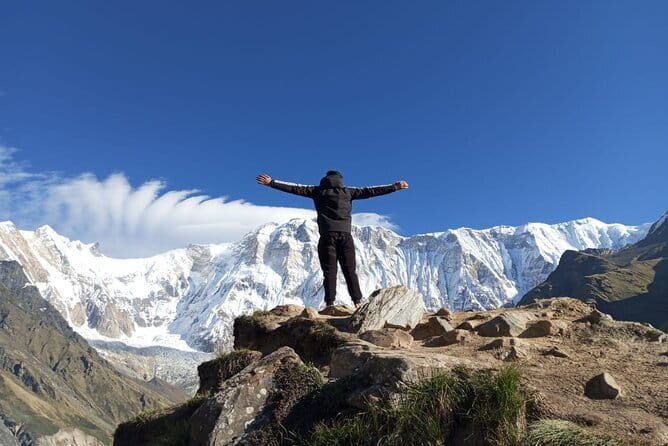
- Small-group attention (max 10) means your guide can actually manage pacing and needs.
- Meals are largely taken care of on the trek (10 lunches, 13 breakfasts, 10 dinners).
- Teahouse + hotel mix is included, so you’re not hunting accommodations in Kathmandu and Pokhara.
- Poon Hill at 3210m is a short, early effort with major viewpoint payoff.
- A return along familiar paths reduces route stress (and often means more downhill walking).
- Guides and support staff are a strong point with names like Suvi, Tulsi, Krishna, and Arjun showing up in prior trips through this provider.
Kathmandu starts: Thamel arrival without the stress headache
Your trip begins at Tribhuvan International Airport in Kathmandu, where an airport representative meets you. You’ll get a drop to your hotel in Thamel via a private tourist vehicle. After a long flight, that simple “someone’s waiting for you” detail matters more than people think.
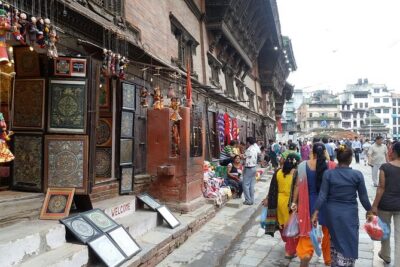
Thamel is a practical landing zone. You’re close to basic services and easy to orient from, so you can focus on rest, hydration, and getting your gear in shape for trekking. If you’re tired, the plan gives you room to slow down on day one, rather than sending you straight into a grueling night walk.
This is also where the small-group setup starts to feel real. With a limited group size (max 10), you’re not blending into a crowd. Your guide can explain what’s ahead and what to expect from the hiking rhythm.
You can also read our reviews of more hiking tours in Kathmandu
The road to Pokhara: a long drive that sets your pace
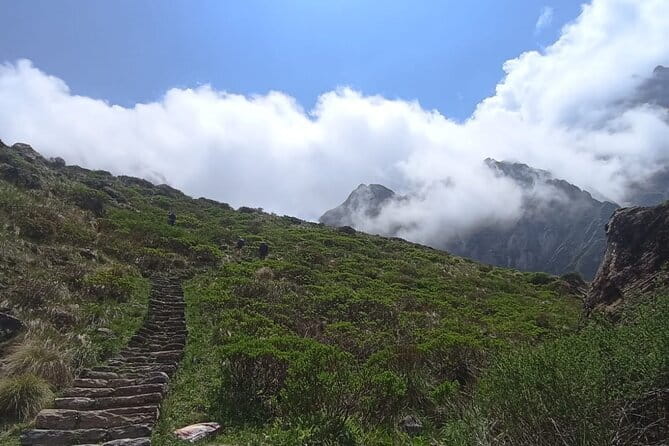
On day two, you travel to Pokhara—about 200 km—by tourist bus. The drive is listed as roughly six hours, and you stop for lunch somewhere along the way. Then you overnight in a guesthouse in Pokhara.
This matters because Annapurna Base Camp isn’t a one-day jump. You’re building acclimation and confidence in layers: first city comfort, then trekking starts with gradual movement through villages and forested sections. If you’re the type who gets antsy during long transport days, the upside here is that the schedule at least gives you a clear plan and a place to sleep right after.
You’ll also get a quick sense of the region’s geography before the trail begins. Pokhara is that in-between space where your brain shifts from traffic and schedules to footpaths and mountain views.
Nayapul to village days: Modi River walk and teahouse rhythm
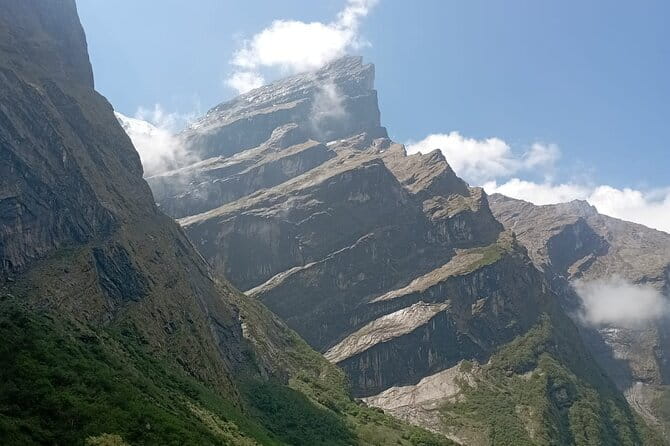
Trekking starts from Nayapool after a drive from Pokhara (about an hour). From there, the route begins with a short walk alongside the banks of the Modi River, reaching Birethani along the way. The route is described as having plenty of small teahouses, which is a big deal for sanity on trek days.
Why this first stretch is worth your attention: it’s your early “body switch.” The hiking isn’t framed as a brutal push. Instead, you’re easing into the routine—walking, meals, and the steady rhythm of stopping when you reach the next village.
It also helps you learn the vibe of the trail. Teahouses aren’t glamorous, but they do offer structure. When accommodation options are built into the plan, you can stop worrying about where you’ll sleep later. That’s one of the hidden values of a guided small-group trek.
Ulleri, rhododendron, oak forest, and Ghorepani positioning

From Ulleri, the trek moves into a gentler ascent. You pass through rhododendron and oak forests to reach Banthanti, then continue on to Ghorepani.
This is the part of the trek where the scenery starts to feel layered. Forest sections tend to soften the day—less “open sky all the time,” more shifting visuals as you climb. And Ghorepani is strategically important because it sets up your next morning’s viewpoint work.
If you’re active but still want a trek that feels like progress rather than punishment, this section fits. You’re walking, but you’re also transitioning through different environments instead of getting stuck in one long monotone climb.
Poon Hill at 3210m: the short sunrise payoff day
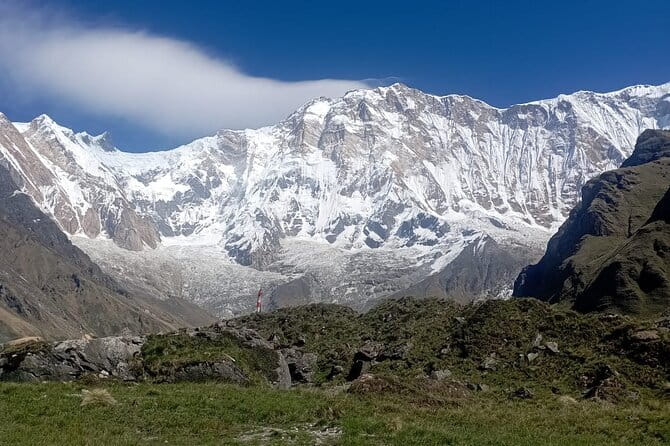
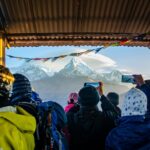
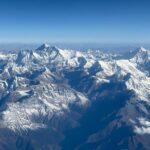
Day five is your Poon Hill day. The morning starts with a short hike: about 45 minutes to reach the top, which is at 3210m. Poon Hill is described as one of the best viewpoint moments on this route and a photographer’s favorite.
Here’s why this is a smart inclusion: it gives you a big-view experience without requiring you to start at the peak of exhaustion. You’re still early enough in the trek that your body can handle a “quick climb” for a big reward.
After that, you’ll continue onward through the itinerary, but you’ve already banked a classic Himalayan moment. If you’re the type who wants proof the trek is worth it, this day delivers that early.
Tadapani to Chhomrong: climbing through forests and into stone-and-view country
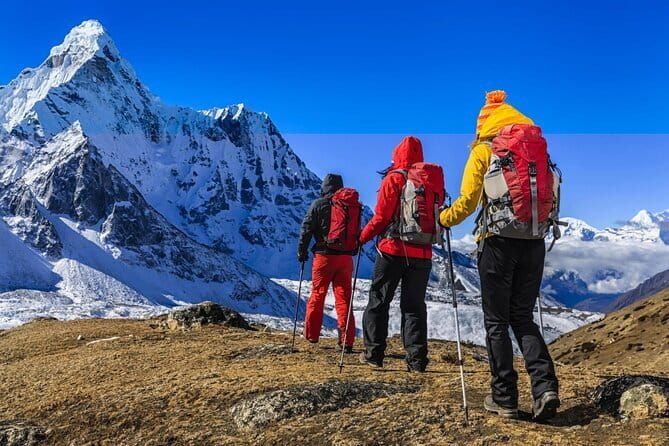
From Tadapani, you move down gradually through rhododendron forests, cross the Kimsung River, then ascend again toward Gurjung, a Gurung village. After that, a straight climb takes you to Chhomrong.
Chhomrong is where the trek starts to feel more “mountain-focused.” You’re moving through human settlements and forest, then shifting into a landscape where views and altitude become more obvious. The route description emphasizes a mix of gradual sections, crossings, and then a sharper climb—so your day likely feels like intervals rather than one continuous effort.
If you’re planning your energy, this is a good place to remember how the guide’s pacing can help. When you have a small group, it’s easier to adjust for different walking speeds. And you’ll want that because the next days build on each other.
Chhomrong to Sinuwa to Bamboo: steps, suspension bridge, and steady effort
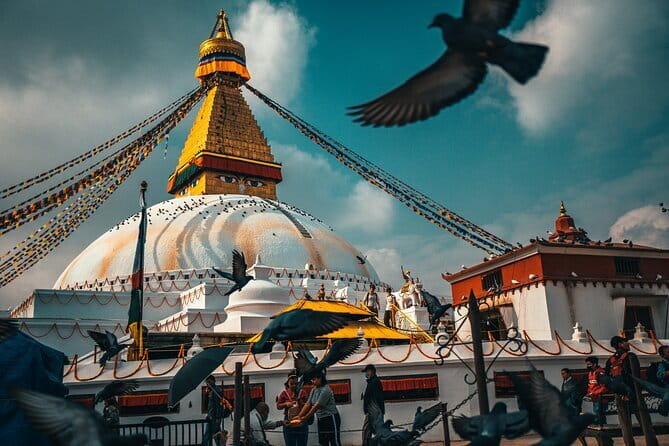
Day seven starts with stone steps from Chhomrong down to Chhomrong Khola, where you cross a suspension bridge. Then there’s a steep climb to Sinuwa. After some walking along jungle areas and an easier downhill segment, you reach Bamboo.
This is a classic Annapurna rhythm: descend toward a river, cross, then climb again. The suspension bridge is usually one of those moments you remember because it changes your sense of height and movement.
One practical upside of this day’s structure: there’s variety. You’re not only climbing or only descending. That makes it easier to keep your mind on your footing and the scenery instead of counting minutes.
Dovan to Himalaya: the silent temple stretch you’ll actually notice
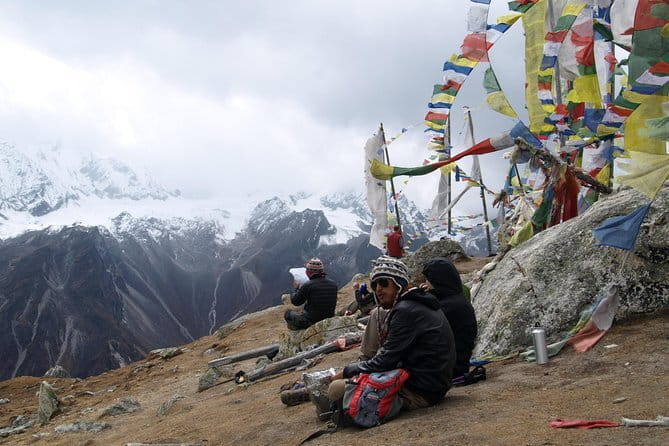
On day eight, the route from Dovan to Himalaya is described as a silent one. The reason: big noises aren’t allowed in the jungle due to a temple along the way. The walk goes through bamboo forests, then shifts to rhododendron forests.
This is a small detail that turns into a real experience. It’s the kind of rule that changes how you walk. You end up listening—to birds, wind, and your own breathing—because the trail is asking for quiet.
Also, the forest mix matters. Bamboo forests have a different texture and light feel than rhododendron zones, so the day doesn’t blur together.
Deurali to Machhapuchhre Base Camp: views come with effort
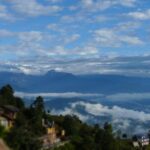
From Deurali, the trail passes through a river bed and then includes a tedious climb to reach Machhapuchhre Base Camp. You’ll be surrounded by mountains on all sides, with views of Annapurna, Machhapuchhre, Gangapurna, and Himchuli mentioned among the peaks you can spot.
This is one of those days where the route description reads like an honest warning: some effort before reward. But the payoff is the kind of “all directions” mountain panorama that makes Annapurna Base Camp trips famous.
If you’re worried about whether your effort will feel worth it, this is the middle-point indicator. You’re not just walking through scenery—you’re getting into a zone where peaks start showing themselves at a grand scale.
ABC sunrise and the return: the easiest hard day (if weather cooperates)
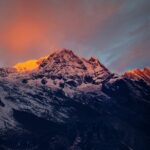
Day ten is framed around viewing a spectacular sunrise from ABC, then heading back along the same trail. You pass through MBC, Deurali, Himalaya, and Bamboo all the way to Sinuwa. The route is described as mostly downhill and an easy walk.
This part of the trip can feel like a relief after a higher-effort day. Sunrise is the emotional anchor. Then your body gets a simpler path: less vertical strain, more flowing walking.
But don’t treat it as lazy. Even “easy” in mountains means you’ll still cover ground, and you’ll want to keep good footwear habits and steady hydration. The guide’s job here is helping you land on your feet and avoid turning relief into sloppiness.
Chhomrong lunch stop and the slow shift back to easier life
Day eleven includes a stop in Chhomrong, with lunch there. The village is described as spread across a hillside with stunning views of the Annapurnas and Machupachare. Then you move onward as planned.
This isn’t a “do it all” day. It’s more of a transition moment, when you’re moving down the mountain and reentering a village rhythm. I like days like this because they help you avoid the end-of-trek crash. You’re tired, but you aren’t forced to grind through another long climb.
Jhinu Danda hot spring: a real morale booster after altitude
Day twelve takes you to Jhinu Danda. The highlight here is a natural hot spring with ponds, located beside the Modi River. It’s about 20 minutes walking distance from your hotel in Jhinu Danda.
After days of hiking, a hot spring stop is more than a fun side quest. It’s a practical recovery tool—one that can make the last stretch feel less brutal. Even if you don’t go in for long, the chance to soak and reset is a big quality-of-life win on a trek like this.
Malekhu lunch and the fish stop you didn’t plan for
On day thirteen, there’s a stop for lunch in Malekhu. The plan notes it’s famous for various types of fish species and its product. The stop is listed as about 30 minutes.
This is one of those moments where the trek touches everyday local life. It’s short, but it gives you a clean contrast to mountain views and trail routine. It also helps you mentally shift from trekking mode to ending-mode.
Kathmandu finale: Pashupatinath photos and an orderly finish
On day fourteen, you drive via Pashupatinath Temple and you can stop for a few minutes to take photos. The admission ticket is noted as not included.
Then you finish the trip, with your earlier airport-to-hotel setup making the ending feel as organized as the start. After 14 days, that matters. Nobody wants the final day to turn into surprise taxi math.
Price and value: what $925 covers (and what it doesn’t)
At $925 per person, this trek is priced for a guided, logistics-light experience. The big value components included in the price are:
- Professional guide
- Round-trip shared transfer
- Accommodation as per itinerary (teahouses on trek + hotels/guesthouses in Kathmandu/Pokhara)
- Trail meals (10 lunches, 13 breakfasts, 10 dinners)
- All taxes, fees, and handling charges
- Mobile ticket
- Pickup offered (airport meet and drop to hotel are arranged)
What’s not included is also clear: lunch and dinner in Kathmandu and Pokhara. The Pashupatinath photo stop has an admission ticket marked as not included. So you’ll want a little cash or card flexibility for those meals and any entry you choose to pay.
To me, this price makes the most sense if you value reduced stress. A guide on a moderate high-altitude trek isn’t just about storytelling—it’s about pacing, knowing what’s next, and handling small changes when needed. Prior trip experiences through this provider also highlight guide professionalism and care, with guides named Suvi, Tulsi, Krishna, and Arjun, and porters like Sumon showing up in past arrangements.
Who should book this trek (and who should reconsider)
This Annapurna Base Camp trek is a solid fit for you if:
- You’re an active traveler who can handle 4 to 7 hours of hiking daily
- You want a moderate high-altitude trek without DIY planning
- You like a small group (max 10) where your guide can manage the pace
- You’d rather spend energy on views than on figuring out meals and sleeping logistics
You might reconsider if:
- You’re highly sensitive to altitude or want a very low-commitment trek
- You can’t handle changing conditions, since the experience requires good weather
- You’re hoping for luxury lodging on the trail (the trip includes teahouses, plus hotels in Kathmandu/Pokhara)
If you’re somewhere in the middle—curious, active, and open to basic mountain lodging—the structure here is exactly the kind that helps most people succeed.
Should I book this Annapurna Base Camp trek?
If your goal is real Himalayan scenery with guided support, I’d say yes—this plan is built to remove the usual trekking headaches. The included meals and teahouse/hotel coverage mean you can focus on walking and acclimating instead of booking and backtracking.
Book it if you want a clear 14-day rhythm, early viewpoint payoff with Poon Hill, and the big milestone moment of sunrise at ABC—then a calmer return with mostly downhill walking.
Skip it if weather worries you a lot or if you’re looking for a trip that’s entirely hands-off and low altitude. Mountain treks are never fully controllable. This one just makes the uncontrollable parts more manageable.
FAQ
How many days is the Annapurna Base Camp trek?
The trek is listed as 14 days (approx.).
What’s the group size for this trek?
It’s a maximum of 10 travelers.
What’s included in the $925 price?
Included: accommodation as per itinerary, all taxes/fees/handling charges, a professional guide, round-trip shared transfer, and meals on the trek (listed as 10 lunches, 13 breakfasts, and 10 dinners). Some meals are also included in Kathmandu/Pokhara as part of the itinerary.
What’s not included in the tour price?
The tour does not include lunch and dinner in Kathmandu and Pokhara. The Pashupatinath Temple stop on day 14 notes that the admission ticket is not included.
Where do I meet the group, and is pickup offered?
The start is at Tribhuvan Airport, Kathmandu, Nepal. An airport representative meets you there, and a hotel drop in Thamel is arranged by private tourist vehicle. Pickup is listed as offered.
Is this trek difficult?
It’s best suited to travelers with moderate physical fitness. The trek involves moderate high-altitude hiking, with days typically around 4 to 7 hours of walking.
Are meals included during the trek?
Yes. The package includes all meals on the trek, and it also includes some meals during the Kathmandu/Pokhara portions (while lunch and dinner in Kathmandu/Pokhara are not included).
Do I get a mobile ticket?
Yes, the tour includes a mobile ticket.
What happens if weather is bad or I need to cancel?
The trek requires good weather. If it’s canceled due to poor weather, you’ll be offered a different date or a full refund. There is free cancellation up to 24 hours in advance for a full refund.