REVIEW · KATHMANDU
The Boudhanath Yoga Experience in Nepal
Book on Viator →Operated by Himalayan Advisor Pvt. Ltd. · Bookable on Viator
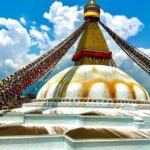
Boudhanath makes yoga feel different. This hands-on workshop in Kathmandu ties asana and breathing to Buddhist teachings, with a giant stupa right there for you to look at before and during class. You get the practical perks too: hotel pickup and round-trip private transfers, so your day runs on rails instead of random taxi math.
I really like that the session is taught step by step and covers the stuff most classes gloss over. You practice postures (asanas) and hand gestures (mudras), then move into breathwork and attention training like pranayama, dharana, and meditation (dhyana). I also like the setting: it’s near Boudhanath Stupa, a UNESCO-listed pilgrimage hub and home to a strong exiled Tibetan community.
One thing to consider: this is a 4-hour block that includes a 2.30-hour yoga class, and food isn’t included. If you’re picky about timing or you get hungry mid-session, plan to eat before you go (or make a quick stop after).
In This Review
- Key things to know before you go
- Boudhanath Stupa: the view your yoga comes with
- Hotel pickup and the 9:00 am start that saves you time
- The 4-hour flow: stupa time plus a 2.30-hour class
- Inside the yoga workshop: from asanas and mudras to meditation
- Asanas: posture with purpose
- Mudras: hand gestures that change the focus
- Pranayama: breathing that slows the mind
- Dharana and dhyana: attention and meditation
- The Eight-Fold Path and Seven Disciplines, translated into daily practice
- Price and value: why $110 can make sense here
- Who should book this workshop (and who might not)
- Practical tips for your best session
- Should you book the Boudhanath yoga experience?
- FAQ
- What time does the yoga experience start?
- How long is the experience?
- Is hotel pickup and drop-off included?
- Is transportation included?
- Is entry to Boudhanath Stupa included?
- What will I learn during the workshop?
- Do I need to bring my own food or drinks?
- How many people are in the group?
- Can I cancel and get a full refund?
Key things to know before you go
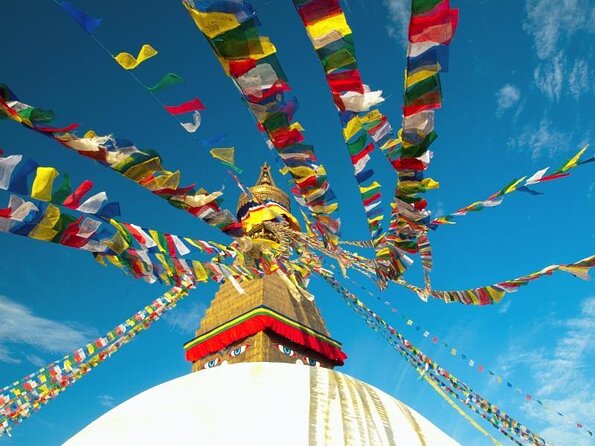
- World’s largest Buddhist stupa nearby: you’ll be able to see Boudhanath while doing the practice.
- Door-to-door private transfers: you don’t need to figure out transport on your own in Kathmandu.
- A full yoga menu: postures, mudras, pranayama, plus mind training (dharana and dhyana).
- Small group limit (max 14): better odds of getting real guidance when you need it.
- Stupa entry fee included: you won’t have to handle that on the day.
- Loose clothing recommended: you’ll enjoy the class more if you can move freely.
Boudhanath Stupa: the view your yoga comes with
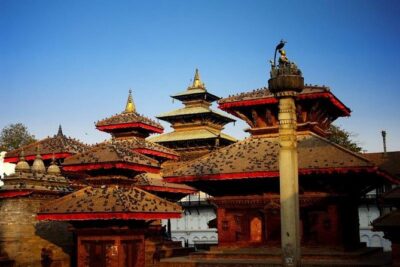
This experience is built around one simple idea: practice yoga where Buddhist devotion is part of daily life. Boudhanath Stupa is the star of the show, and it’s right by the yoga area. That matters because yoga isn’t only about stretching. It’s also about focus, rhythm, and how calm you can stay while the world keeps moving.
The atmosphere here is shaped by pilgrimage. People come to pray, walk around the stupa, and spend time in the space. You’ll still be in a real Kathmandu neighborhood, but your class is structured so the practice stays the main event, not street noise.
And if you’re curious about the cultural side, you get more than a photo stop. The workshop frames yoga as a holistic discipline connected to Buddhist ideas, taught through an approach that references the Eight-Fold Path and the Seven Disciplines. That’s not just branding. It’s a way of turning yoga into a life practice: posture and breath become tools for attention and ethical living, not just exercise.
You can also read our reviews of more tours and experiences in Kathmandu.
Hotel pickup and the 9:00 am start that saves you time
The day starts at 9:00 am, with hotel pickup and drop-off included. You’ll ride in a private vehicle, so you avoid the usual time sink of hunting for a taxi, negotiating a route, or guessing how long traffic will take.
This is especially helpful in Kathmandu because your schedule can get messy fast. A door-to-door plan keeps the day predictable, and it also helps you arrive with less stress. That’s not a small thing—yoga works better when you’re not already annoyed at your own commute.
The group stays small (up to 14 travelers), and that typically makes logistics smoother. You’re also not stuck in a big crowd where no one can hear the instructor. The goal here is participation: you should feel like you can ask questions and keep up.
The 4-hour flow: stupa time plus a 2.30-hour class
Total duration is about 4 hours, with 2.30 hours for the yoga class. The rest of the time is for getting to the Boudhanath area, getting oriented, and visiting the stupa.
Here’s what that feels like in real life:
1) You’re picked up from your hotel and taken to Boudhanath.
2) You get a chance to visit Boudhanath Stupa in a way that fits the workshop rhythm.
3) Then you shift into the yoga class while you keep the stupa in view.
The experience is designed so you’re not doing yoga in a vacuum. You practice while the stupa sits nearby, and that visual reminder can help your focus. It’s the kind of detail that makes the session more meaningful—like your breathing and attention are happening in the same space as centuries of devotion.
The one practical downside: food and drinks are not included. If you go into the morning without breakfast, you might feel it during the long class. A simple snack before pickup can make the whole thing feel easier.
Inside the yoga workshop: from asanas and mudras to meditation
This isn’t a one-note yoga class. You’ll work through a sequence that moves from body to hands to breath to mind.
Asanas: posture with purpose
You’ll practice asanas, meaning proper body positioning. The key value here is guidance: the class is taught move by move, so you’re less likely to get lost in a “figure it out yourself” format. That’s ideal if you want structure, or if you’ve tried yoga before and still feel unsure about what you’re actually doing.
Posture work also matters for comfort. The instruction strongly suggests wearing loose-fitting clothing, and that’s not just for politeness. It affects how naturally you can breathe and how safe you feel holding positions.
Mudras: hand gestures that change the focus
Next come mudras, proper hand gestures used to direct energy and deepen concentration. This is one of the most interesting parts for many people because mudras aren’t usually a big highlight in basic fitness-style yoga.
What you’ll likely notice is that mudras create a “second anchor” besides the breath. Your body is doing a physical action, your hands are set with intention, and your attention has something concrete to hold.
Pranayama: breathing that slows the mind
You’ll learn pranayama, the breath techniques meant to relax you and support purification of body and energy. Even if you don’t buy into every spiritual explanation, breath training still helps you regulate your nervous system. The class frames breath as a pathway to calmer awareness, not just a way to survive a stretching session.
Dharana and dhyana: attention and meditation
Then the workshop reaches the mind side: dharana for controlling the mind and generating positive energy, followed by dhyana for meditation aimed at liberating the mind.
If you’ve ever tried to meditate and felt like your brain wouldn’t shut up, this is why the instructor-led approach matters. The class doesn’t just say sit and hope. It gives you a technique structure, which is more practical than “good luck.”
The Eight-Fold Path and Seven Disciplines, translated into daily practice
Yoga here is described as holistic, with an explicit connection to Buddhist teaching. The workshop says it draws on the Eight-Fold Path taught by Lord Buddha while cultivating the Seven Disciplines.
What does that mean for you in the room?
It usually comes through in how the session is paced and framed:
- Posture becomes grounded discipline (how you hold yourself).
- Breath becomes self-regulation (how you stay steady).
- Mudras become intention (where you place focus).
- Dharana and dhyana become mind training (how you manage thoughts and attention).
You’re not just burning time. You’re learning a set of tools that can carry beyond the 4-hour class. If you like practices you can repeat, this is a good fit, because the session isn’t only about flexibility. It’s about how to direct attention.
And since Boudhanath is tied to pilgrimage, the setting reinforces the message: this is practice for living, not only performance.
Price and value: why $110 can make sense here
The price is $110.00 per person for about 4 hours, including:
- Hotel pickup and drop-off
- Private vehicle transport
- A trained yoga instructor
- 2.30 hours of yoga class
- Entry fee at Boudhanath Stupa
So what are you really paying for?
You’re paying for three things that are hard to DIY in a satisfying way:
1) A guided, structured class that includes more than basic stretching.
2) Door-to-door transport, which saves time and stress.
3) Stupa access handled for you.
If you’re the type who hates spending half your day coordinating transport and entry tickets, this format is good value. Also, the group size is capped at 14, which generally makes instruction more personal than you’d get in a massive tour crowd.
One timing note: on average, people book this about 113 days in advance. That doesn’t guarantee it sells out immediately, but it’s a clue that you should plan ahead if your Kathmandu dates are firm.
Who should book this workshop (and who might not)
I think this experience suits you if:
- You want yoga that’s more than exercise and includes breath and meditation techniques.
- You care about Buddhist culture and like practicing near meaningful places.
- You’d rather have an instructor-led plan than freestyle through unknown routines.
- You want practical support in Kathmandu (pickup, private transfers, and a clear schedule).
You might skip it if:
- You only want a quick, casual stretching session. This is a full 2.30-hour class with structured techniques.
- You hate mornings or you’re very sensitive to timing gaps—food and drinks aren’t included, so plan accordingly.
The best part for most people is that the session is described as suitable for most participants, and the pace is guided. You don’t need to be a yoga pro to join. You just need willingness to try.
Practical tips for your best session
A few small choices will pay off big here.
- Wear loose-fitting clothes so you can move and hold positions comfortably.
- Eat beforehand. Food and drinks aren’t included, and you’ll be in class for a while.
- Bring a light layer if you run cold while sitting for breathwork and meditation.
- Ask questions during the session. The teaching style is structured move by move, and you should feel encouraged to clarify anything you don’t understand.
- Keep your phone away during practice. It sounds obvious, but the stupa setting is more powerful when you’re present.
Also, start time is 9:00 am, so make sure you’re ready to go on Kathmandu time. If you’re already jet-lagged, breathwork is still helpful, but you may want a slower breakfast and a calm mindset.
Should you book the Boudhanath yoga experience?
If you want a yoga session that’s tied to a real spiritual setting—right next to Boudhanath Stupa—this is a strong pick. The combination of a trained instructor, a structured 2.30-hour class, and door-to-door transfers turns it into a low-effort day with meaningful payoff.
Book it if you’ll use the breathing, attention, and meditation techniques. Skip it only if you’re looking for a short, purely physical workout or you don’t want to handle the simple reality that food isn’t included.
Overall, this is the kind of Kathmandu experience where the logistics actually support the experience. You show up, you practice, and the stupa helps you remember what calm feels like.
FAQ
What time does the yoga experience start?
The start time is 9:00 am.
How long is the experience?
It lasts about 4 hours total, including a 2.30-hour yoga class.
Is hotel pickup and drop-off included?
Yes. Hotel pickup and drop-off are included.
Is transportation included?
Yes. You’ll travel by private vehicle for transport to and from the experience.
Is entry to Boudhanath Stupa included?
Yes. The entry fee at Boudhanath Stupa is included.
What will I learn during the workshop?
You’ll practice asanas, mudras, pranayama (breathing), and mind practices including dharana and dhyana.
Do I need to bring my own food or drinks?
Food and drinks are not included, so plan to eat on your own outside the workshop time.
How many people are in the group?
The group size is capped at a maximum of 14 travelers.
Can I cancel and get a full refund?
Yes. There is free cancellation up to 24 hours in advance of the start time for a full refund.