REVIEW · KATHMANDU
Annapurna Base Camp Trekking
Book on Viator →Operated by Accessible Adventure Pvt. Ltd · Bookable on Viator
Annapurna Base Camp feels close to real life here. I like that you travel with a licensed guide and porter support, so safety and pacing don’t fall on you alone. I also love that key cold-weather gear like the down jacket plus a sleeping bag is included. The one thing to plan for: trek meals and your Kathmandu and Pokhara hotel nights are not included, so you’ll budget extra.
You’ll also get a lot of structure for a trek that can otherwise feel chaotic. The route works through classic Annapurna-region stops, with tea house nights already arranged, and permits handled for you. In one past group experience, the guide Avi and porter Robin were called out for being patient and careful with slower trekkers, which is exactly what you want at higher altitudes.
This is geared to people with at least moderate fitness. If you’re the type who hates early starts, long walking days, or cold mornings, you may find the schedule a bit sharp—but if you like steady progress and mountain time, this plan fits well.
In This Review
- Key highlights worth paying attention to
- Why this Annapurna Base Camp trip feels easier than DIY
- Price and logistics: where $749.90 really goes
- Kathmandu Day 1: airport pickup and a real pre-trek briefing
- Kathmandu to Pokhara Days 2 and the handoff to trail mode
- Days 3–4: Ulleri and the Poon Hill sunrise warm-up
- Day 3: Birethanti to Ulleri to Ghorepani
- Day 4: Poon Hill sunrise, then Tadapani
- Days 5–6: Chuile, Sinuwa, and Deurali before the big summit push
- Day 5: Chuile and Sinuwa (bamboo and rhododendron country)
- Day 6: Sinuwa to Deurali
- Day 7: Reaching Annapurna Base Camp via Machhapuchhre Base Camp
- Days 8–9: Descending to Bamboo and the Jhinu Danda hot springs reset
- Day 8: ABC to Bamboo (about 7 hours of descent)
- Day 9: Bamboo to Jhinu Danda (hot springs are the goal)
- Day 10–11: from Jhinu Danda to Pokhara, then back to Kathmandu
- What’s included on the trek (and what you’ll supply yourself)
- Gear, pacing, and altitude: how to set yourself up for comfort
- Should you book this Annapurna Base Camp trek?
- FAQ
- What’s included in the trek price for the Annapurna Base Camp tour?
- Are permits covered for the Annapurna region?
- Do I get a sleeping bag and down jacket with this tour?
- Are meals during the trek included?
- Is accommodation in Kathmandu and Pokhara included?
- Do I get a porter if I’m traveling alone?
- How do transfers between Kathmandu and Pokhara work?
- What time does the tour start and where do we meet?
Key highlights worth paying attention to
- Guide-led safety and decisions: a licensed English-speaking guide plus porter support reduces guesswork on the trail
- Provided trek gear: duffle bag, sleeping bag, and down jacket are included
- Permits are taken care of: TIMS and the Annapurna Conservation Area Permit included
- Tea house nights are arranged: you sleep in tea houses during the trek (not camping)
- Classic altitude stepping stones: Ghorepani and Poon Hill warm you up before the main ABC climb
- Free-time recovery stops: Jhinu Danda hot springs helps you reset after the descent
Why this Annapurna Base Camp trip feels easier than DIY
A good Annapurna plan should do two things: reduce logistics stress and keep you moving at the right rhythm. This one does both. You get a licensed, English-speaking trek guide and porter support, plus the package covers the permits (TIMS and the Annapurna Conservation Area Permit) and government/agency service charges. That means you spend less time figuring out paperwork and more time learning the trail with someone who knows how it actually works.
I also appreciate the gear bundle. A duffle bag, sleeping bag, and down jacket are included for use during the trek, which can save you money and suitcase space. If you’ve ever shown up to a Himalayan trek with the wrong layer and spent the week bargaining with the weather, you’ll understand why this matters.
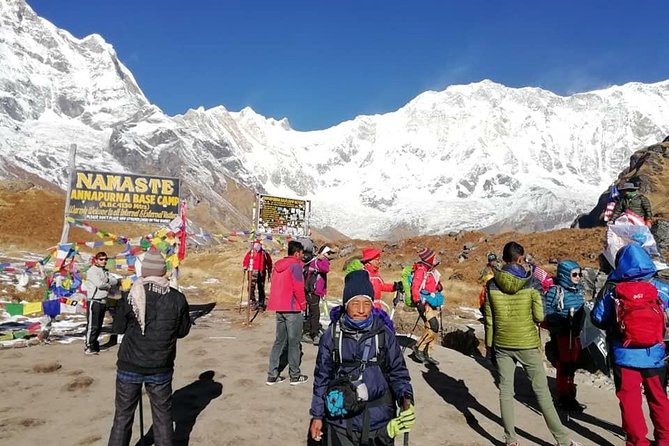
The trek still asks for effort. You’ll be hiking multiple days with changing elevations, including reaching about 4,130m at Annapurna Base Camp. So think of this tour as “organized support,” not “a walk in the park.”
You can also read our reviews of more hiking tours in Kathmandu
Price and logistics: where $749.90 really goes
At $749.90 per person for a 12-day trip, the value depends on what you’d otherwise pay for on your own. Here, you’re paying for a package that covers several expensive-to-fix items: the guide and porter plan, permits, transfers between Kathmandu and Pokhara, and trekking logistics like private transfers to the start/end points.
You’re also getting round-trip bus transfers between Kathmandu and Pokhara in a tourist bus. After that, you’re not stuck trying to coordinate taxis and timing on your own. The itinerary also includes private transfers to the trail starting point and ending point, which matters because Annapurna-area trailheads are not “right outside” the city.
A couple of costs you should assume are on you:
- Cold drinks are not included, and water isn’t listed as included
- Meals during the trek (breakfast, lunch, dinner) are not included
- Accommodation in Kathmandu and Pokhara is not included
So when you compare price, don’t just look at the headline number. Add a realistic daily food budget for the mountains, plus hotel nights in Kathmandu and Pokhara, and the value equation becomes clearer.
One more practical note: it’s a private tour/activity, meaning only your group participates. That can feel good if you hate big-chaos group dynamics, but it can also mean you should double-check meeting and pacing expectations with your guide ahead of time.
Kathmandu Day 1: airport pickup and a real pre-trek briefing
Day 1 starts with Kathmandu arrival, with an airport representative and a transfer to your hotel. Later, you meet your trek leader at a pre-trip meeting. This is more than ceremony. A proper briefing is where you learn what your group needs to do—how the trek leader wants you to handle pacing, what to expect on specific days, and what the plan is if weather shifts or you need to slow down.
If you like the idea of a trek that feels run with a plan (instead of everyone winging it), this first-day setup is a strong point. You’ll also be able to ask straightforward questions—what to wear, how to manage layers, and what the guide expects on “earlier than you want” mornings.
The trip notes that the meeting start time is 6:00 am. Even if you’re not hiking at that hour on Day 1, it’s a good signal for the pace of the whole journey.
Kathmandu to Pokhara Days 2 and the handoff to trail mode
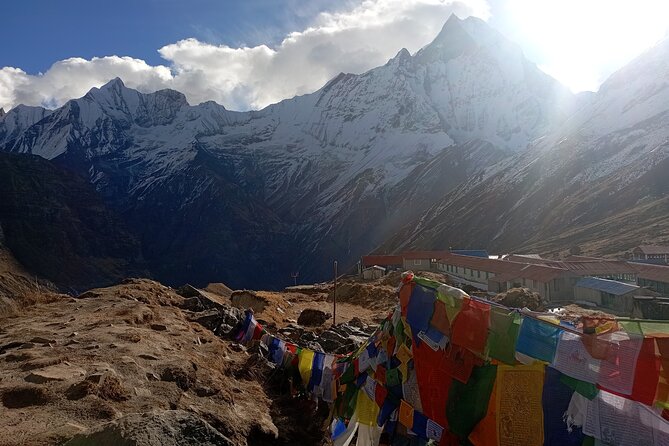
Day 2 moves you from Kathmandu to Pokhara Lakeside. The drive time is listed at about 7 hours, and Pokhara is where your trip pivots from city life into trekking life. Pokhara Lakeside is a comfortable base: you’ll be close to food, gear shops if you need anything small, and the general traveler rhythm that helps you settle in.
What I like about this structure is that it gives you a night where you can prep calmly. You’re not jumping into the first steep climb immediately after landing. You also get some time to check your packing system—especially if you’re using the provided duffle bag and sleeping bag.
Then Day 3 starts the trek from the Annapurna region trail area via the usual sequence of stops. Your plan includes starting at the altitude of about 827m at Birethanti, and then climbing through places like Tikhedhunga/Ulleri and onward.
Days 3–4: Ulleri and the Poon Hill sunrise warm-up
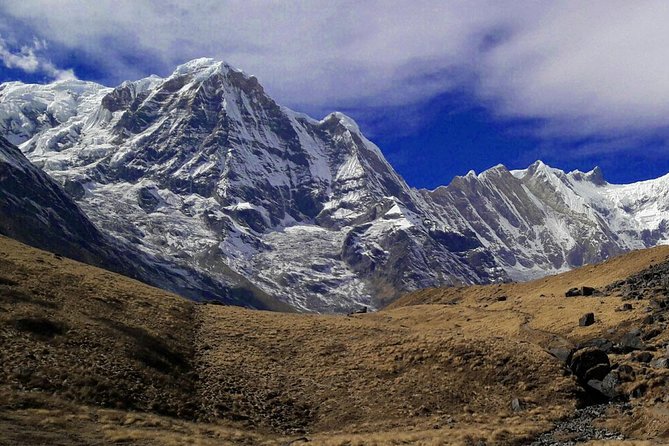
This is one of the smarter parts of the itinerary. You’re not thrown straight into the biggest altitude day. You climb gradually while still getting impressive mountain payoff.
Day 3: Birethanti to Ulleri to Ghorepani
Day 3 begins around 827m at Birethanti and heads uphill toward Ulleri (around 1,480m). Expect steady climbing segments and time on the trail—about 3 hours to Birethanti and around 4 hours listed for Ulleri, then a shorter hop to Ghorepani. Ghorepani sits at about 2,874m, with a rest stop vibe that fits this “build momentum” phase.
If you’re worried about what your legs will do later, Day 3 is a good test run. The climbs are real, but the day doesn’t try to do everything at once.
Day 4: Poon Hill sunrise, then Tadapani
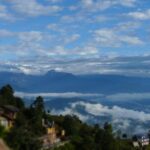
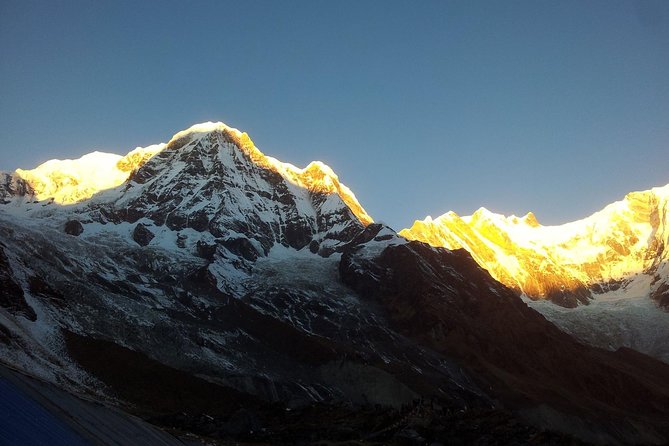
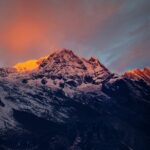
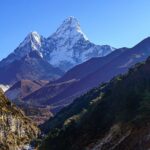
Day 4 is classic Annapurna-region trekking. You wake early for sunrise at Poon Hill (about 3,210m), with a pre-dawn hike from Ghorepani taking roughly 45 minutes. You’ll get panoramic views that stretch across the region, including peaks like Annapurna and Dhaulagiri (and Machhapuchhre is referenced in the route notes).
After sunrise, you move on to Tadapani (about 2,630m). This day is listed at around 7 hours total, so it’s not a “light day.” Still, the combination of early views plus a later village stop makes it feel like progress, not just grind.
Days 5–6: Chuile, Sinuwa, and Deurali before the big summit push
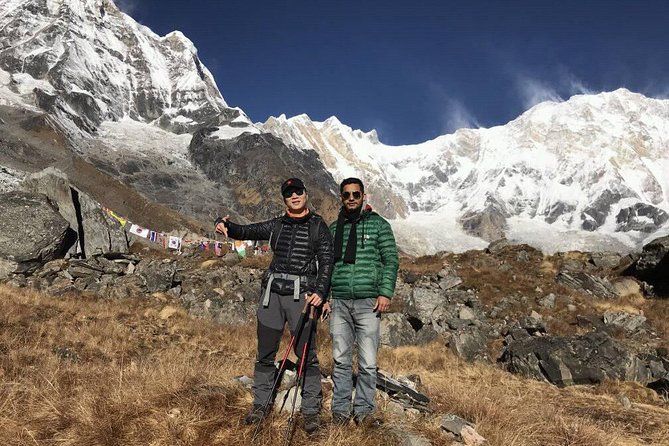
These days are about stepping deeper into the sanctuary and getting used to the rhythm of “hike high, sleep higher.”
Day 5: Chuile and Sinuwa (bamboo and rhododendron country)
Day 5 includes a move to Chuile (about 2,300m) and then onward to Sinuwa (around 2,340m–2,360m). The day is listed at about 7 hours for the trek segment and feels like a shift from earlier foothill walking to more mountain-flavored trails.
Sinuwa is an important stop on the ABC trek, and this is where a guide’s pacing advice becomes valuable. At this stage, you’ll likely start thinking more about breathing control than speed.
Day 6: Sinuwa to Deurali
Day 6 continues upward with a trek that’s listed at about 6 hours from Sinuwa to Deurali. Deurali is given at multiple elevations in the notes (including around 2,890m and 3,174m depending on starting point), which is a hint that the route can flex slightly. Either way, you’re moving into the area that sets you up for the final altitude push.
This is the day where your clothing system matters most. You’ll likely be warmer on the climb and colder during breaks, so having the provided down jacket available (and using layers correctly) can make the difference between enjoying the stops and wanting to rush through them.
Day 7: Reaching Annapurna Base Camp via Machhapuchhre Base Camp
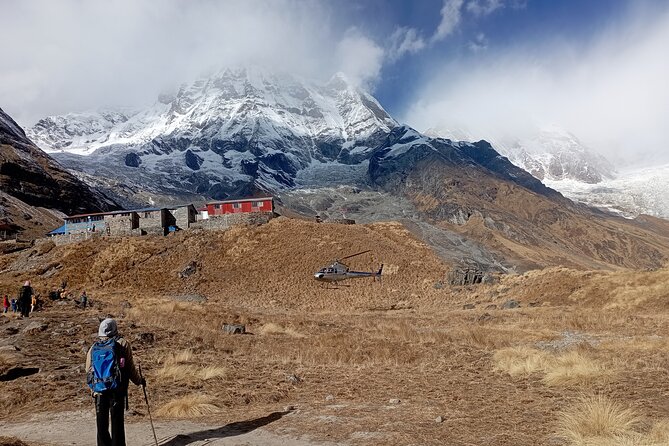
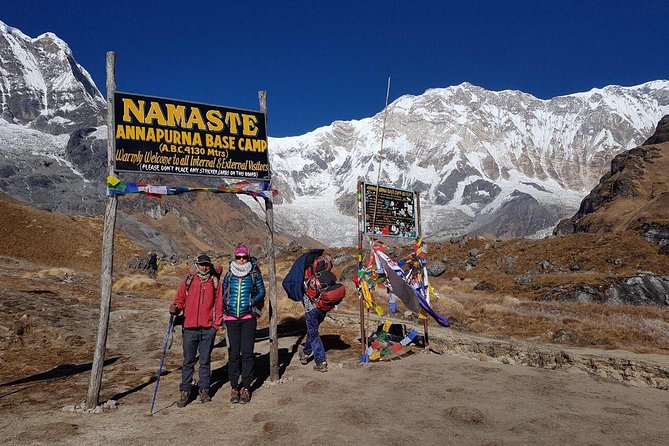
Day 7 is the day your trip is built around. You start from either around 2,890m (Deurali) or 3,174m, then hike up toward Annapurna Base Camp at about 4,130m. The route notes also mention Machhapuchhre Base Camp at around 3,700m as a destination along the way.
The climb is listed at about 6 hours for the key move to ABC, with that final altitude being the “no joke” moment. This is where a good guide earns their keep: not by rushing you, but by helping you keep effort sustainable. Even if you feel strong on Day 7 morning, you’ll still want to save energy for the last stretch.
If you’ve heard stories of people struggling at the top, here’s the practical take: go slower than you think you need to. The altitude at ABC makes breathing feel different, and you’ll feel better if you’ve kept your pace controlled from the start.
Days 8–9: Descending to Bamboo and the Jhinu Danda hot springs reset
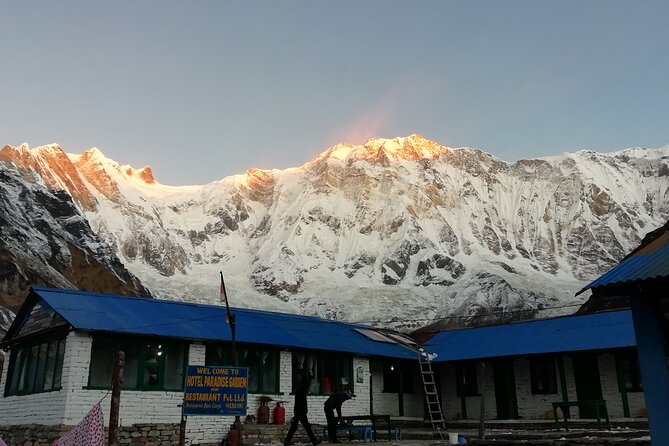
After you reach ABC, you’ll spend the next days learning a second skill: downhill stamina. It can feel easier than going up, but your knees may argue.
Day 8: ABC to Bamboo (about 7 hours of descent)
Day 8 is a descent from ABC around 4,130m down to Bamboo at about 2,350m. The listed trekking time is roughly 7 hours. This is a long moving day, even though it’s down. A guide’s advice on foot placement and pacing can be a big help here.
Day 9: Bamboo to Jhinu Danda (hot springs are the goal)
Day 9 takes you from Bamboo (2,350m) to Jhinu Danda at about 1,780m, with about 5 hours of hiking listed. Jhinu Danda is known in the notes for natural hot springs, and this is the day you’ll appreciate the break.
Even if you’re not a “spa person,” hot springs after a long descent can feel like a cheat code for recovery. It’s a very practical reward.
Day 10–11: from Jhinu Danda to Pokhara, then back to Kathmandu
Day 10 includes the hot springs time at Jhinu Danda (the notes list an included activity, but specify hot spring admission is not included). Then you trek toward Pokhara area stopping points such as Siwa or Ghandruk Phedi, depending on the chosen route. The hiking time is listed at about 5 hours.
Day 11 is your return to Kathmandu, with a scenic drive from Pokhara to Kathmandu (about 8 hours). Kathmandu sits around 1,350m in the notes, so you’re back to city elevation and can finally breathe normally without focusing on altitude strategy.
This part of the itinerary matters more than people think. When you land back in a city, your trip becomes a vacation again: good meals, warm showers, and sleep that isn’t in a tea house.
What’s included on the trek (and what you’ll supply yourself)
Here’s the “real life” inventory from the package.
Included during the trek:
- Tea house accommodations along the route
- A licensed professional English-speaking trekking guide
- Porter support: 1 porter for two trekkers
- Permits: TIMS and Annapurna Conservation Area Permit
- A duffle bag, sleeping bag, and down jacket for use during the trek
- A first aid kit (mentioned in the trip overview)
- Trek-support staff costs like salary, food, equipment, insurance, and transport
- Trip materials like a trekking map and a trip achievement certificate
Not included (plan ahead):
- Trek meals (breakfast, lunch, dinner)
- Cold drinks like juice, soda, etc.
- Accommodation in Kathmandu and Pokhara
One key note for solo travelers: a porter is listed as not included for solo travelers. The package includes porter support as “1 porter for two trekkers,” so if you’re traveling alone, confirm how porter arrangements will work before you book.
Gear, pacing, and altitude: how to set yourself up for comfort
Because the package provides a sleeping bag and down jacket, you can travel lighter than you would for a fully DIY version. Still, you’ll want to bring the basics that aren’t listed: good trekking shoes, moisture-wicking layers, and a rain layer if you own one.
Pacing is the other “gear.” At the top end—ABC is around 4,130m—you’ll get a firsthand lesson in why trekking plans emphasize gradual movement and scheduled rest. Your guide’s job is to keep you safe and moving, which is why it matters that the tour includes a licensed guide and porter support.
If you’re worried about feeling behind, take comfort in the tour’s style: in a past group experience, guide Avi and porter Robin were specifically praised for being patient and careful with safety. That kind of support often changes how you experience the whole trip, especially if you’re not chasing speed records.
Should you book this Annapurna Base Camp trek?
I’d book this if you want a trek that feels guided, structured, and logistically handled—without giving up the authentic tea house rhythm of the Annapurna region. The biggest strengths for most people are the licensed guide, the porter support setup, the provided cold-weather gear, and the fact that permits and transfers are included.
I’d think twice if you’re trying to keep trip costs ultra-low, because trek meals and your Kathmandu/Pokhara hotel nights aren’t covered. Also, if you’re a solo traveler, confirm the porter situation since porter support is tied to the “1 porter for two trekkers” plan.
If you’re looking for a 12-day ABC experience where your days are clearly paced, your paperwork is handled, and you can focus on walking and mountain views, this is a solid choice—especially if you’d rather not stress over planning while you’re already breathing harder at altitude.
FAQ
What’s included in the trek price for the Annapurna Base Camp tour?
The package includes Kathmandu to Pokhara and Pokhara to Kathmandu transfers in a tourist bus, private transfers to the trek start and end points, a licensed English-speaking trekking guide and porter support, TIMS and the Annapurna Conservation Area Permit, tea house accommodation during the trek, and trekking gear (duffle bag, sleeping bag, and down jacket for use). It also includes staff costs, taxes, a trekking map, and a trip achievement certificate.
Are permits covered for the Annapurna region?
Yes. The TIMS and the Annapurna Conservation Area Permit are included.
Do I get a sleeping bag and down jacket with this tour?
Yes. A duffle bag, sleeping bag, and down jacket are provided for use during the trek.
Are meals during the trek included?
No. Breakfast, lunch, and dinner during the trek are not included.
Is accommodation in Kathmandu and Pokhara included?
No. Accommodation during Kathmandu and Pokhara is not included in the package price.
Do I get a porter if I’m traveling alone?
A porter is listed as not included for solo travelers. The standard porter support is noted as 1 porter for two trekkers.
How do transfers between Kathmandu and Pokhara work?
You get round-trip transfers in a tourist bus between Kathmandu and Pokhara, plus private transfers to your trek starting and ending points.
What time does the tour start and where do we meet?
The meeting point start time is listed as 6:00 am.