REVIEW · LALITPUR NEPAL
Patan and Bhaktapur City Full Day Tour
Book on GetYourGuide →Operated by Himalayan Travel Consultant · Bookable on GetYourGuide
Two Durbar Squares, one smooth day of Newari art. I love how this tour anchors you in UNESCO heritage and then slows down for the details, especially at Patan’s Golden Temple and the surrounding sacred spaces. One drawback to plan for: monument entrance fees are not included, so your budget may stretch a bit once you’re standing at the gates.
I also like the human side. With a live guide in English or Spanish and air-conditioned transport plus hotel pickup and drop-off in Kathmandu, the day feels organized without feeling like a race.
Bhaktapur adds the medieval tone, and Patan brings the artist’s touch. If you’re the type who enjoys walking through squares and reading the symbolism on carved pagodas, you’ll get a lot from this kind of tight, curated route.
In This Review
- Key Things You Should Know Before You Go
- Patan and Bhaktapur: Why These UNESCO Squares Still Matter
- Getting There in Comfort: Hotel Pickup and a Realistic Time Window
- Bhaktapur Durbar Square: The Medieval City Feeling You Can Walk Into
- Taumadhi Square and the Nyatpole Temple (Tallest Temple in Town)
- Dattatraya Square: Royal Origins in a Place You’ll Pass Through
- Patan Durbar Square: Newari Craft and a 12th-Century Backbone
- Bhimsen Temple: The Merchant-Friendly Pagoda With Hanging Household Goods
- Krishna and Vishnu Temples: Shikhar Architecture and Garuda at the Entrance
- The Royal Palace Complex in Patan: Sundarichok, Mulchok, and Keshavnarayan Chok
- Golden Temple (Hiranyavarna Mahabihar): Newari Metalwork at Its Best
- Managing the Day: Free Time, Photo Stops, and a Private Pace
- Price and Logistics: Is $50 Good Value?
- Who This Tour Fits Best
- Should You Book This Patan and Bhaktapur Full Day Tour?
- FAQ
- How long is the Patan and Bhaktapur City Full Day Tour?
- What is the price per person?
- Does the tour include hotel pickup and drop-off?
- Is a live guide included?
- Are monument entrance fees included?
- What is the cancellation policy?
Key Things You Should Know Before You Go
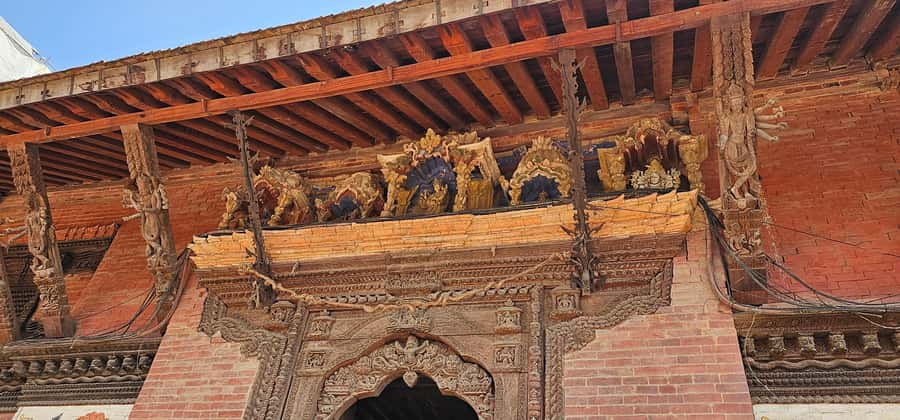
- Hiranyavarna Mahabihar Golden Temple: A glittering example of Newari metalwork, and a standout stop in Patan.
- Nyatpole Temple at Taumadhi Square: The tallest temple in town, so it’s an easy landmark when you’re orienting yourself.
- Patan’s royal palace courtyards: Sundarichok (royal bath), Mulchok (Taleju deity), and Keshavnarayan Chok (Vishnu imagery and museum).
- Bhimsen Temple’s merchant symbolism: A three-story pagoda with hanging household goods, tied to Bhimsen and the business community.
- Krishna and Vishnu temples: Krishna’s shikhar-style architecture comes with a Garuda statue in front, with a Vishnu temple next door.
- Guides can shape the pace: Even within fixed landmarks, you should expect time for questions, photo stops, and practical walking breaks.
Patan and Bhaktapur: Why These UNESCO Squares Still Matter
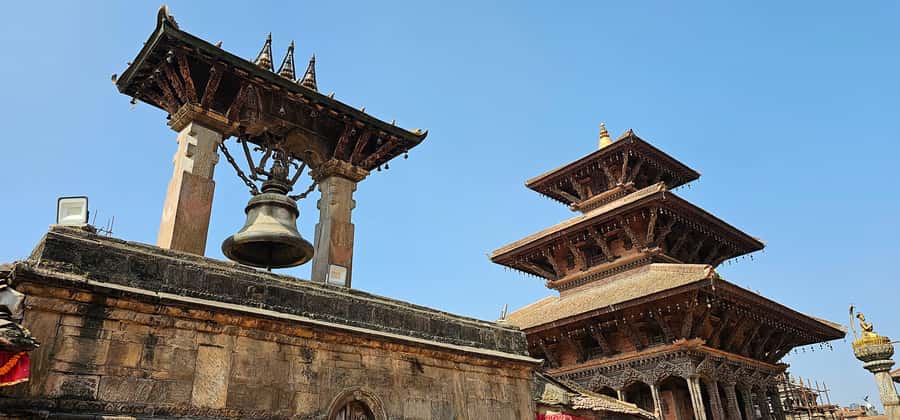
Patan and Bhaktapur sit in Nepal’s Kathmandu Valley, but they don’t feel like duplicate suburbs. Patan (also known as Lalitpur) is its own old world—small, temple-heavy, and famous for Newari craft traditions. Bhaktapur, described as a medieval town, carries more of the dense, old-stone feeling in its city layout and squares.
What makes a day tour work here is that these heritage sites are built for walking. You’re not driving long distances to see a single monument from a single angle. Instead, you move between squares, temples, palace courtyards, and the cultural nodes around them—so your eyes keep finding new layers.
This is also a good place to understand how religion and royalty blended in Nepal Valley cities. In Patan, the palace complex isn’t just a background detail; it’s a working map of sacred space. In Bhaktapur, the Durbar Square concept gives you a strong sense of how public life used to center around rulers and worship.
You can also read our reviews of more tours and experiences in Lalitpur Nepal.
Getting There in Comfort: Hotel Pickup and a Realistic Time Window
This experience is designed for an easy start. You get pickup and drop-off from your Kathmandu hotel, plus air-conditioned transport. That matters in the Kathmandu Valley, where traffic and walking heat can chew up your energy fast.
The total duration is about 6 hours, which is both the magic and the limitation. It’s long enough to see major highlights in both cities, but short enough that you should expect a guided, focused route rather than slow wandering with unlimited detours.
A private group also helps. You’re less likely to feel stuck behind a bigger crowd, and it’s easier to ask questions when the guide is not constantly managing a larger group’s timing.
Bhaktapur Durbar Square: The Medieval City Feeling You Can Walk Into
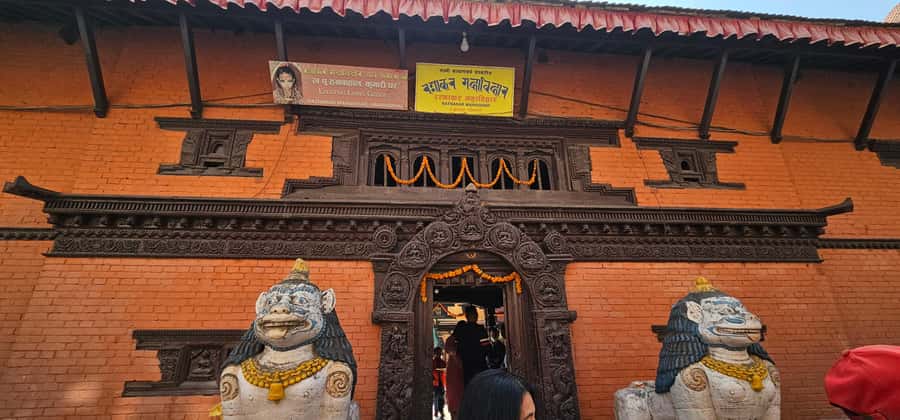
Bhaktapur is often the kind of place where the streets feel like they’re still carrying yesterday’s routines. The tour centers on Bhaktapur Durbar Square, which is the kind of landmark that rewards you for slowing down.
A good guide will help you read what you’re seeing: the role of royal spaces, why temples are positioned the way they are, and what the square signaled to the community historically. Even if you’re not a hardcore architecture nerd, you’ll likely enjoy spotting how carved details communicate religious meaning.
One practical note: Bhaktapur can be a lot of walking on uneven ground. If you’re planning shoes for the day, choose something comfortable and grippy. You’ll thank yourself on the small turns between sights.
Taumadhi Square and the Nyatpole Temple (Tallest Temple in Town)
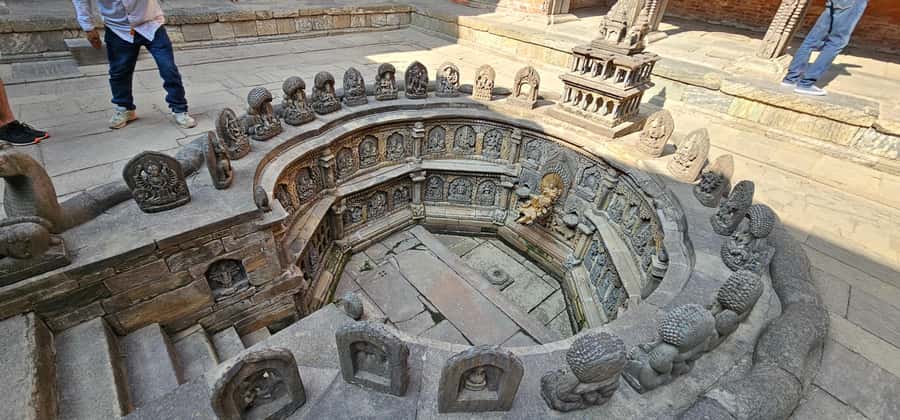
Taumadhi Square is directly tied to the Nyatpole Temple, and that link is easy to use when you’re orienting yourself. The Nyatpole is described as the tallest temple in the town, so it functions like a natural beacon amid the city’s texture.
What I like about this stop is that it’s not just about height. The temple offers a chance to look up and compare forms and levels while your feet still stay on the street-level pace of exploring squares.
If your travel style includes photo stops with context, this is a strong spot. The taller silhouette makes framing simpler, and the guide can point out what different temple elements typically signal in Newari/Hindu sacred design.
Dattatraya Square: Royal Origins in a Place You’ll Pass Through
Dattatraya Square is another key stop, described as the first square used by royalties. That detail makes the area feel less like a random plaza and more like a historical hinge.
If you’re curious about how power shows itself in built space, this is the kind of place to pay attention. Royal use usually means the square wasn’t only for worship—it also shaped public gatherings, authority, and visibility.
This is also a good area to take a breath. Even on a full-day tour, a square stop gives you a mental reset before you switch into Patan’s more palace-and-temple deepening.
Patan Durbar Square: Newari Craft and a 12th-Century Backbone
Patan Durbar Square is where the day starts to feel like an art museum you walk through, except everything is still active and meaningful. The tour highlights Patan’s Durbar Square and its Golden Temple area, with the palace and temples dating back to early centuries of city development—described as being constructed back in the 12th century.
What makes this stop valuable is the mix of monumental architecture and human-scale detail. You can stand back and appreciate the overall composition, then turn toward carvings and small motifs that tell you who mattered and what they believed.
If you’re a first-timer in the Kathmandu Valley, Patan can also help you connect the dots across Nepal’s temple styles. The guide can translate temple names and elements into a simple story you can remember later.
Bhimsen Temple: The Merchant-Friendly Pagoda With Hanging Household Goods
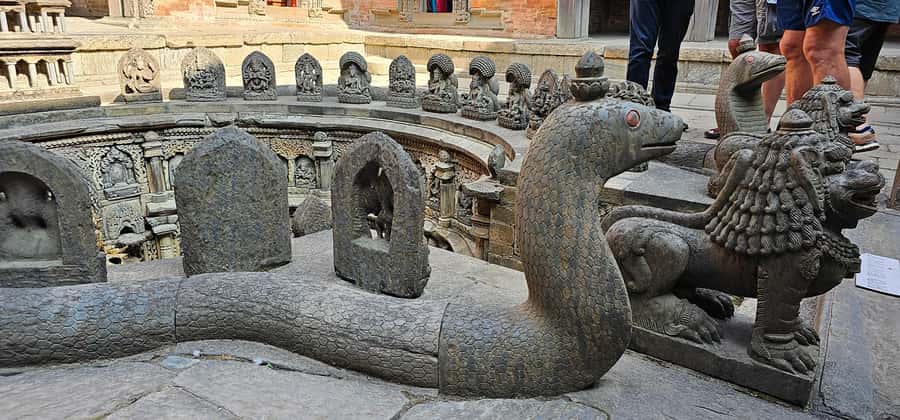
Bhimsen Temple is a highlight in Patan, and it comes with a very specific symbolism: Bhimsen is especially worshipped by the business community, and Bhimsen represents bravery.
The temple is described as a richly ornamented three-story pagoda, and one of the most memorable details is the hanging of household items—pots, pans, brooms, and wooden slippers. That’s the kind of detail that turns a building from a name in a guidebook into a lived belief system.
If you want your heritage sightseeing to feel human, this temple delivers. It shows that devotion wasn’t only abstract. It could be connected to daily work, family routines, and the pride of earning a living.
Krishna and Vishnu Temples: Shikhar Architecture and Garuda at the Entrance
Patan also gives you temple contrasts. The tour includes the popular Krishna temple, described as a masterpiece of shikhar architecture, and it includes a statue of Garuda in front.
Krishna is taken as a reincarnation of Vishnu, which is why you’ll find a Vishnu temple next to the Krishna one. Standing between these spaces, you’ll get a clearer idea of how religious roles are organized spatially.
There’s also mention of restoration connected to the 2015 earthquake: the statue of the Malla king Yoga Narendra Malla has already been restored. Even without going into disaster history, that fact reminds you these sites are living heritage, not frozen museum pieces.
The Royal Palace Complex in Patan: Sundarichok, Mulchok, and Keshavnarayan Chok
If you like your sightseeing with context, Patan’s palace complex is the centerpiece. The tour describes it as the finest collection of Newari urban architecture in Nepal, and the palace is organized around three different courtyards.
Here’s what to look for:
- Sundarichok (southern courtyard): Signifies the most beautiful courtyard and was once a royal bath.
- Mulchok (main courtyard): Traditionally used for social and religious occasions, and it houses a temple for Taleju, a tutelary deity of the royal family.
- Keshavnarayan Chok (last courtyard): Contains a small Vishnu temple with an image of Vishnu with his wife Laxmi and transport Garuda. This is also the part that now houses the best preserved museum in Nepal.
This courtyard structure helps you understand how royalty operated. They didn’t separate private life from sacred life. They layered them. When you walk through the courtyards with a guide explaining names and meanings, you’ll feel the logic of the space rather than just absorbing visuals.
Golden Temple (Hiranyavarna Mahabihar): Newari Metalwork at Its Best
After the palace complex, the tour heads to Hiranyavarna Mahabihar, better known as the Golden Temple. The reason it earns its nickname isn’t vague hype—it’s described as one of the richest monasteries in Patan and a glittering example of Newari metalwork.
This is one of those stops where a good guide makes a difference. Instead of rushing you through, the guide can point out what makes the craftsmanship special and how metalwork functions as devotion and identity.
If you’re the kind of traveler who likes to see materials up close—details matter here. You’ll likely enjoy it most when you slow your pace for a few moments and let the ornamentation sink in.
Managing the Day: Free Time, Photo Stops, and a Private Pace
A key feature of this tour is time you control. There is guided sightseeing plus free time in each city block of the day. That means you can step away for quick purchases, pause for photos, or decide when you’d rather eat.
This matters because Patan and Bhaktapur both offer plenty of street texture. If you keep only one rule—take short pauses often—you’ll avoid that end-of-day fatigue that hits when you’ve been sprinting temple to temple.
It also helps if you ask your guide for small adjustments. This is the kind of tour where guide flexibility is a real value, especially if you’ve already seen some temples elsewhere in Kathmandu and you want the focus to land on the best matches.
Price and Logistics: Is $50 Good Value?
The price is $50 per person for a full day around Patan and Bhaktapur. For that rate, you get hotel pickup and drop-off in Kathmandu, a live guide, and air-conditioned transport for about 6 hours.
The important catch: monument entrance fees are not included. So your total cost isn’t just $50. It’s $50 plus whatever entry fees apply at the sites you want to go inside.
Still, the value is strong when you compare what you’re buying: two major heritage areas, a guide who can connect names to meaning, and practical transportation between them. If you were doing this on your own, you’d still spend money on transport and you’d likely spend more time figuring out what to prioritize.
For budget travelers, the entrance fees are the only part to watch. For everyone else, the guide-led structure is a big part of why this feels efficient without feeling like a checklist.
Who This Tour Fits Best
This tour is a strong match if you want:
- A first taste of UNESCO heritage in Kathmandu Valley without committing to multiple days
- Clear guided interpretation of major squares, temples, and palace courtyard symbolism
- A private setup so you can ask questions and set a comfortable walking rhythm
- You like Newari craft culture, especially metalwork at Patan’s Golden Temple
It may be less ideal if you’re the type who needs hours of free exploration in only one city. With a 6-hour window, you’ll see the core highlights, but you won’t have time for the deeper side streets and extended museum-level wandering that comes with staying longer.
Should You Book This Patan and Bhaktapur Full Day Tour?
I’d book it if you want a smart heritage day that balances big landmarks with meaningful details. The Golden Temple stop, the palace courtyards in Patan, and the royal-square focus in Bhaktapur give you a clear story of how sacred space and city power worked together.
I’d think twice if your budget is tight and you strongly prefer doing every monument interior. Since entrance fees are not included, you’ll need a little extra room for on-the-spot choices.
If you’re trying to make Kathmandu Valley feel real fast, this is one of the cleaner ways to do it. You get the UNESCO spine, guided context, and a pace that still leaves room to breathe.
FAQ
How long is the Patan and Bhaktapur City Full Day Tour?
The tour lasts 6 hours.
What is the price per person?
The price is $50 per person.
Does the tour include hotel pickup and drop-off?
Yes. Pickup and drop-off are included from your hotel in Kathmandu.
Is a live guide included?
Yes, a live tour guide is included, with English and Spanish available.
Are monument entrance fees included?
No. Monument entrance fees are excluded.
What is the cancellation policy?
You can cancel up to 24 hours in advance for a full refund.